November 3, 2026
Bonus Content: Bayer Beat Estimates, Raised Guidance, Still Trades Like a Pariah
Editor’s Note: Our friend Louis Navellier has spent 47 years spotting big shifts before the crowd. He was early to Amazon, Apple, Microsoft, Google and Nvidia. Now he says the energy crisis everyone is worried about is quietly sending a wave of money toward one stretch of American coastline. Watch his free interview, or read more below.
Dear Reader,
In early February, 129 tankers a day were moving through the Strait of Hormuz.
Within a week… four.
The mainstream media covered it as a crisis. For a lot of countries, it was.
But here’s what the evening news mostly missed…
The countries that got burned aren’t sitting around waiting for the Strait to reopen. They’re lining up for American energy instead. Germany signed for 20 years.
Even Saudi Arabia, Qatar and Abu Dhabi – some of the richest oil nations on Earth – are putting billions into the American Gulf Coast – Texas and Louisiana.
The old energy powers are betting BIG on America.
See where all that money is going.
I’ve been doing this for 47 years. I’ve never seen a country’s position in the world change this fast.
And I don’t think energy is even the biggest part of the story.
What’s happening along that coastline is tied to something President Trump set in motion last year… something I’ve seen only once before in American history.
The last time, ordinary families who got in early collected income for years. Some of them passed that wealth down for generations.
I call this one America’s $31.5 TRILLION IPO. And I believe the Gulf of America could become the new Middle East.
Click here to find out what Trump is really building.
In my new interview with John Burke, I explain what’s going on… why the money is moving now… and the companies I’d want to own before Wall Street catches on.
It’s free to watch.
|
Regards,
Louis Navellier
Editor, Growth Investor
P.S. Most people are watching the price at the gas station. I’m watching who’s collecting the checks. Here’s the full story.
Bayer Beat Estimates, Raised Guidance, Still Trades Like a Pariah
Hey there, bargain hunter. Bayer is not a pretty company. It carries a debt pile that would make most CFOs sweat, a weedkiller litigation that has consumed north of $10 billion in cash, and a Crop Science division that missed badly in Q3. And yet, this morning it dropped numbers that remind you why ugly and cheap sometimes converge into something interesting.
Scoreboard
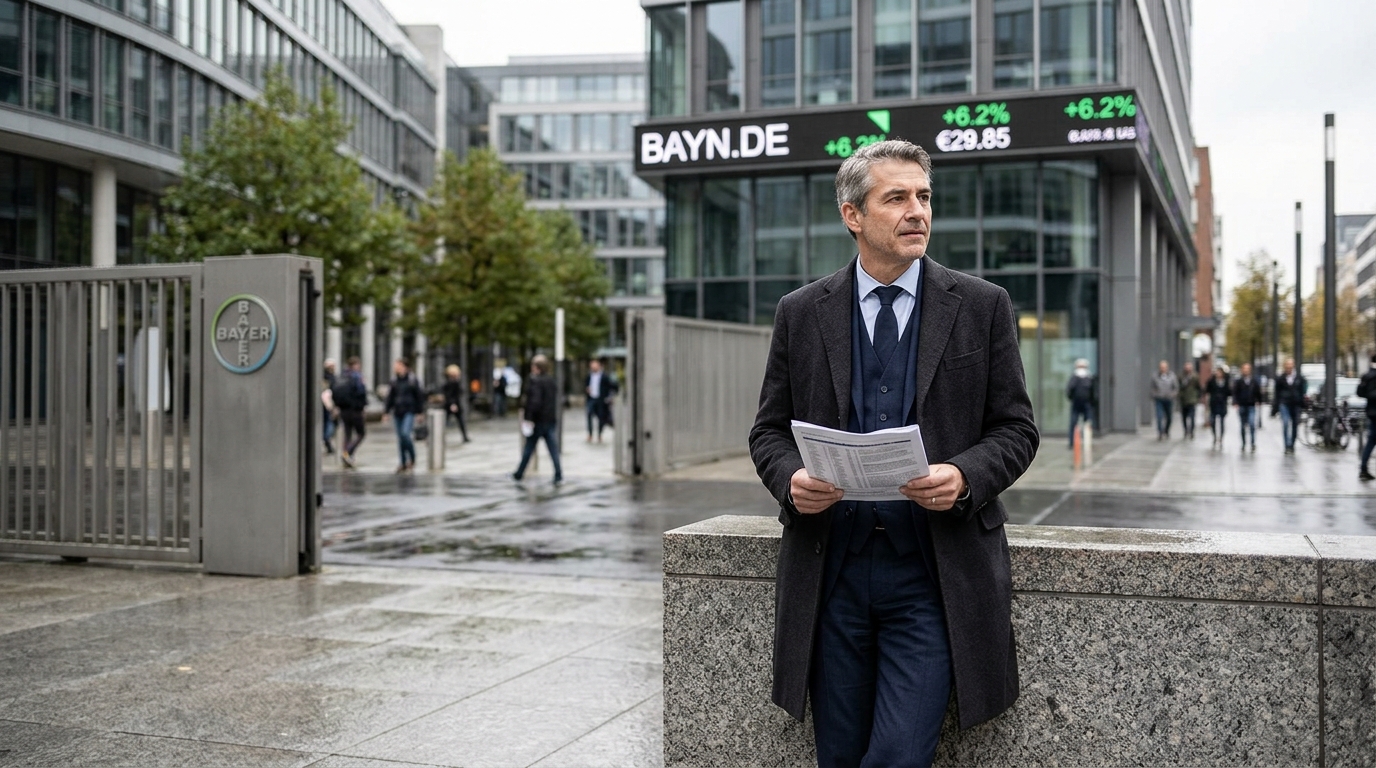
Q3 group sales: €10.053bn, up 4.1% year over year, beating the €9.92bn consensus. EBITDA before special items: €1.615bn, up 6.9%, against an estimate of €1.43bn. That is not a narrow beat. Full-year adjusted EBITDA guidance lifted to €9.8bn–€10.3bn from €9.6bn–€10.1bn. Free cash flow guidance improved to between negative €1.5bn and negative €0.5bn, from negative €2.5bn to negative €1.5bn previously. Year-end net financial debt guided to €28bn–€29bn, a billion lower than the prior target. The stock surged as much as 6.3% in Frankfurt, one of the few things in green on a bruising morning for European equities.
What Actually Happened
Pharmaceuticals did the work. Pharma sales came in at €4.68bn in the quarter, roughly 5% above analyst expectations. Nubeqa, the prostate cancer drug, and Kerendia, the kidney disease therapy, posted quarterly growth of 58% and 65% respectively. CEO Bill Anderson called it a turning point in the pharma division’s growth trajectory. He is not wrong on the numbers.
Crop Science told a different story. That division posted €101mn in adjusted core earnings against €164mn expected, hurt by higher selling costs and weak demand in Europe and Asia Pacific. The agricultural business is still dragging.
The Business in Plain English
Bayer runs three divisions: Pharmaceuticals, Crop Science, and Consumer Health. Pharma is its best asset right now, fuelled by Nubeqa and Kerendia replacing revenue lost to Xarelto generics. Crop Science is the original sin: the $63bn Monsanto acquisition in 2018 saddled Bayer with Roundup litigation that has not stopped bleeding cash. A proposed settlement of up to $7.25bn is still awaiting a court decision on final approval after a September 14, 2026 hearing. Net financial debt at the end of Q3 stood at €31.083bn, down from €32.708bn a year ago, partly because Apollo Global Management sent over €3.0bn in a prior deal.
Is It Cheap?
Traditional P/E is useless here; Bayer is loss-making on a reported basis. Analyst consensus sits at an average price target of €58.33 against a current price near €52, implying roughly 16% upside. The stock has already doubled over the past year from its lows, but it still sits well below its five-year highs above €67. Generalist investors have largely refused to touch it until Roundup litigation is fully resolved. That is precisely where the opportunity lives for someone willing to sit with discomfort.
Bull / Base / Bear
- Bull: The Roundup settlement gets final approval, removing the litigation ceiling. Pharma growth accelerates through 2027. Debt falls faster than guided. Stock re-rates toward €65+.
- Base: Settlement drags into 2027. Pharma continues growing, Crop Science stabilises. Free cash flow turns positive in 2027. Stock grinds toward analyst consensus near €58.
- Bear: Settlement collapses or faces new legal challenges. Crop Science deteriorates further. Debt stays heavy, free cash flow remains deeply negative beyond 2026. Stock gives back recent gains.
Action Plan
This is a position-size-carefully situation. A full allocation before litigation is resolved is aggressive. A zero allocation after a guidance raise and a clear pharma inflection is lazy. Scale in: a starter position now, with a second tranche contingent on the Roundup settlement receiving final approval. Set your stop near the Q3 lows. This is not a set-and-forget; it is a monitor-monthly.
Cheap Investor Scorecard
- Q3 revenue beat consensus: Yes (€10.053bn vs €9.92bn expected)
- EBITDA beat: Yes (€1.615bn vs €1.43bn expected)
- Full-year guidance raised: Yes (EBITDA, free cash flow, net debt all improved)
- Net debt trajectory improving: Yes (guided to €28–29bn year-end, down €1bn)
- Pharma growth drivers intact: Yes (Nubeqa +58%, Kerendia +65% in Q3)
- Crop Science recovering: No (missed badly in Q3)
- Roundup litigation resolved: Not yet (settlement of up to $7.25bn pending a final-approval decision)
- Free cash flow positive: Not yet (guided negative through 2026)
- Dividend restored: Not yet (suspended pending litigation resolution)
- Analyst consensus: Outperform, average target €58.33
Bottom Line
If the Roundup settlement clears court and pharma keeps compounding, Bayer at current prices looks like a mispriced recovery. If litigation flares again and Crop Science keeps disappointing, the debt load is unforgiving. The Q3 report moves the scoreboard in the right direction. Keep the position small, watch the settlement docket, and let the balance sheet do the talking.