There’s a market signal that shows up around 9:35 AM that most traders completely overlook.
They’re watching RSI.
Moving averages.
Candlesticks.
Trying to figure out where the market is headed next.
Meanwhile, I’m watching what happens in the first few minutes after the opening bell.
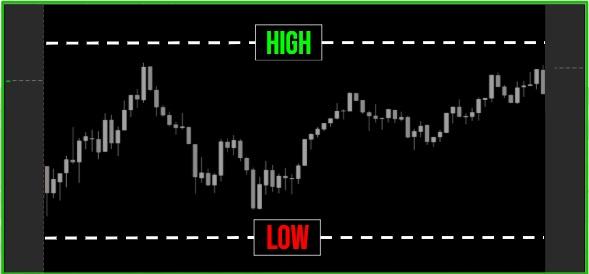
Because that’s where I’ve found a recurring pattern that can help identify key levels above and below the market.
I’ve spent years tracking this behavior.
And over the past two years, we’ve seen this approach produce 618 winning signals.
Now there’s a new test on the table.
Can we get to win #618 before the weekend?
I’ve set a challenge in motion to find out.
No trading guarantees, of course…
But I can show you the data behind the setup, the levels I’m watching, and exactly what I’m looking for as we make our run from #618 toward #620.
If you want to follow along the Challenge, I’ve laid everything out right here.
See you in the market,
Chris Pulver
Tyson Jumped 8.7% Monday. The Beef Crisis Still Exists.
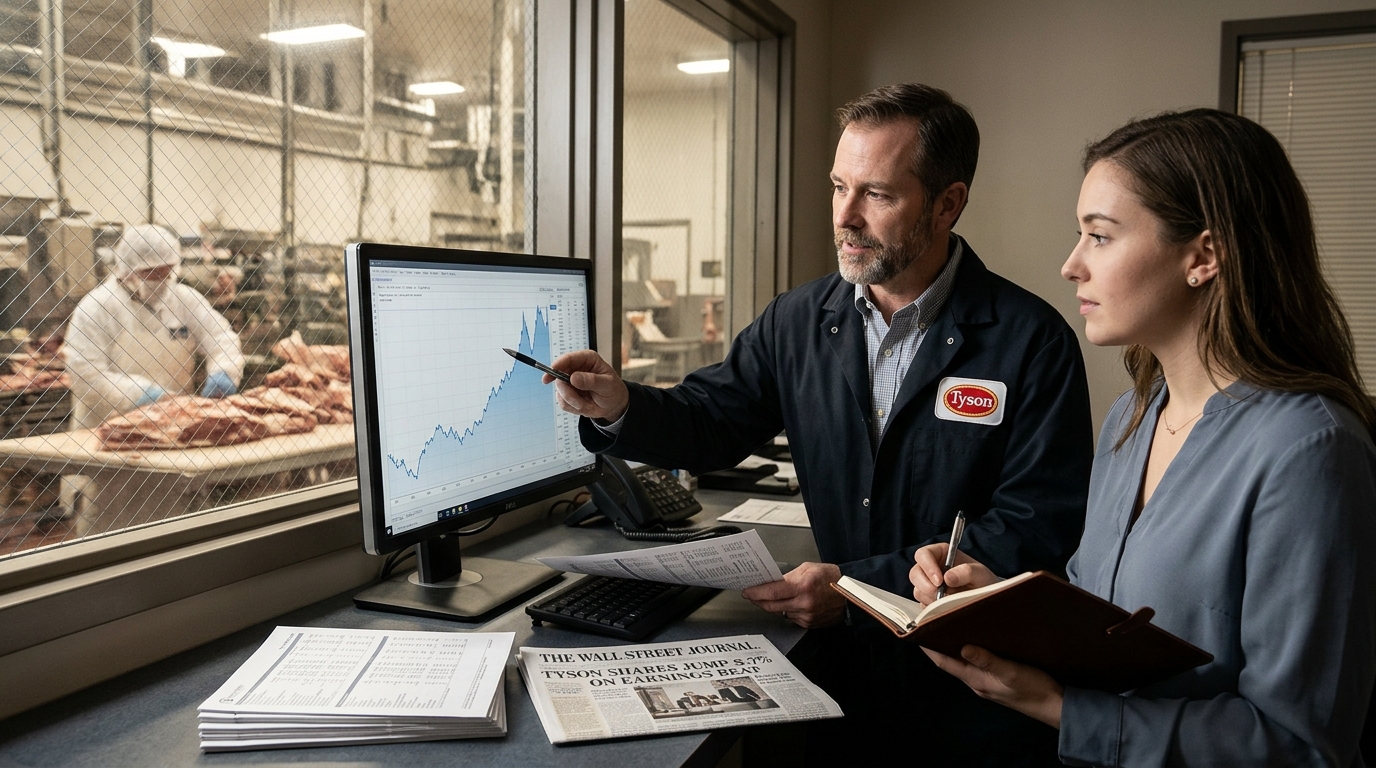
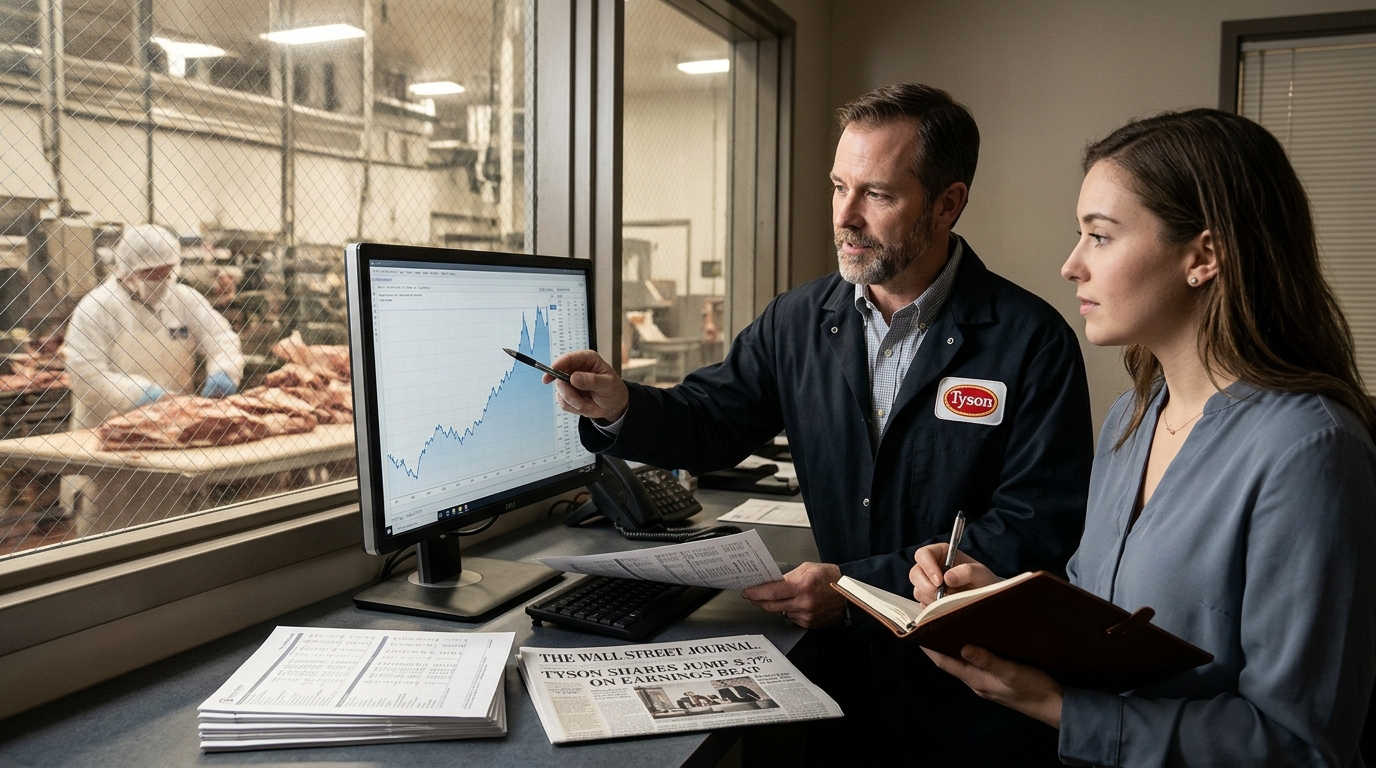
Hey there, bargain hunter. Last week the bears had a clean story: Tyson Foods was structurally broken, beef was bleeding, and EPS was down 43% year over year. Monday morning scrambled all of it. Tyson reported Q4 fiscal 2026 adjusted earnings of $0.61 per share on revenue of $14.585 billion, clearing the $0.5320 consensus estimate and topping the $14.10 billion revenue forecast by roughly $485 million. The stock surged 8.7% on November 16, 2026, while the S&P 500 fell 1.9%. That is a head-turning divergence.
Scoreboard
- Q4 Adjusted EPS: $0.61 vs. $0.53 consensus (beat)
- Q4 Revenue: $14.585B vs. $14.10B estimate (beat by roughly $485M)
- Full-Year Sales: $56.419 billion, up 3.6% year over year
- Full-Year Adjusted EPS: $3.44, compared to $4.12 in the prior year
- Free Cash Flow: $1.663 billion for fiscal 2026, up $486 million
- Stock move: One of the stock’s biggest one-day gains in recent years
What Actually Happened
The beat was real. So was the damage. The beef segment posted an adjusted operating loss of $654 million for fiscal 2026. Gross profit margin contracted to 3.7% from 5.2% a year ago. On a GAAP basis, Tyson posted a loss of $0.22 per share for the quarter. The headline beat masked real operating stress.
Investors looked past that because of what comes next. Early signs of improvement are showing in heifer retention and placements, and FY27 beef is guided to between -$300 million and +$100 million, up to roughly $754 million better at the midpoint versus FY26’s loss. That is the trade the market bought.
The Business and What It Makes
Tyson is the largest U.S. protein processor, running chicken, beef, pork, and prepared foods under brands including Jimmy Dean, Hillshire Farm, and Ball Park. Adjusted sales for fiscal 2026 were $55.370 billion. In Q4, Chicken delivered sales of about $4.5 billion, up 1.3% on volume growth of 2%, with segment operating income of $389 million at an 8.7% margin. Chicken carried the company while beef hemorrhaged cash.
Is It Cheap?
This is where it gets complicated. Valuation snapshots put Tyson near 17 times forward earnings, compared with approximately 13.6 times for Pilgrim’s Pride and 14.5 times for Hormel Foods. You are paying a premium for the beef recovery option. The dividend yield sits around the low-to-mid 3% range, but the payout ratio is elevated on an earnings basis, which raises questions about sustainability. Effective November 13, 2026, the board increased the quarterly dividend to $0.52 per Class A share. Streak intact, cash coverage thin.
An elevated payout ratio is not unique to protein processors right now. Nike’s FY27 earnings guidance came in 25% below consensus, raising the same dividend sustainability question at a very different company.
Tyson ended the year with $4.1 billion of liquidity and net debt-to-adjusted EBITDA of 2.1 times. The balance sheet can absorb another rough beef year. Whether it has to is the question FY27 will answer.
Bull / Base / Bear
Bull: Cattle supply normalizes faster than expected. Beef swings from a $654 million loss toward the top of the $100 million gain guidance. Chicken and prepared foods hold margin. Free cash flow covers the dividend with room to spare.
Base: Beef improves modestly, sitting near breakeven. FY27 adjusted operating income lands somewhere in the $1.7 billion to $2.15 billion guidance range. Dividend is maintained. Stock trades sideways or slightly up from current levels.
Bear: Cattle cycle drags longer than management projects. FY27 sales are guided down 3.5% to 5.5%. Payout ratio stays elevated. Any dividend cut would quickly reprice this stock.
The cattle cycle is not the only cost pressure Tyson is navigating. Record diesel prices are splitting freight and farm budgets in ways that hit protein processors on both the input and distribution side.
Action Plan
Do not chase the 8.7% gap. The stock opened Tuesday, November 17, 2026, at $63.72, already pricing in meaningful beef recovery. If beef improvement is your thesis, consider building a position in thirds: a starter here, a second tranche if the stock pulls back toward $58 to $59, and a final add after Q1 FY27 results confirm the beef trajectory.
Cheap Investor Checklist
- Beef segment operating income: watch for a swing toward positive territory in Q1 FY27
- Free cash flow vs. dividend: FY26 free cash flow of $1.663 billion should not collapse if the dividend is to feel comfortable
- Chicken margin: 8.7% in Q4 is the floor to defend
- Prepared Foods volume: any acceleration here reduces beef dependency
- Cattle supply data: heifer retention trends are the leading indicator
- Net debt-to-EBITDA: needs to stay below 2.5x to protect dividend capacity
- FY27 capex: guided at $1.1 billion to $1.4 billion, watch for cuts as a stress signal
Bottom Line
If beef is a cycle, Tyson is cheap. If it is structural, that 3% plus yield has a haircut coming. The company beat on both lines, generates real cash, and raised its dividend again in November 2026. But at about 17 times forward earnings with an elevated payout ratio, you are not getting a margin of safety on the valuation. Buy it in stages, watch the cattle data monthly, and let Q1 FY27 results be your confirmation before committing full size.