Hey there, bargain hunter. A Wisconsin company that used to make radiators for trucks just became a $7.5 billion to $8 billion takeover target overnight. That should make you look twice at every other unloved industrial heat-exchanger name still sitting at pre-AI prices.
Scoreboard
Modine Manufacturing grew its share price by 27.86% on Friday, November 13, 2026, to finish at $135.66, as investors bought shares following reports it is in talks with Samsung Electronics. Ahead of the news, Modine had a market cap of about $5.6 billion. By Friday’s close, it was roughly $7.3 billion. Samsung is in talks to acquire Modine for an estimated $7.5 billion to $8 billion.
What Actually Happened
Samsung Electronics is in talks to acquire Modine Manufacturing, a maker of cooling systems for data centers, with a transaction possibly coming together in the coming weeks, according to people familiar with the matter who asked not to be identified. Discussions are still in early stages, there is no guarantee of a sale, and another suitor could also make a bid.
The stock had fallen around 15% since November 3, 2026, when quarterly results underwhelmed investors. Samsung is not a cooling novice. This would not be Samsung’s first move in the category: the company acquired Germany’s FläktGroup for €1.5 billion in 2025, though a Modine takeover would be a far bolder cheque. If the price exceeds the roughly $8.0 billion Samsung agreed to pay for Harman in 2016 (completed in 2017), the deal could become the largest acquisition in the company’s history.
What the Business Actually Does
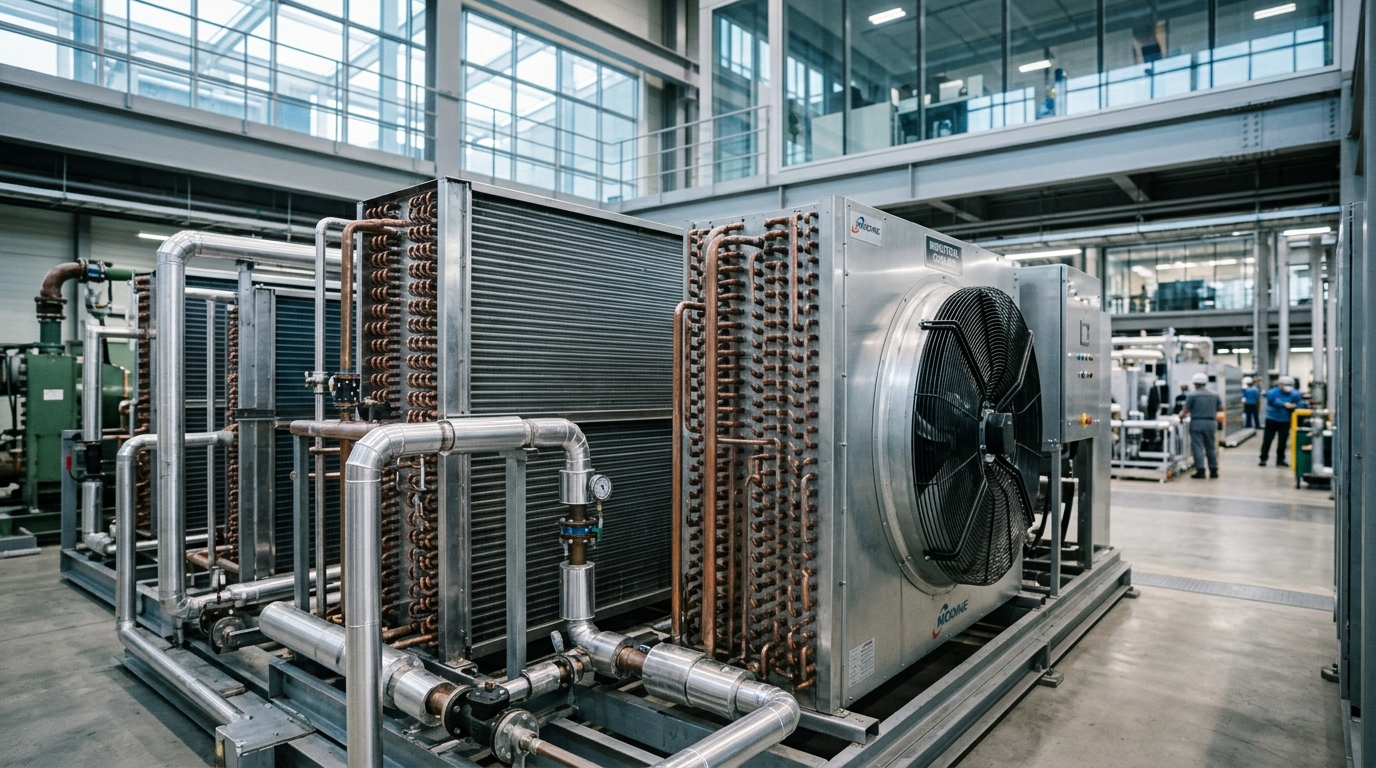
On October 1, 2026, Modine completed the spin-off of its Performance Technologies business in a Reverse Morris Trust transaction with Gentherm, retaining its Data Centers and Commercial HVAC segments to become a pure-play climate solutions company. Modine acquired cooling firm Airedale in 2005 and is now one of the largest end-to-end cooling solutions providers in the data center industry, with technologies covering liquid cooling as well.
Data That Matters
- Q2 fiscal 2027 net sales: $994.4 million, up 35% year-over-year; adjusted EBITDA of $136.2 million, up 31%.
- Data center-specific sales rose 95% over the prior year, primarily driven by North America hyperscale demand.
- Data center adjusted EBITDA increased 66%, with a 15.4% adjusted EBITDA margin.
- Full-year fiscal 2027 guidance (continuing business): net sales of $3.1 billion to $3.2 billion, up 50% to 55%; adjusted EBITDA of $470 million to $500 million.
Is It Cheap? And Who Else Might Be?
Modine at $135 is no longer priced for a world that doesn’t know about data centers. But Samsung’s bid tells you exactly what the industry believes thermal management is worth. That rerating logic extends to peers still carrying pre-AI industrial multiples.
Johnson Controls fell 10% in January following concerns that Nvidia’s Rubin chip platform could reduce cooling requirements, with Trane Technologies dropping 8% and Carrier Global declining 5% as investors assessed the implications. Those selloffs created entry points that the Samsung-Modine deal now argues were overdone.
The selloff logic matters because it was never isolated to cooling stocks. Industrial names tied to AI infrastructure spending outperformed tech broadly in the first half of 2026, a rotation the chiller scare briefly interrupted.
Consider the spread: Vertiv is clearly priced for sustained data center cooling demand. Barclays noted the Nvidia chiller concerns most affect companies focused on space cooling and air handling with minimal liquid cooling presence, with Johnson Controls, where data centers represent a low-double-digit percentage of total sales, appearing most exposed. That same concentration risk cuts both ways: JCI is cheap precisely because the market priced in secular displacement. If Samsung is willing to pay 7-8x sales for Modine’s air handling and liquid cooling capability, that thesis looks shakier.
Bull / Base / Bear
Bull: Samsung closes the deal at $8 billion, triggering a re-read of the entire industrial cooling complex. JCI and Trane rerate toward Vertiv-adjacent multiples. SPX Technologies, with narrower HVAC exposure, gets scoped by another strategic buyer.
Base: Samsung deal closes or gets bid up by a rival suitor. Modine holds $130-plus. Peers drift higher but not dramatically. Investor day on November 18 adds upside via hard guidance numbers.
Bear: Talks collapse. Modine shares, which had been steadily declining since mixed fiscal Q2 results, revert toward $100. Chiller-disruption concerns from Nvidia’s Rubin architecture resurface and weigh on the whole group through year-end.
Action Plan
MOD itself is now event-driven. Do not chase it here without sizing for a deal collapse. The more interesting trade is the adjacent one: JCI and TT sold off hard on a chiller-disruption scare, and Samsung just told you what a buyer pays for the real thing. Modine’s analyst and investor day on November 18 is the next concrete catalyst, where CEO Neil Brinker and CFO Mick Lucareli are expected to present updated multi-year financial targets. That event is worth watching even if you are positioned in a peer, not in MOD itself.
Scale-in framework: a third now in JCI or TT if you believe the Samsung deal legitimizes the structural cooling thesis; hold the rest for confirmation from the November 18 investor day or any rival bid announcement.
Cheap Investor Checklist
- Does Samsung confirm or deny the deal before November 18?
- Does a rival bidder (think Carrier, Trane, or a private equity firm) emerge?
- Does Modine’s investor day raise or narrow fiscal 2027 guidance bands?
- Does data center revenue sustain 90%-plus growth in Q3, or does hyperscale ordering slow?
- Do JCI and TT retrace their January chiller-scare losses as the M&A logic sinks in?
- Does Vertiv’s backlog, last reported at roughly $15 billion, hold or grow in its next update?
- Does Modine’s adjusted EBITDA margin reach the 20% Q4 target management outlined?
Bottom Line
If Samsung closes this deal near $8 billion, it confirms that thermal management for AI infrastructure is worth a full strategic premium, not an industrial discount. The bargain, at that point, is not Modine. It is every peer the market sold off on a chiller-disruption scare that a Korean conglomerate just proved wrong with its checkbook. Watch the November 18 investor day and any rival bid. If neither materializes and the deal collapses, treat the bounce back toward $100 on MOD as the market resetting the base case, not an indictment of the broader cooling thesis.