
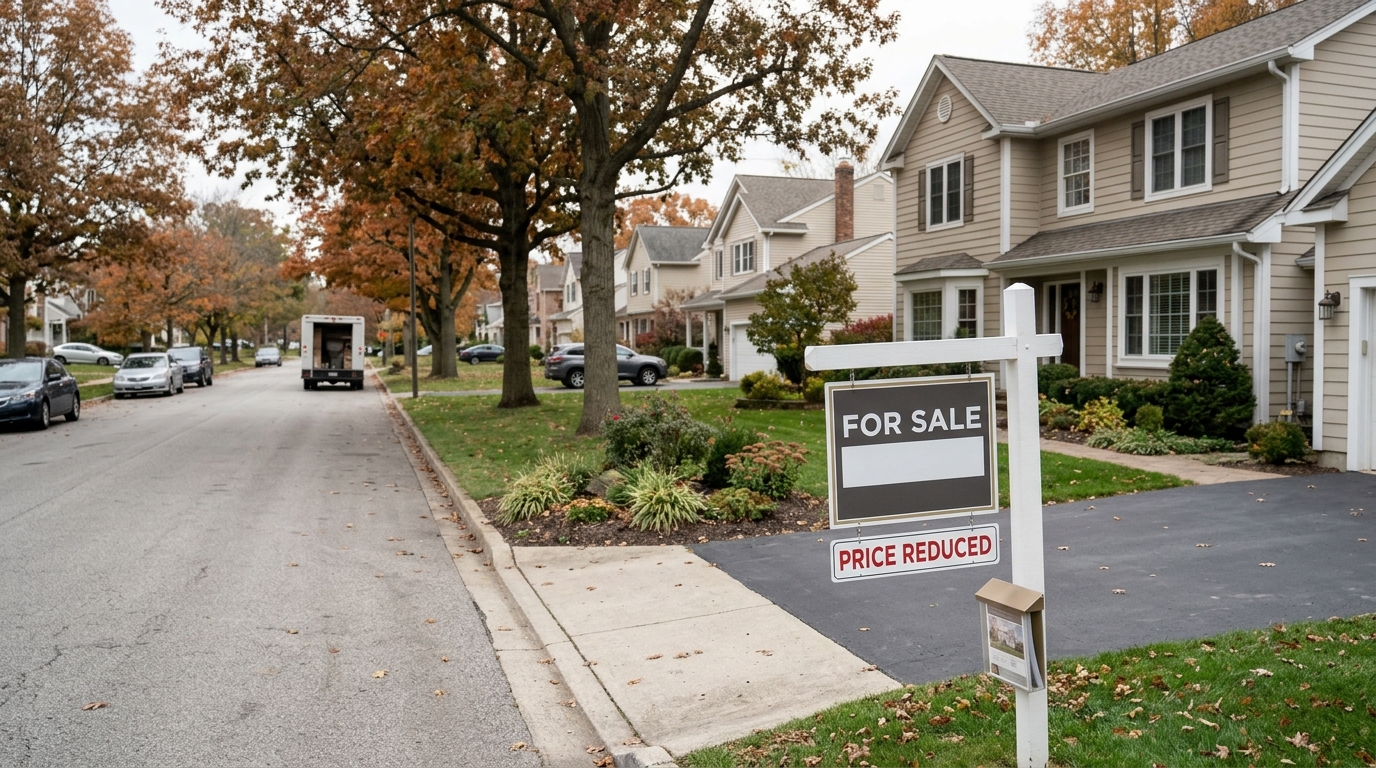
The housing market just produced its most contradictory data point in years. Existing-home sales fell 5.5% in October to a seasonally adjusted annual rate of 3.75 million, the lowest rate since August 2010, according to the National Association of Realtors. At the same time, the median existing-home price was $416,700, up 0.4% from a year earlier. Volume at a generational low, prices still climbing. For anyone trying to read housing as a store of wealth, that combination deserves a closer look.
Why Prices Hold Even as Sales Collapse
The answer is supply, or the near-absence of it. The average rate on a 30-year fixed mortgage rose to 7.33% in October from 6.86% in September and 6.25% a year earlier, according to Freddie Mac figures cited by NAR. Owners with 3% pandemic-era mortgages have no financial incentive to sell. That lock-in shrinks the pool of available homes and keeps prices from correcting even as buyers walk away.
It is very likely 2026 will end with a total of fewer than 4 million existing-home sales for the first time since the mid-1990s. And the pipeline ahead looks no better. The concern is that October’s decline may be followed by another round of disappointing closings, as signed contracts hit a record low in September, with closings catching up to what buyers had already stopped doing.
Builders are equally discouraged. In Zonda’s October builder survey, 86% reported slower-than-expected demand, buydowns remain prevalent but are not particularly effective, and 87% of builders anticipate starts will be flat or down in 2027. Meanwhile, credit conditions on loans for residential land acquisition, development, and construction were still tightening in Q3 2026, with NAHB’s net easing index posting a third-quarter reading of -15.3, the nineteenth consecutive quarter of reported tightening.
What This Means for Housing as Wealth
Frozen turnover cuts two ways for homeowners. Your equity is intact, the year-over-year price gain confirms that. But the asset is illiquid in a way it rarely has been. Home Depot’s CFO has said housing turnover has been at roughly 3% of the housing stock for about four years, a historical low with no sign of an inflection point. When fewer homes change hands, fewer renovation dollars flow. Home Depot itself has guided fiscal 2026 comparable-sales growth of flat to 2%, suggesting it can navigate subdued housing demand while positioning for eventual recovery. HD’s Pro segment is absorbing some of the slack, but the big-ticket remodel category, the highest-margin work, stays depressed until people move.
Which Housing-Linked Holdings Survive
Among builders, the divide is structural. D.R. Horton has built its model around affordability, and the company has said its average closing price runs about 30% below the national average for new homes. That price point, combined with in-house financing and the ability to offer rate buydowns at scale, gives DHI more room than peers when rates are punishing. NVR takes a different approach. NVR’s lot acquisition strategy relies heavily on contracts with third parties and finished-lot purchase agreements, which the company says reduces the financial risks associated with direct land ownership and development. The model does not eliminate rate sensitivity, but it reduces the balance-sheet risk that can turn a slow market into an existential one.
Lennar (LEN) faces the most pressure. Lennar is down about 19% year to date in 2026 and about 31% over the last 12 months (through the close on November 13, 2026). The valuation reflects real earnings compression, not just sentiment.
Risks to Monitor
NAR Chief Economist Lawrence Yun sees potential for a rebound if borrowing costs ease, saying that given the current underwhelming sales pace during a period of consistent job growth, there could be sizable pent-up demand if mortgage rates decline. That is the bull case. The bear case is simpler: mortgage rates hit their highest level in nearly three years in October, making buying a home more challenging at a time when prices are already high. With lender standards tightening for 19 straight quarters in builders’ AD&C financing surveys, the catalyst for broad relief is not obvious.
Daily Wealth Takeaway
A market where sales volumes hit 16-year lows while prices keep rising is not broken, it is immobilized. For long-term wealth building, the distinction matters. Homeownership still preserves purchasing power when supply stays constrained. The opportunity in housing-linked equities, however, belongs to builders with balance-sheet discipline and sub-market price points, not to the broad sector. Volume recovers before prices do when rates finally fall. Position accordingly.