Hi,
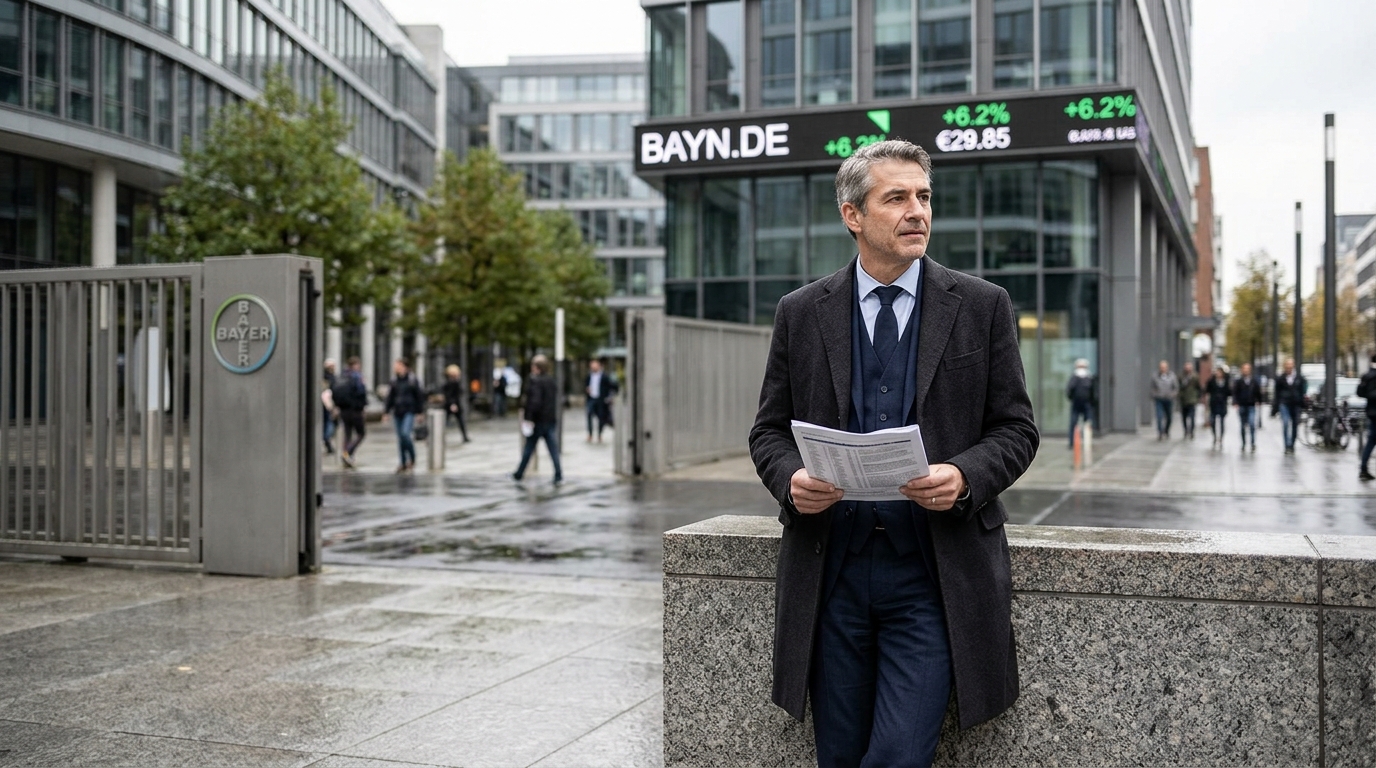
In 1965, about 42% of American adults shared the same habit. By 2022, it was under 12%.
You can probably guess the habit. The industry that may be next is the surprise.
Along the way, the companies behind that first habit agreed to an estimated $206 billion in settlement payments.
The industry didn’t vanish. But the customers, the rules and the money all moved.
Now a similar kind of pressure may be building around another industry, one the world can’t live without.
Here’s the twist: people could quit that first habit. Nobody can quit pest control.
So if the pressure keeps building, the demand doesn’t disappear. It has to go somewhere.
Our research desk boiled the whole story down to a 60-second read. It starts with one question:
Corning’s Fiber Is Now Half Its Business. Next Stop: Servers.
Hey there, bargain hunter. Corning just reported Q3 2026 earnings, and the number that matters most is not the headline beat.
Scoreboard
Core earnings came in at 91 cents a share, up 36% year over year, as Optical Communications sales rose 44% to $2.38 billion. Total core sales grew 19% to $5.08 billion. Gross margin expanded 150 basis points to 40.5% and operating margin widened 310 basis points to 22.7%. This is not a company squeezing a mature product. It is a company running uphill and accelerating.
The Real Reason
Wall Street had been modeling Corning as a steady fiber supplier. The Q3 report rewrites that framing. Optical now sits at about 47% of company revenue, and hyperscalers are providing upfront cash to help fund fiber capacity and reserve supply. That is not a commodity dynamic. That is a toll road.
The annualized sales run rate hit $20.3 billion, ahead of the $20 billion target Corning had set for the end of 2026. They beat their own milestone a quarter early.
What Corning Actually Sells
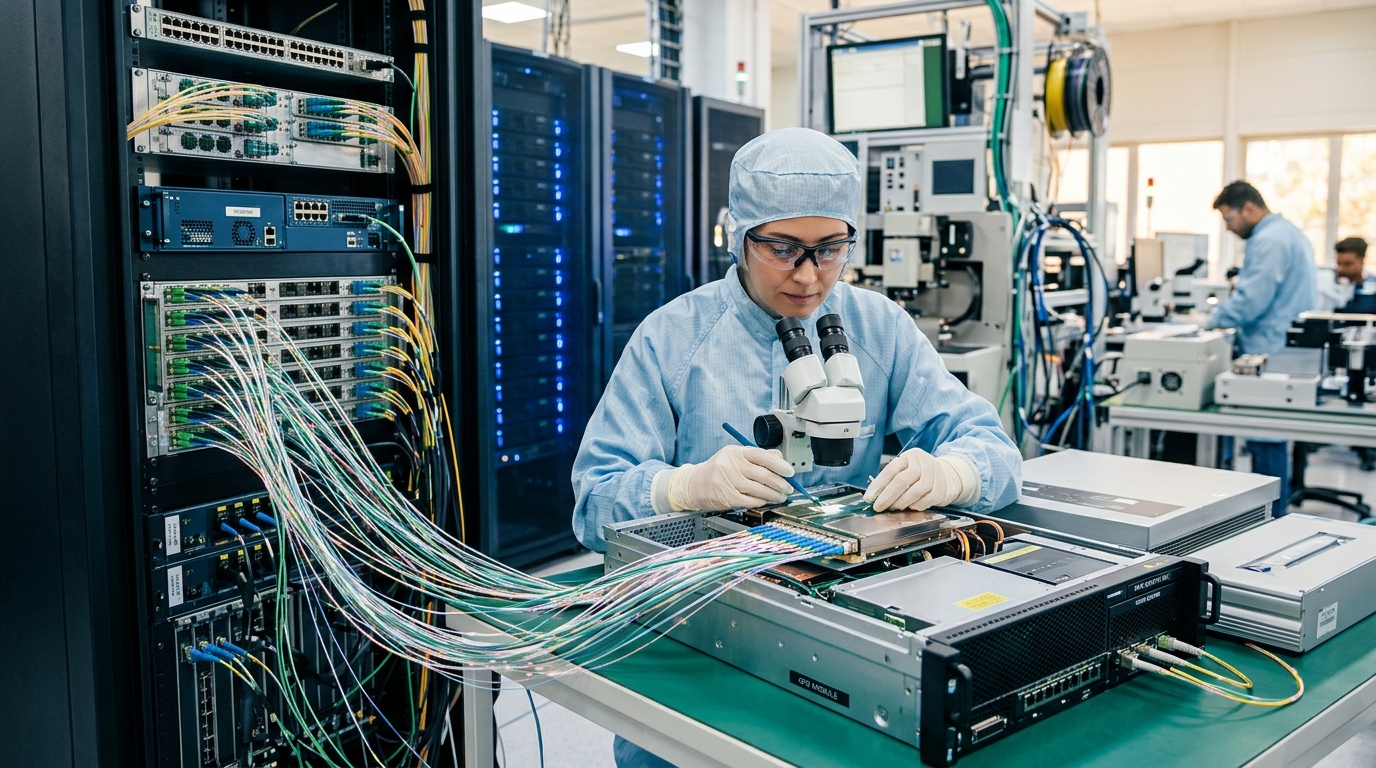
Most investors know Corning as the glass company. The real business today is optical connectivity at every layer of AI infrastructure. Products span multicore fiber for density, micro cable for inter-campus links, next-generation connectors, and co-packaged optics systems designed to scale out larger AI networks. Copper connections inside data centers have hit their limits under AI workloads. Corning’s co-packaged optics keep data in optical form until it reaches the GPU or switch. That last step, fiber-to-the-chip, is the angle the market is still underpricing.
The Numbers That Matter
- Free cash flow: $661 million in Q3 after investing more than $500 million in capacity.
- CapEx: approximately $2 billion planned for full-year 2026, directed primarily at Optical Communications expansion.
- Q4 guidance: core sales of $5.2 billion to $5.3 billion, representing roughly 19% growth year over year, with core EPS of 96 cents to $1.00, implying 36% growth.
- Full-year 2026 EPS consensus has moved to about $3.3, with 2027 estimates around the low-$4s.
- Nvidia partnership: Corning says it will increase its U.S.-based optical connectivity manufacturing capacity by 10x and expand its U.S. fiber production capacity by more than 50%.
Is It Cheap?
The stock trades at roughly the high-30s times estimated 2026 earnings. That multiple stings at first. But GLW’s Springboard roadmap has already delivered operating margins above 20% ahead of plan, with Q2 2026 core EPS up 30% year over year. The company targets a 19% sales CAGR from Q4 2026 to Q4 2030, with earnings growing faster than sales. Paying up for a business compounding earnings at that rate, with customer deposits de-risking the capex, is a different conversation than paying up for a static industrial.
Corning is not the only infrastructure name where the business is outrunning the stock price. Broadcom posted 221% AI revenue growth and a $230 billion roadmap while its shares sat 26% below their high.
Bull / Base / Bear
Bull: Co-packaged optics adoption accelerates. A full shift to optical scale-up could materially increase fiber content per GPU versus today’s configurations. Revenue trajectory to $30 billion by 2028 looks conservative.
Base: Hyperscaler capex holds at current levels. Corning hits its $40 billion sales target by 2030 roughly on schedule, and margins grind higher as capacity scales.
Bear: AI infrastructure spending cools or consolidates among fewer providers. Prepayment agreements protect near-term revenue, but a multi-quarter pause in hyperscaler ordering would expose the premium multiple immediately.
The bear case hinges on whether hyperscaler capex actually cools — and AWS’s margin expansion while absorbing record infrastructure spend is the clearest data point on that question. Amazon’s cloud business grew 37% while simultaneously running its largest-ever buildout, and operating margin still expanded.
Cheap Investor Checklist
- Optical Communications quarterly revenue: watch for continued hold above $2.3 billion
- Operating margin trajectory: target 23%+ in Q4 2026
- Co-packaged optics: monitor for any named deployment timeline from a hyperscale partner
- Hyperscaler prepayment disclosures: any new customer-funded capacity agreements
- Free cash flow conversion: keep adjusted FCF above 13% of core sales
- CapEx discipline: full-year 2026 spend should stay near $2 billion, not balloon past it
Bottom Line
If co-packaged optics scales on the 2028 timeline management has outlined, the fiber content per AI server jumps sharply and this quarter’s 44% Optical growth looks like a warm-up. If hyperscaler spending stalls, the multiple will compress fast. The prepayment structure is the margin of safety. Size accordingly, and watch the co-packaged optics newsflow like it is the next product cycle, because it is.