
October 11, 2026
Bonus Content: A Vitamin-Sized Implant Just Beat Humira in a Clinical Trial
Hey,
From September’s Fed statement…
“Inflation remains elevated. Today’s policy action will support a timelier return to the Committee’s 2 percent goal.”
That’s the first rate hike since 2023. And they already signaled another one is on the table.
You don’t need a 400-page playbook on what the Fed might do next. You need a simple, defined step-by-step way to find, set up, and trade the market in this environment.
That’s why I want you to have this…
11-Hour Options For Beginners guide.
100% free download.
Grab it now while it’s still live.
In your corner,
Dave Aquino
Base Camp Trading
A Vitamin-Sized Implant Just Beat Humira in a Clinical Trial
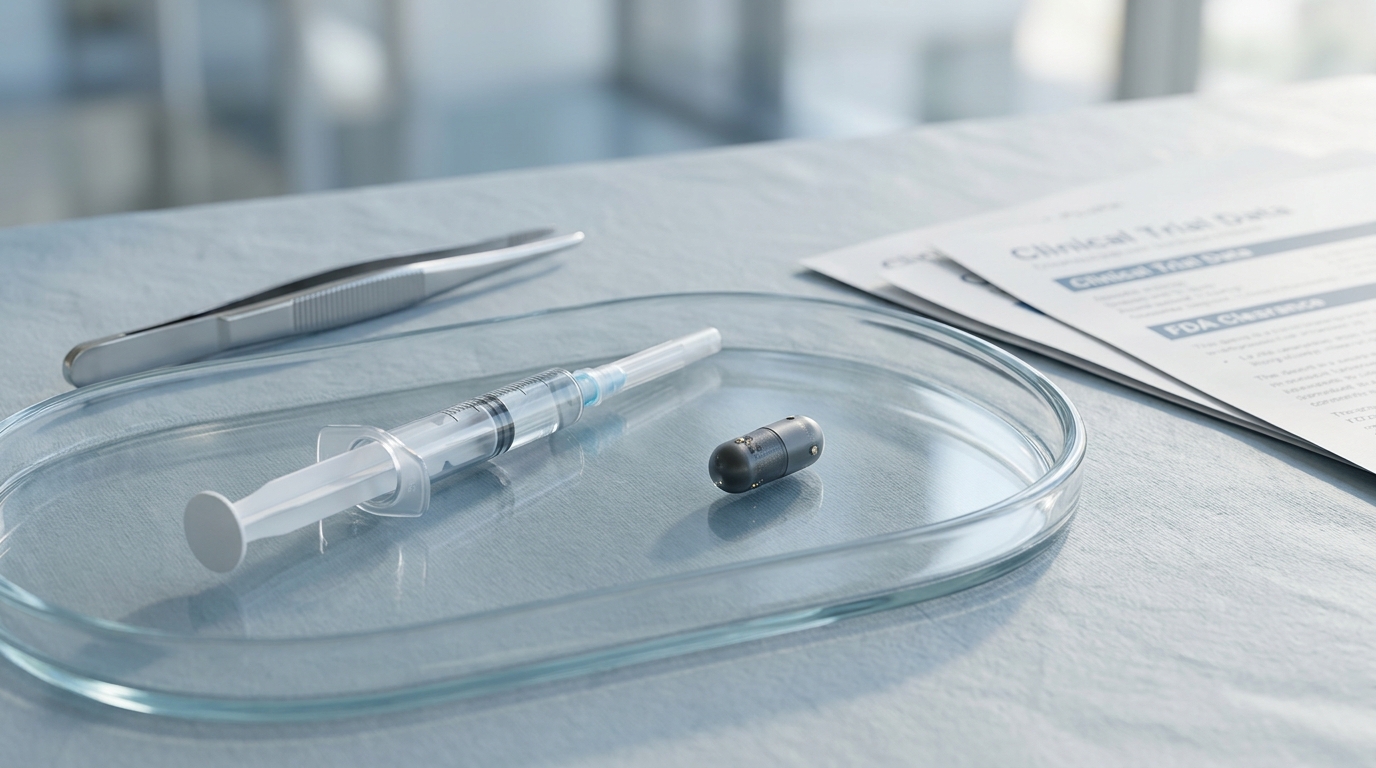
Hey there, bargain hunter. One of the most widely used RA drug classes just got a competitor. It does not come in a syringe. It comes in a device the size of a multivitamin.
Scoreboard
SetPoint Medical’s SetPoint System received FDA approval on July 30, 2025 for rheumatoid arthritis. A short neck procedure places the neurostimulator. Each day, the device delivers electrical stimulation to the vagus nerve, activating what researchers call the cholinergic anti-inflammatory reflex. The nervous system quiets an overactive immune response without broadly suppressing it systemically.
The pivotal trial enrolled 242 people with moderate-to-severe RA. After 12 weeks, 35.2% of active-device patients hit the clinical improvement threshold versus 24.2% in the control group. Every enrollee had already failed biologic or targeted synthetic DMARDs.
The Real Reason This Is Not Just a Clinical Story
Biologics for RA can cost tens of thousands of dollars per patient per year, indefinitely. SetPoint’s device is a one-time implant. The reimbursement math is not settled publicly yet, but the structural argument is plain: insurers would rather pay once than pay forever. That is the angle the commercial market is still working out.
SetPoint is also moving. The company initiated enrollment in a pilot multiple sclerosis study in April 2026 that plans to enroll up to 60 participants, and its Crohn’s disease work has reported clinical improvements in biologic-refractory patients in earlier studies using the Crohn’s Disease Activity Index. Two more indications means three potential FDA franchises from one platform.
Data Scorecard
- FDA approved: July 30, 2025, rheumatoid arthritis
- Trial size: 242 patients, biologic or targeted synthetic DMARD experienced RA
- Response rate: 35.2% active vs. 24.2% sham at 12 weeks
- Annual biologic cost comparator: often tens of thousands of dollars per patient
- Pipeline: Crohn’s disease program, MS pilot study enrolling up to 60 participants (initiated April 2026)
- Estimated valuation: ~$650 million; total funding ~>$518 million
- Estimated annual revenue: not publicly reported by the company
- Broader market: bioelectric medicine market estimates vary widely, depending on definitions
Is It Cheap?
SetPoint is private. No P/E to quote. But GSK and Alphabet’s Verily committed up to $715 million to their joint venture, Galvani Bioelectronics, to pursue the same nerve-modulation thesis. When two large-cap companies bet that size on a concept, the concept is not speculative. The question is who reaches commercial scale first. SetPoint has the FDA stamp. Galvani does not.
Bull / Base / Bear
Bull: Crohn’s and MS trials reach pivotal scale, additional FDA approvals land by 2029, and payers adopt the device as a cost-offset tool against perpetual drug spend.
Base: RA adoption is slow. Surgeon training and payer negotiations drag. SetPoint reaches an IPO or acquisition around 2028 at a moderate premium.
Bear: Coverage codes lag, the 35% vs. 24% efficacy gap underwhelms payers, and long-term signal degradation from foreign body response erodes outcomes.
Bottom Line
If payers conclude that one procedure beats decades of annual drug bills, SetPoint’s addressable market is enormous. The clinical proof exists. The commercial proof is what 2026 and 2027 will answer.