August 3, 2026
The Bond No One Wants Is Worth Owning
Featured: The Bond No One Wants Is Worth Owning
You worked hard to build your retirement savings.
But with Washington looking for new tax revenue, many Americans are asking whether retirement accounts could eventually become a target.
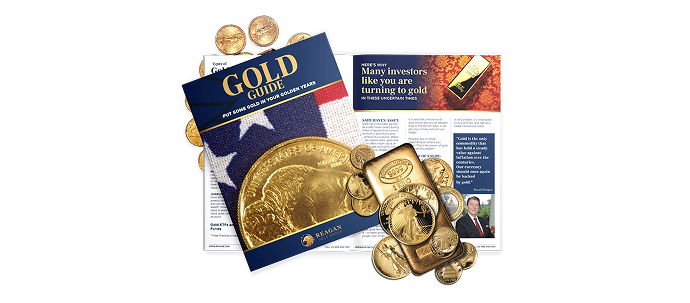
Reagan Gold’s free guide explains why gold is getting renewed attention from retirement savers.
You’ll learn how physical gold works, why it has been trusted for generations, and how a Gold IRA may help diversify your retirement strategy.
GET YOUR FREE GOLD GUIDE TODAY
GET YOUR FREE GOLD GUIDE TODAY
The Bond No One Wants Is Worth Owning
Hey there, bargain hunter.
Here is a question worth sitting with: when was the last time the boring part of the bond market was actually interesting? Not in a glossy, Wall Street pitch deck kind of way. Genuinely interesting, in the sense that patient investors are being compensated for waiting, and the math actually works.
That moment might be right now. And almost nobody is talking about it that way.
Most investors treat short-term bond ETFs like a waiting room. You park cash there until something with a better story comes along. That framing is costing people money.
What Actually Just Happened
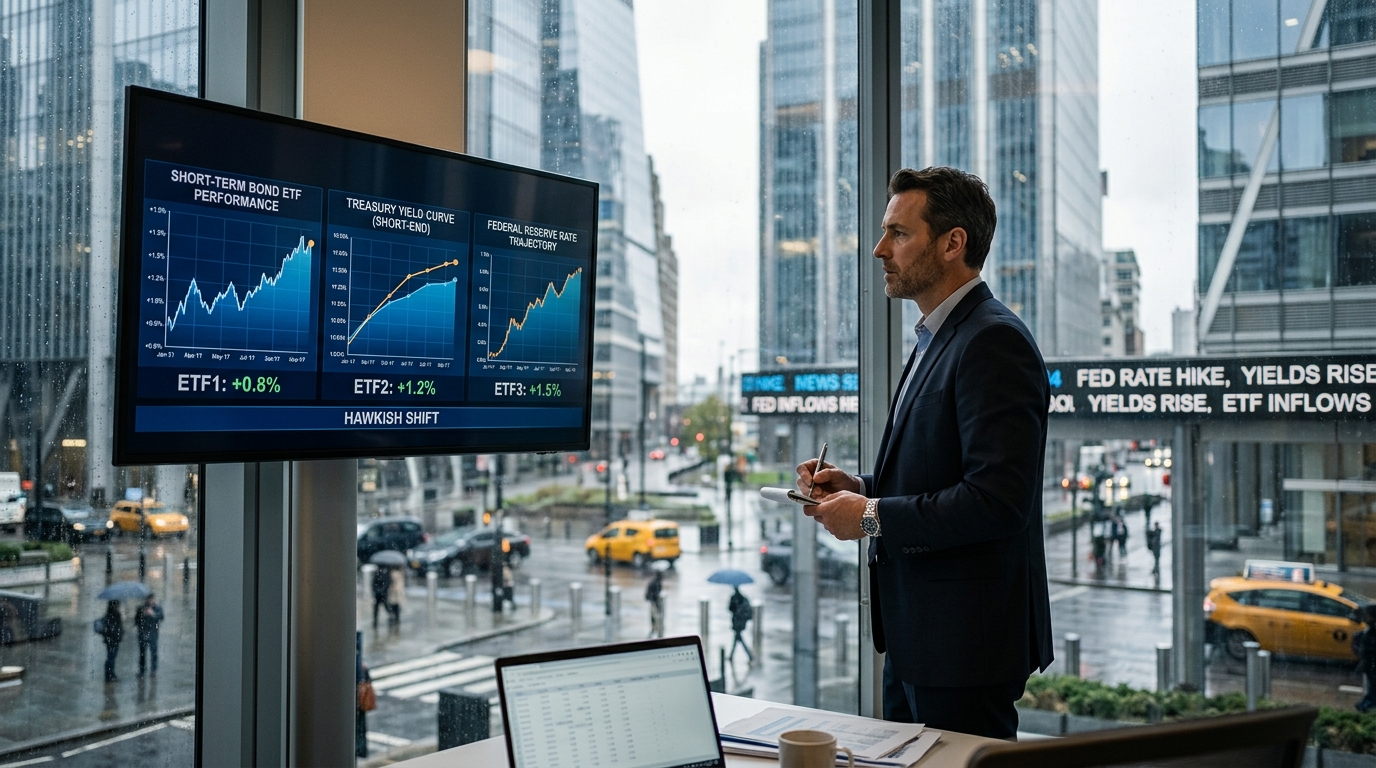
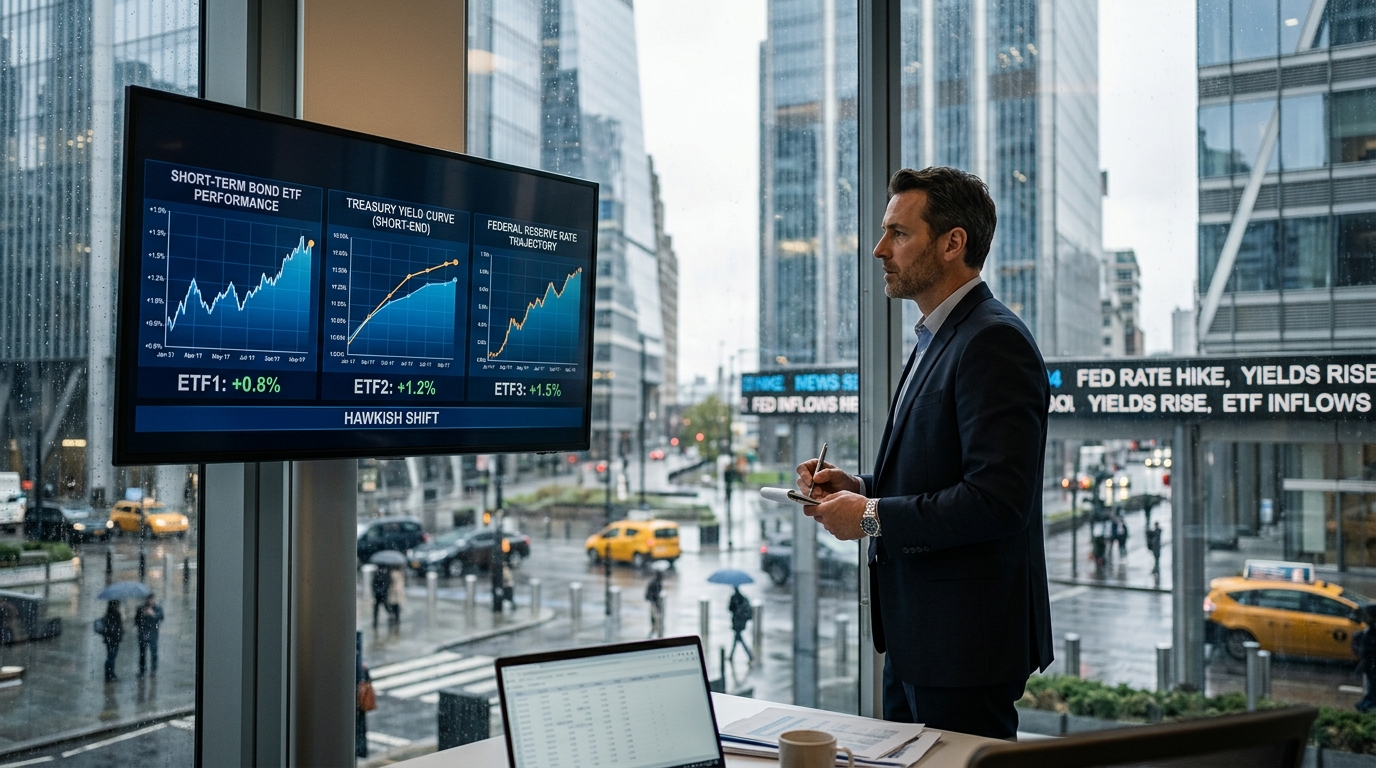
The Federal Reserve voted 9-3 on July 29 to hold the federal funds rate steady at 3.50% to 3.75%. That sounds unremarkable until you look at who dissented. Three regional bank presidents — Beth Hammack of Cleveland, Neel Kashkari of Minneapolis, and Lorie Logan of Dallas — all wanted a hike. Not a hold. A hike.
That is the first time since September 2016 that three policymakers dissented with a unified directional view. The committee is not a wall of consensus. It is cracking, and it is cracking upward.
The June dot plot made the internal tension visible. The full committee penciled in at least one quarter-point increase by year-end 2026, with Fed officials projecting year-end rates between 3.6% and 4.1%. That is a meaningful upward shift from the March projection of 3.25% to 3.75%. Meanwhile, the next FOMC meeting is September 15-16, and it will include a fresh Summary of Economic Projections. In other words, the committee will have to show its cards again.
Markets are currently pricing in two 25-basis-point hikes in 2026. That is not the base case most income investors have built their portfolios around.
Elon Musk: “The Only Thing That Can Solve It”
trillion debt crisis. He predicts it will happen within three years. One Wall Street veteran has identified a single fund at the center of this AI buildout – and you can get in for less than $20.
The backdrop underneath all of this: US inflation was running at 4.2% as of the June FOMC meeting. The committee’s inflation target is 2%. That gap has existed for more than five years. And now you have three dissenting votes and a new Fed Chair, Kevin Warsh, who has publicly called inflation “a choice” and has expressed skepticism toward the Fed’s old habit of telegraphing policy in advance.
The short end of the curve does not need a cut to be interesting. In an environment where the next move might be a hike, it is already doing its job.
The Cash Pile Nobody Talks About
Slight tangent, but it matters.
Total money market fund assets hit $7.92 trillion for the week ended June 17, 2026, according to the Investment Company Institute. As of the week ended July 29, that figure stood at $7.85 trillion. Call it a rounding error in terms of the broader trend. The point is that an enormous wall of cash is sitting in instruments that float on overnight rates. The moment the Fed eventually eases, those yields reprice lower immediately. There is no lock-in. No duration. No cushion.
Short-term bond ETFs solve for exactly that problem. They give investors a way to capture the current yield environment across a 1-to-5-year window rather than just floating on whatever the overnight rate happens to be. If you believe the next move is a hike, the income story gets better, not worse. If you believe the Fed eventually eases, owning some duration at today’s levels is a reasonable hedge. Either way, you are not just waiting.
Three Funds. Three Different Bets.
All three ETFs covered here share the same 0.03% expense ratio. That is not a differentiator. What separates them is what they own, how much credit risk they carry, and how they behave when conditions shift.
VCSH: The Income Argument
The Vanguard Short-Term Corporate Bond ETF focuses on investment-grade corporate bonds in the one-to-five-year maturity range. It carries a dividend yield of approximately 4.3% and posted a one-year return of 6.98% as of early 2026. All at a 0.03% expense ratio. That yield-for-cost ratio is genuinely hard to replicate at the risk-free end of the curve right now.
The trade-off is credit exposure. VCSH leans into corporate bonds, which means BBB-rated issuers represent a meaningful portion of the portfolio. Investment-grade still, but the lowest rung of it. If the economy softens alongside rate pressure, watch for BBB spread widening. That is the specific risk here.
For investors who are comfortable with modest corporate credit exposure and want the highest income of the three options, VCSH is the cleaner choice.
BSV: The All-Weather Anchor
The Vanguard Short-Term Bond ETF is not trying to maximize yield. It is trying to be the thing in your portfolio that does not break when something else does. About 70% of BSV’s holdings are in US government bonds, with the remainder in corporate debt. That government-heavy mix makes it more defensive than VCSH, with a yield of roughly 3.9% and a steadier ride in periods of market stress.
Its AUM is close to $70 billion. The ETF tracks the Bloomberg US 1-5 Year Government/Credit Float Adjusted Index, meaning it holds a blend of Treasuries and investment-grade corporate bonds rated BBB or above. Average portfolio duration sits around 2.6 years, which limits price sensitivity when rates move.
In a scenario where September produces a hike and credit spreads widen, BSV’s government-heavy tilt becomes an actual advantage over a pure corporate bond fund. That is the scenario worth thinking through before you decide you do not need the extra safety.
SCHO: The Treasury Purist
The Schwab Short-Term US Treasury ETF owns only US government bonds in the one-to-three-year maturity range. No corporate credit. No spread risk. A yield of roughly 3.89% as of late July 2026, an AUM of approximately $13 billion, and a beta of 0.23 relative to the S&P 500. That beta tells the real story. This instrument barely moves when equities do.
Yes, the yield is lower than VCSH. That is the cost of certainty. For investors who want income that is essentially immune to corporate credit stress, and who believe the macro path stays bumpy well into the back half of 2026, SCHO is the cleaner instrument. Less yield. More certainty. For some portfolios, that is exactly the right trade.
And here is where the Fed backdrop loops back in. Money market fund yields float with the overnight rate. SCHO locks in 1-to-3-year government yields regardless of what the Fed does at the next meeting. That is a real structural advantage in an environment where policy direction is genuinely uncertain.
The Cheap Investor Scorecard
| Criteria | VCSH | BSV | SCHO |
|---|---|---|---|
| Yield (approx.) | 4.3% | 3.9% | 3.89% |
| Expense Ratio | 0.03% | 0.03% | 0.03% |
| Primary Holding Type | Corp. Bonds | Mixed | Treasuries |
| Credit Risk | Moderate | Low-Moderate | Minimal |
| Duration Sensitivity | Moderate | Low-Moderate | Low |
| Hike Scenario Fit | Good | Very Good | Excellent |
| Recession/Spread Risk | Higher | Lower | Lowest |
| Margin of Safety | Yield cushion | Diversification | Sovereign backing |
Where the Mispricing Lives
Here is what the market is getting wrong.
Most retail investors are treating the short end of the bond market as a pure waiting room. Cash in, cash out when something more interesting comes along. That works in a rate-cutting cycle. It is a less useful posture in a cycle where the next move is being debated between hold and hike.
The mispricing is behavioral, not fundamental. These instruments are cheap to own, liquid, and generating real income at yields that would have been considered generous two years ago. VCSH at 4.3% with a 0.03% cost structure. SCHO at 3.89% with virtually no credit risk. BSV somewhere in between, holding nearly $70 billion in assets because large institutional buyers already understand the value.
Don’t dive into options blind – get a “battle-tested” strategy FREE today – ticker included
Ready to dive into options? Don’t go in blind. Dave Aquino’s 11-Hour Options for Beginners guide is so much more than just theory. Inside, he gives you a detailed, plain English walkthrough of his “rinse and repeat” strategy for consistent income in crazy markets, PLUS the exact ticker he’s used nearly 900 times with a 95.3% success rate.
Claim your copy of Dave’s 11-Hour Options for Beginners guide…HERE
The question for patient investors is whether this is temporary or structural. The argument for temporary: inflation eventually comes down, the Fed eases, and short-term yields follow the overnight rate lower. The argument for structural: a Fed Chair who does not believe in forward guidance, an inflation problem that has persisted for five years, and a committee where three members just voted to raise rates in a period of moderate economic growth.
Neither outcome is obvious. What is more obvious is that sitting in pure overnight instruments and hoping for clarity is also a decision. One that removes your ability to lock in anything.
How to Think About This
- If you think September brings a hike and credit spreads hold steady, VCSH gives you the best income with manageable downside.
- If you want duration protection and reasonable yield without making a credit call, BSV is the all-weather option.
- If you want pure Treasury exposure and minimum volatility, SCHO is the right instrument. Lower yield, higher certainty.
- If you are sitting on a large cash position in a money market fund, even moving a portion into 1-to-3-year government bonds locks in today’s rates rather than floating on whatever the Fed decides at the next meeting.
None of these is a prediction about what the Fed does in September. They are positions that work across multiple outcomes in this environment.
The short end of the bond market is not glamorous. It never has been. But a 9-3 vote with three dissenters pushing for a hike, a year-end rate projection range of 3.6% to 4.1%, and $7.85 trillion sitting in overnight instruments that will reprice the moment the Fed eventually blinks — that is a setup worth paying attention to.
What matters is what you do while everyone else is still waiting for the story to get more interesting.
The Cheap Investor