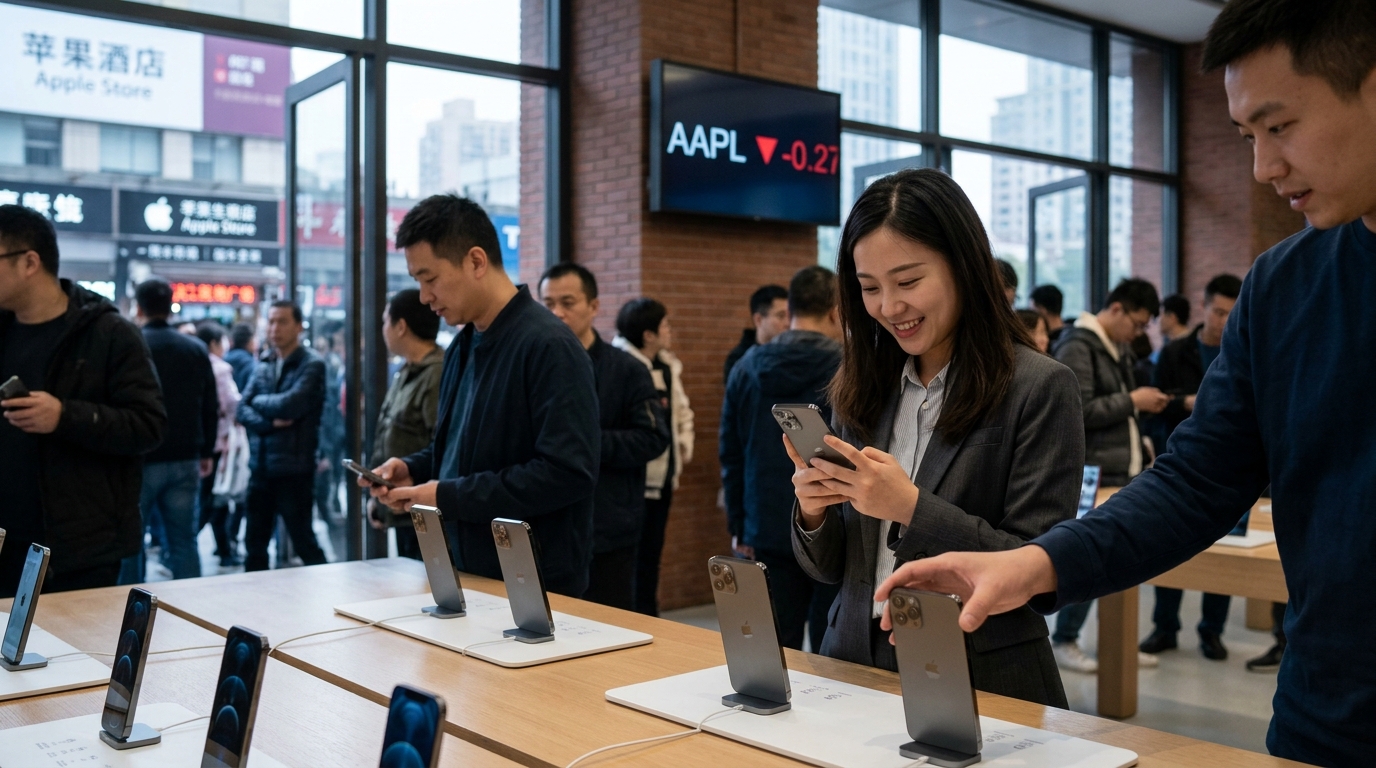
Here is the disconnect worth paying attention to. Apple accounted for 33% of smartphone sales in China during the week of September 14 to September 20, with the iPhone 18 Pro series available for only the final three days of that period. Those are not the numbers of a company losing China. Yet AAPL closed Friday at $333.69, sitting roughly 3% below its September 22 high of $345.34.
The gap between the operating reality and the stock price traces directly to one event: a federal jury in San Diego awarded Taction Technology $5.72 billion in damages after finding that Apple infringed claims from two haptics patents. Apple plans to appeal. The market reacted as though the check is already written.
The Business
The Taptic Engine generates the tactile feedback in certain iPhone and Apple Watch functions, producing the subtle taps and vibrations that accompany alerts, buttons, and notifications. Taction argues that two of its patents cover the core technology inside that engine. Apple’s response is blunt: “Apple’s Taptic Engine is fundamentally different from Taction’s technology, which Taction’s own testing of Apple’s products confirmed during trial.”
Critically, jurors rejected Apple’s invalidity arguments, but they also found that Apple’s infringement was not willful. A willfulness finding could have supported increasing the damages to as much as three times the award. The jury stopped short, and that matters for where this case ends up.
Why Wall Street Is Paying Attention
The real threat, as analysts framed it this week, is not the one-time payout. It is the possibility of an ongoing royalty on every affected iPhone and Apple Watch sold going forward. That scenario would put material pressure on hardware margins over time, and it is why some are treating this verdict as more than a legal sideshow.
That concern is real, but it is premature. A $5.72 billion one-time payment might be material in absolute terms, but Apple has substantial financial capacity to absorb it. And the verdict itself is far from settled. Taction may face an uphill battle to collect, since large patent judgments are often reduced or overturned in post-trial motions or on appeal.
What’s Driving the Opportunity
The China data is the story the market is ignoring. The iPhone 18 Pro and iPhone 18 Pro Max went on sale September 18, leaving just three days of sales in Counterpoint’s weekly tally. The firm says the new Pro models sold 12% more units in those three days than the iPhone 17 Pro series did during its launch week.
There is more runway ahead. The iPhone Duo goes on sale October 23. Apple’s earnings are scheduled for October 29, though the company has not confirmed that date. Management will almost certainly address both the China momentum and the legal overhang directly. That call could serve as the catalyst that reframes the stock for investors who have been fixated on the verdict rather than the fundamentals.
What Could Go Wrong
If hardware margins were to be compressed by new recurring royalty payments, if the current upgrade cycles disappoint, or if component costs rise faster than pricing can offset them, the stock’s valuation could start to contract rather sharply. The PE ratio sits above 38 times trailing earnings at current prices, which leaves little tolerance for a margin surprise. A settlement that includes a meaningful per-unit royalty rate would be a genuine problem, not just a headline.
Apple retains a Moderate Buy consensus among analysts, although its elevated valuation leaves less room for legal or operational setbacks. That is the honest framing.
The Bottom Line
The Taction verdict is a real legal risk attached to a company appealing what legal outlets have described as the largest patent damages award in U.S. history. But Apple is not standing still while it litigates. It just posted its strongest China iPhone launch data in years. A successful appeal or a settlement that avoids a significant ongoing royalty would remove much of the overhang. Under that framework, the verdict creates a window for a settlement that removes longer-term uncertainty without gutting margins. Investors pricing AAPL as though the royalty clock is already running are getting ahead of a legal process that history suggests will look very different by the time it concludes.