
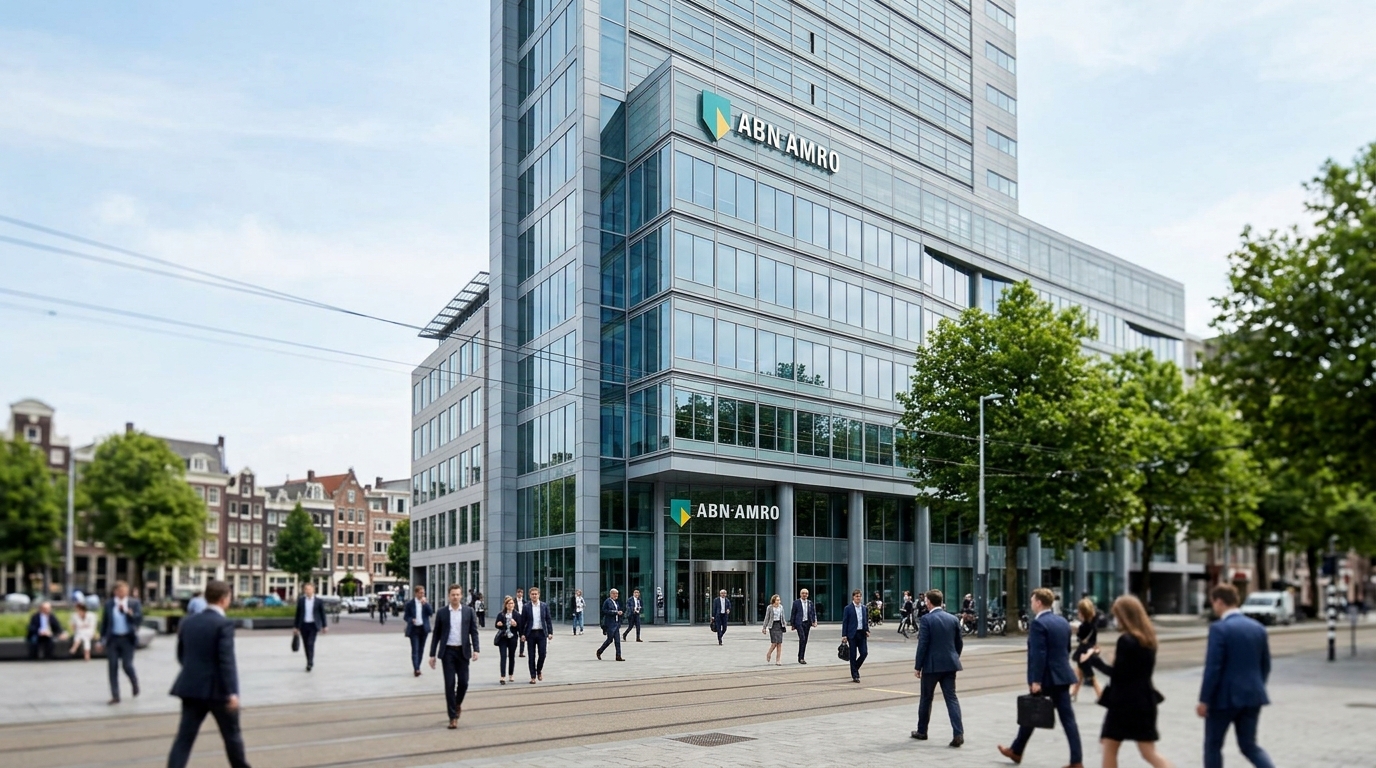
Not all bank profits are created equal. ABN Amro reported a third-quarter net profit of €940 million, beating the €782 million analyst consensus, although a one-off gain from its NIBC acquisition and a release of loan-loss provisions accounted for most of the upside. That distinction is worth pausing on before anyone gets too excited.
Here is the simplest way to think about it. When a bank lends money, it sets aside a reserve in case borrowers do not pay. If those borrowers do pay, or if the bank decides it was too cautious, it releases some of that reserve back into profit. That release looks identical to earned income on the bottom line. It is not. It is money the bank had already set aside, now being returned to the results column.
Loan losses resulted in a net release of €11 million, against an expected charge of €66 million. On its own, €11 million is modest relative to a €940 million quarter. The more meaningful question is whether the core business can sustain that profit level once the reversals stop. The answer, in this case, looks encouraging.
Net interest income increased 15% year-on-year to €1.822 billion, supported by the interest-rate environment, and commercial NII guidance for 2026 was raised to above €6.9 billion. That is real revenue, earned from lending and deposits, not from adjusting a spreadsheet.
One important correction: the bank did not say fee income stayed above €600 million for a third straight quarter. In its third-quarter reporting, ABN Amro said net fee and commission income was up year-on-year, but lower than the previous quarter due largely to non-recurring items that benefited the prior quarter.
Net profit of €940 million translated to a year-to-date return on equity of 12.5%, already exceeding the bank’s 2028 target of at least 12%. Hitting a four-year target two years early is not nothing. Given the strong progress and improved interest rate outlook, management plans to announce financial targets for 2029 when reporting fourth-quarter results.
Personal and Business Banking increased net profit by 25% quarter-on-quarter, supported by the inclusion of NIBC. NIBC, the Dutch lender ABN Amro acquired this year, was consolidated from August 1, and contributed €63 million of net interest income from that consolidation date.
Why does this matter for dividend sustainability? Because dividends come from cash, and cash comes from durable earnings. A bank that grows profit through higher loan-loss releases is borrowing from its own future; at some point those reserves are exhausted and the support disappears. A bank that grows profit through higher net interest income and fees is building something sturdier. ABN Amro kept its cost guidance unchanged at around €5.5 billion (excluding incidentals and restructuring costs) and reported a 15.3% CET1 ratio after the NIBC acquisition and continued capital optimisation, which keeps the balance sheet in solid shape for returning capital to shareholders.
The broader European context reinforces the opportunity. European bank stocks have been leading the STOXX 600 higher, with consolidation deals, including UniCredit’s pursuit of Commerzbank and Crédit Agricole’s proposal to Banco BPM to engage in discussions about creating a new leading Italian bank, reminding investors that the sector is restructuring in ways that reward stronger franchises. ABN Amro is not in play as a target, but it benefits from the same tailwind: rates that remain supportive, loan books that are holding up, and management with a clear cost discipline.
The takeaway for long-term investors is a simple one. A 52% profit jump is worth scrutinising, not celebrating blindly. When the core numbers, the interest income, the fees, the cost controls, support the headline figure, the result is credible. When only the reserve releases do, it is not. At ABN Amro this quarter, the core held up. That is the difference that decides whether a bank’s dividend is built on earnings or borrowed time.