
Hey Reader,
Ready for a pop quiz?
Thanks to a little-known investment secret…
One man was able to build a single $1,000 investment into a $70,000 income stream – after 60 years – without touching a single stock!

Click Here to Reveal the Answer!
Listen…
It doesn’t matter whether you get it right or wrong…
What matters is that you go here now for the answer.
Because I’ve just uncovered a similar opportunity that could help YOU collect double-digit income from this very sector for yourself.
As of right now, it’s still virtually unknown.
But I don’t expect it to stay that way for long.
So if you want a first mover advantage, you need to check it out ASAP.
Good investing,
Marc Lichtenfeld
Chief Income Strategist, The Oxford Club
P.S. I’d guess only 1 in 100 readers will get this right. And I’m curious if that’ll be you. Find out here.
Permian Resources Beat Q3. The Stock Fell Anyway.
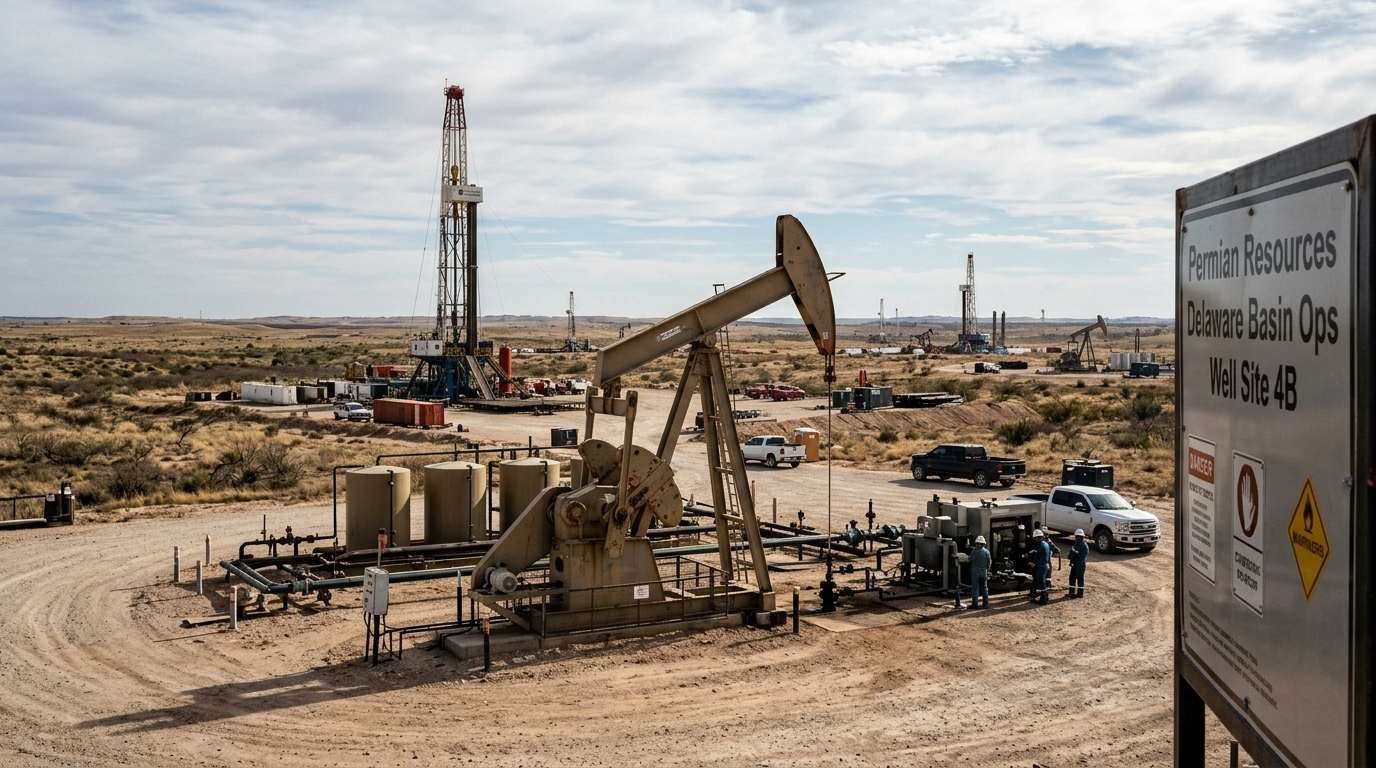
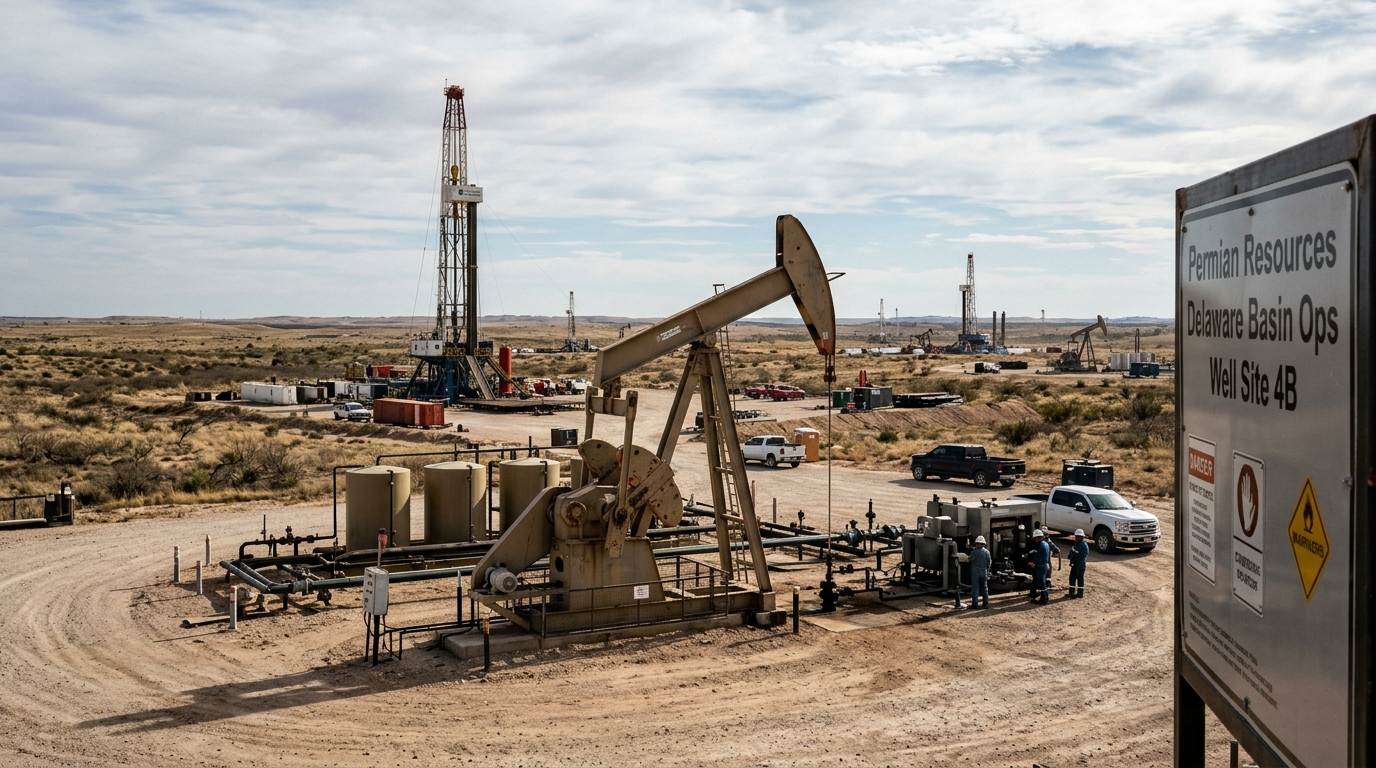
Hey there, bargain hunter. Permian Resources (NYSE: PR) just handed Wall Street a beat on every line that matters, then watched the stock drop more than 6% the same week. If that sounds familiar, good. That is usually where the opportunity hides.
Scoreboard
Q3 adjusted EPS came in at $0.69, beating the $0.61 consensus by $0.08, on revenue of $1.96 billion against expectations of $1.78 billion. Revenue was up 48.1% year on year. Oil production hit 208,029 barrels per day, up about 5% sequentially. Total output reached 457,528 Boe/d, up about 12% sequentially. The company generated $846 million of adjusted free cash flow on $518 million of capital spending.
What Actually Happened
Controllable cash costs hit $7.05 per Boe, the lowest level in company history. Management also pointed to AI-enabled artificial lift monitoring as a contributor to lower downtime. The Ridge Runner bolt-on closed October 30 producing roughly 6,000 barrels of oil per day at closing and is expected to contribute roughly 4,000 barrels of oil per day in Q4.
The muted market reaction suggests investors are weighing the updated capex range, acquisition spending, and commodity price sensitivity alongside the stronger quarterly result. Two real concerns surfaced on the earnings call: cost inflation in diesel and steel could pressure margins, and the company expects to become a full cash taxpayer in 2028, with partial tax impacts arriving in 2027.
Commodity price sensitivity is not abstract here. The geopolitical risk premium keeping WTI elevated can reverse faster than most E&P models assume.
Is It Cheap?
On the numbers we can verify from the quarter, PR is throwing off real cash. Adjusted free cash flow of $846 million in Q3 on $518 million of capex is not subtle. The question is whether the market believes that level of cash generation is repeatable when oil prices wobble and when the tax profile starts to change in 2027 and 2028.
Analysts forecast full-year EPS of $2.47, putting the stock at roughly 8.6x forward earnings at Friday’s close near $21.34.
The consensus analyst rating is “buy” with an average price target of $26.61. Wells Fargo trimmed its target from $28 to $27 but kept an overweight rating. That $26.61 average target is about 25% above $21.34.
The gap between operational excellence and shareholder returns is not unique to PR. Petrobras posted record production while investors waited to learn how much of that cash would actually reach them, a reminder that production growth and capital returns are two separate questions.
Bull / Base / Bear
- Bull: The 2026 oil production target is 202,500 barrels per day, up 13,500 barrels from the original February guidance. Q4 is guided above 210,000 barrels. At $75 WTI, free cash flow compounds quickly.
- Base: Investment-grade ratings from all three agencies reduce the cost of capital and steady bolt-on deals continue. PR re-rates toward a more typical sector multiple over 12 months.
- Bear: The company’s hedging posture has shifted toward opportunistic rather than protective, leaving cash flows more exposed if WTI drops below $65. The 2027 tax inflection also compresses reported free cash flow even if operations hold.
Action Plan
PR is not a screaming distressed buy. It is a capital-efficient operator sitting at a discount to its own sector while growing production double digits. Scale in with 50% of a target position near current levels. Add the rest if WTI pulls back toward $65 and PR dips below $19, where the free cash flow yield becomes difficult to ignore.
Cheap Investor Checklist
- Valuation multiple versus the sector median (target: close to sector average before trimming)
- Quarterly oil production vs. 202,500 Bbl/d full-year guidance
- Controllable cash costs vs. $7.05/Boe benchmark
- D&C cost per lateral foot (trend from $700 toward $650)
- Leverage ratio vs. 0.5x current level
- WTI spot price vs. $65 floor
- 2027 tax rate guidance at next earnings
Bottom Line
If oil stays above $70 and PR hits its Q4 production target of 210,000-plus barrels per day, the stock at $21 is cheap by any peer comparison. If WTI slides and the 2027 tax hit lands harder than guided, the discount narrows but does not disappear. The cost structure here is genuinely differentiated. The market is punishing execution that most E&Ps would celebrate. That gap is your edge.