Two governments moved against the global diesel market on the same day, and neither was trying to help the other. Beijing quietly froze fuel exports for October while Washington threatened to cut off diesel to France and Germany unless they release diesel from emergency reserves. The result is the same in either direction: less supply, wider margins for US refiners, and more pain for anyone who runs a truck or a combine.
What Happened
Chinese refiners suspended oil product exports for October, four people briefed on the matter told Reuters, as Beijing looks to preserve domestic stocks, a move that will further crimp war-constrained fuel markets. PetroChina cancelled several gasoline and jet fuel cargoes scheduled for October, while Zhejiang Petrochemical did not schedule exports during China’s week-long National Day holiday. Kpler estimates commercial diesel and gasoil inventories are around 20 million barrels below pre-war levels, while gasoline stocks are roughly 9 million barrels short of the threshold Beijing wants restored before allowing exports to normalize.
Beijing has yet to authorize October exports outside Hong Kong and Macau, although shipments could resume after the holiday ends on October 7 depending on domestic inventories and refinery output. Do not count on it. S&P Global warned in early September that Asian fuel markets have limited surplus supply, meaning any further restriction on US diesel exports would increase competition for Asian and Middle Eastern barrels.
On the other side of the globe, Washington is applying maximum pressure to allies. A source based in a European capital told Reuters the US has asked the EU to release 120 million barrels of diesel over the next six months. France and Germany could face a potential US diesel export ban if they refuse to tap their emergency diesel stockpiles. Politico reported the administration was preparing a 90-day diesel export ban, lending credibility to the threat against Paris and Berlin.
The Trade: Long Refiners, Watch the Downstream Victims
Diesel prices hit a record $6.53 a gallon in late September, according to AAA data, even as crude has struggled to hold recent highs. That gap is the entire trade. Crude near $100 is a geopolitical estimate about eventual resolution; diesel above $6 is a physical fact about what is actually moving through pipelines right now.
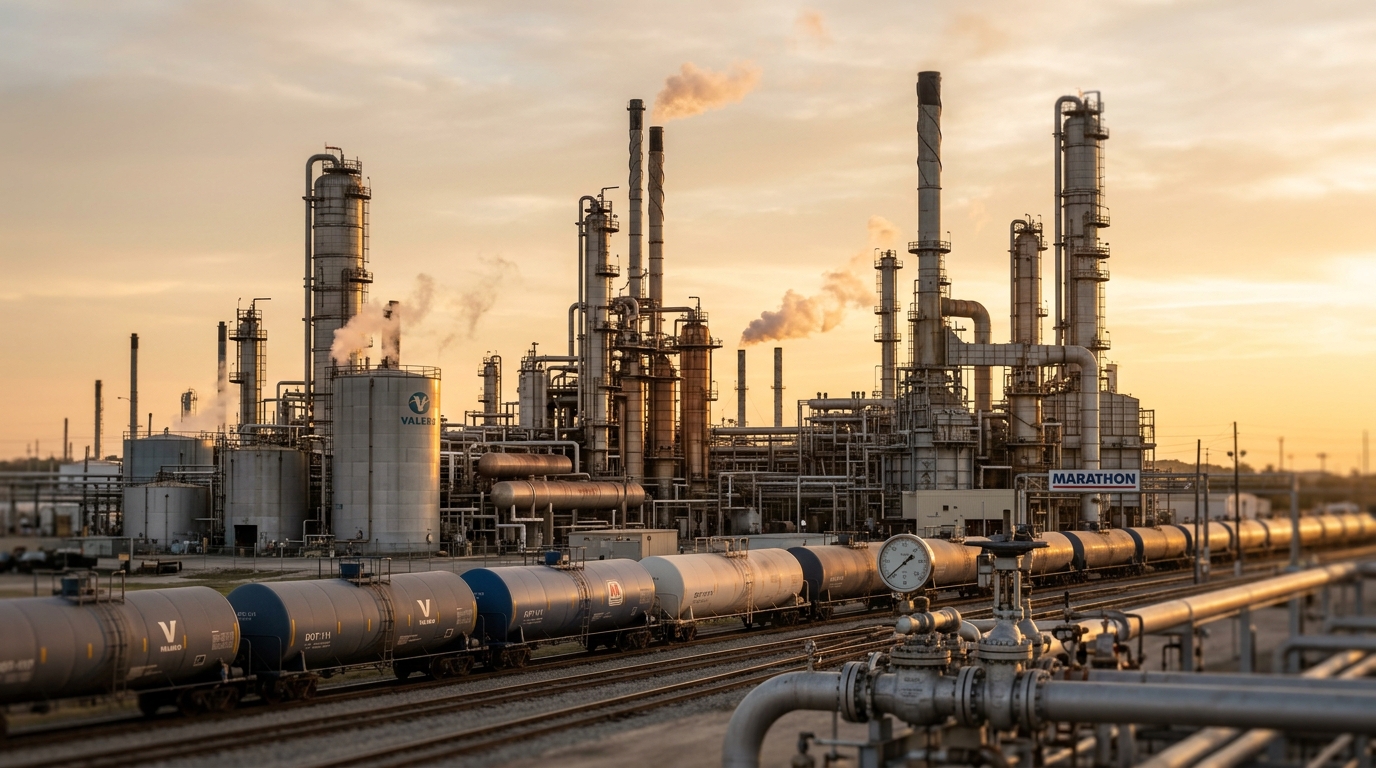
The diesel crack spread, the pricing difference between a barrel of crude oil and the diesel refined from it, has hit record highs in both the United States and Europe in recent weeks. Valero, Marathon Petroleum, HF Sinclair and Phillips 66 have all rallied sharply during the latest crack-spread run-up. US refining margins helped Marathon Petroleum, Valero and Phillips 66 generate $12.6 billion in combined profits during the second quarter of 2026.
Marathon’s refining and marketing margin jumped to $36.33 a barrel from $17.58 a year earlier, while Valero’s realized refining margin roughly doubled year over year. Those numbers came before China suspended exports and before Washington escalated pressure on Europe. Q3 earnings calls, due in the coming weeks, will show whether the third quarter topped those already exceptional figures, the evidence suggests it did.
The other side of this position deserves attention. Higher diesel prices are rippling through agriculture and trucking, ultimately raising the cost of food and everyday goods, because diesel is used by trucks and railroads to move most goods across the country. Union Pacific’s October 2026 fuel surcharge has increased 35 cents per mile versus October 2025. USDA forecasts farm fuel and oil expenses will rise by about $4.8 billion in 2026, up about 28.8% from 2025. Companies with direct diesel cost exposure and thin freight-rate pricing power are at risk as this crunch persists through harvest season.
Risk Dashboard
The primary risk to the refiner trade is a diplomatic resolution that unlocks supply faster than the market expects. Energy Secretary Chris Wright has distanced himself from an outright export ban, saying “the blunt tool of banning diesel exports definitely doesn’t work.” If the ban threat collapses and Europe simultaneously releases reserves, crack spreads could compress sharply. Watch the October 7 date: that is when Beijing decides whether fuel exports resume, and the answer will move Asian diesel swaps immediately.
Trader’s Action Plan
The highest-conviction position remains long independent refiners, Valero, Marathon Petroleum, and Phillips 66, where the margin environment just received two fresh catalysts in a single session. The China suspension removes a supply source the market was quietly counting on; the European standoff raises the odds that US diesel stays constrained regardless of what Washington ultimately decides.
On the other side, freight-heavy names and agricultural input suppliers warrant caution heading into harvest. The crack spread does not need to hold its record high for those cost pressures to continue; it only needs to stay wide, and nothing on the horizon closes it quickly.