
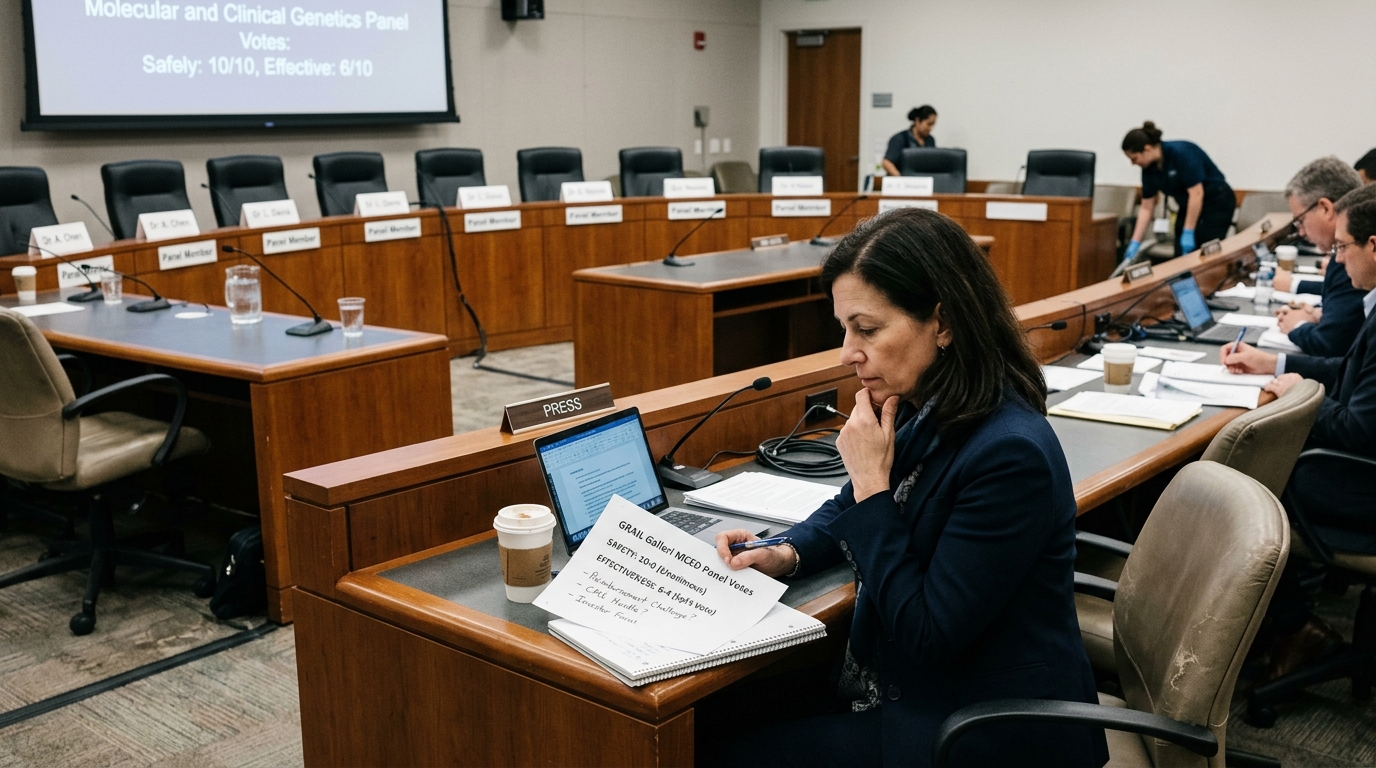
Ten votes for safe. Six votes for effective. That gap inside yesterday’s FDA advisory panel decision on GRAIL’s Galleri blood test tells you more about the investment case than the headline result does.
The Molecular and Clinical Genetics Panel endorsed Galleri on Wednesday, concluding that benefits outweigh risks. It voted 10-0 that the test is safe, 6-4 that it is effective, and 7-2 with one abstention that benefits outweigh risks. Unanimous on safety, but a coin-flip margin on the core clinical question. That is not the clean sweep GRAIL bulls were hoping for, and it is the number payers will remember when coverage negotiations begin.
The panel balked at calling Galleri an “early detection” test, saying it failed to show effectiveness for that specific claim. That labeling fight is not semantic. If Galleri cannot carry the words “early detection” on its marketing materials, the case for broad screening adoption weakens considerably, and so does the leverage GRAIL needs at the negotiating table with insurers.
The Galleri test analyzes cell-free DNA methylation patterns to detect signals from more than fifty cancer types, including those without recommended screening protocols. The advisory committee reviewed two major clinical studies, including one involving more than 142,000 patients in the UK’s National Health Service, and another of 35,878 North American patients, all over the age of 50. That is an unusually large evidence base for a novel diagnostic, yet four of ten panelists still could not cross the effectiveness threshold. The data gap is real.
If Galleri clears FDA approval, it could broaden the path toward Medicare reimbursement for the test, which currently costs $949 out of pocket, and Congress has passed legislation intended to enable Medicare coverage of multi-cancer early detection screening tests once they are approved by the FDA. That legislative framework is the bull case in a sentence: tens of millions of Medicare-eligible Americans, a government payer already primed to pay, and no approved competitor. Meanwhile, the FDA and the Centers for Medicare and Medicaid Services have announced a RAPID coverage pathway aimed at accelerating Medicare coverage decisions for certain eligible Breakthrough Devices after FDA market authorization. Whether Galleri qualifies for RAPID is a separate question.
But the 6-4 vote gives private insurers an offramp. Benefit managers who were already skeptical of covering a $949 screening test now have a federal panel vote to cite. Approval alone does not force their hand.
GRAIL has said it submitted its PMA application in January 2026, and the FDA is not bound by the panel’s recommendations, though it takes them into consideration. A final decision is expected in the coming months.
The competitive pressure is building regardless of GRAIL’s timeline. Exact Sciences, which was acquired by Abbott Laboratories in March 2026, and Guardant Health have each introduced multi-cancer early detection products into the market in 2025. Neither has FDA approval either, which is exactly why this panel vote matters to the whole sector: whoever gets approved first sets the clinical bar and the coverage precedent.
GRAL’s current price-to-sales ratio stands at 26.47, substantially above its historical median of 10.24, reflecting market expectations of robust future growth. Insider activity shows no insider buying over the past 12 months, with insiders net selling shares. The market is pricing a smooth path from panel endorsement to broad reimbursement. The 6-4 vote suggests that path has speed bumps the stock has not priced in yet.
Watch the FDA’s final language on the effectiveness claim. If the agency narrows the approved indication or requires post-market outcome studies before full Medicare coverage kicks in, the revenue ramp slows considerably. Approval is a gate. Reimbursement scale is the destination. Wednesday’s vote confirmed GRAIL can reach the gate. Whether it gets through is a different question entirely.