Every China-focused portfolio manager is running the same mental arithmetic this week: how much export-license relief for Nvidia is already embedded in Chinese equity prices and semiconductor positioning, given that Beijing still has not officially confirmed Xi Jinping’s September 24 Washington visit?
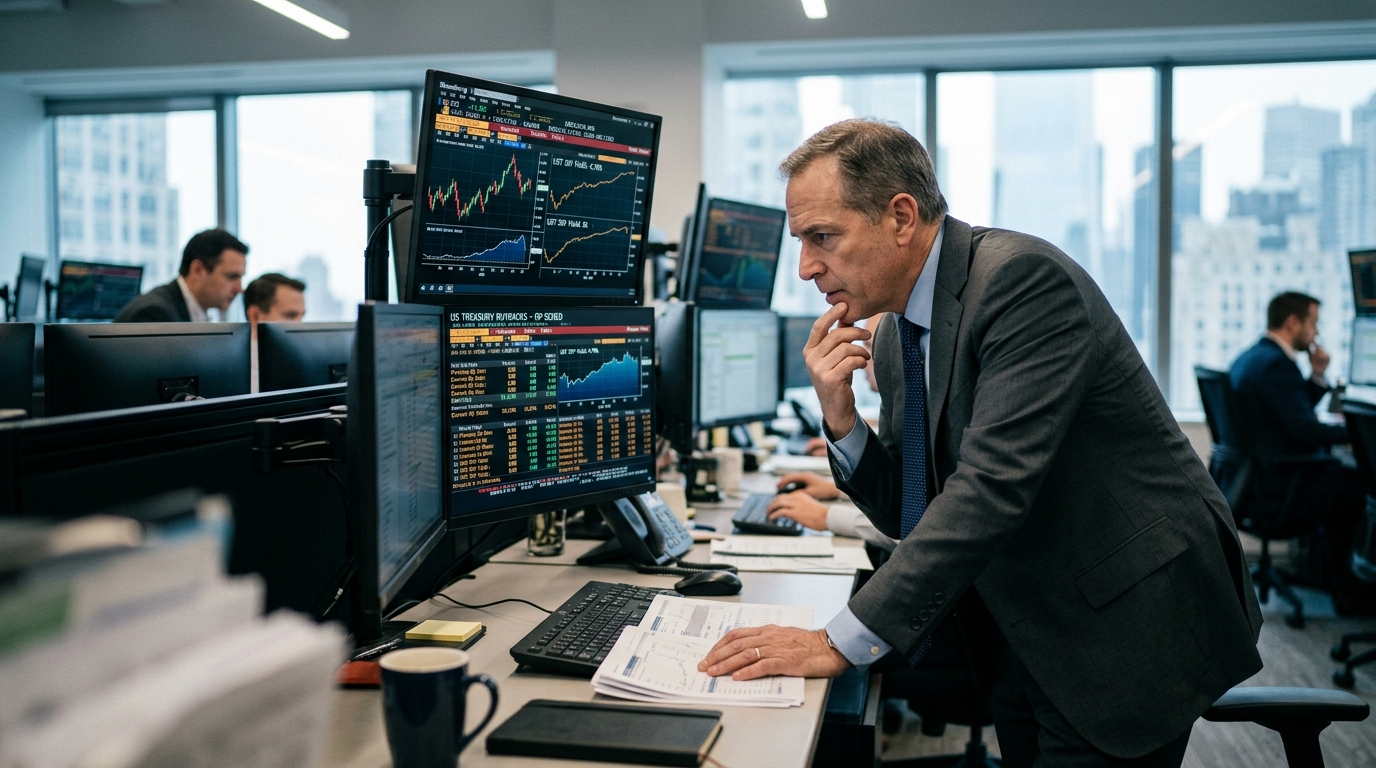
The market has made its bet. Chinese stocks logged their best day in a month on Friday, with the blue-chip CSI 300 closing 1.1% higher, its biggest one-day gain since mid-August, while the Shanghai Composite rose 0.9%. Crucially, technology stocks led the advance on the mainland, with chip and AI-related indexes surging. That is not a trade on tariff extensions. That is a chip bet.
Why Wall Street Cares
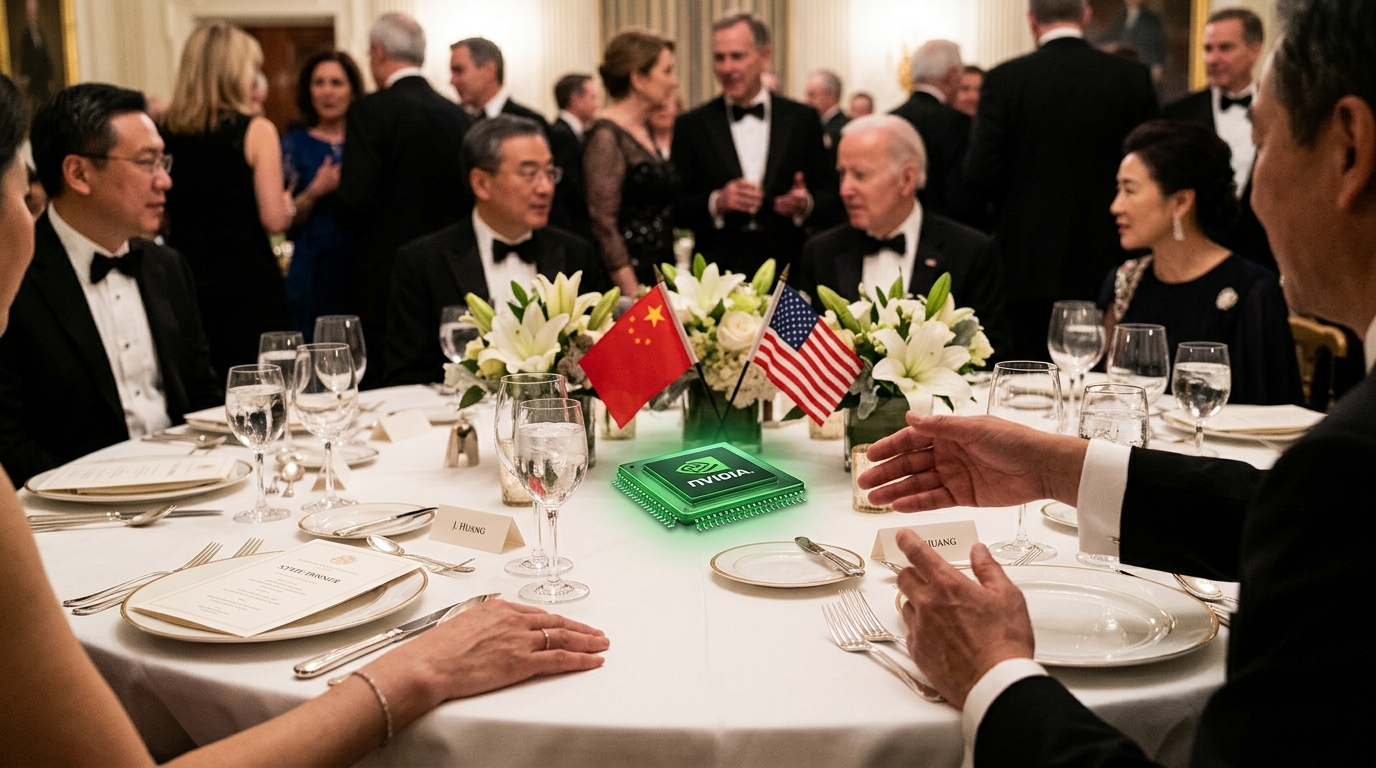
OpenAI’s Sam Altman, Nvidia’s Jensen Huang, and Tim Cook, Apple’s longtime CEO who recently stepped down, are all reportedly attending the September 24 state dinner. The White House has said Trump invited several prominent U.S. business leaders and wants to prioritize deals that benefit the U.S. Huang’s seat at that table is not incidental. It signals that chip export policy, not just tariff levels, is on the agenda, or at least in the room.
Investors are closely watching this weekend’s talks between Treasury Secretary Scott Bessent and Chinese Vice Premier He Lifeng, ahead of the September 24 meeting, with AI competition and China’s access to advanced U.S. chips expected to be key topics. Markets are also looking for signs that the current trade truce could be extended beyond its November 10 expiration, while reports that the U.S. may delay new tariff announcements until after the summit have additionally supported sentiment.
The Bull Case
The optimists point to a simple sequence: Huang attended the May state dinner in Beijing during Trump’s visit, then Washington later cleared limited H200 sales to a small set of Chinese firms. Now Huang is back at the table in Washington. The pattern suggests progress begets progress. The fate of Nvidia’s business in China is likely to be near the top of the agenda, since U.S. export controls have made it difficult for Nvidia to maintain its dominance there. Huang’s company dominates the GPU market powering both U.S. and Chinese AI infrastructure, and a summit-driven agreement to ease chip sales restrictions into China could unlock billions in incremental revenue and push the stock materially higher from current levels.
The Bear Case
The May summit should give bulls pause. Not a single Nvidia H200 has shipped to China since the Trump administration cleared sales in December 2025, with U.S. Trade Representative Jamieson Greer later saying chip export controls were not discussed at the Beijing meetings. The structural reason matters: chips cleared for export can still run into deployment and policy constraints, and Beijing’s push to reduce reliance on U.S. chips has complicated deliveries even after Washington grants export licenses.
Foreign policy analysts expect the pattern to hold. A Phoenix foreign policy expert says Americans should not expect the two rivals to agree on a sweeping plan on technology, forecasting very limited progress in the talks. PIIE is equally guarded: Trump has no intention of abandoning tariffs above 10% and cannot credibly pledge to refrain from all national security export controls on high-end chips, semiconductor production equipment, and software. The November 2026 U.S. midterm elections are likely to harden political scrutiny of China policy, limiting the administration’s ability to offer major technology concessions.
What Investors Are Missing
The deeper issue is that China is actively engineering away from the problem. DeepSeek has said its latest V4 model released in April was adapted for Huawei’s Ascend chips, and Alibaba has disclosed that T-Head, its chip design subsidiary, has brought a proprietary GPU into production at scale. China is actively urging its tech firms to cut reliance on Nvidia, with AI labs such as DeepSeek developing models to run on domestic chips while Huawei’s AI processors gain market share. A summit that delivers ambiguous language on chip access could actually accelerate that substitution by giving Chinese firms another six months of policy uncertainty to plan around.
Stocks to Watch
- Nvidia (NVDA): The direct beneficiary of any export-license expansion, and the direct casualty if the dinner produces theater rather than a deal. The May precedent suggests the latter is more likely.
- FXI and KWEB: Both China ETFs are pricing in summit goodwill. If chip controls stay unchanged and the trade truce language disappoints, these unwind quickly.
- Alibaba (BABA): Among the roughly 10 Chinese firms Reuters has reported as holding approved U.S. export licenses for H200 units. The question is whether Washington and Beijing loosen the conditions and scrutiny that have kept those chips from actually shipping.