May 14, 2026
RAD Intel is 95%+ allocated. Act now.
FEATURED: Cerebras Systems Goes Public.

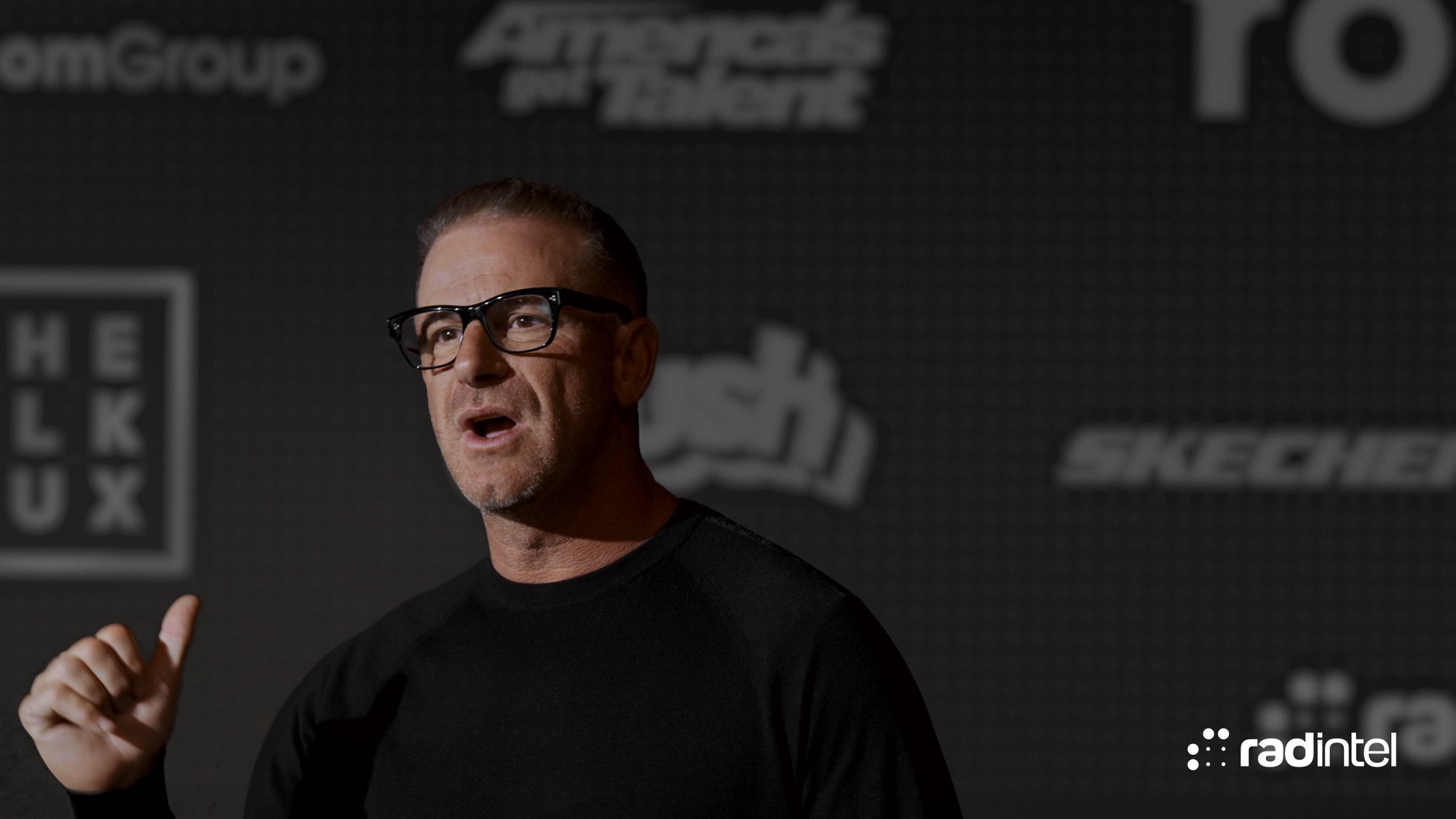
Jeremy Barnett, founder and CEO, RAD Intel
A note from the founder
More than 95% allocated. Why I’m asking you to act now.
There are three things I tell every investor who asks me, “why now?”
First, the AIBO Engine compounds.
Each new operating brand we run on the engine makes the next one cheaper to launch and faster to scale. That is the difference between a tool and a holding company. We chose the holding company.
Second, AI marketing is consolidating.
The creator economy alone saw 52 M&A deals in the first half of 2025, a 73% year-over-year increase. Larger firms are racing to acquire AI decision-layer infrastructure. We have spent five years building exactly that.
Third, this Reg A+ window does not reopen.
The round is more than 95% allocated. The remaining capacity can fill at any moment. There is no scheduled cutoff and no warning before it closes. Once filled, the current pricing tier is no longer available to new investors.
If you have been on the fence, this is the moment. Read the offering circular, weigh the risks, and make the call. There are 20,000+ shareholders here already. Whatever you decide, decide now.
Jeremy Barnett
Founder & CEO, RAD Intel
| Invest Before It Closes |
RAD Intel, Inc. is offering securities under Tier 2 of Regulation A+. The offering circular and risk factors are available at invest.radintel.ai. Investing in early-stage companies involves significant risk, including the loss of principal. Past performance does not predict future results. Brand references reflect factual platform use, not endorsement. Investor references reflect factual individual or institutional participation and do not imply endorsement or sponsorship by the referenced companies.
FEATURED 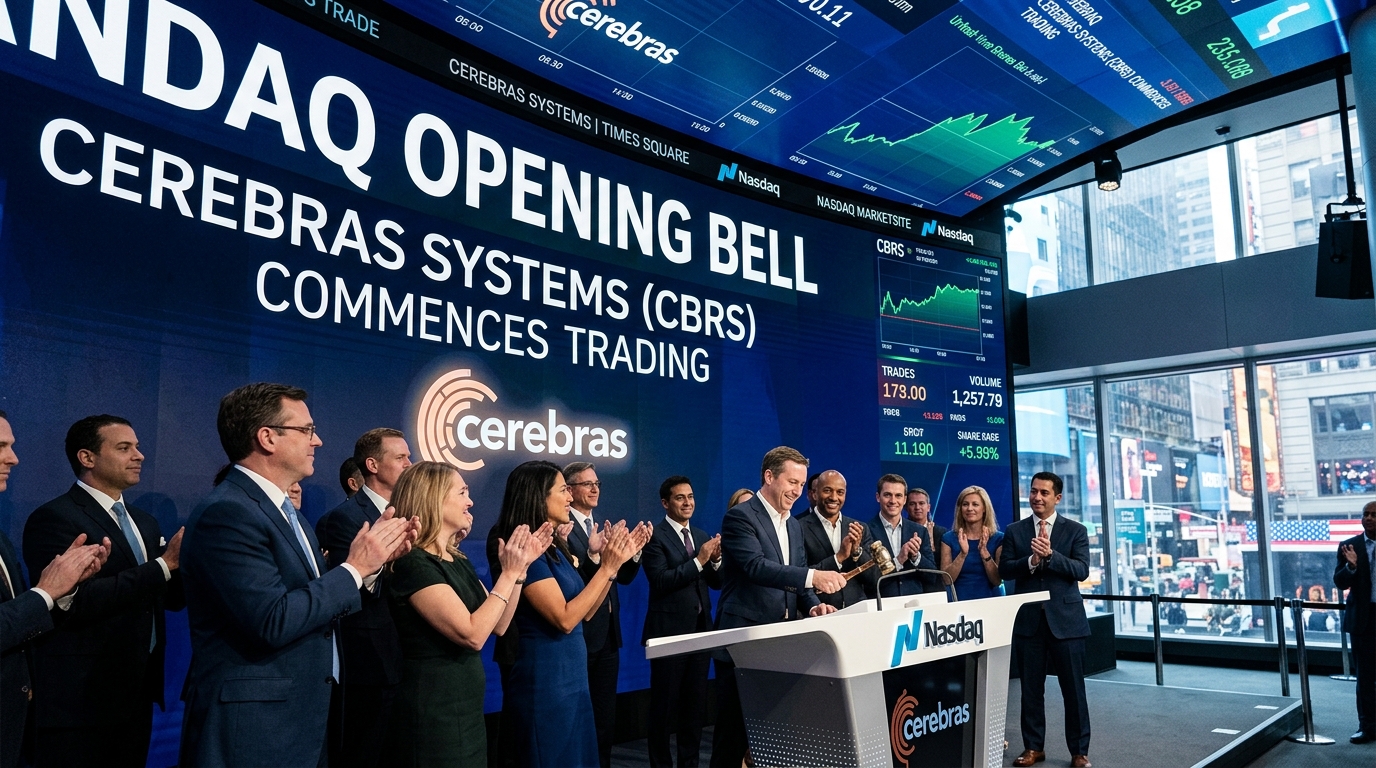
Cerebras Systems Goes Public.
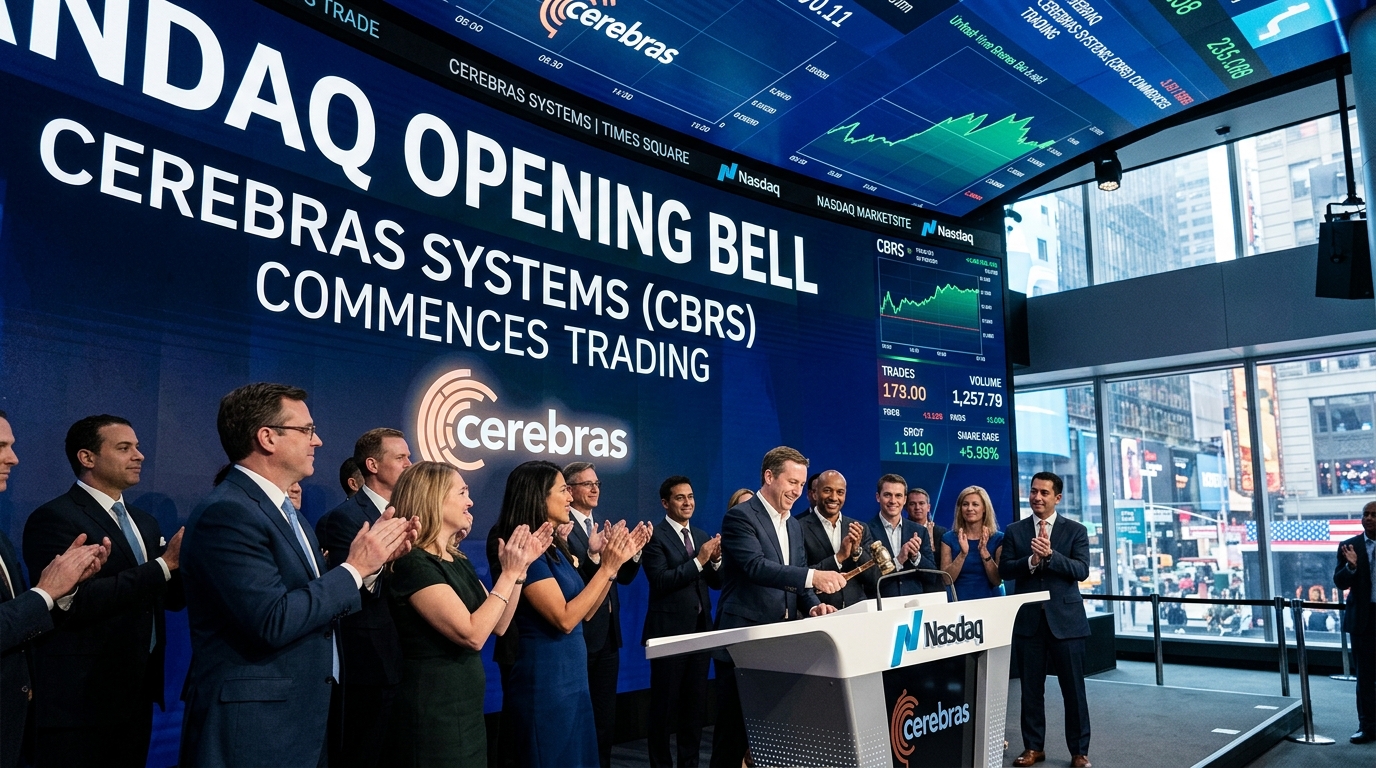
Today is the day Cerebras Systems (CBRS) begins trading on Nasdaq — and the setup going into the open is about as loud as an IPO gets in 2026.
The company priced at $185 per share on the evening of May 13. That’s above the $150–$160 revised range, which itself was a step up from the original $115–$125 band. Thirty million Class A shares. $5.55 billion raised. A fully diluted valuation — per Reuters — north of $56 billion. The offering was 20x oversubscribed before they ever bumped the range. That’s not routine IPO mechanics. That’s a market telling you something about where institutional money wants to be positioned in AI infrastructure right now.
Whether that tells you to buy is a separate question entirely.
What Cerebras Actually Builds
The pitch is architectural, not incremental. Cerebras doesn’t make a slightly cheaper GPU. It builds the Wafer-Scale Engine — literally an entire silicon wafer functioning as a single processor, rather than slicing that wafer into hundreds of smaller chips and then networking them together. The current flagship, the WSE-3, is 58 times larger than a leading GPU chip and claims inference speeds up to 15 times faster than GPU-based alternatives on leading open-source models. The tradeoff: wafer-scale chips are notoriously difficult to yield, which is why Cerebras packs in redundant cores and memory cells to compensate.
Revenue comes through three channels: hardware sales of the CS-3 AI supercomputer system, cloud-based AI services, and large multi-year compute arrangements. In 2025, that broke down to roughly $358 million in hardware and $152 million in cloud and services — the cloud mix growing fast, which matters for margins later.
Slight tangent, but it matters: Arm Holdings and SoftBank reportedly attempted to acquire Cerebras in the weeks before the IPO. That bid was turned away. The fact that two of the most strategically positioned players in AI semiconductors tried to buy this company before it went public tells you more about how the hardware supply chain is repositioning itself than any analyst price target will.
The Scoreboard
- 2025 Revenue: $510 million, up 76% year over year (from $290M in 2024)
- Hardware Revenue: $358M | Cloud & Services: $152M
- GAAP Net Income: $237.8M — but read the footnote below
- Operating Loss: $145.9M GAAP operating loss in 2025
- Non-GAAP Net Loss: $75.7M after stripping stock comp and the forward-contract gain
- Order Backlog: $24.6 billion disclosed in the S-1
- IPO Price: $185/share (priced May 13, trading begins May 14)
- Shares Offered: 30 million Class A, plus underwriter option for 4.5M more
- Fully Diluted Valuation: ~$56.4 billion
- Revenue Multiple at IPO: approximately 111x trailing 2025 revenue
- Oversubscription: 20x at the original $115–$125 range
About That Profit Number
The 47% net margin headline will circulate today and most people will read it wrong. Here’s what actually happened.
In 2024, Cerebras signed a deal with Abu Dhabi’s G42 to sell its preferred shares — a transaction that created a $401 million loss on the books that year. When the US government scrutinized that deal on national security grounds, it was eventually restructured. Cerebras removed the liability from its balance sheet, recording a $363 million paper gain that flowed straight into 2025 net income. Strip that out — along with stock-based compensation — and you get a $75.7 million non-GAAP net loss. The company also ran a $145.9 million GAAP operating loss in 2025.
That’s not fraud. That’s accounting. But at 111x trailing revenue, investors are paying for a company whose core operating model is still being built — not one that’s cleanly printing cash. Gross margins improved from 12% in 2022 to 39% in 2025. R&D alone ran $243 million last year. The margin story is real, but it’s a multi-year project.
The Two Deals Everyone Is Talking About
OpenAI is the anchor. In January, OpenAI signed a binding Master Relationship Agreement with Cerebras covering 750 megawatts of low-latency AI compute capacity — expandable to nearly 3 gigawatts by 2030. The deal is valued at over $20 billion. That contract is the majority of the $24.6 billion backlog disclosed in the S-1. OpenAI also advanced Cerebras a $1 billion loan secured by warrants for over 33 million near-free shares — meaning OpenAI is simultaneously a customer, a creditor, and a potential equity holder. The relationship runs deep, and it cuts both ways.
The AWS deal is the diversification narrative. In March, Amazon Web Services announced plans to deploy Cerebras CS-3 systems inside its own data centers — integrated alongside its proprietary Trainium chips and accessible to developers through Amazon Bedrock. That’s a materially different structure than the OpenAI arrangement: AWS as a channel, not just a buyer. It adds a critical second major hyperscaler to a customer book that was dangerously thin without it.
Cerebras also has a $45 million DARPA contract — via Ranovus — for chip-to-chip photonic interconnect technology. Small relative to the OpenAI number, but worth noting as a signal of government interest in alternative AI compute infrastructure.
The Part People Are Glossing Over
Customer concentration is not solved. Mohamed bin Zayed University of Artificial Intelligence in the UAE accounted for 62% of 2025 revenue. G42 was another 24%. That’s 86% from two UAE-affiliated entities. OpenAI and AWS are the growth narrative — but they are not yet the revenue reality. The existing UAE revenue is project-based, lumpy, and geopolitically exposed in ways that are hard to model.
Here’s a data point that went mostly unreported during roadshow week: Cerebras’ US-domestic revenue actually shrank 34% in 2025, falling from $282.7 million to $187.6 million. Every dollar of the 76% headline growth came from international — specifically, Abu Dhabi — bookings. The OpenAI and AWS ramp hasn’t shown up in the revenue base yet. It’s backlog. It’s forward commitment. That gap between contracted future revenue and current revenue composition is the central risk at this valuation.
And the OpenAI structure has its own complexity. Cerebras is handing OpenAI warrants worth up to 10% of the company in connection with the deal — roughly $5 billion at the IPO price, or approximately half the gross profit Cerebras stands to make on the contract per Financial Times calculations. OpenAI is simultaneously the company’s most important customer and a future equity holder whose interests may not always align with public shareholders.
Forward Scenarios
Bull: OpenAI begins drawing down its 750MW commitment on schedule, AWS deployments scale through Bedrock, and a third hyperscaler signs before year-end. Cloud services revenue grows as a percentage of the mix, expanding gross margins toward 50%+. The $24.6 billion backlog converts, and Cerebras becomes the infrastructure layer for real-time AI inference the way Nvidia owns training. At that scale, 111x trailing revenue looks cheap in retrospect.
Base: OpenAI ramp proceeds but slowly — the S-1 projects roughly 15% of backlog recognized in the first 24 months. UAE revenue fades at roughly the pace the OpenAI revenue ramps. The stock trades at a compressed multiple while institutional investors wait for the first public earnings print to validate the model. Sideways to modestly higher over 12 months.
Bear: OpenAI hits its own financial headwinds and scales back compute commitments. UAE revenue drops faster than new bookings can replace it. Nvidia’s CUDA ecosystem — 12+ years of software lock-in — proves stickier than Cerebras’ inference speed advantage. TSMC N5 capacity constraints slow WSE-3 production. The lock-up expires around November 2026 and early investors use the window to reduce exposure. At 111x trailing revenue with an operating loss, the stock has almost no margin for error.
What determines the next major move isn’t the day-one pop or where the stock opens this morning.
It’s whether OpenAI is actually deploying that 750 megawatts — or just contracted for it.
Cheap Investor Scorecard
- Revenue growth (76% in 2025): Real — but sourced almost entirely from UAE. Watch Q1 2026 print for domestic mix shift.
- Operating profitability: Not there yet. $145.9M GAAP operating loss. Gross margins improving (39% in 2025 vs. 12% in 2022), but R&D intensity is heavy.
- Backlog visibility: $24.6B in contracted revenue is genuine visibility — if customers execute. OpenAI ramp schedule (15% in first 24 months) is the pacing item.
- Customer concentration: Still critical risk. 86% of 2025 revenue from two UAE entities. The fix is OpenAI + AWS revenue materializing — not just being signed.
- AWS integration: Structural positive. CS-3 inside Amazon data centers via Bedrock is a channel story, not just a bilateral deal.
- OpenAI relationship complexity: Customer + creditor + future equity holder. Monitor warrant dilution and any renegotiation signals closely.
- Valuation: ~111x trailing revenue at $185. Premium over comparable AI hardware plays. Only justified if backlog converts and margins expand materially.
- Lock-up expiry: ~November 2026. Early institutional holders and employees get a liquidity window. Watch for supply pressure.
- Nvidia competition: CUDA ecosystem remains the default. Cerebras wins on inference latency for specific workloads — not general-purpose replacement.
- First earnings call: The real debut. Q1 2026 results will show whether OpenAI and AWS revenue is actually flowing, or whether the UAE cliff is arriving faster than the ramp.
Bottom Line
If you’re the kind of bargain hunter who needs a margin of safety before pulling the trigger — there isn’t one here today. At $56 billion fully diluted on $510 million of revenue, with an operating loss underneath a paper-driven profit line, the stock prices in a lot of things going right. The backlog is real. The OpenAI relationship is real. The technology differentiation is real. None of that is in dispute.
What’s not real yet: a diversified revenue base, operational profitability, or public earnings history. You are betting on the ramp, not the track record.
The Cheap Investor approach here is patient. Watch the open, watch the first-day close, and then wait for the first public quarterly print before sizing a position. If OpenAI starts deploying compute and AWS Bedrock access drives new enterprise customers — that’s the signal. If Q1 shows UAE revenue declining faster than new revenue fills the gap, you’ll have your entry point at a more honest price.
The story isn’t over when the bell rings this morning. It starts there.