May 12, 2026
The Macro Ice Bucket: What a 3.8% CPI Print Actually Does to Chip Stocks
Inflation just handed the bond market a weapon. High-multiple AI names are already feeling it.
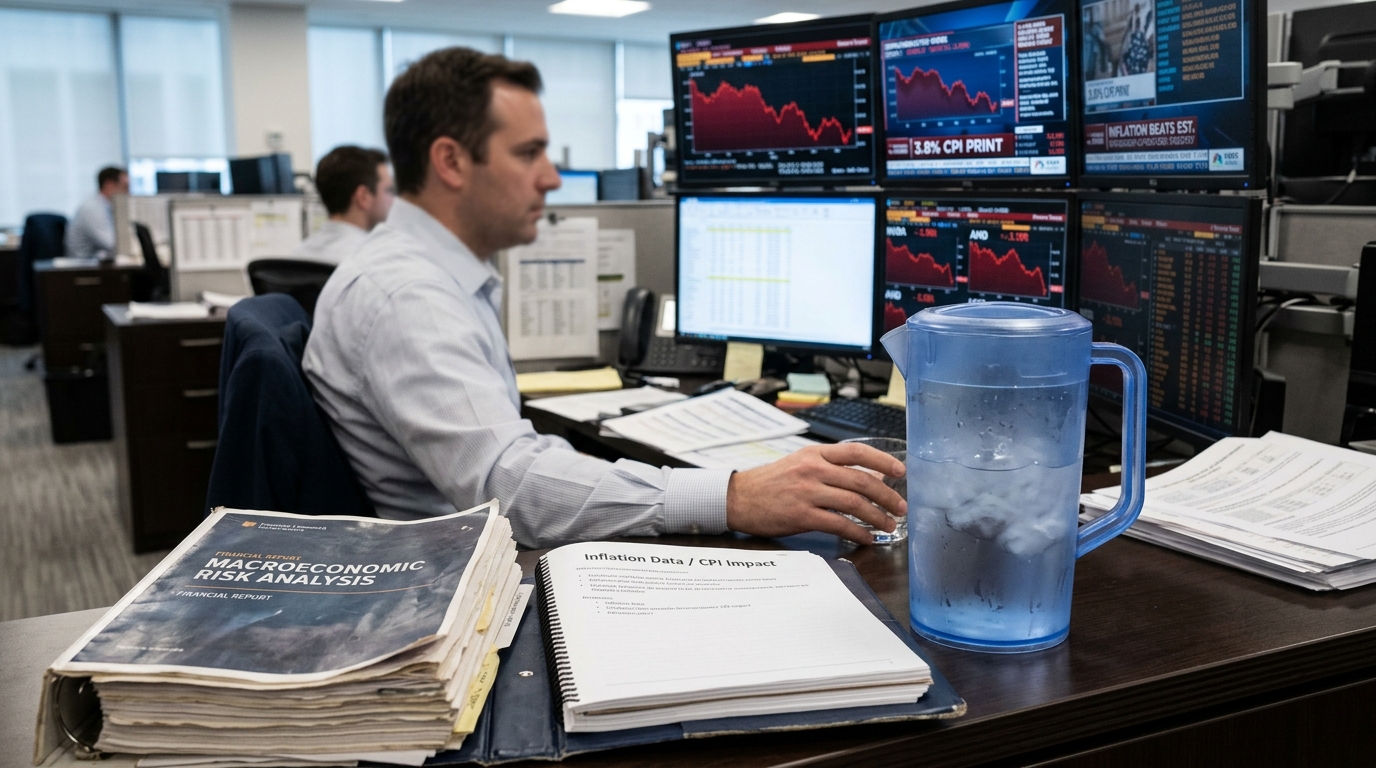
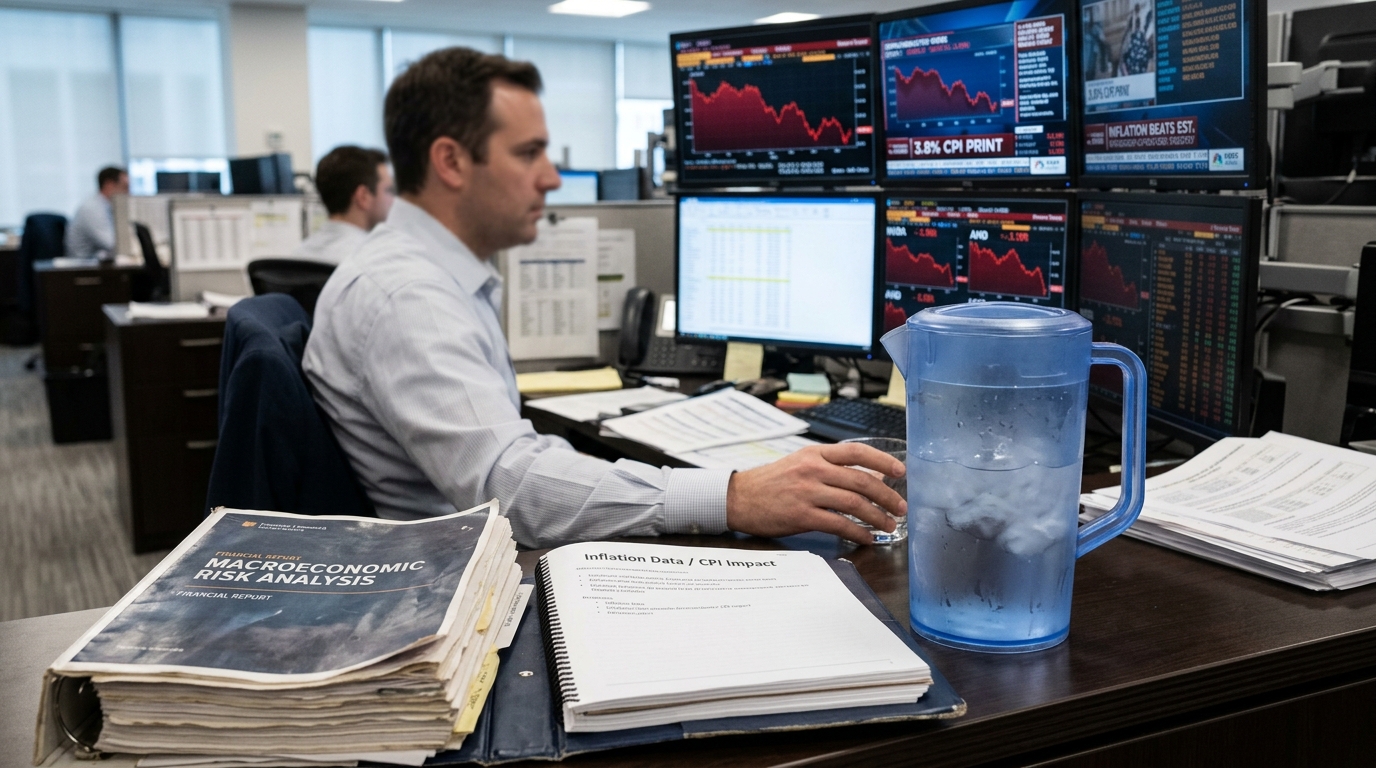
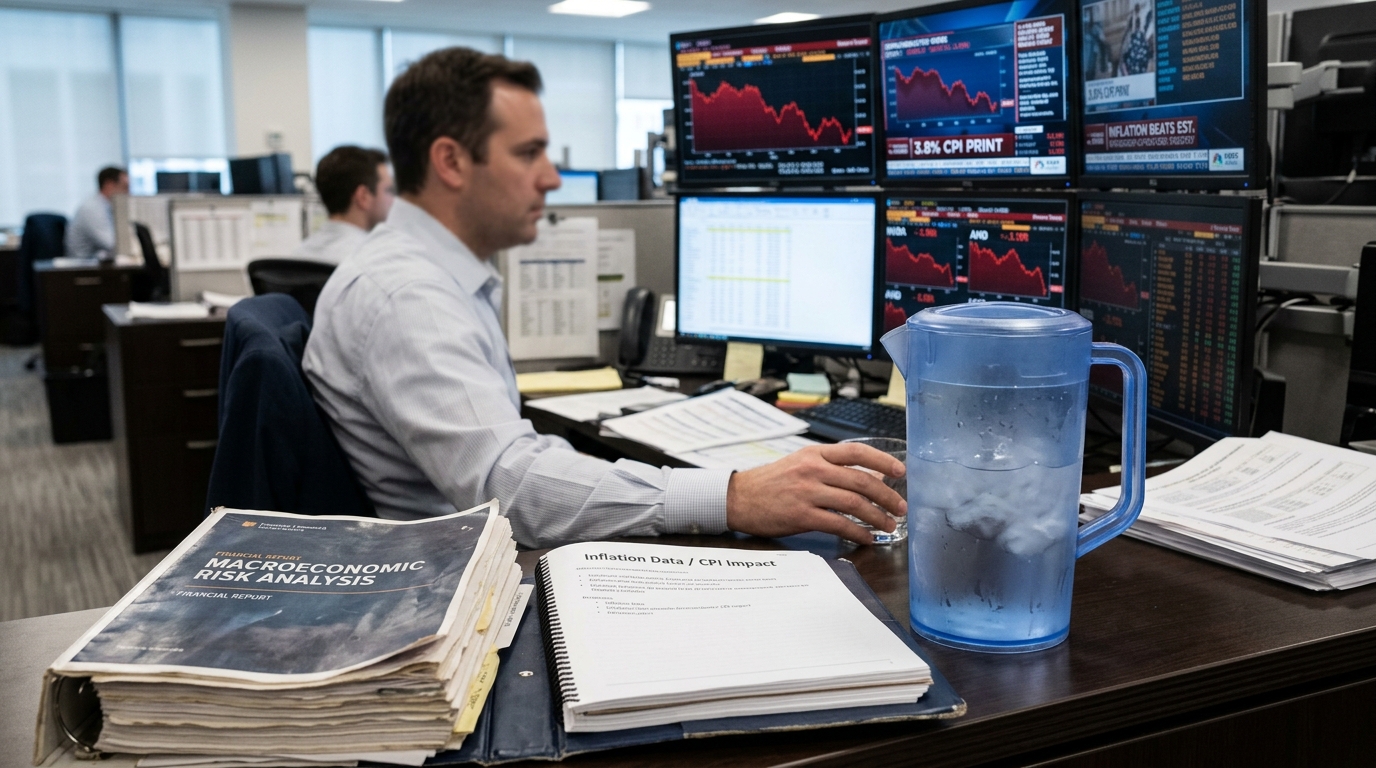
It turns out artificial intelligence can’t outrun a hot inflation report. Tuesday morning, the April CPI print landed at 3.8% year-over-year — the steepest rise in three years — and the semiconductor sector reacted about as gracefully as someone slipping on ice. The PHLX Semiconductor Index dropped roughly 5% in a single session. That’s not a dip. That’s the market recalibrating something it had been pretending wasn’t a problem.
Let me back up for a second, because the setup here matters more than the single-day move.
Going into Tuesday, chip stocks had been on an almost vertical tear. The SOX index was up 60% since the start of the year, 29% over the trailing month alone. Qualcomm had been flying. Intel — yes, Intel — had run up roughly 430% over the past year. Micron jumped 37.7% in a single week last month, then surged another 53% in April. The tape was pricing in a world where AI demand was infinite, rates were heading lower, and nothing could go wrong. Evercore ISI strategist Julian Emanuel put it plainly in a note: the action was reminding his team of 1999. Relatives, friends, doctors, Uber drivers — everyone was talking AI stocks. That’s usually a tell.
Then the CPI report showed up and ruined the party.
$1 Billion Money Manager: “Trump’s About to RUIN Elon’s SpaceX IPO”
How? By releasing a radical new AI model more than 1,000X more powerful than Elon’s Grok… just in time to leapfrog Elon’s SpaceX IPO.
What’s Trump up to? And how could it send shares of one AI stock (not SpaceX) soaring?
What the numbers actually said
Headline CPI: 3.8% year-over-year. That’s up from 3.26% the prior month and the highest reading since May 2023. Month-over-month, prices rose 0.6%. Core CPI — which strips out food and energy — climbed to 2.8% annually, with the monthly core print hitting 0.4%, the most in over a year and above the 0.3% Wall Street had penciled in. Energy prices surged 18% on an annual basis, with gasoline up 28% and fuel oil jumping 54%, largely driven by the Strait of Hormuz blockade tightening global oil flows. WTI crude is back above $100 a barrel.
The part people skip: core services ex-housing came in at 0.5% month-over-month. Bank of America flagged that specifically — airfares, lodging, personal services all heating up. This isn’t just an energy story. The inflation is broadening.
And that distinction matters enormously for what comes next at the Fed.
Why chip stocks specifically took the hit
Here’s the mechanics, because this is where it gets interesting. High-growth, high-multiple stocks are essentially long-duration assets. Their value is heavily weighted toward cash flows that don’t exist yet — earnings that are years or decades out. When the discount rate used to value those future earnings rises, the present value of the whole enterprise mathematically shrinks. Rising Treasury yields — which move in lockstep with inflation expectations — are the mechanism. When the 10-year yield creeps up, expensive growth stocks are the first to get frostbite.
The damage on Tuesday was not subtle. Qualcomm plummeted 13% — its worst session since 2020. Intel dropped 8%. On Semiconductor and Skyworks each fell more than 6%. AMD, Micron, and Marvell all saw mid-single-digit declines. The iShares Semiconductor ETF sank 5%. The Nasdaq Composite shed 0.7% at the open, leading all major indices lower.
Slight tangent, but it matters: the semiconductor sector, as measured by the Philadelphia Semiconductor Index, has only ever been this overbought relative to its 200-day moving average twice before — in early 2000 and in 1995. In 2000, it coincided with a generational market peak. In 1995, semis rolled into their own bear market even as the broader indices kept climbing. Neither outcome is exactly a comfort.
To be clear — one bad session doesn’t erase a year. The SOX is still up 60% year-to-date. Tuesday’s selloff barely dented the 2026 gains. But the setup has changed. The question is whether AI demand justifies these multiples in a world where capital is no longer free.
Legendary trader makes the boldest prediction of his 40-year career
In 2020, Larry Benedict told CNBC the market was about to fall. Few believed him. Within weeks, markets dropped 34% but his readers had the chance to make 62%.
In 2022, he predicted the worst market in a generation. He went 11-for-11. One trade returned 117% in under a month.
Now he’s speaking out again… and he says what’s coming makes both of those look like a warm-up.
Click here to hear his new prediction and get his #1 ticker free.
What the Fed looks like from here
This is where the macro picture gets genuinely uncomfortable. April’s hot CPI print follows a stronger-than-expected jobs report just days earlier. The labor market is holding up. Inflation is moving in the wrong direction. That combination essentially boxes the Federal Reserve into a corner — or more specifically, it boxes in incoming Fed Chair Kevin Warsh before he’s even sat down.
Bank of America’s view: the Fed is on hold until at least the second half of 2027. Some desks are beginning to price in rate hikes — not cuts — for next year. One analyst at Northlight Asset Management noted the stock market has rallied nearly 17% since the March lows on better-than-expected earnings, but at best the Fed is frozen in place, and at worst the next move is a hike. Markets are even starting to price that scenario.
RSM chief economist Joseph Brusuelas put it more bluntly — the headline rate could reach 4% later this year, and median American families are going to struggle to adjust in the second half.
That’s not the environment growth stocks get re-rated higher in.
What I’m watching from here
A few things worth tracking, not as a checklist but as genuine open questions:
- Core PCE (late May): The Fed’s preferred inflation measure. If it confirms what CPI is showing, the higher-for-longer narrative gets a lot more oxygen.
- 10-year Treasury yield: Has been climbing steadily. Analysts have flagged the 4.6%–4.8% range as the zone where semiconductor valuations face real structural pressure — not just profit-taking.
- Energy prices: WTI above $100 is the wild card. If the Strait of Hormuz situation stabilizes, some of the inflation pressure releases. If it doesn’t, the CPI story gets worse before it gets better.
- SOX relative to its 200-day: The overbought reading is historic. Whether that resolves through time or through price is the key technical question for chip bulls.
- Memory chip pricing: Micron’s parabolic run was partly driven by HBM memory being a genuine AI bottleneck. That dynamic hasn’t changed — but stretched valuations are a separate conversation from strong fundamentals.
“Simple Options Trading For Beginners”
If you still haven’t downloaded my free “Simple Options Trading For Beginners” guide…
…please take a few seconds and download it right now before your new temporary download link expires.
I eventually plan to charge money for this training, so do yourself a favor and download it now…
That way, no matter what it costs in the future, you’ll have a free copy on your computer.
Make sense?
Here’s where I’m at: the AI buildout thesis hasn’t broken. Data center demand is real. Memory is genuinely constrained. The long-term case for owning the picks-and-shovels of this cycle is intact. But “intact thesis” and “cheap entry point” are two very different things — and right now, the macro is doing its best to remind anyone who forgot.
A 3.8% CPI print in a world where everyone’s uncle is talking chip stocks is not the backdrop for adding risk at any price. It’s the backdrop for patience — and for watching whether the next few inflation reads give the Fed any room at all to breathe.
The hype train isn’t derailed. But it just hit a speed bump that the market hasn’t fully priced.