
October 25, 2026
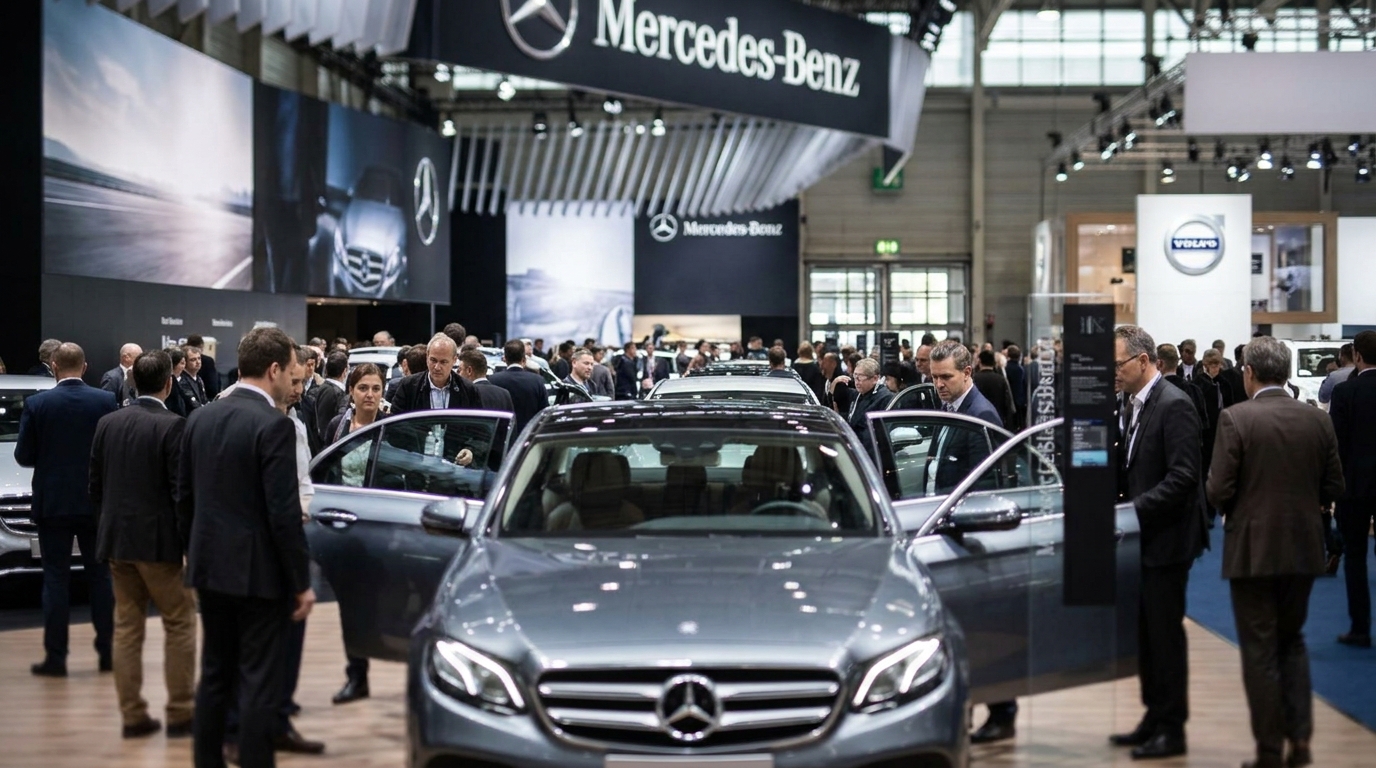
Bonus Content: Mercedes-Benz Looks Cheap at €41. It May Not Be.
Quick reminder.
Your free copy of The 0DTE Game Plan is still sitting there, ready to download.
But the link won’t work forever.

Once it expires, the report goes back to $29.97 on our website.
So do yourself a favor and download it right now. Save it to your computer, and it’s yours to keep no matter what it costs later.
It takes about 10 seconds.
Inside, you’ll find the simple 3-step plan for trading same-day options like a business: Plan it. Profit from it. Protect it.
Make sense?
Click here to download The 0DTE Game Plan before your link expires.
Good Trading,
Bill Poulos
p.s. Free today, $29.97 once this link is gone. Grab your copy here.
Mercedes-Benz Looks Cheap at €41. It May Not Be.
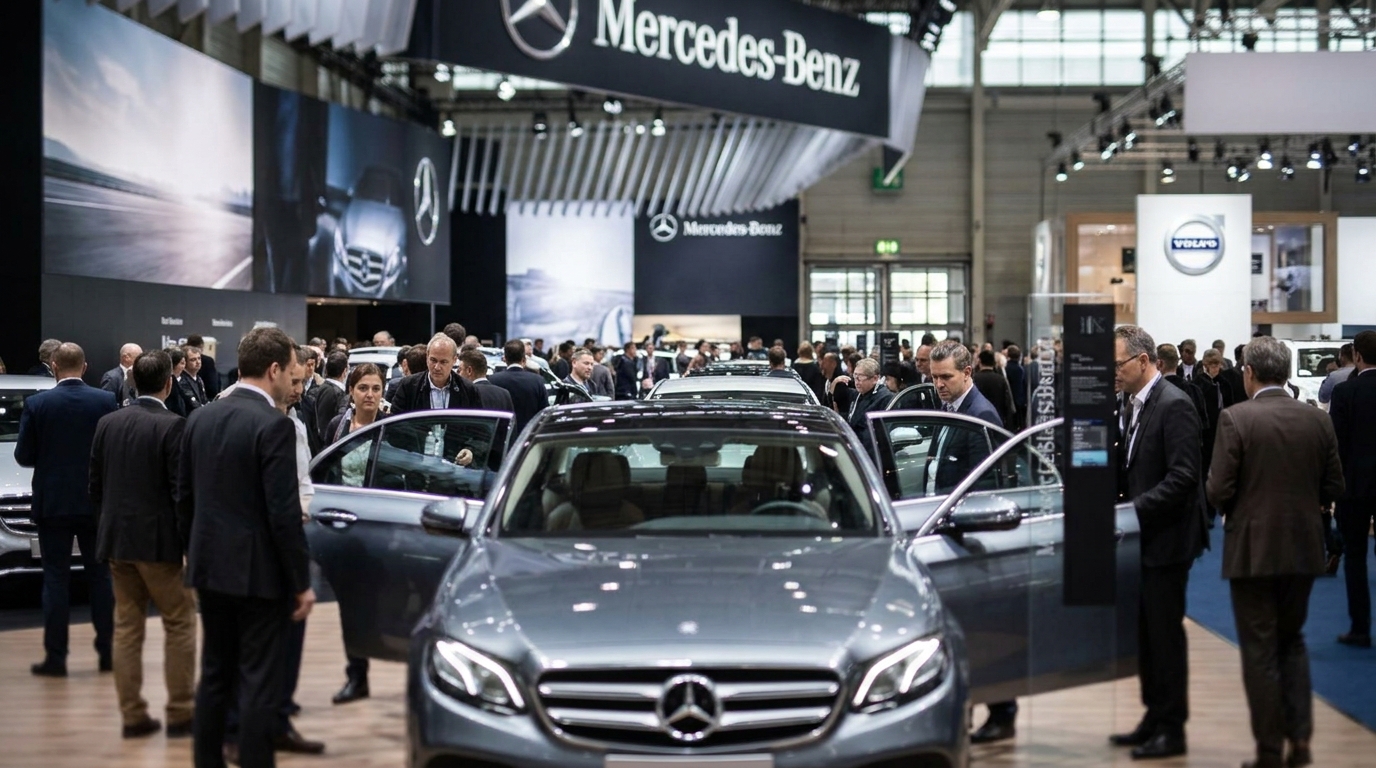
Hey there, bargain hunter. A stock down 32% in a year, trading at a price-to-earnings ratio below 8, yielding more than 8%. That sounds like a screaming buy. Before you reach for the order ticket on Mercedes-Benz, let’s talk about what happened to Volvo Cars on Friday.
Scoreboard
Mercedes-Benz (MBG.DE) closed Friday at around €40.74, sitting just €1.85 above its 52-week low of €38.89. The Q3 financial results land Wednesday, October 28. What the market already knows: global passenger-car deliveries fell 8% to 407,200 units in the quarter, dragged almost entirely by China, where sales collapsed 31% to 86,800 vehicles. Group sales including vans fell 6% to 491,700 units. The high-margin Top-End segment, Maybach, AMG, G-Class, S-Class, slid 21% to 53,900 units.
The Volvo Cars comparison landed hard. On October 23, Volvo reported a SEK 3.7 billion Q3 operating loss, announced 2,500 job cuts, and watched its shares fall close to 27% in a single session. Revenue dropped 23% to SEK 66.9 billion. China revenue fell almost 50% year on year. The question now hanging over Stuttgart: how much of that was Volvo-specific, and how much is a blueprint for what Mercedes reports Wednesday?
The Real Reason This Matters
Mercedes entered 2026 guiding for a Cars adjusted return on sales of 3% to 5%, already a steep step down from the 8%-10% mid-term target management had been promising investors for years. On the Q2 call, management flagged it expected to land in the lower half of that range. RBC analyst Tom Narayan went further on October 13, cutting his price target from €54 to €44 and warning that the Q3 car margin could slip below the 3% floor of guidance entirely. A guidance breach Wednesday would not just be a bad quarter. It resets what investors think this business is worth in a structurally weaker China.
RBC also cut its 2027 equity income estimate to €200 million from €300 million and lowered the EBITDA valuation multiple it applies, from 1.5x to 1x. That is an analyst telling you the multiple compression may not be done.
Multiple compression on a shrinking earnings base is not unique to autos. Nike’s experience shows how quickly a high dividend yield turns from attraction to warning sign when earnings guidance is cut sharply below consensus.
What the Business Actually Is
Mercedes makes money three ways: selling cars (the Cars division), selling vans, and financing those vehicles through Mercedes-Benz Mobility. The Cars division is the engine. China was, until recently, its highest-volume and highest-margin market. At its peak, China represented roughly a third of global car volume. That share has now dropped to about 21% of car division sales, and nine-month China deliveries are down 29% to 297,000 units. Domestic Chinese brands have taken that share and show no sign of giving it back.
Outside China, the picture is meaningfully better. Battery-electric vehicle sales jumped 52% to 78,100 units across Cars and Vans, a quarterly record. That is real. It does not yet offset the profit hole China has left.
The contrast with North American-focused automakers is worth holding in mind. GM’s insulation from Chinese competition has become a structural advantage as domestic brands take share from European premium makers.
Is It Cheap?
- P/E (trailing): below 8x
- P/E 2026 consensus: below 8x
- Dividend yield: more than 8% (€3.50 per share)
- Price-to-book: below 0.5x
- Analyst average target: €53.20, implying ~30% upside
- 52-week range: €38.89 to €62.34
On every screen, MBG looks cheap. Citi put it plainly: low valuations create real re-rating potential if execution improves. The word “if” is doing a lot of work there. A P/E below 8x on earnings that may still be falling is not cheap. It is a number waiting to be revised upward once the denominator stops shrinking.
Bull / Base / Bear
Bull: Wednesday’s result shows the Cars margin held at or above 4%, guidance is confirmed, and management signals the cost restructuring is gaining traction. Shares bounce toward the €44-€46 range that analysts identify as the first meaningful resistance level.
Base: Margin comes in at 3%-4%, guidance is held at the low end with caveats, and the stock drifts sideways between €39 and €44 as investors wait for H1 2027 data.
Bear: Car margin comes in below 3%, Mercedes cuts full-year guidance, and the market draws the Volvo parallel explicitly. The 52-week low of €38.89 breaks. Analysts who have flagged €36 as the next level find an audience.
Action Plan
Do not buy ahead of Wednesday. The Volvo result confirmed that China exposure in premium autos can produce outcome dispersion far wider than consensus models. Wait for the October 28 release. If the car margin holds above 3% and guidance survives intact, a small starter position in the €39-€41 range makes sense for patient money with a 12-18 month horizon. Scale only on evidence that cost actions are flowing into margins, not on valuation alone.
If the margin breaks below 3% and guidance is cut, this is not a buying opportunity. It is a signal that the earnings floor has not yet been found.
Cheap Investor Checklist
- Q3 Cars adjusted return on sales: must hold above 3% to preserve guidance
- Full-year 2026 guidance: confirmed, lowered, or pulled entirely?
- China volume trajectory: any sign of stabilization in Q4 commentary?
- Cost restructuring: concrete savings figures and timeline
- Top-End segment mix: partial recovery here matters most for margins
- Free cash flow: Volvo’s turned deeply negative; watch Mercedes’ industrial FCF
- Dividend sustainability: the €3.50 yield looks attractive until earnings cannot support it
- BEV momentum: 52% group growth is real, but profitability per unit is the unanswered question
Bottom Line
If Wednesday’s car margin holds above 3% and guidance survives, Mercedes at €41 is a deep-value position with a real recovery case. If the margin breaks guidance and management signals more pain ahead, the Volvo playbook applies: low prices get lower when the earnings base is still moving. Cheap and broken are not the same thing. October 28 tells you which one this is.