
October 10, 2026
Bonus Content: GM’s EV Sales Crashed 62%. Is the Stock Finally Cheap?
Dear Reader,
My name is Marc Lichtenfeld. I’m Chief Income Strategist at The Oxford Club. I’ve been featured as an income expert by The Wall Street Journal, Bloomberg and Fox Business.
In November 2021, while the Federal Reserve called inflation “transitory,” I warned it could exceed 8% within 18 months and favored energy. Inflation reached 9%, and energy became the best-performing asset class of 2022.
Charlie Munger spent a lifetime beside Warren Buffett finding great businesses.
But one of his favorite investments was not Berkshire Hathaway.
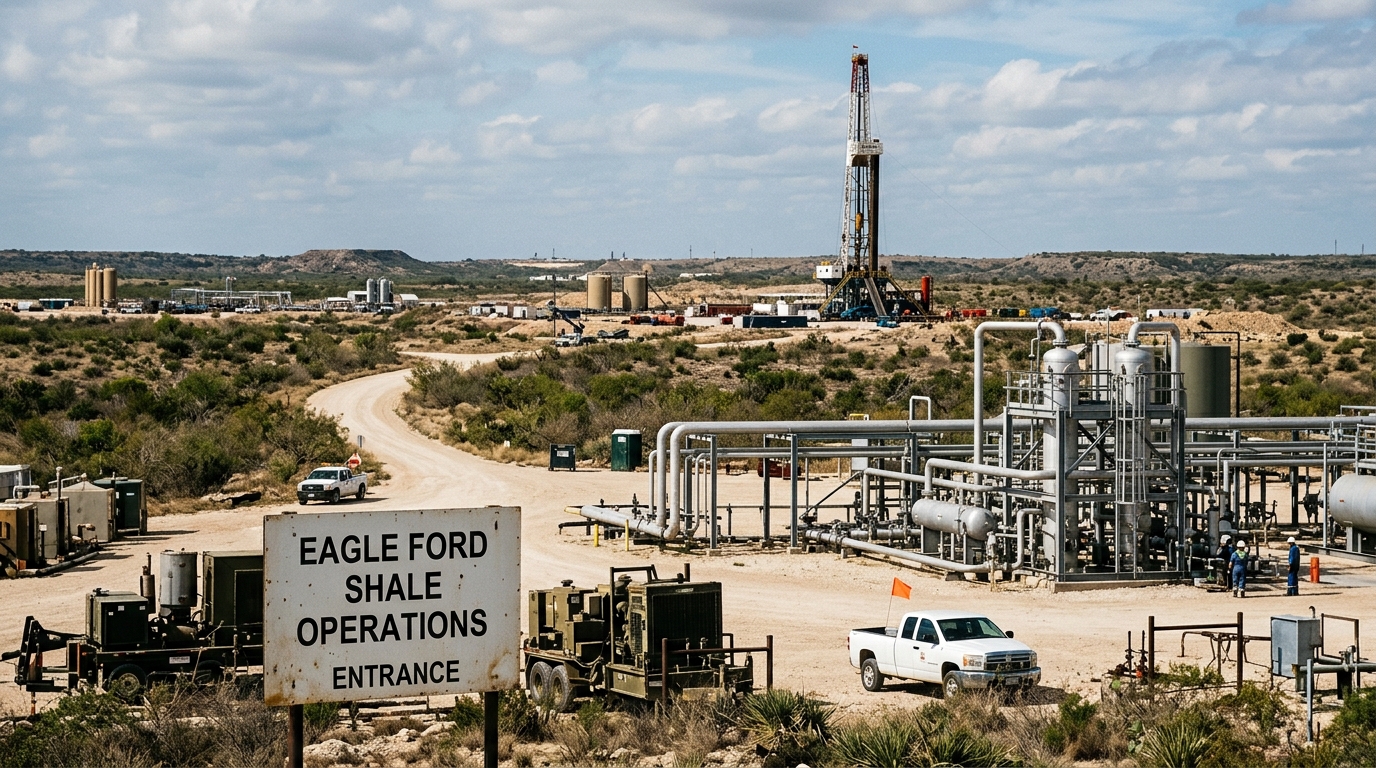
It was a little-known $1,000 oil investment he bought in 1962.
According to Munger’s account, that small stake later paid about $70,000 a year and roughly $1 million in total after 60 years.
That was Munger’s separate historical result. It is not typical, it is not from the recommendation I’m making today, and no one should expect to repeat it.
See why Munger loved this unusual oil income setup
Munger did not run the wells, buy a drilling rig or manage a crew. Yet the checks kept coming as oil was produced.
I have found a different oil income investment available today through an ordinary brokerage account. At the source date, one unit cost less than $15.
It connects investors to interests across more than 17 million gross acres, 28 states and more than 137,000 producing wells.
The income is variable. The unit price can fall. And past oil fortunes do not guarantee a future one.
My presentation explains the structure, why I favor it now and what could go wrong before you invest.
Good investing,
Marc Lichtenfeld
Chief Income Strategist, The Oxford Club
P.S. It has made a distribution every quarter since its 2017 IPO, including during the 2020 oil crash. The amount can change. Watch the full oil income presentation here before it is too late.
GM’s EV Sales Crashed 62%. Is the Stock Finally Cheap?
Hey there, bargain hunter. The post-subsidy auto market has arrived, and it is not subtle.
Scoreboard
General Motors sold 670,974 vehicles in the U.S. during Q3 2026, down 5.5% year over year. The headline number is unpleasant. The EV number is ugly: GM delivered just 25,213 electric vehicles in the quarter, a 62% collapse from 66,501 in Q3 2025. That drop put EVs at 3.8% of GM’s total mix, against 9.4% a year ago. Ford did not escape either, posting 509,764 vehicles, down 6.6%, though its adjusted retail share actually rose 0.4 percentage points to 12.1% once you strip out the planned Escape and Corsair phase-out. Over in Europe, the walls are already breached: Chinese brands have captured about 12% of that market, and Ford CEO Jim Farley said publicly on September 29, 2026 that it is “too late” for Europe to fend them off.
What Actually Happened
The market expected a soft quarter. It got a collapse. The comparison period was poisoned from the start: Q3 2025 was a tax-credit rush quarter, as buyers sprinted to take the $7,500 EV credit before it expired at the end of September 2025. When the credit vanished, so did the demand. The Equinox EV, once GM’s EV volume leader, fell 93.2% to just 1,705 units. The Blazer EV dropped 84.4%. The Silverado EV fell 58%.
Toyota ran the opposite play. Its electrified vehicle sales reached 363,367 in Q3, up 28.5%, representing 57.4% of its total U.S. mix. The RAV4 Hybrid alone sold 28,642 units in September, up 114.3% on a volume basis (and up 123.2% on a daily-selling-rate basis). Toyota’s trick is not magic: it bet on hybrids when Detroit was betting on mandates, and now buyers are voting with their wallets.
The Investor Who Tabbed Tesla, NVIDIA and AMD Before They Soared as High as 3,129%… 6,271%… and 25,000% over 20 years at their Peak Says: “This is BIGGER Than Anthropic”
Anthropic was the hottest IPO in history. But Matt McCall says he’s not touching a single share.
He’s found a tiny company that poured $100 million into Anthropic years ago. If history repeats, he says it could double or triple in the years ahead.
For the time being, you can watch his interview free, right here. (Name and ticker inside.)
Meanwhile Farley, whose own Ford EV sales fell 80.2% to 6,047 units in Q3, is watching BYD target 1.5 million exports in 2026, up from far smaller volumes four years ago. China’s automakers are on track to exceed 12 million total overseas sales this year. Import bans buy time. They do not build competitive cars.
The Business, Briefly
GM is a truck and SUV company that tried to become an EV company on policy tailwinds that reversed. Full-size pickups and SUVs generate most of its operating profit. The EV segment burned through capital and then required a widely reported $6 billion charge in January 2026, including $4.2 billion in cash-related supplier settlements and contract terminations and $1.8 billion in non-cash impairment charges. Two Ultium Cells battery plants in Ohio and Tennessee were idled in January. The Tennessee site in Spring Hill is being retooled to produce lithium-iron phosphate batteries for energy storage systems. The Ohio site resumed ramp-up after workers began returning in August 2026.
The regulatory backdrop matters as much as the balance sheet. Washington’s rollback of Biden-era fuel economy standards reshuffled the compliance math for every automaker still holding EV credits.
Is It Cheap?
This is where bargain hunters earn their keep. GM’s forward P/E sits around 6x, roughly 55% below the auto industry median of around 14x. Its 5-year average P/E is under 10x. On a normalized ICE-earnings basis, the stock looks genuinely inexpensive.
Here is the catch. TTM earnings are depressed by the EV writedown cycle. Strip out the charges and the ICE business is still throwing off profits. But the battery assets on the balance sheet are worth less than GM once believed, and the market is right to ask whether the pivot back to trucks is a strategic retreat or a rational capital allocation. Ford’s Maverick Hybrid, up 59.6% to a quarterly record of 27,793 units, suggests the hybrid middle ground is where real demand lives right now, not at either extreme.
Cross-border supply chains add another variable to the truck-profit story. A 50% tariff on Canadian auto parts and steel, effective January 1, compounds the cost pressure on any automaker running cross-border assembly.
Bull / Base / Bear
- Bull: GM earns $10-plus per share on normalized ICE volumes, trades at 8-9x, and the EV write cycle is complete. Trucks stay dominant for 5-7 more years. Stock doubles from current levels.
- Base: ICE stays solid, EV losses stabilize, Chinese access to the U.S. remains restricted. GM grinds higher on buybacks and F-Series-equivalent truck profits. Mid-single-digit annual returns.
- Bear: Trump loosens EV import restrictions, or a domestic recession cuts into truck and SUV demand. The $6 billion writedown is not the last. Margins compress and the forward P/E is not as cheap as it looks because the E keeps falling.
Action Plan
Do not rush. Q3 2026 earnings are still ahead, and the market has not yet priced in whether the impairment cycle is finished. If GM’s earnings report confirms ICE margins are holding and the EV drag is quantified cleanly, a modest starter position at current levels makes sense. Scale in: one-third now, one-third on the earnings reaction, hold the final third for a potential dip if Ford or Stellantis reports something that spooks the sector. Set a stop on a clean break below the trailing 12-month low.
For Toyota (TM): it is not cheap, but the hybrid playbook is working. Watch it as a long-term compounder rather than a value buy today.
Nvidia’s Next Big Potential Winner Is Not a Chip Stock
Nvidia has already backed 11 companies in an emerging field that has nothing to do with semiconductors, gaming, or data centers.
One is a tiny publicly traded company that could help open an enormous new market for artificial intelligence.
And Wall St veteran Matt McCall believes November 14th could be the date the rest of Wall Street catches on.
Cheap Investor Scorecard
- GM Q3 EV sales: 25,213 units (down 62% YoY). Watch for stabilization above 30,000.
- GM forward P/E: approximately 6x vs. industry median ~14x. Cheap on earnings, expensive on assets.
- GM $6B EV charge: is this the last one? Confirm on Q3 earnings call.
- Ford Maverick Hybrid: up 59.6% to quarterly record. Hybrid demand is real, not theoretical.
- Toyota electrified mix: 57.4% of Q3 sales. Benchmark against GM and Ford’s mix quarterly.
- BYD exports: targeting 1.5M units in 2026. Tracks the pace of the external threat.
- Farley’s Europe warning: Chinese brands at about 12% of European market. Watch U.S. import policy headlines weekly.
- GM ICE truck volumes: Silverado LD up 13.3% in Q3. The cash engine is intact for now.
- Ultium Cells restart: the Ohio site began ramp-up again as workers returned in August 2026. Production cadence is the real tell.
- Ford’s adjusted retail share: rose 0.4pt to 12.1% excluding phase-outs. Share, not just volume, is the real health check.
Bottom Line
If GM’s ICE business holds margins through 2027 and the EV impairment cycle is genuinely complete, the stock is cheap on normalised earnings. But the battery plants are worth less than the balance sheet once said, and Farley is right: import bans are a moat, not a strategy. Buy GM conditionally, small, and only if the Q3 earnings call shows no new charges. If there is another writedown, wait for the dust to settle before adding.