
October 9, 2026
Bonus Content: Devon Energy Is Selling Eagle Ford for $4.2 Billion
Dear reader,
Most investors wait for the government press conference.
I follow the money before the cameras show up.
And the money trail now leads straight to one tiny nickel stock.
Its U.S. platform has already been selected for $135.4 million in disclosed federal grants: $114.8 million tied to a domestic processing facility and another $20.6 million supporting exploration in Minnesota and Michigan.
That is not a prediction. That’s money already disclosed.
The next step is my forecast: I believe Washington could eventually go further and take an equity stake.
It may never happen. But the U.S. has already shown it is willing to put taxpayer capital directly into strategic mineral companies. And this company now controls the only primary nickel mine operating in America.
Meanwhile, Tesla has locked in a six-year supply agreement, and America remains dangerously exposed to foreign nickel supply.
Russia, China, and Indonesia have leverage because the United States allowed its domestic pipeline to wither.
This little company is one of the few credible ways to fight back.
That’s why I bought 10,000 shares before any equity announcement.
I am not promising Washington will buy in. I am saying the grants, the operating mine, the Tesla agreement, and the strategic pressure form a setup I refuse to ignore.
Click here to learn more about the $5 nickel stock I believe Washington could target next.
Yours for peace, prosperity, and liberty, AEIOU,
Dr. Mark Skousen
Macroeconomic Strategist, The Oxford Club
P.S. Washington has already backed this platform with $135.4 million in disclosed grants.
If an equity stake comes next, I believe a stock this small could move violently.
I refuse to wait for the press conference.
Click here to reveal details on what I bought before Washington makes its next move.
Devon Energy Is Selling Eagle Ford for $4.2 Billion
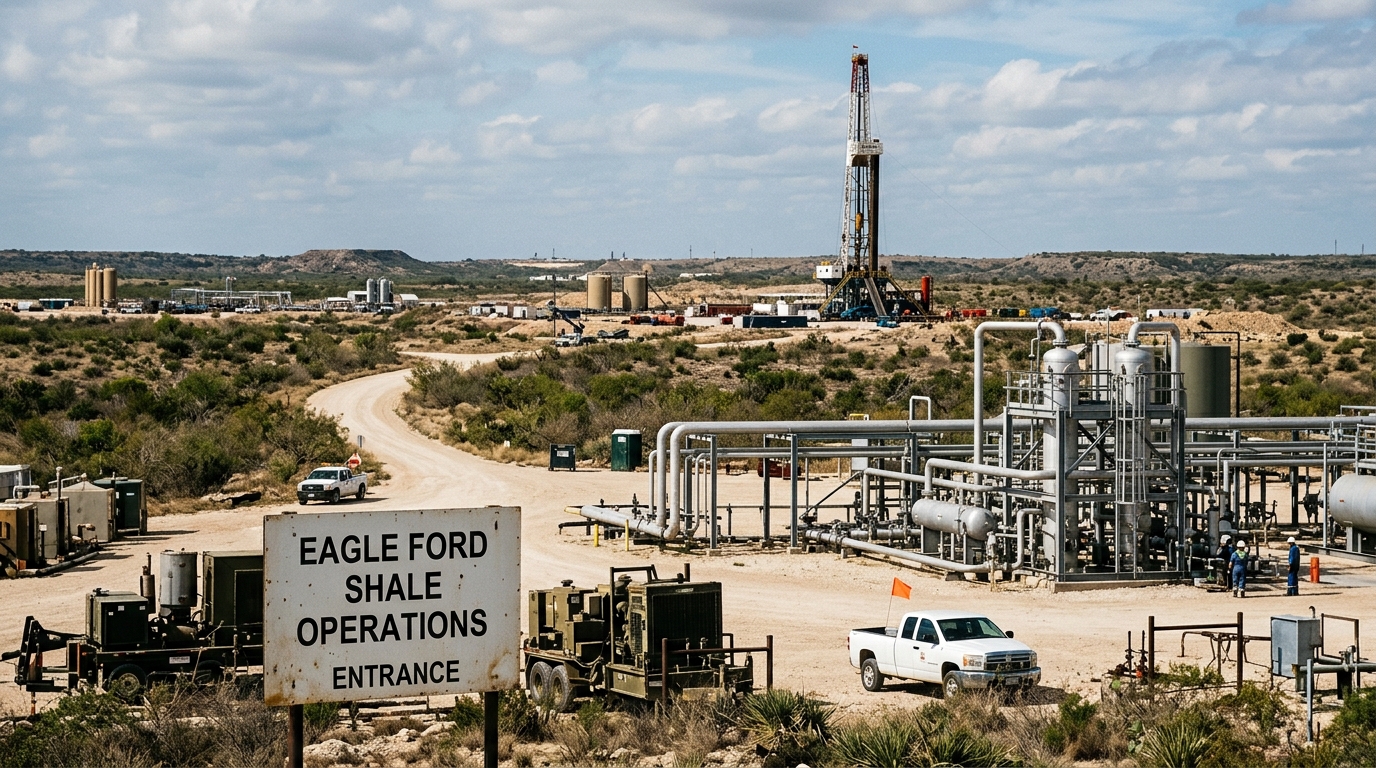
Hey there, bargain hunter. Devon Energy dropped a headline Thursday morning that sounds like a simple asset sale. It is not. Devon has agreed to sell its Eagle Ford assets to Crescent Energy for $4.2 billion in cash, subject to customary closing adjustments. The real question is what $4.2 billion of South Texas shale actually buys Devon’s shareholders once it hits the balance sheet.
Scoreboard
- DVN closed Thursday, October 8, 2026 at $48.92, up about 2.17% on the day.
- CRGY fell on Thursday, October 8, 2026, but the exact percentage move and intraday price depend on the timestamp. Treat “about 5% down” as the right order of magnitude rather than a precise quote.
- The package covers approximately 90,000 net acres in Karnes, DeWitt, and Gonzales Counties, representing about 4% of Devon’s total production.
- Crescent estimates the net purchase price at approximately $3.85 billion after anticipated adjustments.
What Actually Happened
The divestment comes amid continued investor pressure on Devon to streamline its portfolio and focus on its core Permian Basin operations following its merger with Coterra Energy. Devon needed a clear answer to the question every shareholder has been asking since that merger closed: what do you actually do with the parts that do not fit?
Devon framed the divestiture as a portfolio high-grading move that lengthens inventory life, lowers its corporate breakeven, and reduces its base decline rate, sharpening focus on higher-return, longer-duration assets such as the Delaware Basin. The Eagle Ford, in this light, was the cleanest asset to monetize: mature, well-understood, and worth more to a buyer building scale there than it was to Devon managing it as a side position.
Better Than Oil Stocks
The best way to profit from energy is NOT a stock…
Rather, it’s this little-known alternative investment.
The Buyback Math
This is where the Cheap Investor lens matters. Devon plans to use after-tax proceeds to accelerate share buybacks and pay down debt. In May 2026, Devon’s board authorized a new $8.0 billion share repurchase program expiring June 30, 2029. With $7.8 billion remaining on that authorization as of its Q2 2026 reporting, management had already signaled repurchases look compelling at current share prices.
At roughly $49 per share, $4.2 billion in gross proceeds could retire somewhere around 85 million shares before taxes and adjustment. Devon carries roughly 1.1 billion shares outstanding, so that is approximately 7-8% of the float potentially coming off the board. That is not trivial. Management characterized the $4.2 billion price as accretive on a per-share basis to free cash flow and net asset value. The debt side also helps: Devon had about $8.4 billion of total debt at March 31, 2026, so even a partial paydown meaningfully moves its leverage ratio.
Is DVN Cheap?
Valuation snapshots move every day, and the specific P/E, price-to-cash-flow, and price-to-sales multiples in the original draft are not consistently verifiable across mainstream quote sources as of October 2026. Keep the practical framing instead: at around $49, Devon is trading at a market multiple that many energy investors still describe as “single-digit to low-double-digit earnings” versus large-cap peers, with upside that depends more on commodity prices and capital return pace than on perfect multiple math.
On the Street side, UBS raised its price target to $65 on October 7, 2026, and Truist has reiterated a Buy rating in 2026 (with targets in the low-to-mid $60s in recent notes). That supports the core idea: if you believe the buyback actually accelerates, the gap between the stock price and many analysts’ targets is meaningful, even after you haircut the targets for oil risk.
What Crescent Is Getting
The acquired assets produce approximately 68,000 barrels of oil equivalent per day, with oil at 55-60% of production, and add more than 600 high-quality net drilling locations. Crescent also says the deal makes it the Eagle Ford’s second-largest producer, with pro forma production around 400,000 boe/d. Crescent expects $140 million in annual operational and commercial improvements, including about $100 million from drilling and completion optimization.
To help fund the purchase, Crescent launched an underwritten offering of $1 billion of Class A common stock. That dilution, arriving the same day as the deal announcement, helps explain the CRGY selloff. The broader point holds: the balance sheet will be stretched until synergies materialize.
Bull / Base / Bear
DVN Bull: Buybacks at under $50 retire shares cheaply against a $60-plus analyst target range. A Delaware Basin-focused Devon re-rates higher as the cleaner story attracts fresh institutional money.
DVN Base: Proceeds split between debt reduction and buybacks. The stock grinds toward $55-58 over the next 12 months as the $8 billion program does its work.
DVN Bear: Oil falls hard, buyback pace slows, and shedding 4% of production hurts near-term cash flow before merger synergies cover the gap.
CRGY Bull: A buyer with scale, 600-plus new drill locations, and $140 million in identified synergies is genuinely interesting once dilution digests.
CRGY Bear: Leverage spikes and the equity cushion thins fast if oil weakens before synergies and development efficiencies show up in reported results.
The Deal Elon Couldn’t Close in 2018 Is Back on the Table
Elon went after this small chipmaker back in 2018… and walked away empty-handed.
Today it’s the missing piece of his entire AI empire.
And this time he has billions to spend.
Get positioned before he moves… and you could see 50% overnight gains, with a shot at 300% in the months that follow.
Action Plan
For DVN: the stock at roughly a low-double-digit earnings multiple, with an $8 billion buyback authorization and $4.2 billion in gross proceeds potentially arriving, is a reasonable incremental buy for a conservative bargain hunter who can live with oil volatility. Scale in on any pullback toward $46-47. The next meaningful catalyst is the Q3 earnings release on Thursday, November 5, 2026, where management can quantify buyback cadence (with the conference call set for Friday, November 6).
For CRGY: wait for the equity offering to price and settle. The strategic logic is sound but the near-term dilution and leverage spike make it a watch-and-wait until the balance sheet picture clears.
Cheap Investor Scorecard
- Deal closing: Watch for regulatory clearance; expected Q4 2026 or early 2027.
- DVN buyback pace: Track shares outstanding each quarter against the $8 billion authorization.
- Debt reduction: Monitor net debt-to-EBITDAX. (The draft’s specific “0.6x by year-end 2026” target is not clearly supported in Devon’s primary filings I could verify, so treat any exact ratio goal as tentative unless Devon reiterates it in earnings materials.)
- DVN valuation vs. peers: Keep it simple: if Devon’s multiple expands while buybacks shrink share count, you get a double tailwind. If oil drops, the multiple usually compresses.
- CRGY synergy realization: The $140 million annual figure is a projection. Look for confirmed LOE reductions and well cost improvements in 2027 results.
- Oil price: WTI levels matter, but the draft’s “WTI near $90” framing should be treated as scenario math, not a statement of the current tape.
- DVN November earnings: Track the buyback pace guidance and how management describes post-sale capital allocation priorities.
Bottom Line
If Devon closes this deal, deploys the cash into buybacks at current prices, and oil cooperates, DVN around $49 is a reasonable buy with an identifiable path back into the $60s. The Eagle Ford exit is not a retreat. It is Devon loading the buyback cannon with $4.2 billion and pointing it at its own undervalued stock. Crescent gets the acreage; Devon shareholders get the math. Right now, the math favors Devon.