
October 6, 2026
Bonus Content: Lamb Weston Is Down 35% From Its High. Are the Fries Business Cheap or Just Broken?
Editor’s Note: Former tech executive Jeff Brown picked Bitcoin, Tesla, and Nvidia before they jumped as high as 52,400%, 2,150% and 36,000%. Now he’s recommending an Elon Musk-backed startup that has been called “the fastest-growing business in the history of capitalism.” And you can claim your pre-IPO stake for less than $50. Read more below.
Dear Reader,
See this document below?
Elon Musk just revealed what I believe is the biggest investment opportunity of the year when he filed this official document with the SEC.
Because on page 146 he revealed the name of a startup that’s set to be…
The next monster IPO on Wall Street. (Click here to get the details.)
Even though this has nothing to do with robots, self-driving cars, or rockets…
This startup is growing faster than Tesla…
Faster than SpaceX…
And it’s even growing 23 times faster than Nvidia.
That’s why The Atlantic called it…
“The fastest-growing business in the history of capitalism.”
These types of explosive IPO opportunities are normally off-limits to everyday folks like you.
They’re reserved for rich people on Wall Street and Silicon Valley.
But I found a way for you to claim your stake before the IPO… starting for less than $50.
Click here to see the details, including the name of this startup, completely free of charge.

We have so much to look forward to,
Jeff Brown
Founder & CEO, Brownstone Research
Lamb Weston Is Down 35% From Its High. Are the Fries Business Cheap or Just Broken?
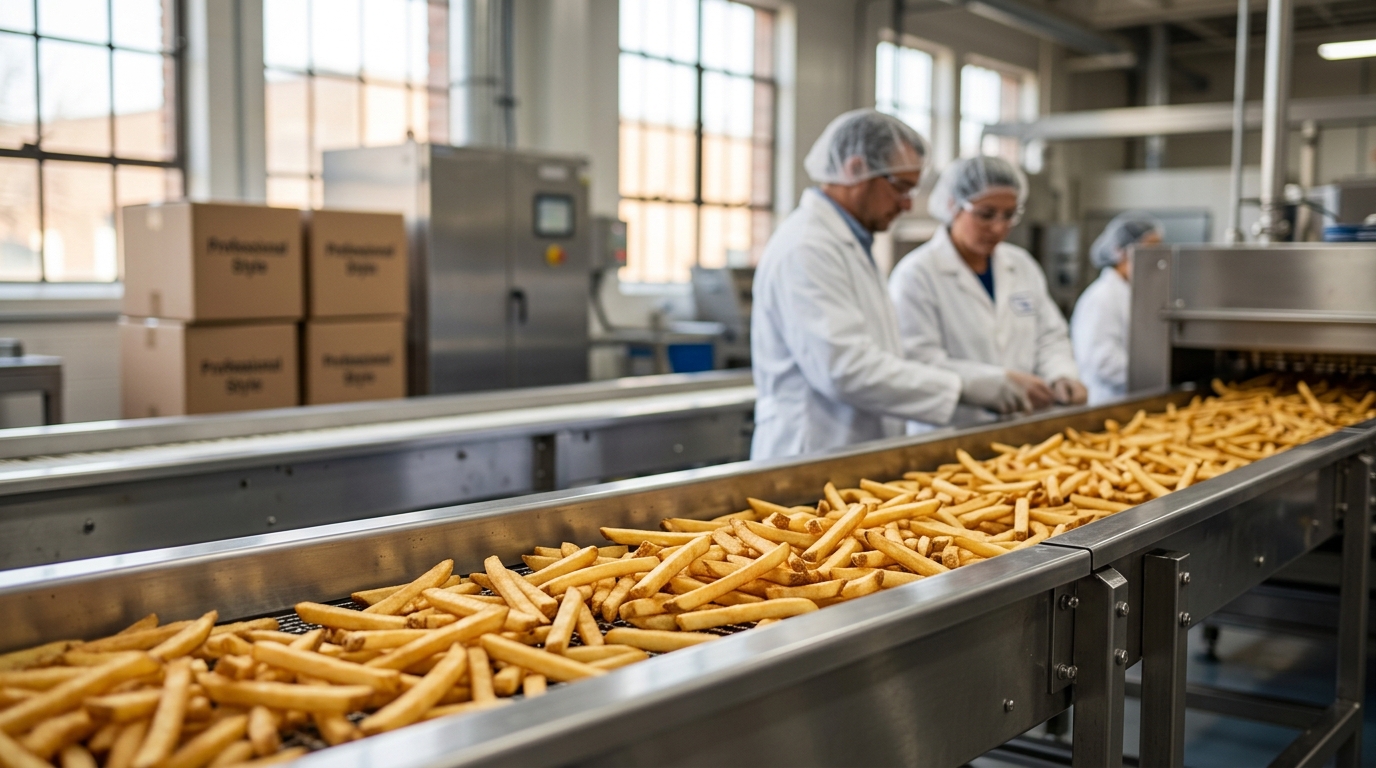
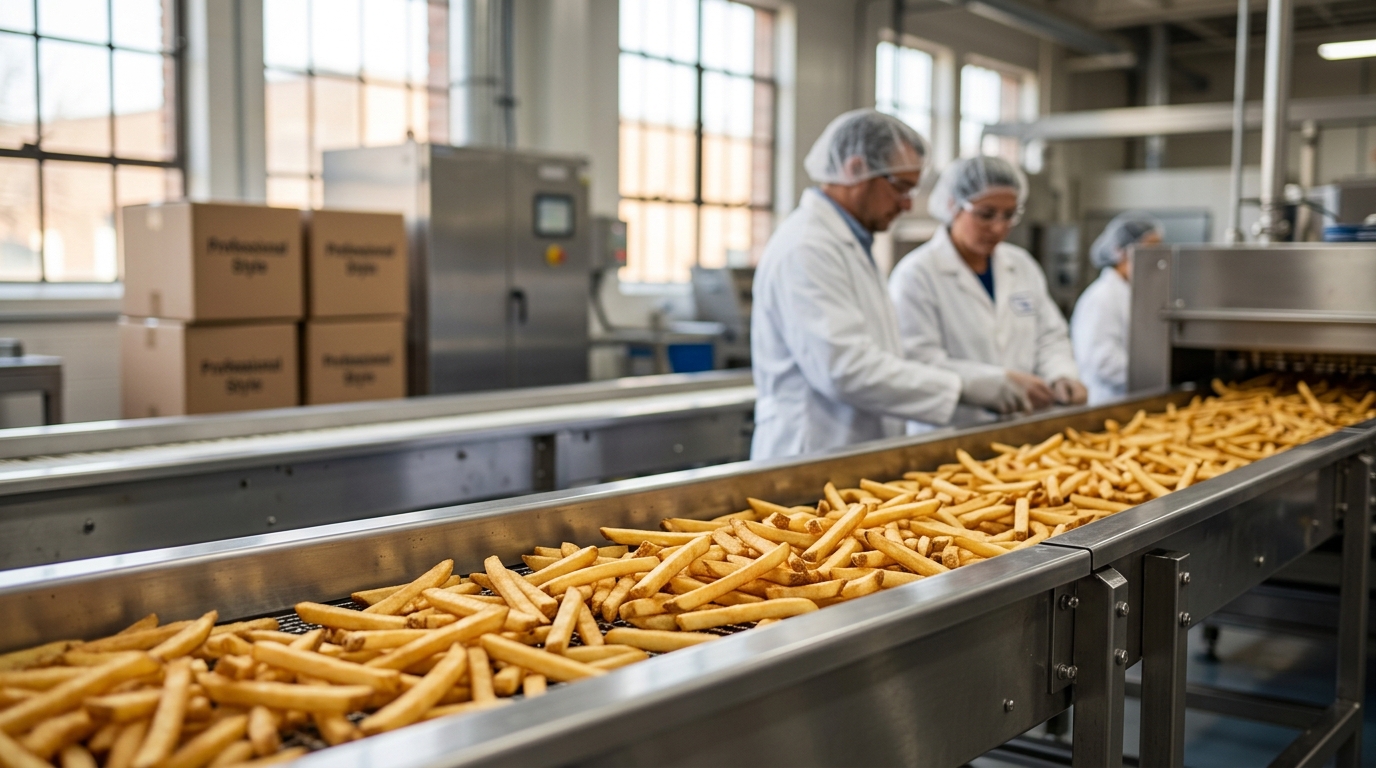
Hey there, bargain hunter. This morning, Lamb Weston is expected to drop its fiscal Q1 2027 results before the open, and it is exactly the kind of situation where the cheap crowd needs to ask an uncomfortable question: is this stock cheap because the business is temporarily beaten up, or cheap because the underlying demand is eroding?
Scoreboard
LW traded around $43.60 heading into the report, sitting $23.47 below its 52-week high of $67.07, a 35% gap from peak. The stock had slumped roughly 25% since late August on restaurant-traffic anxiety and potato-supply concerns, then bounced 5.88% in the October 2 session as pre-earnings optimism crept back in. Consensus coming in was about $0.59 EPS on roughly $1.65 billion in revenue. That compares with $0.74 EPS and $1.66 billion in the year-ago period, implying a lower earnings bar alongside nearly flat sales expectations.
What the Business Actually Is
Lamb Weston is North America’s largest frozen potato producer, holding more than 40% market share, ahead of McCain Foods at about 30% and J.R. Simplot at about 20%. It buys raw potatoes from growers, processes them in its plants, and ships the finished products frozen to restaurants, fast-food chains, foodservice distributors, and grocery retailers, earning most of its money through long-term supply relationships. In short, if a fry lands in a McDonald’s or Taco Bell basket, there is a reasonable chance Lamb Weston made it.
The Real Reason the Stock Got Here
Two forces drove the selloff. First, restaurant traffic. McDonald’s U.S. same-store sales rose only 0.8% in Q2 2026 as traffic to domestic restaurants fell, with average check up but guest counts down. When fewer people walk through the door, fewer fry orders get placed. Second, pricing pain inside Lamb Weston itself. The company’s price and mix has been declining, reflecting continued price and trade support for customers and consumer shifts toward value-oriented channels.
The market concluded that soft traffic plus pricing concessions plus elevated debt equals a melting asset. That may be too simple.
Data Section
- Full-year fiscal 2026 net sales: $6,612 million, up 2% year over year, exceeding guidance of $6,550 million.
- Adjusted EBITDA for fiscal 2026: $1,147 million, above the high end of guidance at $1,140 million.
- Operating cash flow in fiscal 2026 reached $942.9 million. Capital expenditures fell $240.6 million from the prior year to $410.1 million after completing growth investments.
- Forward guidance calls for cash from operations of $750 million to $800 million, with capex of $380 million to $410 million.
- FY2027 EPS guidance: $2.95 to $3.25.
- Net debt as of May 31, 2026: approximately $3.9 billion.
- North American potato contract prices for 2026 are expected to decline by a low-to-mid single-digit percentage, while European contracted raw potato costs could fall by a mid-teen percentage compared to 2025.
Is It Cheap?
At the pre-earnings price, LW traded at a price-to-cash-flow of 7.49x, compared with 6.02x for General Mills and 6.79x for Kraft Heinz. Not screaming cheap relative to peers, but those peers do not have Lamb Weston’s volume recovery story or falling input cost tailwind. The average analyst rating is Hold with a 12-month price target of $55.25, implying roughly 27% upside from recent levels. JPMorgan cut its target to $46 from $52 but maintained a Neutral rating. The bull case depends on whether lower potato costs show up in margins before traffic does further damage.
Bull / Base / Bear
Bull: Lower input costs flowing through in fiscal 2027 could be a meaningful catalyst for margin recovery, particularly if North American volume momentum holds. Taco Bell’s same-store sales grew 7% in Q2 2026, suggesting at least one major fry customer is still ordering heavily.
Base: EPS lands near the midpoint of the $2.95 to $3.25 guidance range, cash flow covers the dividend, and the stock grinds toward the analyst target over 12 to 18 months.
Bear: Organic revenue disappoints for a third consecutive year, and a projected sales decline compounds investor concerns. The $3.9 billion debt load leaves little room for error if EBITDA slides.
Action Plan
Do not chase the pre-earnings pop. If today’s Q1 result beats on volume and management holds the $2.95 to $3.25 EPS range, consider a starter position. Scale toward a full position only if Q2 guidance includes a concrete margin improvement tied to lower potato costs. Keep the position small until the debt-to-EBITDA ratio, currently 3.4x, shows a downward trend.
Cheap Investor Checklist
- Q1 EPS vs. about $0.59 consensus: beat or miss?
- FY2027 EPS guidance held, raised, or cut?
- North America volume growth: positive or flat?
- Price/mix trend: stabilizing or still declining?
- Operating cash flow trajectory toward the $750M to $800M full-year target
- Debt-to-EBITDA: any improvement from the 3.4x level?
- Potato input cost commentary: is the low-to-mid single-digit tailwind confirmed?
- McDonald’s and Taco Bell traffic commentary from their next updates
Bottom Line
If Lamb Weston holds guidance and shows volume holding in North America, the cash flow case at roughly 7.5x price-to-cash-flow is defensible for a patient buyer. If management cuts the EPS range or signals that restaurant traffic headwinds are worsening, the debt load makes this a falling knife, not a bargain. Watch the guidance, not just the headline beat.