You won’t believe what I’ve been seeing almost every Monday at 9:30am.
For 20 years, I’ve been watching the markets.
Seen every pattern you can imagine.
But this one still blows my mind.
Almost every Monday morning… Right when the bell rings…
Certain stocks start doing things that shouldn’t be possible.
Little companies nobody’s heard of…
Have suddenly rocketed 100%… 200%… sometimes 500%.
All on the same day.
Past performance doesn’t indicate future results. And all trading carries risk, of course…
But after years of tracking this anomaly…
There are 4 specific things that happen before these Monday explosions.
And when I see all 4 together?
That’s my cue.
I’ve automated the whole process now.
My scanner watches thousands of stocks every Monday…
Hunting for those 4 signals.
When it finds them… you’ll know immediately.
Because Monday mornings could become your favorite time of the week.
See the Monday pattern that’s been hiding in plain sight
Tim Bohen
Amazon Is Putting Prime Delivery on Shopify Stores
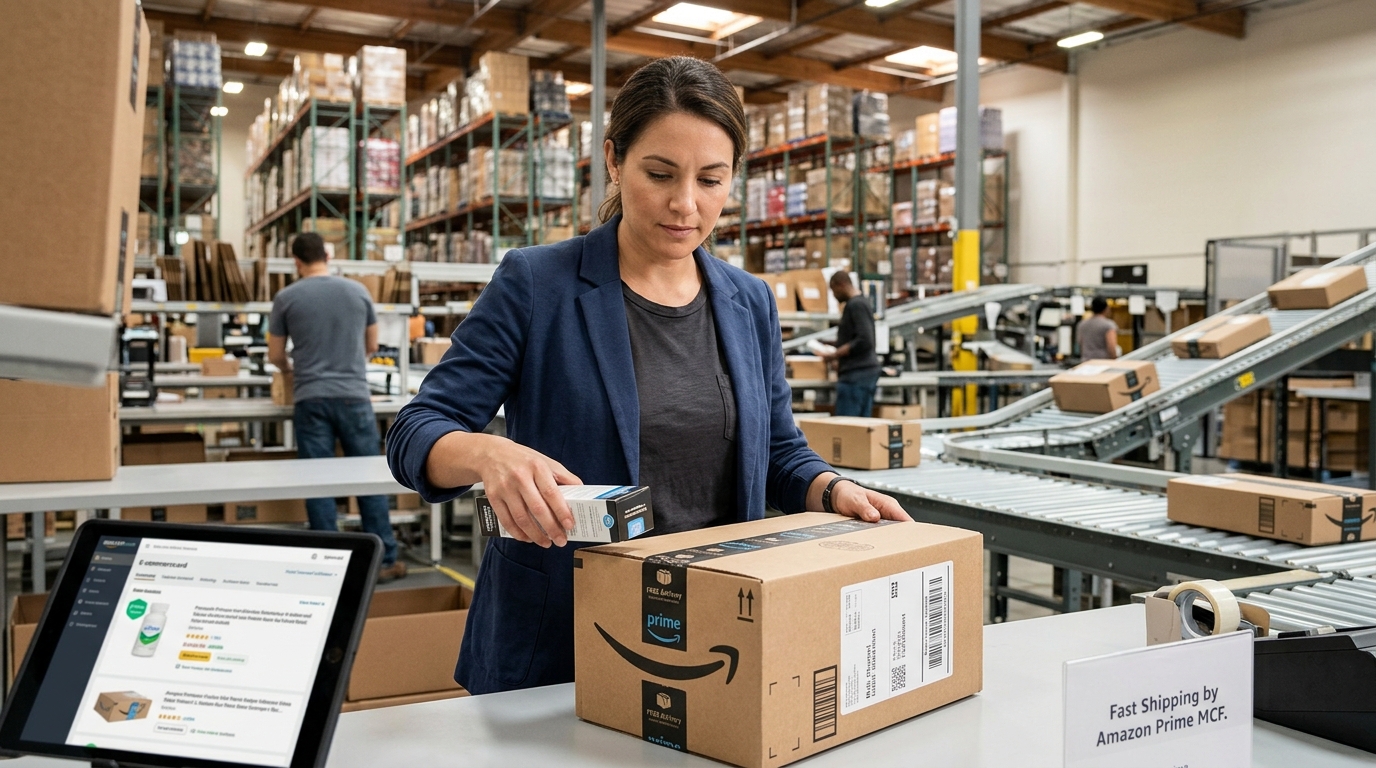
Hey there, bargain hunter. Amazon made two moves this week that look like logistics news on the surface but read as a strategic squeeze on every commerce platform charging merchants a premium for speed. On September 24, 2026, Amazon announced that hundreds of thousands of U.S. merchants using Multichannel Fulfillment can now add the Prime badge and fast, free delivery to their own websites at no additional cost beyond standard MCF fees. The shopper never logs into Amazon. The checkout stays the merchant’s own.
Scoreboard
That is the headline. The second piece is arguably sharper. Amazon’s new MCF Preferred Pricing Program lets eligible sellers save 15% to 25% on fulfillment fees for orders flowing through their own websites, marketplaces, and social channels, with no long-term contracts and discounts applied automatically. Amazon did not publish a verified figure for how many eligible orders have already shipped with Prime delivery, so treat early adoption claims as anecdotal until the company reports them. Alongside all of this, Amazon separately committed another $1.9 billion into its Delivery Service Partner programme for 2027, which brings the eight-year total to $21.7 billion.
The Real Reason
Amazon is not being generous. It is being strategic.
The same week it opened Prime fulfillment to the open web, Amazon blocked Meta’s Muse AI agent from shopping on its site, citing concerns that the agent did not identify itself, and that it appeared to capture and store customer credentials, which Amazon said could create privacy and security risks. That is the defensive half. The MCF expansion is the offensive half: pull merchants deeper into Amazon’s logistics infrastructure so that the customer relationship, wherever it lives, runs on Amazon rails. When your Shopify storefront ships via Amazon and converts via the Prime badge, Amazon collects the fulfillment revenue and the behavioral data. Shopify collects the subscription fee but loses its claim to being the indispensable piece of the checkout stack.
Deep Dive
Amazon Supply Chain Services bundles freight, distribution, fulfillment, and parcel shipping. MCF is the third-party logistics layer within it, already processing orders from Amazon.com, merchant websites, other online retailers, and social media channels. The integration with Shopify runs through Amazon’s own app. If you previously used Amazon’s older MCF app for Shopify, Amazon instructs merchants to migrate to the combined Multichannel Fulfillment and Buy with Prime app for Shopify.
Global-E (GLBE), which handles cross-border localisation for Shopify merchants, faces a similar pressure at the margins: MCF with Prime is US-only for now, but the infrastructure ambition is not small. UPS and FedEx should be watching volume, not just rates.
Data Section
- Amazon (AMZN): Q2 2026 revenue of $200.6 billion, up 20% year over year. AWS operating margin was 39.4% in Q2 2026.
- Shopify (SHOP): Q2 2026 revenue up 33.7% to $3.58 billion. GMV grew 32% to $115.57 billion. Free cash flow of $654 million at an 18% margin. Operating income up 67.7%.
- Shopify valuation: Valuation multiples move daily and depend on the data source and estimate set. If you are using this piece to make decisions, refresh the current forward P/E, EV/EBITDA, and price-to-sales for both SHOP and AMZN the day you read it rather than relying on a static snapshot.
- DSP investment: Amazon is committing $1.9 billion to its Delivery Service Partner programme in 2027, targeting a national average driver wage of nearly $24 per hour.
Is It Cheap?
Amazon’s valuation is not expensive for what you own. The MCF expansion adds fulfillment revenue, but the margin impact depends on how much incremental volume offsets the discounts. If the Prime badge meaningfully lifts conversion for merchants, Amazon is effectively exporting Prime as a growth lever beyond Amazon.com.
Shopify’s multiple is a different conversation. The bull case rests on Shopify being commerce infrastructure that merchants depend on regardless of who ships the package. That thesis holds only if fulfillment and the Prime badge do not become differentiated reasons to bypass Shopify’s higher-value services. Shopify posted 67.7% operating income growth on 33.7% revenue growth last quarter, which is genuinely impressive. But the multiple still demands that Amazon stays a threat Shopify can outrun, not one that runs alongside it on the same merchant’s storefront.
Bull / Base / Bear
Bull on AMZN: MCF becomes the default fulfillment layer for independent ecommerce. Fee revenue grows without proportional capex. The Muse block signals Amazon will defend customer data aggressively as agentic commerce scales.
Base on AMZN: MCF adoption grows steadily, margin contribution is real but modest near-term. AWS and ads remain the primary earnings drivers. Stock grinds higher at a reasonable multiple.
Bear on AMZN: Fee discounts compress MCF margins before volume scales enough to compensate. The $1.9 billion DSP commitment raises the fixed cost base. Regulatory scrutiny on Amazon as logistics gatekeeper intensifies.
Bull on SHOP: Shopify becomes the operating system for merchants who use Amazon for fulfillment but rely on Shopify for payments, analytics, capital, and storefront tooling. Shopify has also said customers can use Meta’s Muse to discover products from Shopify merchants and complete purchases through Shop Pay.
Bear on SHOP: Amazon’s fee cut removes one of Shopify’s negotiating levers with merchants. With a premium multiple, there is no valuation cushion if GMV growth decelerates even modestly.
Action Plan
On AMZN: this week’s moves are incremental positives for the logistics and services revenue line. It is the steadier compounder. Scale into weakness on AWS margin noise rather than chasing a spike.
On SHOP: hold if you own it with a long horizon and believe in the platform thesis. Do not add on the basis that Amazon’s MCF integration means merchants stay loyal. It might be true. It is not cheap enough to be wrong about.
Cheap Investor Checklist
- MCF merchant adoption rate: watch for Amazon to share MCF adoption or usage indicators in Q3 commentary
- Shopify attach rate: does GMV per merchant grow or stagnate as Amazon absorbs the fulfillment relationship?
- Amazon services revenue margin: does the fee cut depress near-term take rate or does volume offset?
- Shopify earnings growth: track whether profitability momentum holds into Q3 2026
- DSP cost pressure: $1.9 billion in 2027 raises Amazon’s last-mile cost base; track against delivery volume growth
- Muse-style agent blocking: any legal or regulatory response that forces Amazon to allow agentic shopping would change the defensive moat
- GLBE: monitor whether Amazon’s US expansion accelerates a cross-border product to compete with Global-E directly
Bottom Line
If Amazon’s MCF adoption keeps compounding and a large share of eligible orders start routing through Prime delivery on merchant sites, Amazon wins fulfillment revenue at scale and Shopify’s differentiation narrows to software and payments alone. That is still a real business, but a higher multiple only works if Shopify keeps owning the merchant relationship while partners commoditize the shipping. Watch Q3 earnings from both companies in late October 2026 for the first company-reported signals that will tell you whether this week’s moves are strategic noise or a genuine inflection.