September 25, 2026
Bonus Content: Oil at $106 and a Consumer at 47.8: Who Still Has Pricing Power?
Hi,
Take a look at this…

It’s smaller than a fingertip…
It’s made of glass…
And it’s about to unlock the next wave of AI growth.
Jensen Huang, Nvidia’s CEO, says this “light-speed” device is shattering the limitations of AI… and without it, AI can’t scale.
Google Ventures says it’s the future of AI compute…
And Sequoia Capital – the firm that backed Anthropic and OpenAI – calls it a “holy grail.”
Already, Elon Musk, Mark Zuckerberg, Cathie Wood, and Bill Gates are moving money to prepare for what’s coming…
Yet most Americans have never heard of it.
Wall Street insider Jason Bodner – the same man who called Nvidia at $4.50 – says this device is about to launch a whole new wave of AI winners…
And to prove it, he’s giving away his #1 stock involved with it – for free.
Click here to learn more. (No purchase necessary.)
We have so much to look forward to,
Jeff Brown
Founder & CEO, Brownstone Research
P.S. Stocks tied to this “light-speed” device already surged 133%, 217%, and even 320% – in a few short months. But it’s just getting started. Click here before the mainstream catches on.
Oil at $106 and a Consumer at 47.8: Who Still Has Pricing Power?
Hey there, bargain hunter. Two vises are tightening at the same time this week, and the companies caught between them are about to tell you everything you need to know about who still has the leverage to protect margins.
Scoreboard
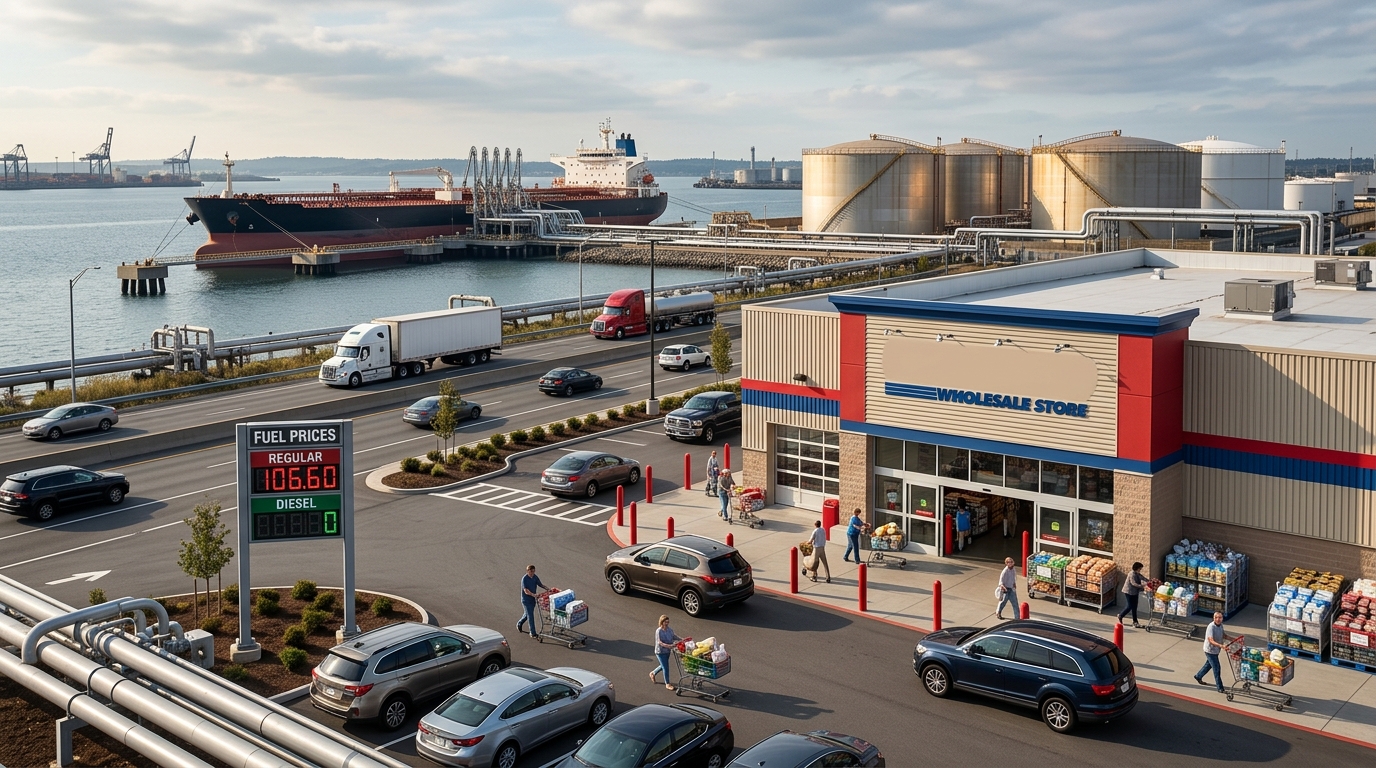
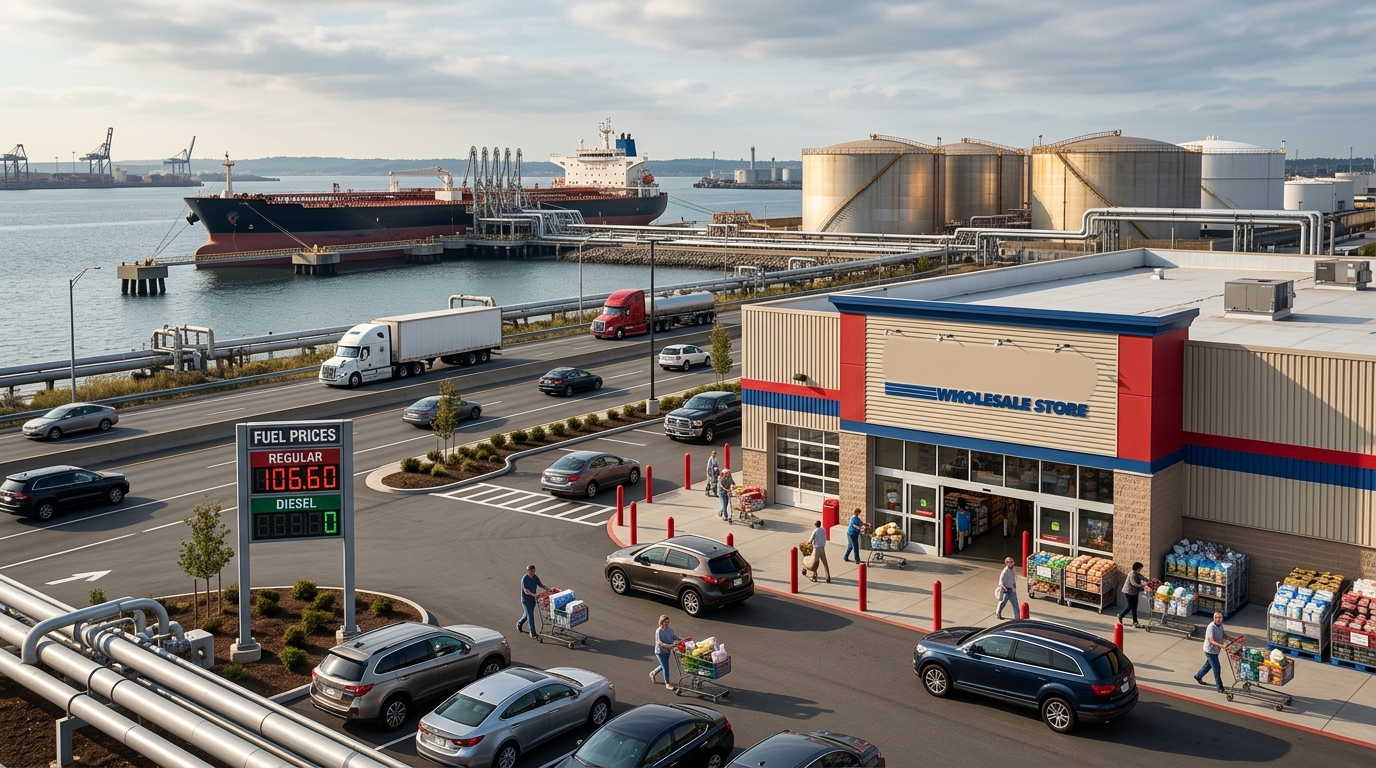
On the cost side: Brent settled at $106.60 Thursday and has been trading around that level this morning, up sharply over the past month as Strait of Hormuz shipping disruptions bite into supply. The September flash PMI showed input costs climbing at their sharpest pace in nearly four years, with supply-chain delays at their most widespread since July 2022. On the demand side: the University of Michigan’s consumer sentiment index fell to 47.8 in early September, down for a second consecutive month and well below market expectations of 51.0. Year-ahead inflation expectations jumped to 4.6%, the highest since June. The final September reading drops at 10am today.
What Actually Happened
Two companies filed live reports Thursday night. Costco and Darden together answered the first real question of this cost cycle: which business models hold up when energy resets every input and consumers flinch.
Costco closed fiscal 2026 with fourth-quarter net sales of $93.9 billion, up 11.2% year over year, as comparable sales rose 9.4%. The adjusted EPS of $6.75 included a non-recurring benefit of $0.15 per share from IEEPA tariff refunds received during the quarter, less partial reinvestment of those refunds in increased member values. Strip that out and the core quarter is still a double-digit comps story running at a pace Kroger cannot match. Membership fee income reached $1.849 billion, up 7.3%, as total cardholders grew to 150.4 million with a worldwide renewal rate of 89.8%.
Darden came in roughly in-line. EPS from continuing operations was $2.05. Net sales rose 5.1% to $3.20 billion. LongHorn Steakhouse saw a strong 6.8% increase in same-restaurant sales, while Yard House achieved 10.0% growth, benefiting from events like the World Cup. Olive Garden lagged at 1.0%. The company returned $406 million to shareholders and maintained a restaurant-level EBITDA margin of 18.8%, consistent with the previous year. Not a disaster. Not a winner. A hold, at best.
The Real Reason This Matters Now
Input costs jumped at the steepest rate in nearly four years, with supply chain delays and capacity constraints likely to sustain inflationary pressures. That combination is the cruelest environment for a company without genuine pricing leverage: costs rise fast, and a sentiment-impaired consumer pushes back on any price increase you try to pass on.
Consumer sentiment sits 13.2% below where it was a year ago. The consumer is not broken, but they are scared and price-conscious. That is exactly who shops at Costco.
Is It Cheap?
Costco trades at a premium for one reason: the membership model absorbs cost shocks the way a shock absorber does. The moat is not the products; it is the renewal rate. At 89.8% worldwide, members are not leaving. That is the pricing power no input-cost spike can easily erase.
Among the other names on this screen, PG and KO have demonstrated in every prior cost cycle that branded consumer staples with dominant shelf position can pass costs through, though both face private-label pressure at elevated price points. GIS is more exposed to commodity grain costs than Costco or KO. MCD has menu-price headroom but faces a 47.8 consumer who is now choosing to eat at home. Sherwin-Williams passes paint costs to contractors who must keep working regardless; that is structural pricing leverage. Valero benefits directly from the same $106 Brent that is squeezing everyone else.
Bull / Base / Bear
- Bull: Hormuz reopens partially, Brent pulls back toward $90, input-cost pressure eases. Companies with strong gross margin histories pocket the relief rather than give it back. Costco’s renewal rate holds above 89%.
- Base: Oil stays in the $100-$110 range through Q4, sentiment stays depressed, and only the top-tier names with genuine volume-driven scale, like Costco and a select few staples, preserve gross margins. The rest see 50-150bps of compression.
- Bear: A second Fed hike materializes, the 10-year holds above 5%, and consumers finally cut discretionary spending sharply. Darden has said key commodity costs have been elevated and are expected to ease later in the fiscal year. Anyone without the Costco-style cost-pass-through model bleeds margin for two more quarters.
Action Plan
Screen for gross margin stability over the 2021-2022 cost-shock period and overlay it on today’s oil exposure. That filter leaves you with a short list. Costco belongs on it. Scale into COST on any weakness tied to the tariff-refund noise; the underlying 9.4% comp speaks for itself. Treat DRI as a monitor, not a buy, until Olive Garden comps accelerate past 2%. Valero is the asymmetric hedge: if Brent stays elevated, refining margins follow. If it falls, the consumer staples names rally. You do not need to pick one; sizing both is a way to stay insulated from whichever direction oil moves next.
Cheap Investor Scorecard
- Costco worldwide membership renewal rate: watch for any dip below 89%
- Costco digital comps: must sustain above 15% to justify valuation premium
- Brent crude: $100 is the line; above it, every food and fuel cost model breaks for low-margin operators
- Michigan Consumer Sentiment final reading (today, 10am): a revision above 49 signals stabilization; below 46 means the demand squeeze deepens
- Flash PMI input prices: at a multi-year high in September, watch for the final reading to confirm or moderate
- Darden’s Olive Garden same-store comps: needs to clear 2% before DRI becomes a conviction buy
- LongHorn comps: 6.8% shows the value-leaning casual-dining consumer is still spending selectively
- GIS and KO gross margins Q1: the first read on whether staples pricing held into the oil spike
- Sherwin-Williams volume data: contractors keep buying paint regardless of sentiment; watch for any volume softness as the leading signal
- NY Fed planned price-increase survey: if manufacturers and service firms widen their intended increases, the cost push is not peaking
Bottom Line
If Brent holds above $100 and sentiment stays below 50, the only companies worth owning are those whose customers have no alternative and whose cost structures can absorb without flinching. Costco’s 9.4% comp and 89.8% renewal rate put it at the top of that list today. If oil retreats and the final sentiment reading surprises to the upside, the trade broadens. Until then, stay close to the names with structural pricing leverage and watch the scorecard above, not the headlines.