
September 20, 2026
Bonus Content: Venezuela’s Oil Is Flowing. Your Gas Bill Ignores It.
How much will premium buyers spend to acquire a story library instead of building one? This February, Paramount spent $110.9B when they acquired Warner Bros. Discovery*.
Skybound Entertainment took another path.

Robert Kirkman and David Alpert (DA) built the company around the belief that creators should be at the heart of development. This superpower resulted in a $700M studio that owns 250+ IP properties outright. No acquisition required.
The opportunity to own a piece of it closes soon.
First, they built The Walking Dead, the most-watched cable show of all time, with $10B+ in franchise revenue. Next, Invincible; Prime Video’s #1 show for multiple seasons. Now, Skybound’s primed for its third straight win with the horror series based on Skybound’s original comic Stillwater, which was just greenlit to series by Amazon.
The biggest studios in the world spend eleven figures to get what Skybound’s been building for nearly two decades.
Final days to become an early-stage Skybound shareholder.
Venezuela’s Oil Is Flowing. Your Gas Bill Ignores It.
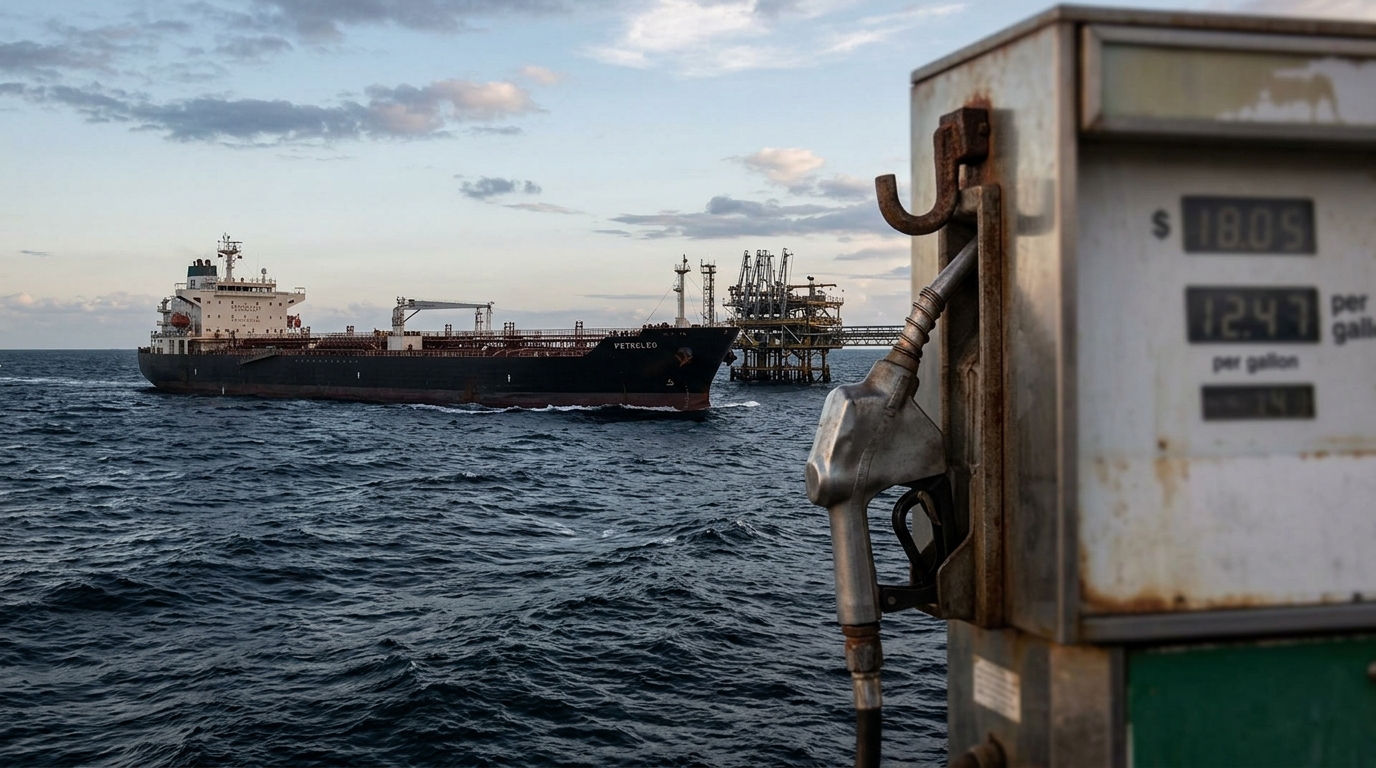
Hey there, bargain hunter. You have probably heard the pitch by now. The US controls Venezuelan oil. The world’s largest proven reserves. The biggest deal in history. Gas prices should be falling. They are not. The national average was about $4.10 a gallon in late August, up about $1.00 from a year ago. WTI crude closed at $99.53 a barrel on September 18. So what happened?
The Scoreboard
When President Trump announced the Venezuela oil agreement on August 28, WTI was already trading between $83 and $86 a barrel. Prices rose after the deal, not before. The EIA’s September 2026 Short-Term Energy Outlook says Brent averaged $91 per barrel in August and expects prices to ease as Middle East flows gradually increase. Retail diesel hit an all-time record of $5.85 a gallon on September 4, surpassing the June 2022 post-Russia-invasion peak. Distillate stocks sit roughly 13% below the five-year average.
The Real Reason Prices Are Not Falling
Venezuela is sending roughly 500,000 barrels per day to the US. That sounds large until you put the other number next to it. The Strait of Hormuz crisis, which began when the war in the region started on February 28, 2026 and tanker movements through the strait were nearly halted, has created the largest supply disruption in the history of the global oil market, according to the IEA. Recent IEA analysis puts Gulf producers’ oil exports about 13.1 million barrels per day below pre-war levels.
Venezuela is plugging roughly 4% of that gap. The math does not close.
The Infrastructure Problem Nobody Mentions
Even if Venezuela could ship more, the US refining system has a ceiling. Total US refinery operable capacity is about 18.2 million barrels per day as of January 1, 2026. Utilization rates across the system already sit near 87 to 95%, depending on the facility. Capacity has shrunk versus the January 1, 2020 peak, and EIA data show it has edged down in recent years as well. Energy Intelligence reported this week that Venezuelan crude supply along the Gulf Coast is growing slowly, but outright US refining capacity has dropped, raising real questions about how much more heavy crude the downstream can absorb.
Greenfield acreage from the Venezuela deal, where it exists, takes seven to ten years to bring into production. Brownfield assets that deteriorated under Chavez and Maduro need billions in capital investment before they produce meaningfully more barrels. Nobody is waiting on those.
What the Refinery Winners Are Actually Doing
Gulf Coast refiners are not complaining. Crack spreads for ultra-low-sulfur diesel on the Gulf Coast ran to $32.19 a barrel in February. Refiners with coking capacity, including Valero, Chevron, and Phillips 66, are running heavy barrels hard precisely because the margin is excellent. That is good for their shareholders. It does not translate to lower pump prices when the global supply picture is this tight.
Is There a Trade Here?
- Refiners (VLO, MPC, PSX): A heavier-crude slate plus strong diesel margins create a window of outsized profitability. Gulf Coast operators with coking capacity are the structural winners of this exact situation.
- Energy ETFs (XLE, XOP): EIA’s September outlook still points to elevated crude pricing in the near term even as it assumes Middle East flows rise gradually. The trade is duration risk, not direction.
- Airlines and trucking (DAL, UPS): Diesel at a record $5.85 and jet fuel crack spreads staying wide are a direct margin headwind. Watch Q3 guidance language carefully.
Cheap Investor Checklist
- Venezuelan barrels to US: currently ~500,000 bpd. Watch for movement toward 700,000 bpd as a meaningful step-change.
- Hormuz traffic recovery: the EIA assumes Middle East exports gradually increase into late 2026. That assumption is not confirmed on the ground.
- US distillate inventories: EIA expects a drop below 100 million barrels in September. Below the five-year low is the number to track weekly.
- SPR level: near its lowest level since the early 1980s, per EIA weekly data. Any release announcement moves prices short-term but does not change the structural supply gap.
- Refinery utilization on the Gulf Coast: already at 93 to 95%. Any unplanned outage during harvest and heating-oil season tightens diesel further.
Bottom Line
Venezuela’s oil is real, and the deal is real. But 500,000 barrels a day cannot offset a roughly 13-million-barrel-a-day disruption tied to the Persian Gulf export shock. If Hormuz traffic normalizes through late 2026, the EIA’s base-case path of easing prices into 2027 looks plausible. If the Saudi East-West pipeline stays shut and Hormuz remains contested, $105-plus Brent is not a tail scenario. For bargain hunters: the cheapest trade in this environment is not betting on relief at the pump. It is owning the Gulf Coast refiners benefiting from strong distillate margins while crack spreads stay at multi-year highs.