
September 8, 2026
Jaguar Land Rover Is Cutting 4,000 Jobs.
The £1.7bn plan targets a 300,000-unit break-even. Are shares cheap now?
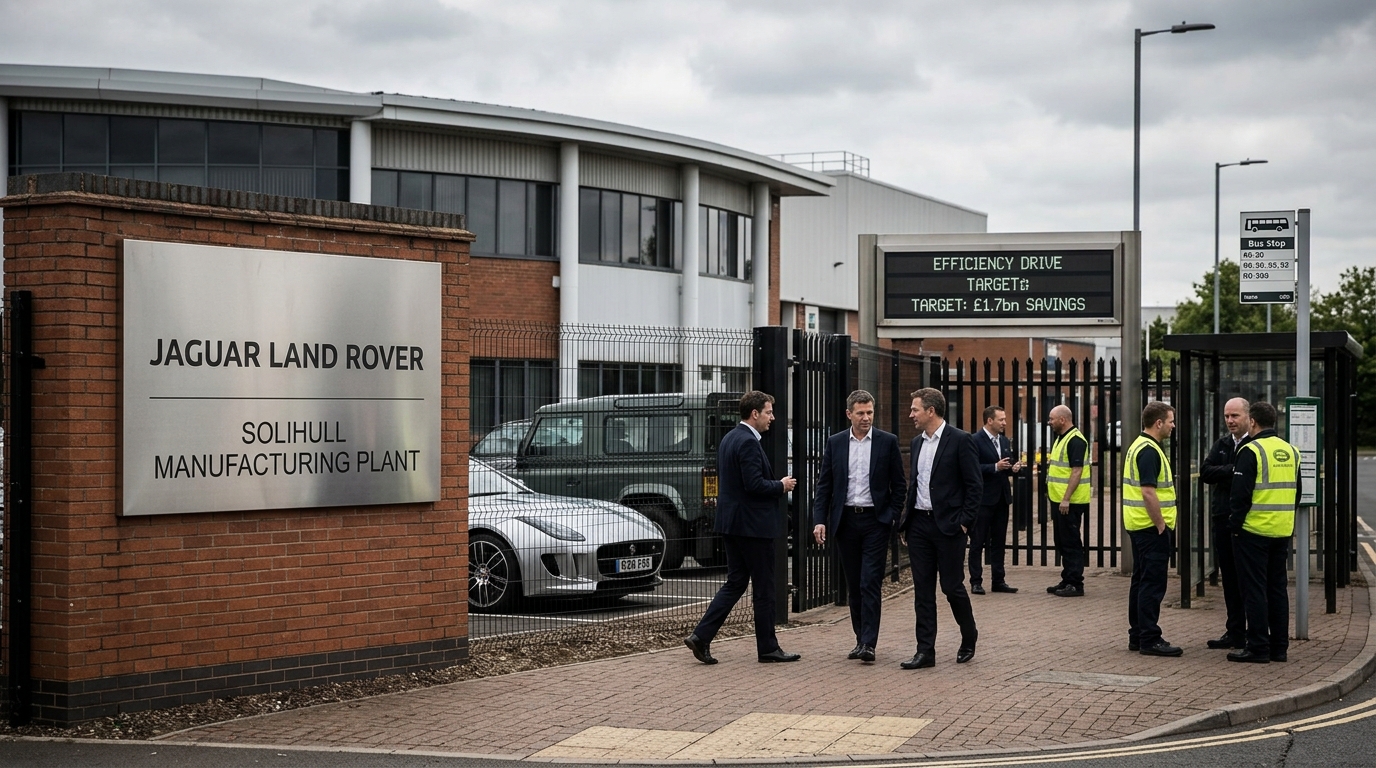
Hey there, bargain hunter. Two European carmakers restructured in the same week, and neither story is purely about headcount. Volkswagen announced plans to cut 50,000 jobs on Thursday. Four days later, Jaguar Land Rover said it will cut 4,000 jobs across its global workforce, targeting £1.7 billion in savings to make it more competitive as the industry transitions to electrification. The pattern here is hard to ignore.
When two legacy carmakers announce mass layoffs within days of each other, the market’s initial reaction to each can obscure what the numbers actually say. a closer look at three earnings reactions the market may have mispriced this week offers useful context for separating a genuine restructuring signal from noise — a discipline that applies directly to reading JLR’s announcement here.
Oil Surge Predicted…But Are You Ready?
Do you own oil and gas stocks? Or are you thinking about buying some?
If so, you need to see my #1 oil play for 2026 But it’s NOT oil stocks, futures, or anything you’ve likely heard about.
Rather, it’s an unusual way to potentially bank monthly income from the oil and gas markets.
Scoreboard
The Range Rover maker is cutting about 4,000 roles, nearly 10% of its workforce, over two years as part of a plan to save £1.7 billion ($2.3 billion). The cuts are expected to largely impact office roles, with the majority affecting UK operations. JLR has said the reductions are not expected to impact direct manufacturing roles and will be voluntary where possible. Prime Minister Andy Burnham’s office said the UK government will not consider a bailout for Jaguar Land Rover.
The Real Reason
This is not a one-quarter reaction. JLR has been absorbing a pile of concurrent headwinds: a major cyberattack forced production to halt for about a month in 2025, and the UK Cyber Monitoring Centre estimated the wider economic impact at about £1.9 billion. On top of that, a 10% import tax on British-made cars entering the US rose to 27.5% after the first 100,000 vehicles produced in a year. Chinese EV competition then compressed pricing across its core European markets.
The structural problem is the break-even point. JLR has said it is targeting £1.7 billion of savings over the next two years to reduce break-even towards 300,000 units. The “Growth Reimagined” plan is aimed squarely at reversing that drift.
Deep Dive: How JLR Makes Money
JLR is Tata Motors’ profit engine, but the exact split in the draft is overstated. Recent Tata Motors disclosures and reporting typically put JLR at roughly 70% plus of revenue and around 80% of profitability, not 75 to 80% of revenue and over 90% of EBIT. It sells luxury SUVs, Range Rover, Defender and Discovery, at average selling prices well above £70,000 per unit. Margin is not about volume, it is about mix. Range Rover, Range Rover Sport and Defender represented 80.8% of total wholesale volumes in Q1 FY27, up from 77.2% in Q1 FY26. That mix is the moat. The cost base is the problem.
Big Tech is bidding against itself for dead mines
Google quietly backstopped a bitcoin miner for 1.8 billion dollars.
Amazon signed 5.5 billion with a second one. Microsoft wired 9.7 billion to a third.
Roughly 63 billion dollars of Big Tech money landed on bitcoin miners inside a single year.
None of it is about bitcoin.
They are bidding for something the miners picked up cheap in 2021, and once a site is taken it is gone for twenty years.
Data
- Q1 FY27 revenue: £6.0 billion; adjusted EBIT margin: 2.8%; profit before tax (before exceptional items): £109 million, down 68.9% year-on-year.
- Profit before tax in Q1 was £109 million, down from £351 million a year ago.
- Free cash flow for Q1 FY27 was negative £998 million; total liquidity stood at £5.9 billion as of June 30, 2026.
- Full-year FY26 revenue: £22.9 billion, down 21% year-on-year.
- The savings plan is intended to fund £15 to £18 billion in investment over the next five years in electrification, digital technologies and other areas.
Is It Cheap?
That depends entirely on whether the £1.7 billion lands. If it does, a 300,000-unit break-even means JLR becomes profitable at volumes it was already selling comfortably before the cyberattack and tariff wave. Q1 FY27 wholesale volumes were 79,300 units, down 9.2% year-on-year, which annualises around 320,000 units. A 300,000-unit break-even against that run rate produces meaningful operating leverage on any demand recovery.
The parent share is not obviously cheap on today’s numbers. Tata Motors Passenger Vehicles reported FY26 consolidated revenue down 8.3% year-on-year, and FY26 EBITDA margin at 6.8% versus 13.4% in FY25. But the market is pricing a restructuring discount, not a steady-state multiple. The bet is whether management can actually execute the cost plan before the cash position tightens further.
Bull / Base / Bear
Bull: The £1.7 billion savings plan delivers on schedule. New electric launches (Range Rover Electric, Jaguar Type 01) restock demand. Break-even falls to 300,000 units and any volume recovery above that flows straight through to margin. The tariff environment softens modestly as UK-US trade relations stabilise.
Base: Savings arrive unevenly over two years, volumes stay pressured in China and the Middle East, and EBIT margin recovers to 6 to 8% by FY28 rather than the double-digit levels seen in FY24.
Nuclear Energy’s Comeback Could Spark Before 2026
Global energy demand is surging and one overlooked power source is quietly returning to the spotlight. New policy support and supply constraints are setting the stage for a surprising shift in the energy markets.
Bear: Chinese EV competition intensifies in JLR’s core European markets. New model launches disappoint on volume or pricing. The cash burn continues and the liquidity buffer shrinks below a comfortable level before the restructuring savings materialise.
Action Plan
Do not size a full position on the restructuring announcement alone. Execution risk is real. A better entry framework: watch Q2 FY27 results for early evidence of cost reduction in selling and administrative expenses, and watch retail volumes in North America, the single most tariff-sensitive market. If the adjusted EBIT margin returns above 5% on Q2 results and free cash flow turns positive, that is the confirmation signal to add.
Waiting for a specific results date rather than reacting to a headline move is a discipline worth applying across restructuring and high-valuation situations alike. how one semiconductor stock’s next earnings date became the only number that mattered walks through the same framework — identifying the single data point that either validates or invalidates the thesis before committing capital.
Cheap Investor Checklist
- Break-even reduction: Does JLR confirm progress toward the 300,000-unit target by Q2 FY27?
- Wholesale volumes: Are quarterly units trending above 85,000 by Q3 FY27?
- EBIT margin: Recovery back above 5% within two quarters?
- Free cash flow: Does it turn positive in H2 FY27?
- Liquidity: Does total liquidity hold above £5 billion through the restructuring period?
- Voluntary redundancy pace: Are the 4,000 roles being exited without costly legal disputes or production disruption?
- New model traction: Order intake for Range Rover Electric and Jaguar Type 01 at launch.
- UK government posture: No bailout is confirmed, but watch for any supply-chain support or trade policy that lifts JLR indirectly.
Bottom Line
If JLR delivers the £1.7 billion and the break-even reaches 300,000 units, Tata Motors has real upside from current levels, because the cost base would be structurally sound for the first time since the cyberattack and tariff wave combined to gut margins in FY26. If the savings slip or volume recovery stalls, the cash buffer shrinks and the restructuring story becomes a refinancing story. Watch the margin, not the headline job count.