
August 8, 2026
Anthropic’s Chip Team Is Early. The Opportunity Is Not.
Featured: Anthropic’s Chip Team Is Early. The Opportunity Is Not.
Dear Friend,
It’s not oil.
It’s not solar. Not wind. Not nuclear.
It doesn’t come from a mine, a well, or a foreign country.
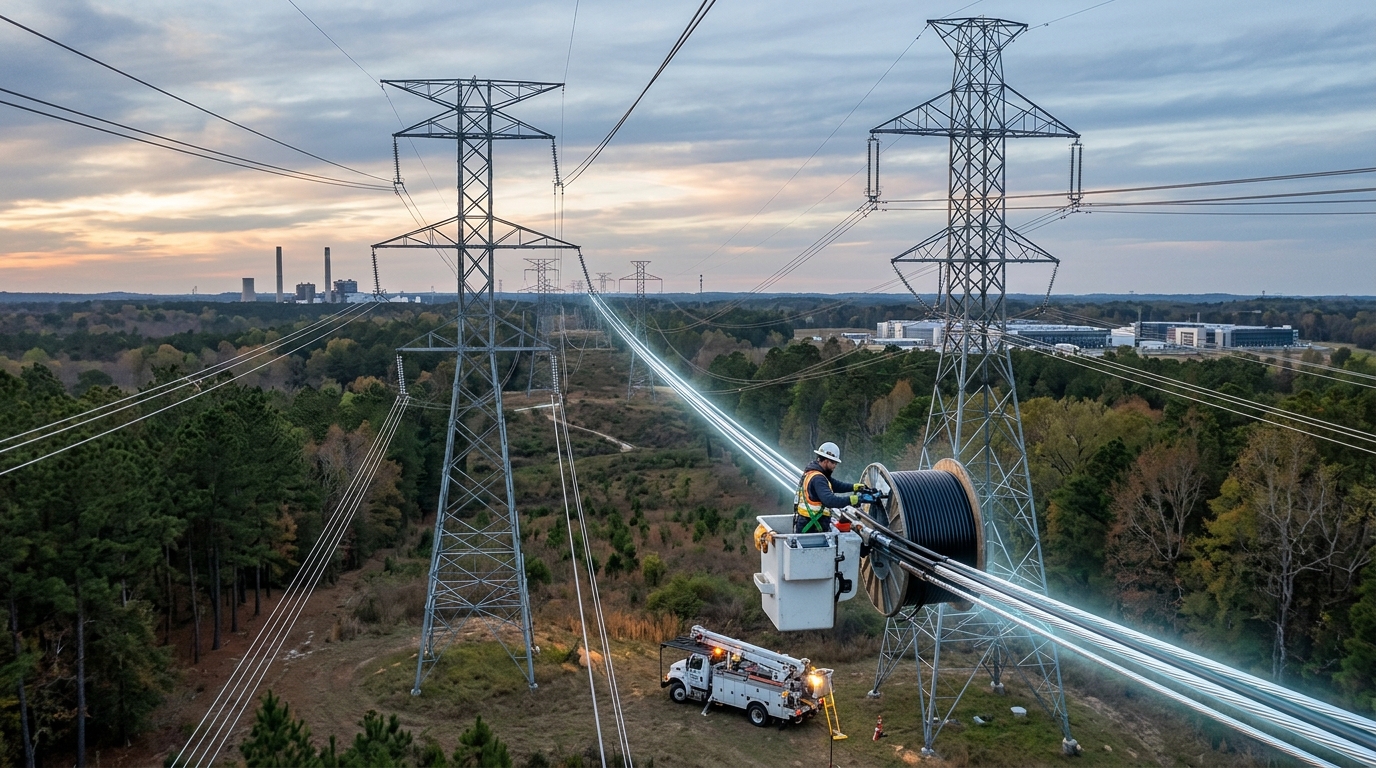
It runs 24 hours a day. Produces zero carbon. Needs no fuel, no batteries, and no sunlight.
The International Energy Agency measured it at 140 times global electricity demand.
So why haven’t you heard of it?
Then a crew near the Grand Canyon drilled through in 16 days. The Department of Energy said it should take 64.
Google signed a 15-year contract the next quarter. Bill Gates invested $100 million. The Pentagon called it priority one.
And on August 18th, Washington gives this energy source something it’s never given solar or wind – a competitive advantage that runs through 2033.
One company controls the technology. Sixty years of infrastructure. No competition in sight.
See the energy source that eliminates the competition >>
Anthropic’s Chip Team Is Early. The Opportunity Is Not.
Hey there, bargain hunter. Anthropic does not have a chip. No name, no tape-out date, no fab committed. What it does have, as of August 5, 2026, is a public confirmation that it is hiring engineers to build one and a Samsung relationship that is already deeper than most people noticed. That three-sentence announcement may be the most investable piece of AI hardware news since OpenAI unveiled Jalapeño in June. Not because of what Anthropic will build. Because of who gets paid while it tries.
Scoreboard
Here is what moved on August 5. Anthropic confirmed to TechCrunch that it is building a team to design custom AI chips and plans to co-design hardware and models for speed and efficiency. Business Insider reported the news first. This is the first time Anthropic has acknowledged the effort publicly.
The key numbers surrounding the announcement:
- $30B+ — Anthropic’s stated annual revenue run-rate, the threshold that makes custom silicon economically rational
- $485,000 — top of the salary range listed in Anthropic’s semiconductor engineer job posting
- 2nm — Samsung foundry process node under discussion for manufacturing, per The Information
- June 9, 2026 — the date Anthropic hired Clive Chan, former OpenAI chip team engineer and co-architect of Jalapeño
- $65B — Anthropic’s Series H valuation from May 2026, in which Samsung participated as a strategic infrastructure partner
The Real Reason This Happened Now
OpenAI’s Jalapeño changed the calculus. Unveiled June 24, it was the first time a pure-play AI lab brought a custom inference chip to production. OpenAI said Jalapeño delivered roughly 50% cost savings compared with standard GPU inference in early testing, built from design to tape-out in nine months with Broadcom as the co-design partner. That efficiency gap is not a rounding error. It is the number every other frontier lab’s finance team immediately modeled against their own token-serving costs.
At $30 billion in annual revenue run-rate, Anthropic’s compute bill is enormous. A single-digit percentage reduction in cost per token compounds into hundreds of millions of dollars annually. The custom silicon math did not require a leap of faith once Jalapeño proved the concept in production. It required a budget approval and a hire.
The broader market context reinforces the timing. TrendForce projects that shipments of servers using custom application-specific integrated circuits from cloud companies will grow 44.6% in 2026, compared with 16.1% growth for servers using general-purpose GPUs. The custom silicon category is not a future trend. It is the fastest-growing segment in AI infrastructure right now.
Who Anthropic Is and Why Scale Changes Everything
Anthropic makes Claude, a frontier AI model running across enterprise, consumer, and government deployments. The company has secured compute infrastructure agreements with AWS as its primary cloud and training partner, alongside Google, Nvidia, and AMD. It is one of the few frontier models accessible simultaneously on AWS, Google Cloud, and Azure.
The revenue run-rate number matters enormously here. Designing and validating an advanced AI chip runs roughly $500 million by Reuters’ industry estimates. At Anthropic’s current scale, that figure represents a fraction of a year’s compute spend. The barrier that once made custom silicon a hyperscaler-only option has effectively disappeared for Anthropic.
The inference workload is the logical target. Training silicon is harder, costlier, and riskier to design from scratch. Inference is large, repetitive, and predictable, exactly the workload profile where a purpose-built accelerator earns back its development cost fastest. Anthropic serving billions of Claude tokens daily has precisely that profile.
Data Section: What the Filings and Reports Say
The strategic groundwork Anthropic laid before the August 5 announcement is more substantial than the headline suggested.
- June 9, 2026: Hired Clive Chan, second-ever engineer on OpenAI’s dedicated chip team and a central figure in the Jalapeño design. That hire gave Anthropic technical leadership with direct production experience, not just academic credentials.
- July 2026: The Information reported early-stage discussions with Samsung Foundry covering the SF2P 2nm process and advanced packaging. Samsung’s in-house HBM production means Anthropic could theoretically source both compute die and high-speed memory from one manufacturing partner.
- May 2026: Samsung, SK Hynix, and Micron named as strategic infrastructure partners in Anthropic’s $65 billion Series H. That investor relationship created a supply-chain opening that a cold vendor pitch would not.
- April 2026: Anthropic expanded its Google and Broadcom partnership for multiple gigawatts of next-generation TPU capacity expected online starting in 2027, on top of over one gigawatt expected in 2026. Broadcom CEO Hock Tan confirmed roughly one gigawatt of Google TPU capacity for Anthropic in 2026 and over 3.5 gigawatts in 2027 during Broadcom’s Q1 FY2026 earnings call.
- Existing stack: AWS Trainium, Google TPUs, Nvidia GPUs, and AMD accelerators all remain active. Anthropic has been explicit that this is a multi-chip strategy, not a vendor exit.
The project is still genuinely early. Anthropic has not finalized the chip’s workload scope, performance targets, or server integration approach. It is working with several design service firms but is far from detailed design, testing, or mass production. Sources cited by The Information noted the company could still abandon the project. That caveat belongs in every model that prices this in.
Inside the SpaceX S-1, Elon’s New AI Disruption Revealed
You will NOT believe what Elon Musk is doing next. Hidden inside the SpaceX S-1 is the master plan for Elon’s next big disruption.
It could transform the world… rewrite the rules of AI… And create the most valuable company EVER. This is the AI story no one’s talking about… yet.
Get the name and ticker here of the No. 1 way to play it, free of charge.
Is It Cheap? The Broadcom Angle Most Coverage Is Missing
Anthropic is private. You cannot buy it. The investable angle here is what this confirmation tells you about the public companies that benefit from the multi-year buildout required before Anthropic ships a single die. Broadcom is the clearest read.
AVGO already is the public-market proxy for custom AI accelerator demand. Its customers include Google, Meta, and OpenAI. The numbers have been accelerating with each quarterly report:
- Q1 FY2026: AI semiconductor revenue of $8.4 billion, up 106% year-over-year, above Broadcom’s own forecast
- Q2 FY2026: AI semiconductor revenue of $10.8 billion, up 143% year-over-year, above forecast again
- Q3 FY2026 guidance: AI semiconductor revenue expected at $16.0 billion, representing over 200% year-over-year growth
- FY2027 target: Management reiterated AI chip revenue guidance in excess of $100 billion
- Q2 revenue overall: $22.2 billion, up 48% year-over-year; Q3 guided at approximately $29.4 billion
AVGO trades near $389 as of early August, consolidating between $380 and $400 following a pullback from its 52-week high. Shares are up roughly 40% year-to-date. The stock has multiplied nearly ninefold since the end of 2022. The Q3 earnings report is due August 29.
Here is the wrinkle that matters for Anthropic specifically: Broadcom CEO Hock Tan disclosed in December 2025 that Anthropic placed a $10 billion custom chip order with Broadcom. The Anthropic relationship is not speculative for Broadcom. It is already on the books. If Anthropic eventually ships its own accelerator die, Broadcom’s role in networking silicon, advanced packaging, and systems integration does not vanish. It may grow, because a custom Anthropic chip still needs all of that surrounding infrastructure.
The more pointed read on Nvidia: Anthropic joining Meta and OpenAI in the custom silicon race means the frontier-lab inference customer list keeps quietly shortening for general-purpose GPUs, even as GPUs remain the near-term default for training and for labs that have not yet reached the scale to justify the engineering investment.
Bull / Base / Bear
Bull Case
Anthropic’s chip team ships a functional inference accelerator within three years. Samsung’s SF2P 2nm node, entering production late 2026, delivers acceptable yields. Co-design with Claude’s architecture produces meaningful cost-per-token reductions. Broadcom collects its $10 billion order in the interim, then pivots to packaging and networking as Anthropic scales its own die. Every public company in the custom silicon supply chain wins: Broadcom on networking and integration, Samsung on foundry revenue, memory suppliers on HBM demand.
Base Case
The first Anthropic chip arrives in 2028 to 2029, delayed by yield challenges at Samsung, staffing ramp time, and the inherent complexity of server integration. In the meantime, Anthropic continues expanding its TPU and Nvidia commitments. Broadcom’s AI revenue compounds toward $100 billion on the strength of Google, Meta, and OpenAI orders. Anthropic’s custom chip becomes a cost optimization tool rather than a wholesale replacement for its existing compute stack. The custom ASIC server shipment growth TrendForce projects at 44.6% in 2026 plays out largely through existing customers before Anthropic joins the production queue.
Bear Case
Samsung’s 2nm process underdelivers on yield. Anthropic’s chip team loses key engineers before tape-out, a real risk at $485,000 salaries that competing labs will match. The project gets abandoned mid-development, which sources cited by The Information explicitly flagged as a possibility. Meanwhile, Broadcom’s Q2 FY2026 revenue slightly missed estimates, and the stock sold off 15% on the day management did not raise the $100 billion FY2027 AI target. Concentration risk in a handful of hyperscaler relationships is Broadcom’s principal vulnerability, and any slowdown in Google or Meta’s custom silicon spending would hit the numbers hard before Anthropic fills the gap.
Action Plan
The Anthropic announcement itself is not a trading catalyst for any public stock. It is a confirmation of a structural trend that has been building since at least OpenAI’s Jalapeño reveal in June. For bargain hunters who want exposure to custom AI silicon without paying a premium for pure-play chip designers:
- AVGO at current levels ($380-$400 range): The Q3 FY2026 earnings on August 29 are the next hard catalyst. Consensus expects roughly $29.4 billion in revenue and $2.55 in adjusted EPS. AI semiconductor revenue guidance of $16 billion for the quarter represents over 200% year-over-year growth. If Broadcom delivers and raises the FY2027 target above $100 billion, the consolidation range breaks higher. If it delivers but holds the target flat again, expect the same reaction as June: a sharp single-session drop that has historically resolved as a buying point.
- Scale in on weakness: The June post-earnings drop of roughly 15% on a flat guidance hold was a dip, not a breakdown. The underlying AI revenue trajectory kept accelerating. A repeat of that reaction on August 29 represents the same situation in a different quarter.
- Samsung (005930 KS): The foundry relationship with Anthropic, if it progresses, adds to Samsung’s data-center chip revenue case. SF2P 2nm entering production late 2026 is the node to watch. Samsung also participated in the Series H, meaning the financial and operational interests are already aligned. This is a secondary, longer-duration play with more execution risk than AVGO.
- Monitor the Anthropic hiring pace: Job postings for semiconductor engineers requiring tapeout experience are the leading indicator. When the posting volume increases materially, the project is moving from exploratory to committed. That is the signal to size up, not the August 5 confirmation.
Cheap Investor Scorecard
Track these to know if the thesis is holding:
- [ ] Broadcom Q3 FY2026 AI revenue (August 29): Beat $16B guidance confirms the acceleration. Miss or flat guidance is a yellow flag on customer concentration.
- [ ] Broadcom FY2027 AI target: Any raise above $100B on August 29 is the single most important data point for AVGO bulls. A hold is noise. A cut is a thesis breaker.
- [ ] Samsung SF2P 2nm yield reports: Leading-edge yields at first production typically disappoint. Watch Korean semiconductor trade press in Q4 2026 for early data.
- [ ] Anthropic semiconductor job posting volume: More than a handful of posted roles by end of Q3 2026 signals the team is scaling beyond the exploratory phase.
- [ ] Clive Chan’s team headcount: Any public confirmation of team size from Anthropic puts a clock on potential tape-out timelines.
- [ ] Samsung foundry partnership announcement: A formal manufacturing agreement between Anthropic and Samsung is the next hard catalyst for the Samsung foundry thesis.
- [ ] Anthropic revenue run-rate updates: Any public update beyond $30 billion tightens the economics of the custom silicon investment further.
- [ ] Nvidia GPU order trends at frontier labs: Watch for any disclosed reductions in Nvidia GPU procurement by OpenAI, Meta, or Anthropic as custom silicon capacity scales.
- [ ] TrendForce custom ASIC server shipment data: Quarterly updates on whether the 44.6% 2026 growth projection is tracking. Upside surprises benefit the entire supply chain.
- [ ] Broadcom customer concentration disclosure: Any shift in the revenue mix away from the top three customers is the key risk to monitor in every AVGO quarterly filing.
Bottom Line
Anthropic’s chip confirmation is an embryo. Years from a finished product, further still from production scale. What it is not, however, is irrelevant to your portfolio today.
The announcement landed in August 2026 because the economics finally demanded it. A $30 billion revenue run-rate, a $10 billion Broadcom order already on the books, and OpenAI’s Jalapeño showing 50% inference cost savings in production: those three facts made the disclosure inevitable. The competitive pressure was real. The financial math was settled.
If Anthropic succeeds, it reduces its per-token compute cost and captures margin that currently flows to its hardware partners. If it delays or abandons the effort, Broadcom and Nvidia collect those dollars in the meantime. The public companies in the supply chain get paid either way.
The pattern across the industry is now complete. Google has Ironwood. Meta has MTIA. Amazon has Trainium. OpenAI has Jalapeño. Anthropic is assembling the team that will eventually put a name on its version of that list. The companies building the scaffolding, co-designing the chips, running the fabs, supplying the memory, and integrating the systems are already public and already reporting triple-digit revenue growth. Broadcom’s August 29 earnings are your next hard data point. Watch the FY2027 AI revenue target. Everything else is noise until then.