July 24, 2026
Oracle’s $7B Pentagon Deal
The stock is down big. The contract says otherwise.
First a note from Banyan Hill Research
Dear Reader,
There’s a strategy behind the Iran war.
I know because I heard it directly.
In a closed-door meeting with a source whose connections run deep into global power networks.
He walked me through the real purpose.
The real objective.
And the massive deal tied to it.
I verified every piece.
And what I found confirms it:
This isn’t random.
It’s planned.
Click here to see the strategy behind the Iran war.
The sooner you understand this…
The better positioned you’ll be.
Hey there, bargain hunter.
Sometimes the market decides a company is broken before it has actually looked at the business. Oracle might be one of those moments right now.
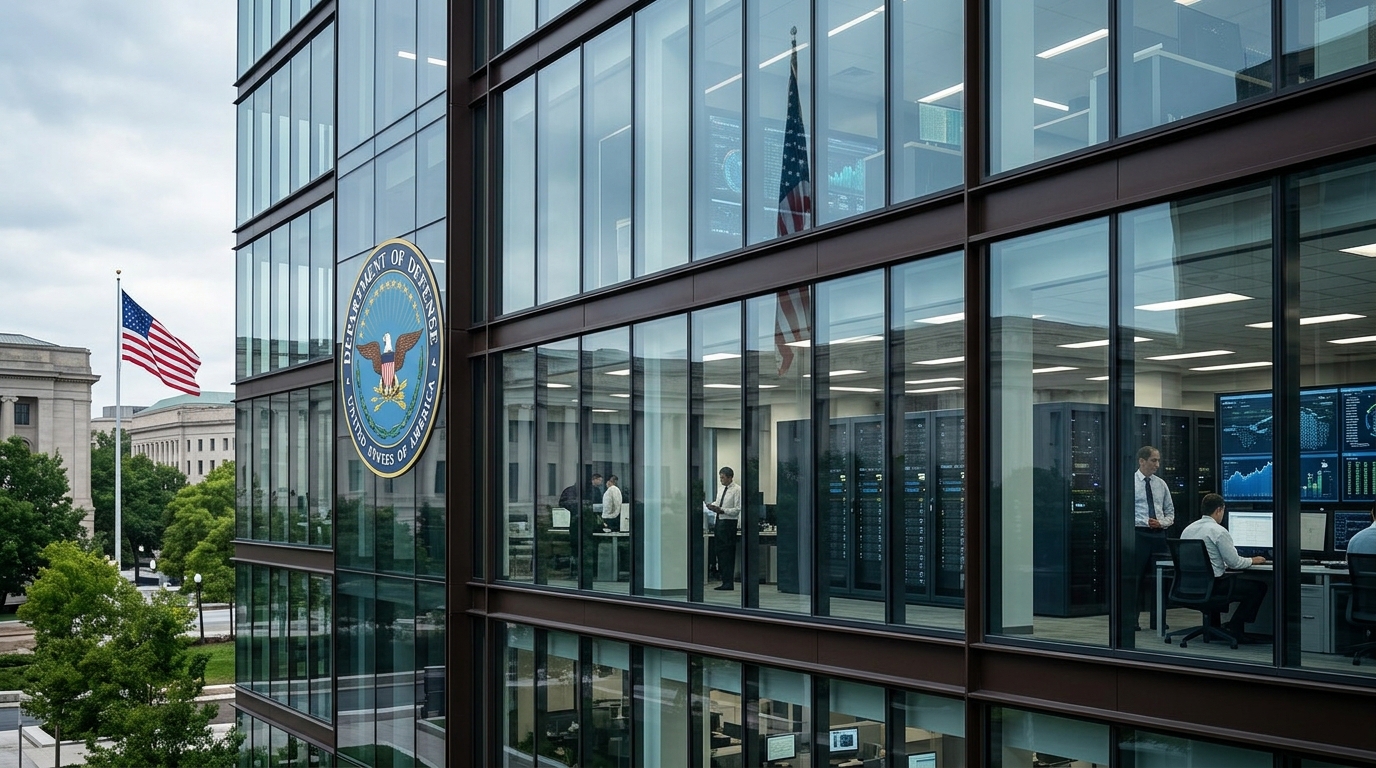
On July 23, 2026, the Department of Defense awarded Oracle a nearly $7 billion Enterprise Software Agreement covering a five-year base period with an optional five-year extension. The contract consolidates fragmented on-premises software licenses, maintenance, and consulting services used across the Pentagon, the U.S. Coast Guard, and the intelligence community into a single vehicle. The DOD’s chief information officer stated the structure will save taxpayers at least $441 million by overhauling how the government procures Oracle capabilities. That is not a small number.
And yet Oracle shares are down roughly 38% year to date.
What the Market Thinks Is Happening
The prevailing concern is that AI disrupts legacy software vendors. The logic goes: if AI can write code and automate workflows, why does anyone need expensive Oracle licenses? It is not a crazy question. But here is where it gets interesting. Oracle is not sitting still watching that happen. Cloud revenue grew 39% in fiscal year 2026 to $34 billion. Cloud infrastructure specifically surged 93% in the most recent quarter. Total FY2026 revenue hit a record $67.4 billion, up 17% year over year. Non-GAAP EPS came in at $7.63, up 27%.
That is not a company being disrupted into the ground.
The Overlooked SpaceX Play
The opportunity right now is NOT to buy SpaceX – it’s to own the small, overlooked stocks that could rip triple digits as Elon expands his empire. That’s according to Tim Bohen, self-made millionaire who called Tesla at $37.
The Real Story Underneath
Slight tangent, but it matters: Oracle’s relationship with the U.S. government goes back to the 1990s. The CIA was Oracle’s first customer. Decades of mission-critical database infrastructure embedded inside military and intelligence systems do not get ripped out because a newer vendor looks interesting. Switching costs are real, and they are enormous in government IT. This Pentagon contract is not a leap of faith for the DOD. It is a formalization of a dependency that already exists.
The new deal does not inject fresh capital all at once. Revenue will be recognized gradually over the contract term. But what it does provide is visibility. And for a company already guiding FY2027 total revenue toward $90 billion (up roughly 34%), that visibility matters to anyone building a long-term thesis.
What the Numbers Actually Say
- FY2026 total revenue: $67.4 billion, up 17% year over year
- Cloud revenue: $34 billion, up 39%
- Cloud infrastructure revenue Q4 FY2026: up 93%
- Remaining performance obligations: $638 billion, up 363% year over year
- Non-GAAP EPS FY2026: $7.63, up 27%
- FY2027 revenue guidance: approximately $90 billion
- Operating cash flow FY2026: $32 billion, up 54%
The one honest concern here: free cash flow turned negative in FY2026, at roughly negative $23.7 billion, because Oracle is spending heavily to build out AI data center infrastructure. That is real capital risk. Gross margins stepped down as a result. Investors pricing in that pressure are not wrong to flag it.
Cheap, Broken, or Something Else
Here is where the discipline matters. A 38% drawdown year to date on a business growing cloud revenue at 39% annually, with a $638 billion remaining performance obligation backlog, and now a locked-in 10-year Pentagon relationship, does not feel like a broken company. It feels like a company the market is penalizing for its capital spending cycle before the payoff arrives.
That is a classic mispricing pattern. Not guaranteed to resolve quickly. But the fundamentals are pulling in a different direction than the share price.
The stock popped over 3% on the contract news. Whether that holds is secondary. What matters is whether the business case is intact. From what the data shows, it appears to be.
Patient investors who understand that government contract revenue gets recognized slowly, that cloud infrastructure margins improve as capacity fills, and that embedded enterprise software vendors rarely get displaced quietly, may find ORCL worth a closer look at current levels.
The question is not whether Oracle is perfect. It is whether the discount reflects the business reality. Right now, that gap looks wider than it should.
The government’s next investment?
One insider has a track record few can match: the U.S. government. It backed Palantir, MP Materials, and Intel before major moves. Now it’s taking an ownership stake in a little-known $20 quantum-chip company – and recent executive orders point to why.
The Cheap Investor