April 4, 2026
Oklo Inc. (OKLO): The Nuclear Bet Behind the AI Power Crisis
Fast Fission, Sam Altman, and the Only Baseload Play That Doesn’t Need Sun or Wind
If You Think Oil Is Headed to $150… You Need to See This
Iran just shut down 20% of the world’s oil supply.
Prices are surging. And they may not stop anytime soon.
But while Wall Street panics, one analyst found an investment that could turn this crisis into a consistent income stream.
It’s been paying out for 137 years. Through every war. Every embargo. Every shock.
And it’s never been better positioned than right now.
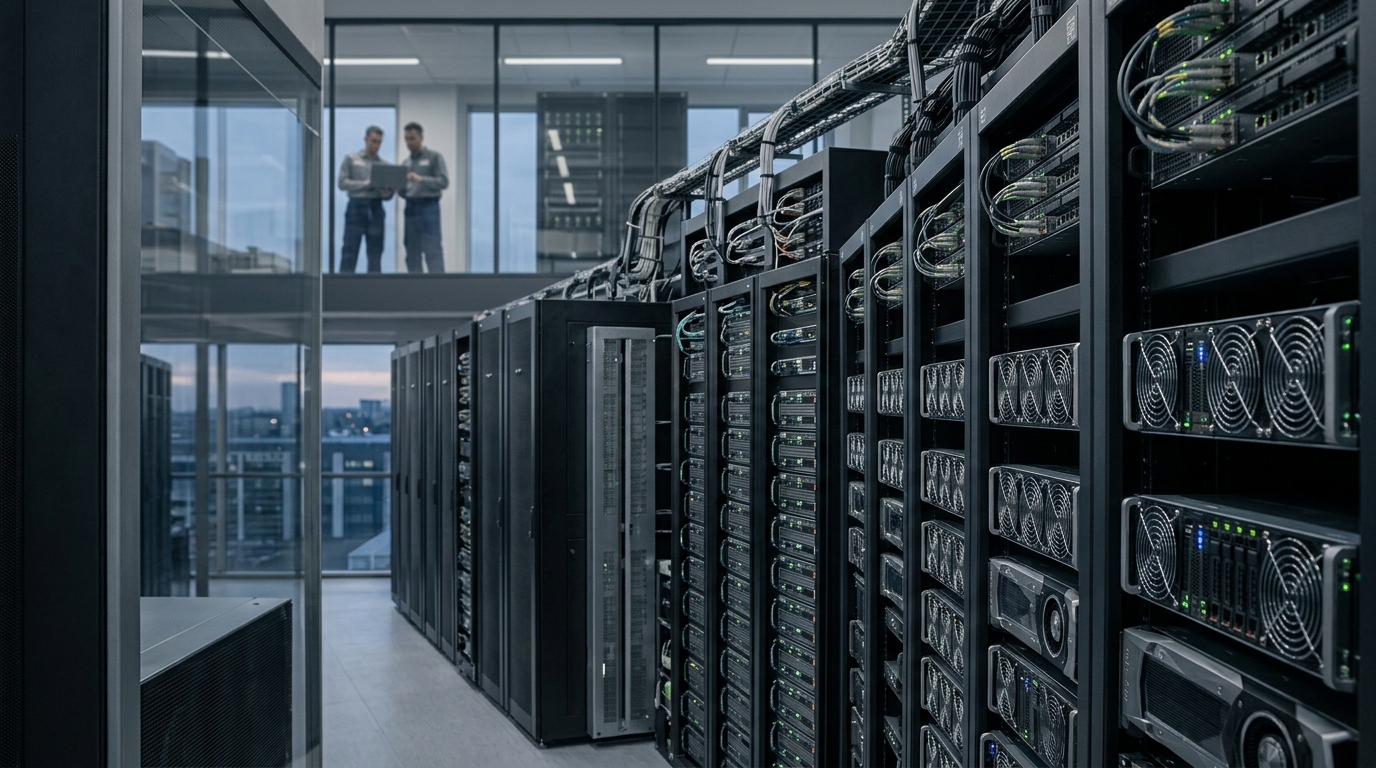
Hey there, bargain hunter. While the financial media spends its airtime on crude oil spreads and OPEC quotas, a quieter and far more consequential energy story is compounding in the background. It lives inside every data center humming along on the outskirts of your city. And it has a ticker symbol: OKLO.
The Scoreboard: What the Numbers Say
Start with a single data point that reframes the entire conversation. A ChatGPT query consumes roughly 10 times the electricity of a standard Google search — a figure cited by the Electric Power Research Institute. Put a number on that: according to the International Energy Agency, a single ChatGPT query draws approximately 2.9 watt-hours of electricity versus 0.3 watt-hours for a conventional search.
Now multiply that gap by the billions of queries running daily across ChatGPT, Claude, Gemini, Copilot, and every enterprise AI deployment quietly going live in the background. The math compounds fast.
- U.S. data centers consumed 183 TWh of electricity in 2024 — over 4% of total U.S. consumption (IEA estimates)
- That figure is projected to grow 133% to 426 TWh by 2030
- Globally, data center electricity consumption is on pace to double to ~945 TWh by 2030 in the IEA base case
- Electricity in accelerated (AI) servers is projected to grow at 30% annually — versus 9% for conventional servers
- Goldman Sachs estimates data centers will consume 8% of all U.S. power by 2030, up from 3% in 2022
That is not a rounding error. That is a structural shift in energy demand, and it is happening faster than grid infrastructure can respond.
The Real Problem: You Cannot Power AGI on Intermittent Energy
Solar panels go dark at night. Wind turbines sit idle in calm weather. Battery storage, at current scale, cannot backstop a hyperscale data center running 24 hours a day, 365 days a year. AI inference workloads are not discretionary — they do not pause while the sun sets over the Mojave.
What Big Tech actually needs is baseload power: dense, always-on, carbon-light electricity that does not depend on meteorological cooperation. For decades, that description fit exactly one technology: conventional nuclear. The problem with conventional nuclear is that it takes the better part of two decades and tens of billions of dollars to build a single plant. That timeline is incompatible with the AI buildout happening right now.
Enter the Small Modular Reactor — and specifically, enter Oklo.
Do THIS before the next big OpenAI story breaks
OpenAI is gearing up for a historic IPO, and Silicon Valley insider Luke Lango has found a way for you to invest BEFORE the announcement is even made. You don’t need to file any special paperwork… buy shares from a former employee… have a source on the inside – or jump through any other hurdles.
Deep Dive: What Oklo Actually Does
Oklo Inc. develops advanced fission power plants — specifically compact fast reactors — designed to deliver clean, reliable, and affordable electricity at scale. Its primary product is the Aurora Powerhouse, designed to produce between 15 and 75 megawatts of electricity per unit. That is small enough to deploy behind-the-meter directly at a data center campus, without waiting for grid interconnection queues that currently stretch years.
The fast-fission architecture gives Oklo a second structural advantage: its reactors can run on recycled nuclear waste — used nuclear fuel that would otherwise sit in storage at legacy plants. Oklo is commercializing fuel recycling and fuel fabrication technology that converts spent nuclear material into usable reactor fuel. In late 2025, the company broke ground on a $1.68 billion fuel recycling facility in Tennessee intended to lock in its own fuel supply chain. That is vertical integration, not just a product roadmap.
The company’s competitive positioning in the SMR landscape is distinct. TerraPower (Bill Gates) targets grid-level utility replacement. X-energy (Amazon-backed) competes for data center power via pebble-bed technology. NuScale focuses on traditional light-water SMR designs and has already received NRC Standard Design Approval. Oklo’s edge lies in its smaller footprint and its direct-ownership business model — it does not just sell hardware, it sells power under long-term contracts.
The Sam Altman Angle: Infrastructure, Not Speculation
Sam Altman is not a passive check-writer in this story. The OpenAI CEO has long viewed reliable, cheap baseload power as the foundational constraint on scaling artificial general intelligence. The logic is straightforward: if inference costs remain tied to volatile, expensive grid electricity, the economics of AGI deployment become mathematically punishing at scale.
Altman chaired Oklo’s board until April 2025, when he stepped back to avoid conflicts of interest as OpenAI ramped its own energy procurement directly. That is not a bearish signal — it is the signal that OpenAI’s energy strategy and Oklo’s commercial trajectory were becoming too intertwined to manage under a single governance structure. The two are structurally linked whether or not one person sits on both boards.
The broader political tailwind is real as well. Trump’s Energy Secretary, Chris Wright, is a former Oklo board member. In May 2025, the White House pledged to triple U.S. nuclear capacity by 2050. The Department of Energy’s Nuclear Reactor Pilot Program, launched in August 2025, included Oklo for two project slots. That is not ambient goodwill — that is regulatory runway being cleared at the federal level.
Data Section: The Business Metrics You Need to Know
- Revenue status: Pre-revenue. First meaningful revenue (~$16M projected) not expected until 2027
- Cash on hand: Approximately $410 million — sufficient runway through the pre-commercialization phase
- EPS (2024): Loss of $0.74/share; 2025 consensus estimate pegged at -$0.61/share
- Market cap: Approximately $15+ billion as of early 2026 (post-SPAC valuation was $850M in 2023)
- Aurora Powerhouse output: 15–75 MW per unit, modular and deployable at data center sites
- Meta deal: 1.2-gigawatt nuclear energy campus in Ohio, specifically to power AI data centers — signed January 2026
- Key contract: Binding agreement with Siemens Energy; DOE approval for Aurora project fuel plant
- Tennessee fuel facility: $1.68 billion groundbreaking in late 2025 — vertical integration of fuel supply
- Target fleet: 500 MW nuclear power fleet by 2035 via Master Project Development Agreements
- First reactor online: Not expected until end of 2027, pending NRC commercial deployment license
New Musk product worth 684X Starlink?
Early Starlink investors could have turned $1,000 into over $64.5 million…
But Wall Street’s latest estimates say Musk’s new AI product could be worth 684X Starlink.
And Jeff Brown says it could send this tiny Musk-linked ticker soaring as soon as April 24.
Is It Cheap? The Valuation Reality Check
Short answer: No. Not in any traditional sense.
With a market cap north of $15 billion and zero current revenue, conventional valuation metrics — P/E, EV/EBITDA, price-to-sales — are inapplicable. Investors are pricing Oklo on projected 2028–2030 earnings and the total addressable market of AI power infrastructure. That is a high-faith, high-duration bet.
For context: NuScale Power, which already holds NRC Standard Design Approval for its SMR design — putting it further along the regulatory path than Oklo — carries a roughly $5 billion market cap and trades at approximately 16x projected 2027 revenue. Oklo’s valuation implies a commercialization certainty that the company has not yet demonstrated. Bank of America upgraded OKLO to Buy in January 2026 with a $127 price target, calling it the most leveraged public SMR name to data center demand. ARK Invest added over 107,000 shares in late 2025. Insider selling, however, has exceeded $120 million since December 2025 — a figure that bargain hunters should not ignore.
Bull / Base / Bear
Bull Case
- NRC commercial license approved on or ahead of schedule; Aurora Powerhouse begins deploying at data center campuses by 2028
- Meta and OpenAI deals expand into multi-gigawatt frameworks; Oklo becomes the default SMR vendor for hyperscalers
- Fuel recycling facility in Tennessee achieves operational scale, cutting input costs and widening margins structurally
- Federal tailwinds accelerate; DOE pilot program reactors hit criticality by mid-2026, de-risking the regulatory path
- Valuation re-rates to revenue-generating utility comps as 2027 revenue materializes
Base Case
- NRC licensing takes 12–24 months longer than expected; first revenue arrives in 2028 rather than 2027
- Oklo secures additional data center contracts but faces execution pressure scaling from prototype to commercial fleet
- Stock trades sideways to moderately lower as the market waits for proof of execution; $410M cash provides adequate runway
- Competitors (NuScale, X-energy) pressure margins but Oklo’s direct-ownership model creates differentiation
Bear Case
- NRC rejects or significantly revises the Aurora commercial license; deployment timeline pushed to mid-2030s
- HALEU fuel supply (high-assay, low-enriched uranium) fails to scale domestically; fuel economics deteriorate
- AI efficiency improvements (better chips, distilled models) reduce per-query energy consumption faster than expected, compressing demand for new baseload capacity
- At $15B+ market cap with no revenue, any dilutive capital raise or partnership disappointment could trigger a sharp de-rating
- Insider selling at scale signals management sees current valuation as a ceiling, not a floor
5 Little Known Stocks Behind Today’s Defense Tech Shift
Behind the headlines, a major transformation is underway. Modern warfare is being driven by AI, autonomous systems, and next generation technology. A handful of lesser known companies are helping power this shift. This report uncovers five stocks quietly playing a critical role in the future of defense.
Discover the companies shaping the next phase of global defense today
Action Plan for Bargain Hunters
This is not a value stock. It is a high-conviction, long-duration infrastructure thesis dressed in pre-revenue clothes. The entry framework matters enormously.
- Aggressive posture: Start a small pilot position (1–2% of portfolio) at current levels. Scale to a full position only on NRC licensing progress or a confirmed revenue-generating contract announcement. Use any 20%+ corrections as defined add points.
- Conservative posture: Stay on the watchlist. Wait for the first revenue quarter (projected late 2027) before establishing a position. The story will still be early even then. The opportunity cost of waiting is likely smaller than the downside risk of holding through a potential regulatory delay at current multiples.
- Both postures: Do not size this as a core holding. This is a satellite position. The thesis is binary in the near term — NRC approval is the gating event. Everything else is narrative.
The Cheap Investor Scorecard: 8 Things to Track
| Checkpoint | What to Watch For | Status |
|---|---|---|
| NRC License Filing | Aurora commercial license submitted and accepted for review | In progress |
| DOE Pilot Criticality | Oklo reactor achieves criticality under DOE program by July 2026 | Target: mid-2026 |
| First Revenue Quarter | Any commercial power delivery generating recognized revenue | Projected: 2027 |
| Meta Campus Progress | 1.2 GW Ohio campus permitting and groundbreaking timeline | Deal signed Jan 2026 |
| Tennessee Fuel Facility | Construction milestones and fuel output readiness | Ground broken late 2025 |
| Cash Runway | Quarterly cash burn vs. $410M reserve; watch for dilutive raises | Monitor quarterly |
| Insider Activity | Net insider buying vs. the $120M+ in selling since Dec 2025 | Bearish near-term |
| Competitor Licensing | NuScale and X-energy regulatory progress that could capture Oklo’s pipeline | Ongoing risk |
Bottom Line
The AI power problem is real, it is large, and it is accelerating. The baseload constraint is not a narrative — it is physics. Oklo has identified the right problem, built the right technology, attracted the right partners, and secured meaningful federal backing. That is a legitimately compelling setup.
But here is the conditional truth, bargain hunter: if the NRC approves the Aurora commercial license on schedule and if the 2027 revenue ramp materializes anywhere near projections, then OKLO’s current valuation — stretched as it is — may look reasonable in retrospect against a multi-decade infrastructure buildout. If regulatory timelines slip or capital needs expand, the $15B+ price tag leaves you very little cushion.
The thesis is not broken. The entry point requires discipline. Watch the NRC. Watch the cash. Watch whether insiders start buying their own story again.
— The Cheap Investor Editorial Desk