Hey Trader,
Before you even think about making a trade on NVDA or any other popular AI stock…
… run the ticker through this “Snapback Indicator.”
This specialized indicator shows you when a stock is likely to “snap back” so you won’t get stuck buying at the peak.
It can also show you when a stock is likely to bounce off the bottom so you can time your entry for bigger potential profits.
Others paid $500 for this. But you’re getting lifetime access to the Snapback Indicator for just $7.
Go here:
Black Friday Breakthrough: “Snapback” Indicator For $7
In your corner,
Thomas Wood
Base Camp Trading
P.S. Other traders are furious that I’m giving this powerful indicator away for just $7. But I don’t care. There’s actually a surprising reason why I’m giving you this deal…
Frontline Earned $641M in One Quarter. What Next?
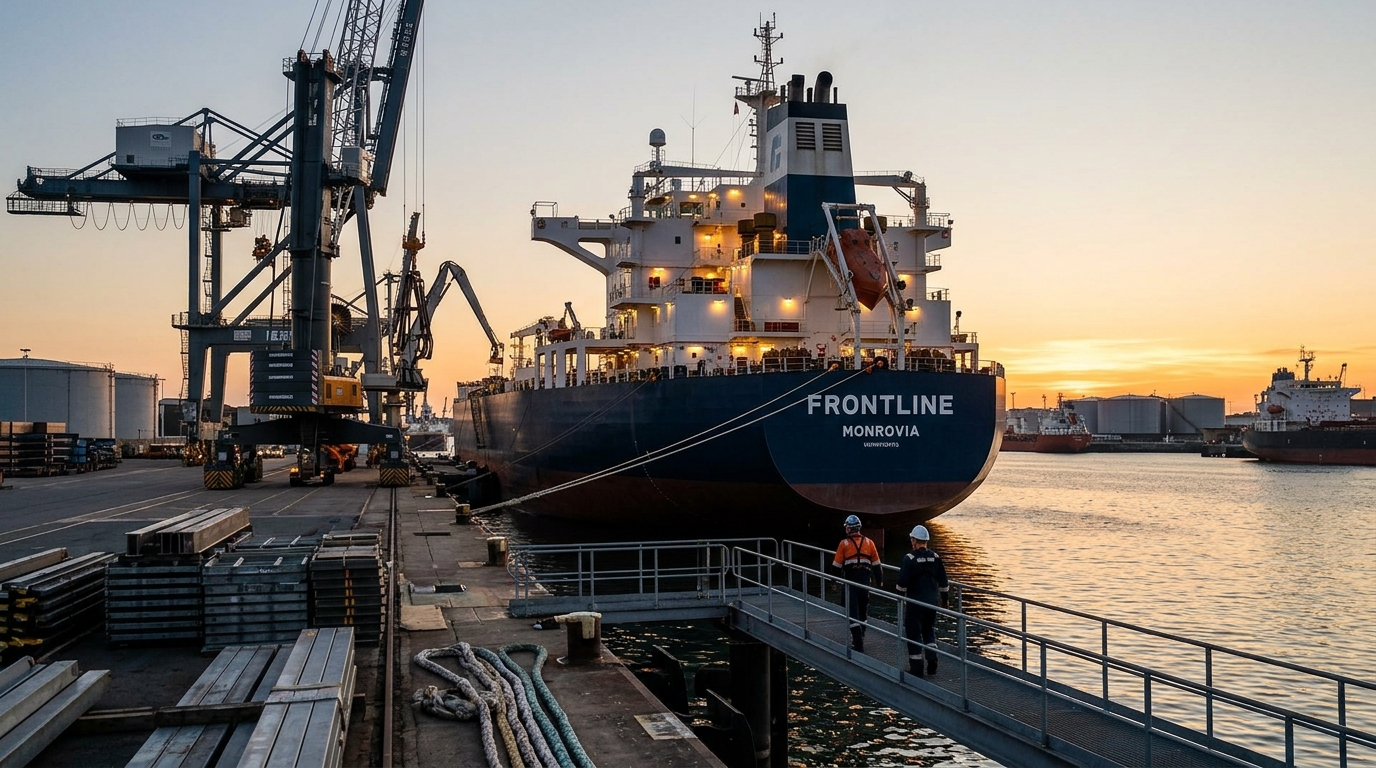
Hey there, bargain hunter. Frontline just handed you one of the most uncomfortable valuation puzzles in the market right now: a stock priced at roughly $48, sitting on a P/E ratio below 6.5x, paying an 11%-plus dividend yield, with a fleet earning day rates that exceed what most shipping companies see in a year. The number is not a typo. Profit for the quarter ended September 30, 2026, was $641.9 million, or $2.88 per share, on revenue of $921.3 million. And that quarter may already be the cheap one.
Scoreboard
In Q4 2026, 68% of VLCC spot days are booked at $562,600 per day, 69% of Suezmax spot days at $324,300 per day, and 68% of LR2/Aframax spot days at $190,800 per day. Those are load-to-discharge rates, so the company explicitly expects full-quarter spot TCEs to be lower than the contracted figures because of ballast days; contracted ballast days total 667 for VLCCs, 324 for Suezmaxes, and 274 for LR2/Aframaxes. Still, VLCC spot has since cooled from the October peak, but rates remain far above long-run norms.
What Is Actually Driving This
The Strait of Hormuz is, for practical purposes, closed. The latest official PortWatch count is 1 vessel on November 22, 2026, about 1% of typical traffic. Lloyd’s List and other market reporting have put war-risk rates for Gulf transits in the high single digits of a ship’s hull value per voyage, versus roughly 0.10% to 0.25% before the war. That is not a rounding error. It is a step-change in the cost of insuring a transit.
The insurance cost alone is enough to reroute fleets, but the diplomatic signals governing that calculus have been volatile. Brent erased a full week of de-escalation pricing in a single session when Trump signalled he no longer needed an Iran deal.
This morning brought fresh evidence the dislocation is deepening. Tens of millions of barrels of Iraqi crude due for collection this month have had loading dates delayed; about 20 to 30 million barrels of Basrah oil meant for November loading face delays, with some available only in the first 10 days of December. Iraq exports the vast majority of its crude from southern offshore terminals near Basra, and tankers leaving those terminals must pass through the Strait of Hormuz.
The Business
Frontline operates 40 VLCCs, 19 Suezmax tankers, and 18 Aframax/LR2 tankers, with an average fleet age of 6.9 years; 100% ECO vessels, 69% scrubber fitted. Cash break-even rates over the next 12 months run approximately $24,100 per day for VLCCs, $25,200 for Suezmaxes, and $20,600 for LR2s. At $562,600 a day, a VLCC earns 23 times its daily cost floor. That is not an operating business; that is a printing operation with a hull.
Is It Cheap?
At roughly $48 per share, FRO carries a crisis-era P/E in the mid single digits and a double-digit dividend yield. Peers trade at comparable crisis-era multiples. Everyone in this sector looks cheap on current earnings. That is the wrong frame.
The right question is what normal looks like. On Frontline’s own disclosures, by the time the current orderbook is fully delivered, the combined crude-tanker fleet in these classes is set to expand by roughly one-third, with the largest delivery years concentrated in 2028 and 2029. When Hormuz traffic normalises, day rates can revert toward the $35,000 to $45,000 historical range. At those levels, Frontline’s earnings power and dividend would compress fast.
Bull / Base / Bear
- Bull: The Hormuz crisis persists well into 2027. Iraq delay volumes and today’s Jazan strike extend the dislocation. FRO locks in multi-year charters at $90,000-plus per day on a portion of its fleet, creating a durable earnings floor well above breakeven. The P/E stays in single digits on crisis-era earnings.
- Base: Partial normalisation by mid-2027. VLCC spot reverts to $60,000 to $80,000 per day. Frontline earns roughly $1.80 to $2.20 per share annually. The stock is fairly valued around current levels, and the dividend shrinks but does not vanish.
- Bear: Major maritime insurers suspended or reset war-risk coverage, but a diplomatic resolution re-opens the strait by Q2 2027. New VLCC deliveries flood supply. Spot reverts to $35,000 per day. Frontline is a 12 to 15x normalised earner, implying a stock price around $18 to $22.
Action Plan
This is not a buy-and-forget position. Scale in only if you are willing to hold through a normalisation that could cut earnings by 90%. For bargain hunters who want exposure: trim toward peers with stronger balance sheets or higher time-charter coverage. Teekay Tankers had about $1.42 billion of cash, cash equivalents, restricted cash and short-term investments as of September 30, 2026, which gives it survivability in a rate downturn that FRO’s leverage does not fully replicate.
If you are buying FRO specifically, limit it to a position you would still hold at $20 and size accordingly.
Cheap Investor Checklist
- VLCC day rate vs. $24,100 breakeven: still far above breakeven
- Q4 contracted coverage: 68% at $562,600 for VLCCs
- Hormuz daily transits vs. pre-war ~85/day: 1 on November 22, 2026
- War-risk insurance as % of hull value: high single digits vs. roughly 0.10% to 0.25% pre-war
- Orderbook as % of existing fleet: roughly one-third by the time the current orderbook is delivered, deliveries peak 2028 to 2029
- FRO P/E on crisis earnings: mid single digits; on normalised earnings: can look extreme
- Iraqi loading delays: 20 to 30 million barrels deferred from November to early December
- Teekay cash-to-market-cap ratio: watch as a stress indicator for the sector
- Frontline dividend: $2.38/share quarterly, designed to track adjusted earnings; limited retention buffer
Bottom Line
Frontline is cheap if the Strait of Hormuz stays disrupted and expensive if it does not. That is the entire trade. The company is not mispriced; the market is correctly applying deep skepticism to earnings it does not believe are durable. If you think the crisis extends through 2027 and you want asymmetric exposure, FRO at a sub-7x crisis P/E earns its place in a small sleeve. If you think diplomacy or ceasefire restores traffic before mid-2027, the stock is priced for pain you have not yet seen.