Dear Reader,
An electric car. A fighter jet. An AI data center.
They may not look like they have much in common. But each depends on materials that have become increasingly important to America’s technological future.
That’s why I’m paying attention to a massive critical-metals discovery.
The original research points to an estimated $8 trillion to $16 trillion in resources. And I believe a small company with the capabilities to recover those materials could be worth a closer look.
Click here to learn about the company and the opportunity.
Here’s the distinction I keep coming back to:
The size of a deposit may grab the headlines. But investors also need to consider who can actually get those materials out and put them to use.
The company I’m following has the tools, talent and technology that I believe could make it a contender.
Its shares traded for less than $5 when this opportunity was originally presented.
I believe a successful effort to develop the resource could change how investors view the company. That outcome is far from certain, but it is why I think the story deserves attention now.
Click here for the full details on the critical-metals opportunity.
Regards,
Matt McCall, Head Innovations Strategist
Monument Traders Alliance
P.S. My interest isn’t based on the size of the discovery alone. It’s based on the possibility that one small company could help make those resources accessible.
Half of This Year’s Holiday Sales Growth Is Higher Prices
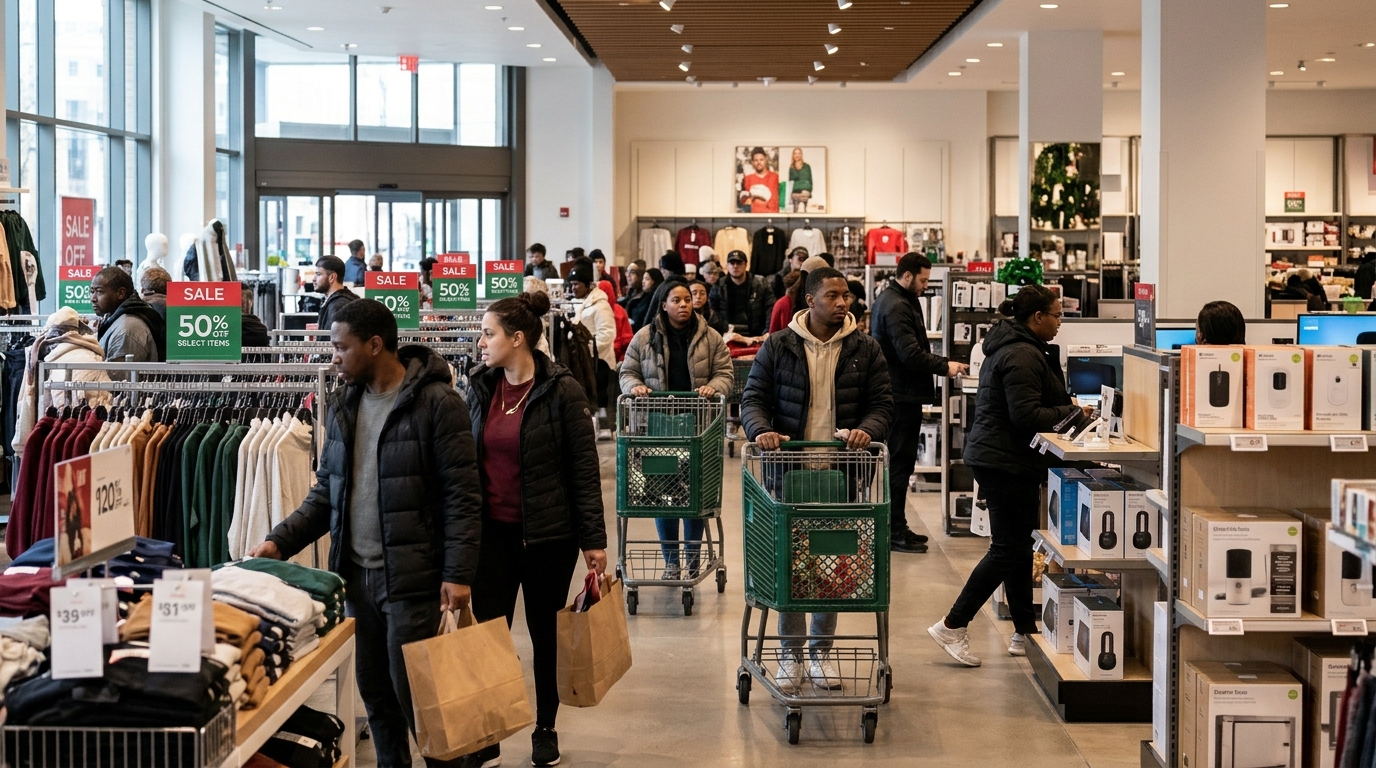
Hey there, bargain hunter. Today is your holiday. Black Friday is the one day a year when the whole retail machine is theoretically working for you instead of against you. So let’s read the numbers honestly, because a few of them are more uncomfortable than the headlines suggest.
Scoreboard
Adobe expects US online spending to grow 9.2% on Black Friday specifically, reaching $12.9 billion today. That is the fastest growth rate of any major shopping day this season. Adobe’s full Cyber Week forecast sits at $47.5 billion, and the whole November-December season is projected at a record $275.1 billion. Those are real numbers. Big numbers.
But here is the part the press releases skip. The National Retail Federation estimated that higher prices would account for about half of the 4.1% sales growth it expected in stores and online in November and December, with US shoppers collectively forecast to spend $1.01 trillion. Read that again slowly. Half. Of the growth. Is just inflation.
What Is Actually Happening
This year’s holiday shopping takes place in a US economic environment marked by lackluster consumer confidence and high inflation, and foot traffic data show Americans are visiting stores less often, with purchases appearing more intentional than impulse-driven, according to Sensormatic Solutions.
Adobe forecasts online sales of clothing basics to run 210% above their September level during Cyber Week, with personal hygiene products at 150% above, baby products at 113%, and pet products at 93%. Shoppers are using Black Friday to stock the pantry as much as the Christmas tree. That is a consumer under pressure, not a consumer splurging.
Discounts are also getting harder to find. In one case reported by Reuters, an AI pricing tool advised a billion-dollar beauty brand to reduce its Black Friday discount from 40% to 30%. Average discounts are smaller than last year across most store types: 15% at department stores, down from 18%, and 23% at specialty retailers, down from 31%, according to Centric Market Intelligence.
Who Is Discounting Hardest
Best Buy is advertising up to 70% off for its Black Friday sale. Walmart is advertising up to 65% off in Black Friday promotions. Target is advertising up to 50% off across categories including women’s clothing and outerwear, plus up to 50% off top tech. Amazon’s promotional umbrella runs through late December. The depth of Best Buy’s cuts stands out: electronics is the category where real unit-volume growth is most likely hiding, since prices on televisions and laptops tend to fall rather than rise.
The BNPL Tell
BNPL spend on Black Friday 2026 is forecast at $807 million, with Cyber Monday projected at $1.09 billion. A Sezzle survey found that 54% of its app users lean on BNPL to absorb higher prices. That is the balance-sheet signal. When more than half of instalment buyers say they are using it because things cost more, not because the product is big-ticket, BNPL growth reads less like consumer confidence and more like consumer stress management.
For Affirm specifically, the momentum is real regardless. In its fiscal first quarter, Affirm’s GMV jumped 34% year over year to $14.4 billion, revenue climbed 35% to $1.26 billion, and active consumers increased 19% to 28.7 million. The company enters today’s volume spike from a position of genuine operating strength.
AI Is Reshaping Discovery
Adobe recorded a 127% year-on-year increase in visits to US retail sites from AI tools between November 1 and 22, and forecasts AI-referred traffic will rise 95% today. Shoppers referred by AI tools generated 83% more revenue per visit than other visitors in September, based on more than one trillion visits to US retail sites. That is the structural shift. The shopper using a chatbot to compare prices arrives at checkout already decided, which is bad for impulse categories and good for whoever has the lowest verified price on a specific SKU.
Walmart, Amazon, and Shopify’s merchant base are built for that world. Target and Best Buy need the browser to convert after they arrive.
Cheap Investor Scorecard
- Adobe’s $12.9B forecast: does real-time spending track above or below by Sunday evening?
- BNPL as share of total online: watch whether $807M for Black Friday is surpassed, signaling volume or stress
- Best Buy’s 70% discount depth: the most aggressive cut on the board, worth watching for margin bleed in Q4 earnings
- Affirm GMV in its fiscal Q2 (holiday quarter): prior quarters grew 34-36%; a slowdown flags consumer pullback
- Shopify GMV report: Q3 missed estimates by less than 1%, so the holiday quarter read matters more
- NRF’s volume-vs-price split: if the final November-December number comes in at 4.1%, how much of it was units?
- Foot traffic trend from Sensormatic: in 2025, in-store traffic was down 2.1% on Black Friday versus 2024
Bottom Line
If Adobe’s $12.9 billion lands or beats and BNPL usage tracks above forecast, Affirm is the cleaner winner from today’s data. If discounts compress further and essentials dominate carts over electronics, Best Buy faces a tougher Q4 margin read than the headline sales number will imply. The real bargain hunter’s question is not how much Americans spend today. It is how much of that spending represents genuine volume growth, and how much is just the same number of paper towels at a higher price. The NRF already told you the answer is roughly half.