On November 16, Eli Lilly announced two oncology transactions. The first, an outright acquisition of Calytrix Bio for up to $1.5 billion, targeted rare blood cancers. The second, announced the same day and largely overlooked, was a research collaboration and exclusive licensing agreement with Stipple Bio worth up to $5.9 billion. Two deals, one day. That is a capital-allocation decision, not a coincidence.
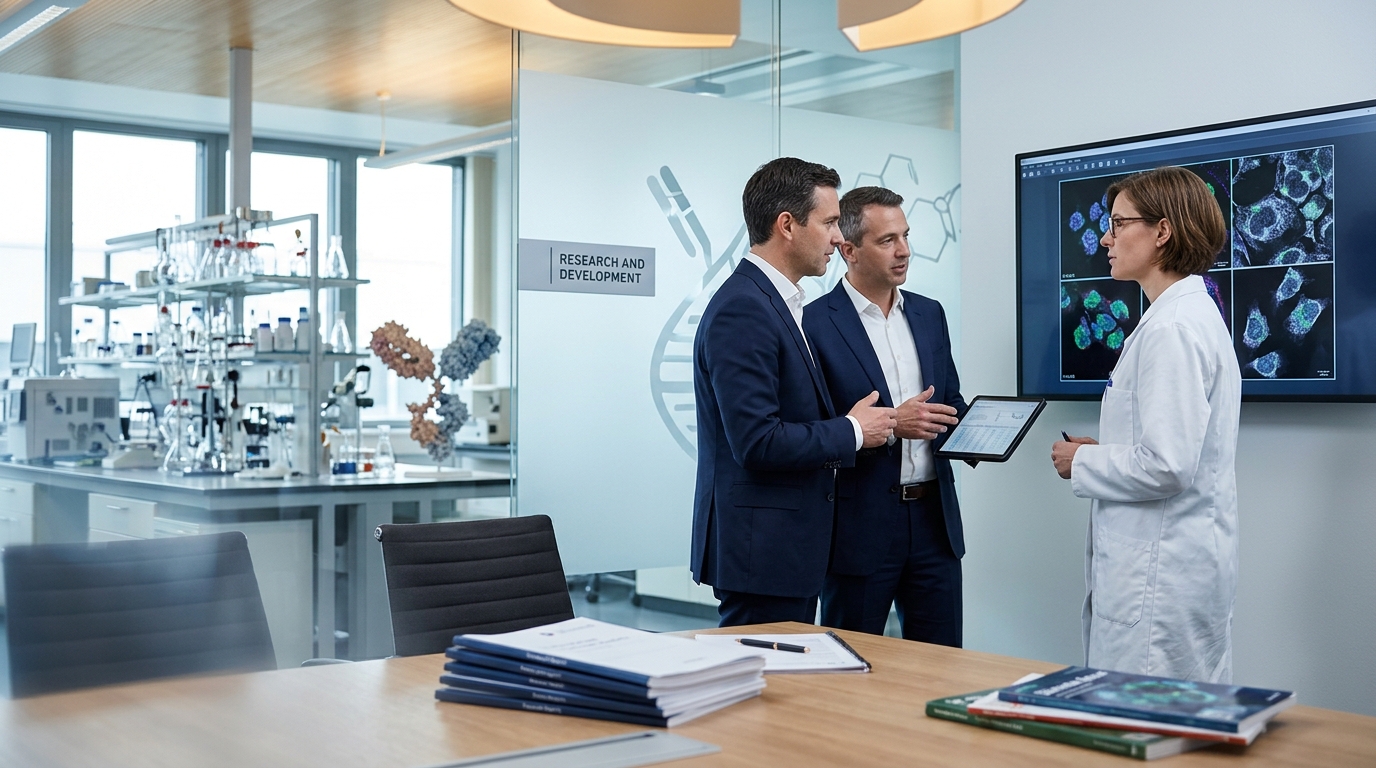
Lilly gained exclusive worldwide rights to develop and commercialize products from tumor-specific cell surface epitope binders found on Stipple’s Pointillist Platform. Stipple was founded by Fred Hutch Cancer Center’s Aaron Ring and UCSF’s Aashish Manglik, and is built on the Pointillist platform for discovering cell-surface epitopes specific to cancer cells. By operating at the epitope level, the company aims to develop medicines highly specific for tumor cells, avoiding the on-target, off-tumor toxicity that limits many existing therapeutics.
Now for the number that matters most to shareholders: $5.9 billion is not a check Lilly wrote on Monday. Lilly is making an upfront payment and an equity investment in Stipple, though neither party disclosed the financials. The pact features research, development, and commercialization milestones that could swell the total value to $5.9 billion, plus tiered royalties. In other words, most of that headline figure will only change hands if drugs actually reach patients, potentially a decade from now. The actual cash committed today is a fraction of what the press release implies.
This distinction matters for how you think about Lilly as a holding. Lilly has been one of the most active big pharmas on the deal front in 2026, but pinning a precise year-to-date total on “acquisitions” depends on what you count as acquisitions versus collaborations, and on whether you measure headline values or upfront cash. What is clear is that the strategy has shifted decisively toward larger, fewer bets rather than a broad scatter of small ones.
What is funding this? The GLP-1 franchise. Revenue in Q2 2026 increased 48% to $23.0 billion, driven primarily by Mounjaro and Zepbound volume. That kind of cash generation gives Lilly the ability to place expensive, long-dated science bets that most companies cannot afford.
Lilly has pursued a series of acquisitions to strengthen its pipeline and support long-term growth, deliberately broadening its footprint into oncology, neuroscience, immunology, and other areas through targeted deals. The Stipple agreement fits that pattern precisely. Stipple will use its platform to discover binders that Lilly will combine with its proprietary oncology technologies to develop therapies across multiple modalities. Lilly brings the manufacturing, the clinical infrastructure, and the commercial reach. Stipple brings the science.
For long-term holders, the lesson from Monday is not that Lilly spent $5.9 billion. It is that Lilly structured an agreement giving it access to a precision oncology platform at an upfront cost that remains undisclosed, with the larger payment obligations tied entirely to whether the science delivers. That is disciplined capital deployment, not a spending spree. The GLP-1 windfall is being used to buy optionality in cancer, at terms that protect the balance sheet if the biology does not cooperate.
The risk is real, of course. Early-stage oncology programs fail often. Stipple’s lead candidate, antibody-drug conjugate STP-100, is listed as the company’s lead program, but the company has not publicly provided a specific clinical start date in its own materials. None of this reaches patients soon. What it does is extend Lilly’s pipeline runway well into the 2030s, which is precisely what a company sitting on a GLP-1 patent cliff should be doing.
Two oncology deals in a single day tells you where the company intends to grow. The fine detail tells you it is doing so without betting the balance sheet to get there.