From the man who tabbed NVIDIA before it soared 6,271%
over 7 years at its peak
Wall Street’s Hottest Stock Has a Waiting List. Here’s How to Skip It.
Wealthy investors are lining up for Anthropic shares and coming up empty. Tech Visionary, Matt McCall, says you can get into a backdoor opportunity today for less than $100 a share.
Anthropic, the company behind Claude, is set to go public at a record $2 trillion valuation.
It could top SpaceX as the biggest IPO in history.
And right now, almost nobody can buy a single share.
One Wall Street broker, whose firm trades about 1,000 private stocks, told TechCrunch:
“The hardest stock to source in our marketplace is Anthropic. There’s just no sellers.”
Even Goldman Sachs is charging clients 15% to 20% of their profits just for a way in.
The Line Is Out the Door
Meanwhile, people who already own a piece of Anthropic are holding on tight.
While everyone else is stuck in line. Even wealthy investors are struggling to get shares.
And it’s all leading to the most anticipated IPO in history.
When Anthropic finally goes public, millions of regular folks will rush to buy whatever they can get.
But tech legend Matt McCall isn’t getting in line.
“Most people are going to wait for Anthropic to go public and then buy as many shares as possible,” he says. “But I think that’s a huge mistake.”
Who Is Matt McCall?
There is a short list of analysts in America who were early on the AI boom.
Matt McCall is one of them.
He’s the Head Innovation Strategist at Monument Traders Alliance and editor of The McCall Innovation Report.
Over the past two decades, McCall has written about 50 stocks that went on to peak gains of 1,000% or more. Including:
- Tesla, before it climbed as high as 3,129%
- NVIDIA, before it soared a peak 6,271% in 7 years
- AMD, which he singled out in 2009
That’s why people call him “Mr. 1,000%.”
On March 6, 2009, McCall went on FOX Business and gave away nine stocks. One was AMD, trading around two dollars. By 2026 it rose 25,000%, enough to turn a $5,000 stake into more than $1.28 million.
No Waiting List Required
McCall’s play isn’t Anthropic. It’s a stock linked to Anthropic that you can buy right now in a regular brokerage account.
No waiting list. No special broker. No fighting Wall Street for scraps.
He calls it a “Second IPO.”
It may sound too good to be true. But it has happened before.
When Rivian went public in 2021, Ford owned a 12% stake. In the six months around Rivian’s IPO, Ford shares roughly doubled.
Yahoo quietly built a huge stake in Alibaba. In the two years around Alibaba’s IPO, Yahoo shares could have tripled your money.
It happened again shortly after EchoStar acquired $8.5 billion in SpaceX shares. In the months leading up to the SpaceX IPO, its shares soared 600%.
Now it’s happening again!
Anthropic’s “Silent Partner”
Years before the IPO frenzy, a much smaller firm took a $100 million stake in Anthropic. It beat Apple, NVIDIA, Amazon and Google to the punch.
Today, the entire company is valued at less than $15 billion. That’s 100x smaller than Anthropic.
McCall believes its early stake could cause it to double or triple in the years ahead.
And you can buy it for less than $100 a share.
We sat McCall down in front of our cameras to get the whole story. He even gave away the name and ticker.
For the time being, you can watch it free.
|
“If history repeats… investors could double or triple their money in the years ahead.” – Matt McCall
The Fund Filings Land Monday. Here Is What to Hunt For.
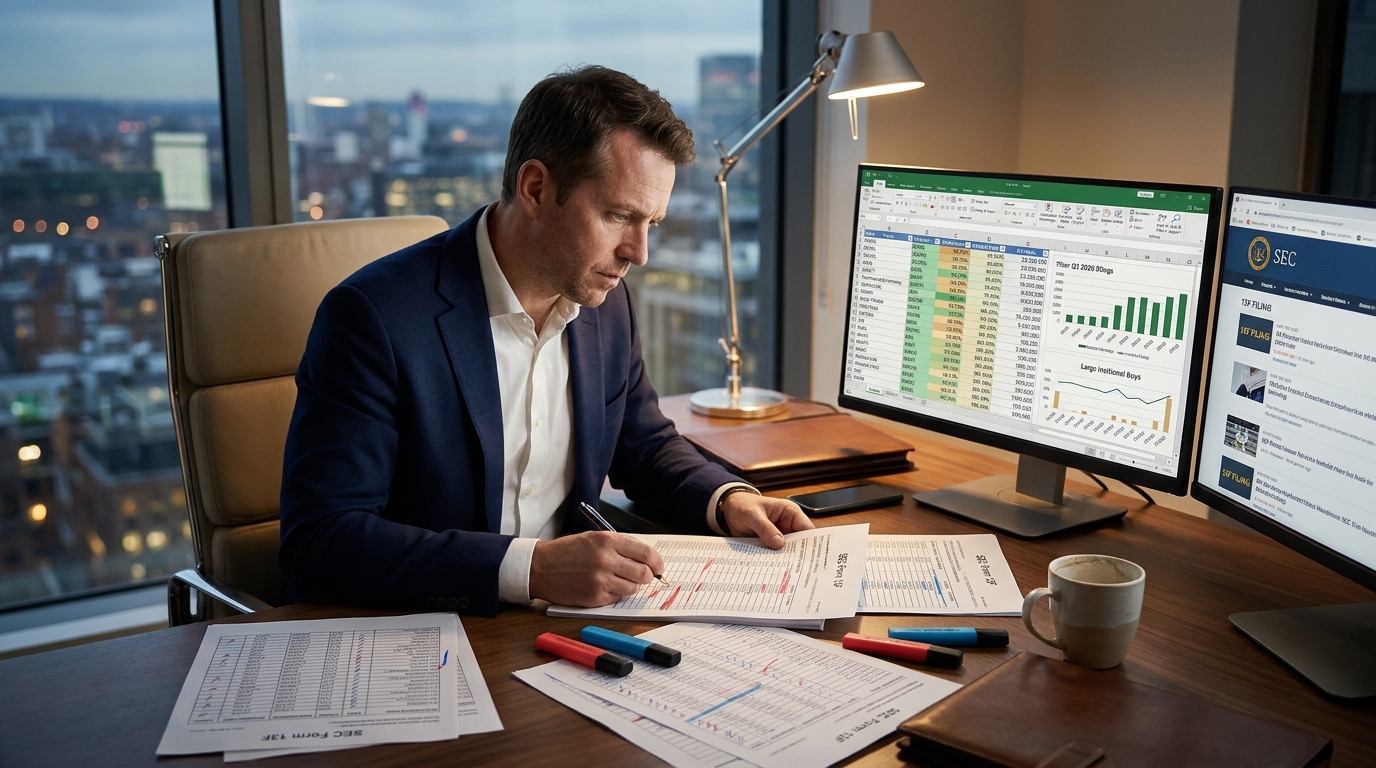
Hey there, bargain hunter. Monday is a gift. Not because the market is open, but because the SEC deadline for Q3 2026 Form 13F filings hits and the flood of data tells you what the big money owned on September 30, right before Nvidia’s early-October peak.
Scoreboard
Here is the context that makes this filing season unusual. Nvidia hit an intraday record of $243.37 on October 6, 2026, then began sliding. By November 12, CEO Jensen Huang had resigned after a scandal involving an alleged Chinese spy, and the stock was down materially from that October peak. The filings due Monday capture positions as of September 30, six days before the high. That is about as clean a snapshot of peak long exposure as you will ever get.
The Real Reason This Matters
13F filings are always backward-looking. Right now that lag is the point. The funds that filed early, and those filing Monday, show you two things simultaneously: who was crowded into AI at the high, and who was quietly building positions elsewhere while the crowd chased chips.
Berkshire Hathaway, the most-watched filer every cycle, has tended to file close to the deadline. Expect Monday. Berkshire posted its Q3 results on November 7 and filed its Form 10-Q on EDGAR on November 9. Operating earnings were $12.7 billion (down about 5.8% year over year), and Berkshire repurchased $9.6 billion of its shares in Q3, more than double the second quarter’s pace. The 13F will show what else CEO Greg Abel was buying.
What Was Already Moving Under the Surface
Earlier filings from Q2 2026, filed in August, showed broad trimming of Nvidia and Broadcom across major funds. Goldman Sachs data, covering 991 hedge funds with $5.4 trillion in total equity positions, found institutions adding shares of infrastructure plays like Bloom Energy, Flex, and Seagate Technology during Q2, companies that sit inside the AI power and hardware chain but carry none of the headline premium.
Berkshire’s Q2 13F showed the firm had added heavily to Alphabet. By September 30, the question is whether Abel kept adding or rotated again. Berkshire’s Q2 reported portfolio value stood at about $299.25 billion, with Apple still the largest position and American Express close behind.
Morgan Stanley flagged this week that hedge funds have turned underweight the broader AI trade for the first time since early 2023, following the longest sustained stretch of de-risking in more than 15 years. That means the Q3 13Fs will likely show a rotation in progress, not a wholesale exit.
Where to Look
- Financials overweights: Goldman noted both hedge funds and mutual funds moved overweight the financials sector in Q2 for only the third time in the firm’s historical data. Capital One Financial, Fiserv, and Interactive Brokers were names both groups bought.
- Energy and infrastructure: Berkshire’s BNSF posted 19% profit growth in Q3 and Berkshire Hathaway Energy increased earnings year over year. Funds rotating out of AI capex stories and into real-asset cash flows belong on your screen.
- AI-adjacent hardware, not AI itself: Seagate and Flex show up repeatedly in institutional accumulation data. Neither carries a 30x multiple or a dependency on a single charismatic CEO.
Cheap Investor Checklist
- Did Berkshire add, hold, or trim Apple on September 30? Shares were unchanged in Q2, has that patience run out?
- Which funds show new Alphabet positions after Berkshire’s Q2 build?
- Did any major filer open a new position in Nvidia during September, before the top?
- Watch for funds that cut Nvidia in Q2 and have since been proven right, their next moves carry extra credibility.
- Track Berkshire’s liquidity pile (cash, cash equivalents, and U.S. Treasury bills) at September 30. Where did any change go beyond buybacks?
- Check whether Abel’s buyback acceleration (about $9.6 billion in Q3 alone) continued into October.
- Look for new positions in power, utilities, or industrial names that support AI data center build-out without direct chip exposure.
- Identify any fund that sold Nvidia at the September 30 close of $228.38 and was sitting on a gain before Huang’s resignation.
Bottom Line
If the unloved names are in the filings, they will not stay unloved for long once EDGAR lights up Monday evening. Read the first wave of reports for new positions and size increases in sectors that have nothing to do with AI hype. That is where the real shopping was happening while everyone else was watching chips hit record highs.