
October 25, 2026
Bonus Content: Intel’s Quantum-Safe Security Pitch for Xeon 6: Worth It?
Hey Trader,
People were skeptical about the size – and frequency – on winning trades my powerful system churns out, so I wrote them all down:
Written Confession About Recent Trade Results
To Your Success,
Dave Aquino
Intel’s Quantum-Safe Security Pitch for Xeon 6: Worth It?
Hey there, bargain hunter. Intel quietly did something no other CPU vendor has done: it baked quantum-resistant cryptography directly into silicon, not as a firmware add-on, not as a software patch, but as a hardware-rooted block inside the chip itself. The question is whether that technical lead is already priced into a stock that has more than doubled this year.
Scoreboard
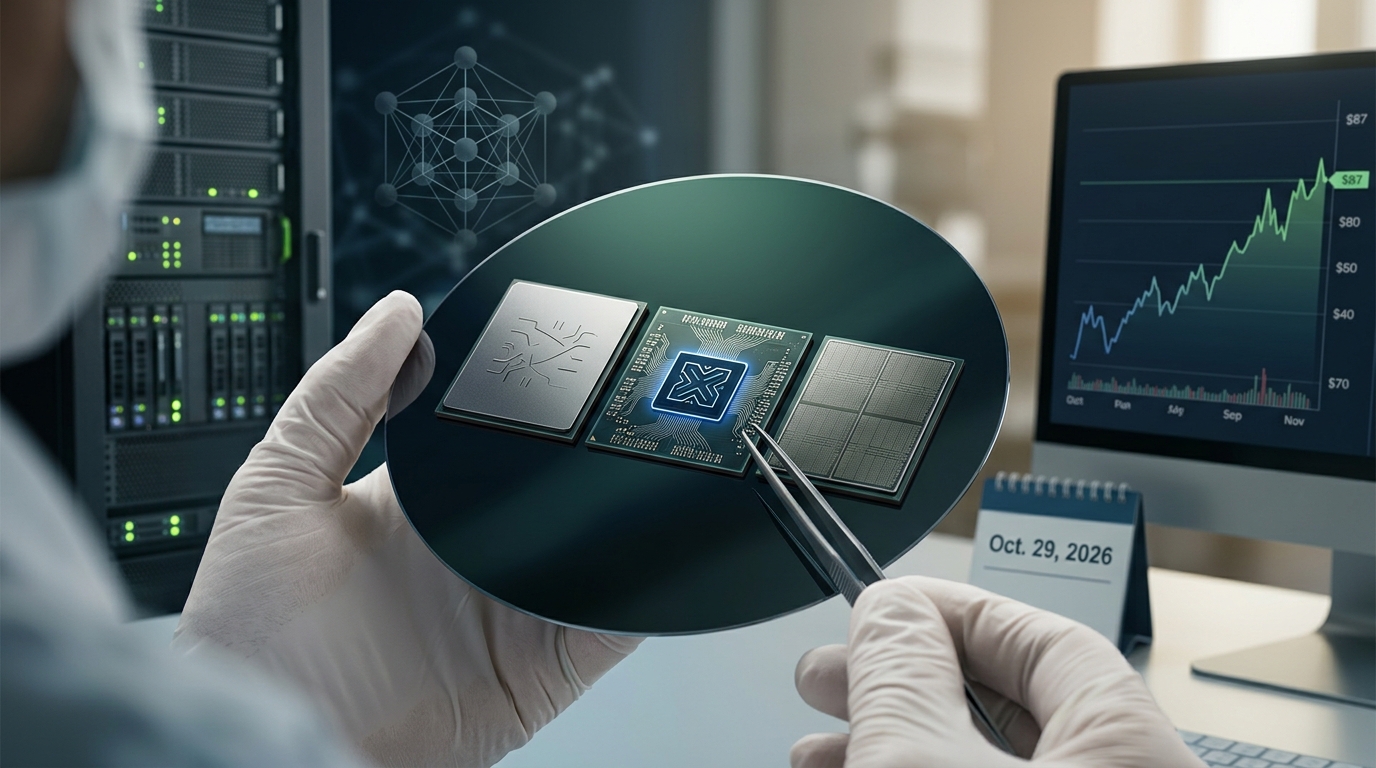
INTC is around $87 ahead of its October 29, 2026 earnings report, down roughly 39% from its late-June peak close of $139.63 (after touching $142.35 intraday on June 30). The 52-week range is roughly $33 to the low $140s, a spread that tells you the market has been rewriting its Intel story in real time all year. Forward P/E is in the mid-50s based on typical consensus estimates, and Intel’s trailing GAAP earnings have been negative, which makes every valuation multiple feel provisional.
The Real Reason This Matters
Most of the Intel conversation this year has been about AI chips and foundry margins. What gets less attention is that Intel has been positioning itself as early on “post-quantum-ready” platform security, which is just beginning to show up as a buyer requirement in some regulated pockets. Intel says it has been introducing PQC capabilities in platforms since 2023, including quantum-resistant microcode authentication and memory encryption in both client systems and server systems (Intel Xeon 6 with P-cores), per its own security materials and platform security reporting. That includes claims around quantum-resistant microcode authentication and memory-encryption-related protections being present in Xeon 6 server platforms today.
Intel’s security leaders have been explicit in public forums about “harvest now, decrypt later” risk and the urgency of migration. That urgency is not academic. Adversaries can archive encrypted government and enterprise traffic, betting they can crack it once a cryptographically relevant quantum computer arrives.
What the Business Actually Delivers
The Xeon 6 server platform story here is less “magic block that does everything” and more “shipping platform security plus acceleration options.” Intel has published PQC readiness guidance and technical material showing PQC enablement and acceleration through its crypto technologies stack (for example, leveraging Intel QuickAssist Technology, AVX, and related software integrations). Intel has also tied its approach to NIST work and to CNSA 2.0-aligned migration planning, but the practical near-term reality for most enterprises is hybrid deployments and staged upgrades, not an overnight flip.
Partners are already moving. EigenQ announced on July 6, 2026 that its platform is compatible with Intel’s secure computing architecture and ecosystem, aimed at helping organizations prepare deployed Intel Xeon processor-based infrastructures for CNSA 2.0-aligned migration requirements. That retrofit angle matters: it’s about readiness and tooling around today’s deployed fleet, not just future chip sales.
The retrofit and ecosystem-readiness angle is not unique to Intel’s orbit. IBM has been building its own quantum-safe migration story, with software margin shifts and a quantum breakthrough converging at the same enterprise buyer.
Is It Cheap?
- Price: ~$87 | Forward P/E: mid-50s (consensus-based) | P/Sales: ~7.5x
- Q2 2026 revenue: $16.1 billion, up 25% year over year
- Gross margin (GAAP): 40.4%
- Data Center and AI revenue: $6.3 billion in Q2, up 59% year over year
- Non-GAAP EPS Q2: $0.42, versus a loss of $0.10 a year earlier
At a mid-50s forward multiple, Intel is priced for a recovery that has to accelerate fast. Peer comparisons can make anything look “reasonable” if you cherry-pick the denominator, so the more honest frame is this: if margins and data center momentum fade, the multiple can compress quickly.
Bull / Base / Bear
Bull: PQC becomes a procurement requirement across federal contracts on a faster timetable, Intel’s head-start in platform security and ecosystem alignment converts to multi-year pricing power, and Xeon 6 server sell-out momentum continues into next year.
Base: PQC is a differentiator on the margin, aids Xeon 6 win rates slightly, but commodity server CPU pricing keeps margins compressed near current levels.
Bear: AMD and ARM-based competitors narrow the gap through platform, firmware, and software layers fast enough that the hardware moat proves shallow, and the forward earnings multiple compresses toward 30x as growth decelerates.
Cheap Investor Checklist
- Does October 29 guidance confirm Data Center and AI revenue staying above ~$6 billion and trending up?
- Any mention of PQC adoption, customer demand signals, or security-driven ASP uplift on server contracts?
- Gross margin trajectory: can Intel hold the ~40% level and expand from here?
- Federal and defense contract wins explicitly citing CNSA 2.0-aligned requirements?
- EigenQ and similar ecosystem partnerships converting to meaningful deployments?
Bottom Line
If Xeon 6 platform security and PQC readiness becomes a government procurement checkbox, Intel has a credible, shipping story today, and it is leaning into it hard. But at a mid-50s forward multiple with trailing GAAP losses still on the books, you are paying full price for a moat that has not yet been tested at scale. Watch October 29, 2026 closely: if data center revenue and margins move in the right direction together, the PQC story has legs. If guidance disappoints, the premium can evaporate fast.