Hey there, bargain hunter. Gilead Sciences dropped $1.275 billion in upfront cash on Thursday for a drug that has not yet treated a single patient in a pivotal trial. That is the price of admission to the oral IL-23 race, and it raises a direct question: is GILD still the disciplined, cash-churning compounder you bought, or has it become a biotech portfolio manager paying venture-capital prices?
Scoreboard
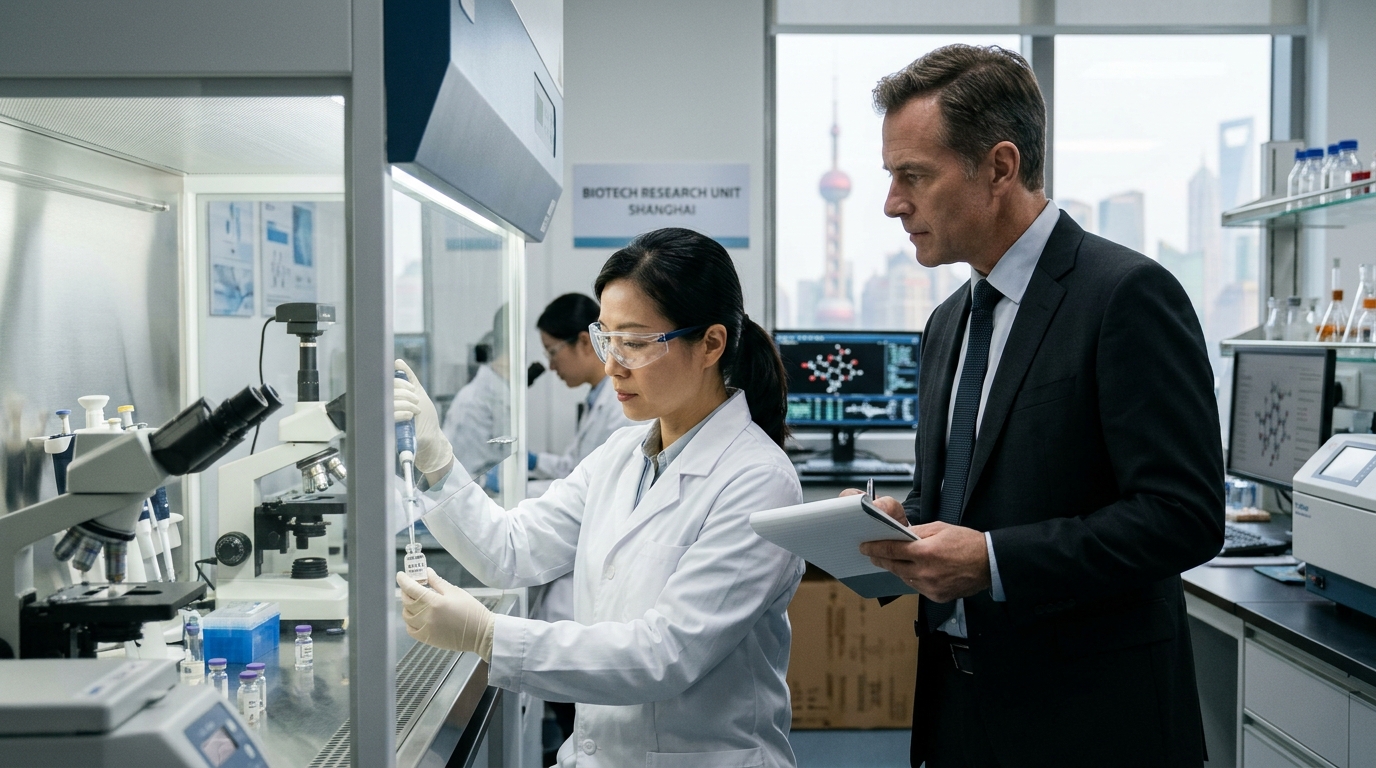
Gilead Sciences announced on October 22, 2026 that it entered a definitive agreement to acquire an oral IL-23 receptor inhibitor program, including lead asset HCXT-2001, from Shanghai-based PepStar Therapeutics for $1.275 billion in upfront cash. HCXT-2001 is an oral macrocyclic peptide with an extended half-life currently in Phase 1 testing, and Gilead sees potential for it alone or paired with emvistegrast as a daily oral IBD treatment. The deal is expected to close in Q4 2026 and reduce that quarter’s GAAP and non-GAAP EPS by roughly $0.79 to $0.83.
What Actually Happened
The deal came three days after Gilead reported positive Phase 2 results for emvistegrast, its own once-daily oral treatment for ulcerative colitis. Some analysts welcomed the deal, describing it as a logical complement to emvistegrast that could support a potential all-oral combination. The science is coherent. The cost of entry is the argument.
The timing is also extraordinary for a different reason. The Treasury Department issued a proposed rule on October 22, 2026 to implement the Comprehensive Outbound Investment Security (COINS) Act, and the proposal would add biotechnology to the Outbound Investment Security Program, restricting certain U.S. outbound investments involving China and other countries of concern. Gilead moved hours before the curtain potentially fell.
Washington’s push to restrict U.S. capital flows into Chinese technology is broader than biotech. The same national-security logic driving outbound investment rules is already reshaping how the Pentagon funds domestic alternatives to Chinese supply chains.
The saving grace: multiple legal and industry readouts have said the proposed outbound-investment restrictions are aimed primarily at covered investment transactions and would generally not sweep in conventional pharmaceutical licensing arrangements. An asset acquisition structured as an upfront cash payment, not an equity stake, likely threads the needle. But the rule is still proposed, and Treasury is taking public comment before finalizing it, meaning the final shape is not yet known. Gilead is betting the structure holds.
The Business and the Market
J&J’s Icotyde (icotrokinra), an IL-23 receptor antagonist approved by the FDA on March 17, 2026, is the first FDA-approved targeted oral peptide that blocks the IL-23 receptor, currently approved for moderate-to-severe plaque psoriasis. J&J sees annual Icotyde sales exceeding $5 billion. J&J is also studying icotrokinra in additional inflammatory indications, making it a direct future competitor in the exact indications Gilead is targeting. HCXT-2001, if it clears Phase 2 and Phase 3, would enter that fight years from now.
The competitive pressure Gilead faces in IBD is not theoretical. AbbVie’s Skyrizi and Rinvoq are already generating more than $6.6 billion per quarter and locking up inflammatory disease share.
Data: What the Balance Sheet Looks Like After This
- As of June 30, 2026, Gilead had about $3.2 billion of cash, cash equivalents, and marketable debt securities, down from about $10.6 billion at year-end 2025.
- The drawdown was driven by $11.3 billion in year-to-date acquisition outflows, $2.8 billion in debt repayments, $2.1 billion in dividends, and $774 million in common stock repurchases, partially offset by $4.1 billion of net proceeds from debt financing and $6.1 billion in operating cash flow for the first half.
- Revenue for Q2 2026 hit $7.8 billion, up 10%, bringing trailing twelve-month revenue to $30.5 billion.
- One Wall Street analyst called the size of the upfront payment notable given that no clinical data on HCXT-2001 has been published.
The operating engine is strong. The cash cushion after a year of aggressive M&A is not. Gilead generated $6.1 billion in operating cash flow in the first half, which covers the PepStar payment, but that is the same pool funding dividends, debt service, and any further deals.
Is It Cheap?
GILD traded for years as a reliably cheap cash flow story: dominant HIV franchise, steady dividend, low multiple. That profile is under pressure. The company has deployed over $11 billion in acquisitions in the first half of 2026 alone. Each dollar committed to a Phase 1 asset is a dollar not in a buyback or on the balance sheet. For a stock whose floor historically rested on capital returns, that matters.
Bull / Base / Bear
Bull: HCXT-2001 and emvistegrast together produce a best-in-class oral IBD combination by 2030. Gilead owns the franchise outright, no royalty drag. The $1.275 billion looks like a bargain against a multi-billion-dollar peak revenue target.
Base: HCXT-2001 advances through Phase 2, but J&J’s Icotyde and AbbVie’s Skyrizi have locked up psoriasis and IBD share. Gilead carves a niche but does not reshape the market. The deal is roughly fair value at current prices.
Bear: The Phase 1 data disappoints on half-life or tolerability, HCXT-2001 is shelved, and Gilead absorbs a $1.275 billion write-down on top of a depleted cash position. The Treasury rule, in final form, complicates future China-sourced pipeline replenishment.
Action Plan
Hold existing GILD positions. The operating business at $30 billion in trailing revenue with $6 billion in half-year operating cash flow is not broken. But do not add aggressively ahead of Q4 earnings, when the full EPS hit lands. A better entry is post-earnings, once the balance sheet picture clears and management frames guidance around the full deal slate. Scale in on weakness below the deal-day close.
Cheap Investor Checklist
- HCXT-2001 Phase 1 data release: watch for half-life confirmation and tolerability signal
- Treasury COINS Act final rule: does the asset-purchase structure survive intact?
- Q4 2026 EPS: confirm the $0.79-$0.83 drag is fully absorbed, no upward revision
- Operating cash flow trajectory: does H2 sustain the $6.1B H1 pace?
- Cash balance at year-end: is Gilead rebuilding toward $5B+ or still drawing down?
- Emvistegrast Phase 3 timeline: the combination thesis only works if this asset advances
- J&J Icotyde IBD data: competitive read-through on how hard the market will be to crack
- Dividend coverage: operating cash flow versus dividend + debt service obligations
Bottom Line
If HCXT-2001 posts clean Phase 1 data and the Treasury rule leaves licensing structures alone, Gilead has bought a credible path to owning the all-oral IBD market by the end of the decade. If either leg fails, the company has spent $1.275 billion on a Phase 1 lottery ticket with a depleted balance sheet. The business is not broken. The margin of safety is narrower than it was a year ago. That is the honest trade-off.