October 20, 2026
Bonus Content: Lilly Has Bought 12 Biotechs This Year. GLP-1 Cash Is Paying for All of It.
Below is an important message from one of our highly valued sponsors. Please read it carefully as they have some special information to share with you.
Dear reader,
Could this man with President Trump help mint the next wave of AI millionaires in America?
Even though he grew up in one of the poorest counties in Kentucky in a city with just 300 people…
And even though he’s a former dish washer at Denny’s…
He could tell you exactly what happens next with this AI boom…
And where you should put your money.
HINT: This is about a new AI industry set to grow 190,597% by 2040…
Enough to turn a small stake into life-changing money.
Regards,
James Altucher
Lilly Has Bought 12 Biotechs This Year. GLP-1 Cash Is Paying for All of It.
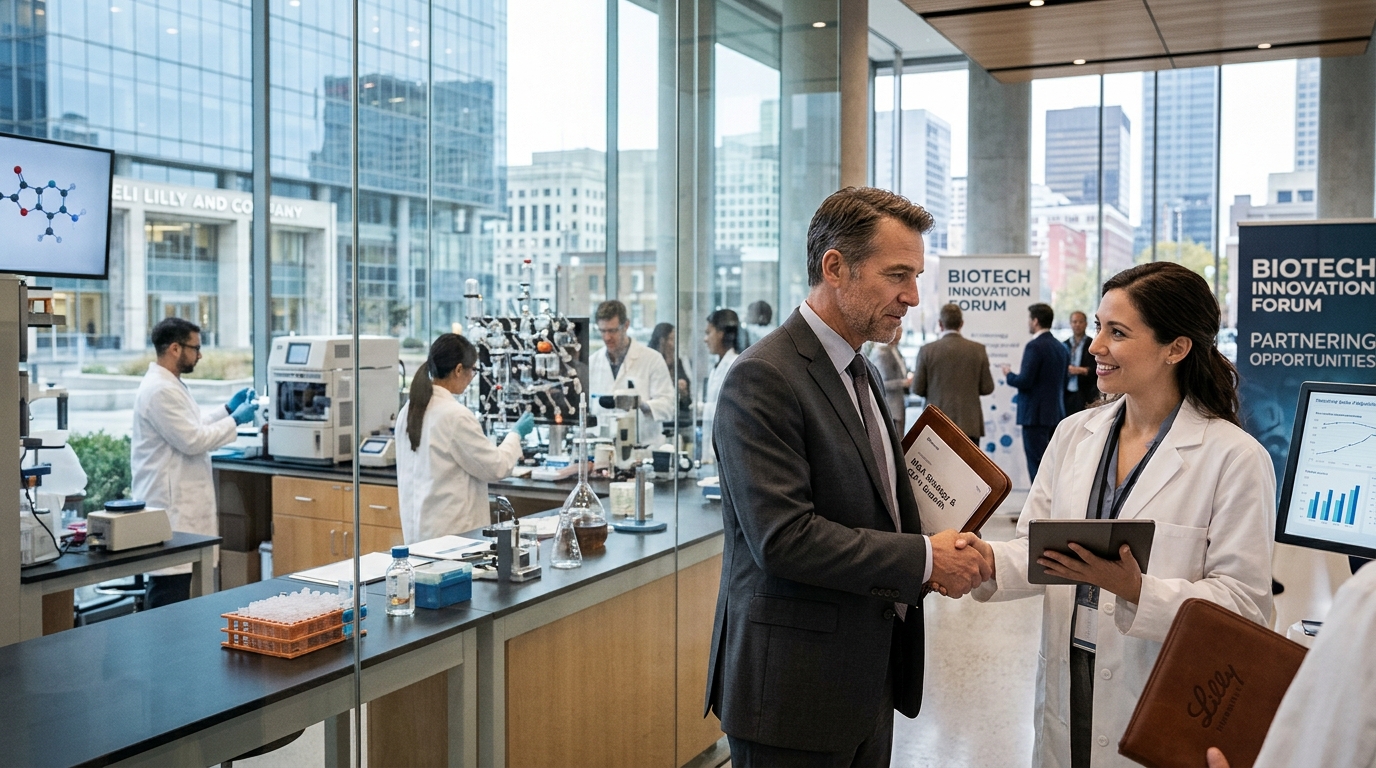
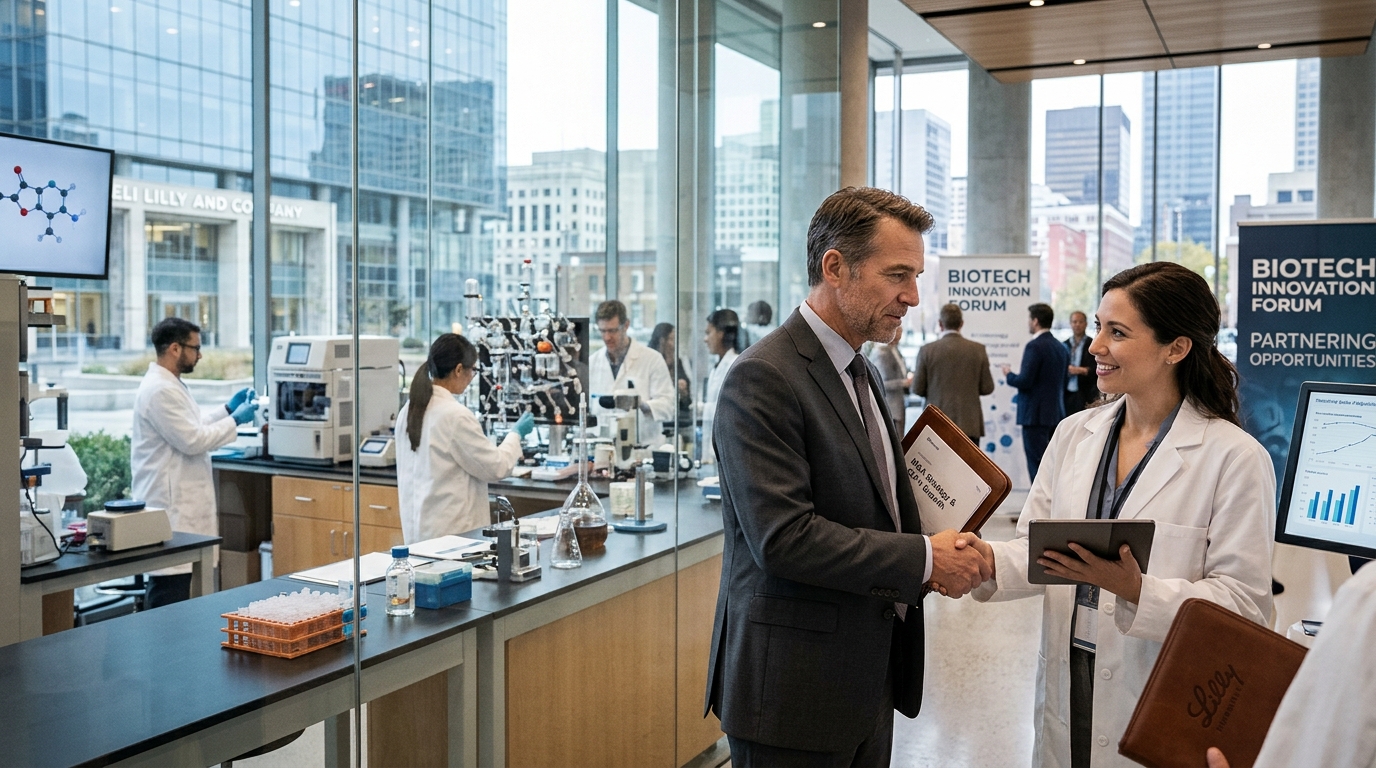
Hey there, bargain hunter. Most investors watch Eli Lilly for the GLP-1 numbers. That is understandable. But the more interesting question right now is not what Mounjaro and Zepbound are earning. It is what Lilly is buying with the proceeds, and whether the stock trading at an all-time high of $1,311 today already prices in the pipeline it just assembled.
Scoreboard
LLY hit a record intraday high of $1,311.48 on October 20, 2026, up roughly 65% from its 52-week low of $793.82 (set on October 22, 2025). The market cap sits at about $1.15 trillion. Q3 earnings land October 29. Meanwhile, the deal count keeps climbing.
The Real Reason This Matters
Lilly has announced 12 company acquisitions so far in 2026, totaling more than $20 billion, making it one of the most acquisitive major pharmas this year. The fuel is simple: a lot of GLP-1 cash.
The draft’s $13.6 billion in trailing free cash flow through June 2026 does not hold up against widely tracked and company-reported cash flow disclosures. Lilly’s cash generation has surged, but the clean number to anchor on here is that free cash flow in the June 2026 quarter alone was about $4.5 billion, and trailing-twelve-month estimates vary depending on methodology.
What does hold up: Mounjaro and Zepbound together produced $36.5 billion in 2025 revenue, and Lilly’s CEO is David Ricks. When one molecule throws off that kind of cash, management can run a clinical-stage rollup at scale. That is exactly what Ricks is doing.
What Lilly Just Bought
The acquisitions span several therapeutic areas, deliberately chosen to reduce dependence on GLP-1 drugs:
- Centessa Pharmaceuticals ($7.8 billion): orexin receptor 2 agonists for narcolepsy and sleep disorders
- Kelonia Therapeutics (up to $7 billion, $3.25 billion upfront): in vivo CAR-T for multiple myeloma, a one-time infusion approach that aims to sidestep traditional cell-manufacturing bottlenecks
- Curevo, LimmaTech, Vaccine Company (up to $3.8 billion combined): infectious disease vaccines covering shingles, bacterial pathogens, and Epstein-Barr virus
- Merida Biosciences (up to $2.875 billion): an autoimmune platform focused on selective degradation of pathogenic autoantibodies
- Ventyx, Orna, Ajax, CrossBridge, Engage Bio: inflammatory disease, circular RNA, blood cancer, ADC oncology, and nonviral DNA delivery
Most of these are mid-stage or earlier. Lilly is not buying revenue. It is buying optionality.
Lilly is not alone in running this playbook. The patent cliff is forcing every major pharma into clinical-stage acquisitions, and the XBI has already priced in who the buyers are.
Is LLY Cheap at $1,284?
At a forward P/E of roughly 32x on full-year guidance of $82 to $85 billion in revenue, Lilly trades at a 71% premium to the healthcare sector. Q1 2026 non-GAAP EPS of $8.55 beat consensus by nearly $2. The GF Value estimate sits at $1,580, implying nearly 19% upside from current levels on one model. The counter: insiders have sold $2.66 billion in stock over the past 12 months with zero purchases. That is not a sell signal by itself, but it is worth noting before chasing a record high.
Bull / Base / Bear
- Bull: Centessa alone justifies the acquisition spend if its orexin drugs hit big commercial scale. Add Kelonia’s in vivo CAR-T and Lilly owns a post-GLP-1 revenue bridge that the market has not yet priced.
- Base: Two or three of the 12 acquisitions generate meaningful revenue by 2030. The rest become write-offs or licensing deals. GLP-1 dominance sustains the dividend and buyback through that transition.
- Bear: Clinical attrition hits the mid-stage pipeline hard. Acquired IPR&D charges have been large in 2026. A GLP-1 pricing setback while the new pipeline matures could compress margins faster than the market expects.
Cheap Investor Checklist
- Q3 earnings on October 29: watch acquired IPR&D charges against operating income
- Kelonia Phase 1 expansion into U.S. sites: first real clinical read on the up to $7 billion bet
- Centessa narcolepsy program timeline: watch for clarity on development and regulatory milestones
- GLP-1 market share: treat any precise volume-share claim with caution unless the company discloses the underlying dataset
- Free cash flow trajectory: the cash machine needs to stay strong to fund further deals without debt stress
- Insider activity: no purchases in 12 months while meaningful stock has been sold
Bottom Line
If two or three of Lilly’s 12 acquisitions produce blockbuster drugs by 2030, today’s stock price looks like a discount on a diversified pharma giant rather than a GLP-1 one-trick bet. If the pipeline washes out and GLP-1 pricing deteriorates simultaneously, the premium multiple has nowhere to go but down. The free cash flow machine is real. Whether the rollup is worth $20 billion in clinical-stage bets is the question Q3 earnings, and the next few trial readouts, will start to answer.