October 20, 2026
Bonus Content: Hasbro Is Posting 41% Margins. The Market Still Prices It Like a Toy Company.
Former tech executive Jeff Brown, the man who picked Nvidia in 2016, before it jumped as high as 37,800%, just got inside a Cybercab, Elon Musk’s new car that has no steering wheel or pedals… and what happens will shock everyone. Click here to see the details or read more below.
Dear Reader,
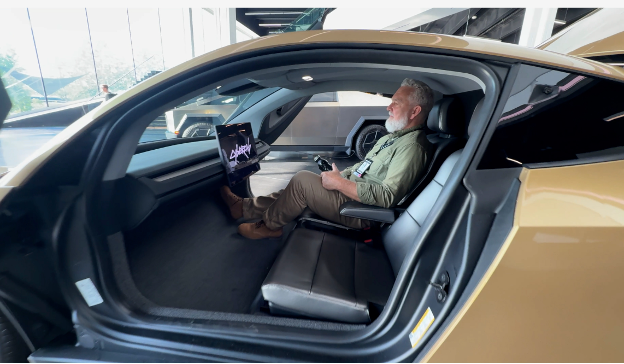
This man you see below just got inside a Cybercab…
Elon Musk’s new car that has no steering wheel…
No gas or break pedals…
And no rearview mirrors.
You won’t believe what happened next.
Click here to see this exclusive Cybercab footage
And get the details on why Elon is predicting his next move could help unleash $320 trillion in new wealth…
And how you could claim your piece of that pie.
Regards,
Lindsey Hough
Managing Director, Brownstone Research
Hasbro Is Posting 41% Margins. The Market Still Prices It Like a Toy Company.
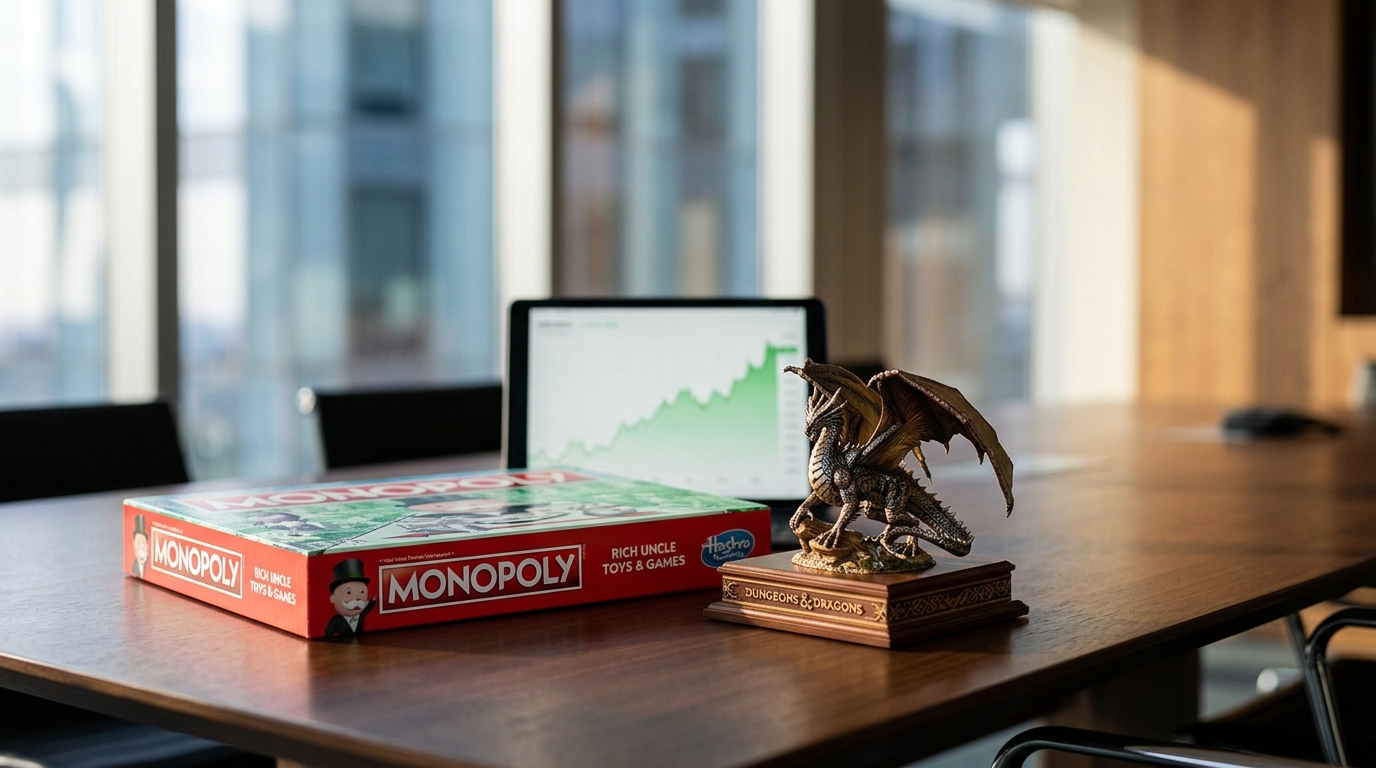
Hey there, bargain hunter. Hasbro is scheduled to release its Q3 results before the open this morning, and the question worth asking is not whether Magic: The Gathering beat the Street. It is whether the market has figured out that there are actually two completely different businesses hiding under that ticker.
Scoreboard
Through the first half of 2026, Hasbro posted $2.14 billion in total revenue, up 15% year over year. The Wizards of the Coast and Digital Gaming segment drove nearly all of it, growing 26.5% to $1.25 billion for the period. Q2 alone came in at $1.14 billion in revenue, up 16%, with Magic: The Gathering surging 32% to clear $500 million in a single quarter for the first time in the card game’s 30-plus year history. Analysts walked into today’s Q3 results expecting about $1.48 billion in revenue.
The Real Reason This Matters
The market still assigns HAS a P/E of roughly 17x on trailing earnings and a 15x forward multiple. That is a toymaker’s valuation. Mattel trades at a forward P/E in the low teens. Hasbro gets priced a few turns above Mattel largely because of Wizards. But even at 17x, it does not come close to reflecting what the Wizards segment actually is.
What the Business Actually Is
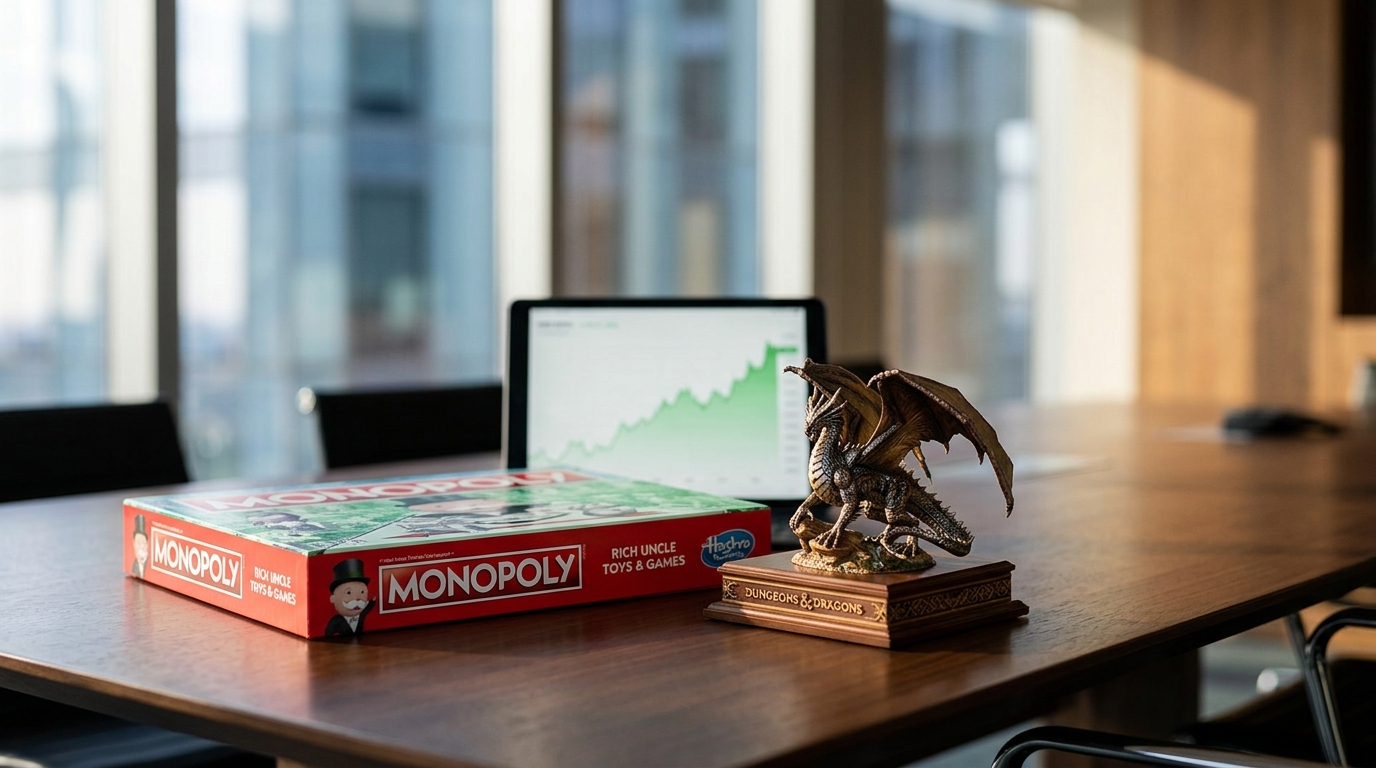
Wizards of the Coast is a high-margin IP licensing and collectible card machine. In Q1 2026, the segment generated about $298 million in operating profit on $582 million in revenue, for roughly a 51% operating margin. In Q2, it put up $270 million in operating profit on $664 million in revenue, a 41% margin that included a $56.4 million non-cash impairment charge tied to a refocused digital games portfolio. Strip that charge and the margin was tracking closer to 50%. Monopoly Go, the mobile title operated by Scopely under a licensing arrangement, contributed $44 million to Q2 revenue and $41 million in Q1, with $85 million total across the first half of the year. That is recurring, asset-light royalty income with essentially no cost of goods.
The Consumer Products segment, your Nerf blasters and Play-Doh tubs, posted an operating loss of $15 million in Q2 and an operating loss of $48 million in Q1. It is seasonal, tariff-exposed, and fighting a retailer that is still cautious heading into the holidays. Hasbro absorbed about $17.7 million in tariff costs in the first six months. The company has said it expects that by 2026, about 30% of total toy and game revenue will be sourced from China, down from roughly 50% previously.
Is It Cheap?
If you pay 17x for Hasbro as a blended entity, you are implicitly paying a very low multiple for Wizards. A standalone software or IP licensing business posting 50% operating margins and double-digit growth would attract 25-35x earnings in the current market. Assign Wizards even 22x its annualized operating profit and you get a segment value that represents the majority of the roughly $14 billion market cap. That means the Consumer Products division, $861 million in revenue in the first half, comes to you near zero. Compare that to Mattel at roughly 0.9x sales: Hasbro’s toy business, if stripped out, would trade at a deep discount to the only true peer in the sector.
The same mispricing logic applies when a software business with durable margins gets lumped into a category the market has already written off. Adobe’s compression to 12x earnings shows how quickly the market can misprice a cash-generating IP business when sentiment sours.
Bull, Base, Bear
- Bull: Q3 and Q4 2026 Wizards revenue stays on the low-double-digit full-year growth guidance management set after raising the outlook in July. Holiday toy orders recover as retailers restocked in September and October. Adjusted EBITDA hits the raised $1.45-1.50 billion guidance band. HAS re-rates toward 20x on the recognition that it is an IP company.
- Base: Q3 comes in roughly at about $1.48 billion. Wizards moderates in Q4 as it laps a record holiday quarter from 2025. The toy business stays barely break-even. Stock holds the $95-105 range, tracking earnings growth of 6-7% through 2027.
- Bear: Consumer spending weakens into the holidays as toy prices have risen about 6.6% year over year. Retail orders disappoint again after the summer delay. Tariff costs accelerate if trade policy shifts. Monopoly Go licensing revenue fades as the mobile game matures. The stock revisits the 52-week low of $69.50.
Action Plan
At around the high-$90s per share and a mid-teens forward P/E, Hasbro is not screaming cheap on blended metrics. It is cheap relative to what Wizards deserves as a standalone. If Q3 confirms the Wizards trajectory and management holds the raised full-year EBITDA guidance, the sum-of-parts gap becomes harder for the market to ignore. Scale into a first position on any post-earnings weakness below $92. Add a second tranche below $85 if the toy segment misses badly. Hold existing positions through the results if you own it already. The $0.70 quarterly dividend gets paid while you wait.
The sum-of-parts mispricing Hasbro faces is not unusual when a legacy business obscures a high-growth segment. DraftKings carries the same structural discount, with its fast-growing exchange product priced as if it were the same business as the legacy sportsbook.
Cheap Investor Checklist
- Wizards Q3 revenue growth: watch for mid-single-digit increase vs. prior year, per guidance
- Wizards operating margin: does it recover above 45% excluding any one-time items?
- Monopoly Go licensing revenue: is the $41-44 million per quarter run-rate holding?
- Consumer Products operating loss: narrowing toward breakeven, or widening from tariffs?
- Full-year EBITDA guidance: held at $1.45-1.50 billion, raised, or cut?
- Tariff cost disclosure: how much hit Q3 cost of goods, and what is the revised full-year figure?
- China sourcing mix: is the 30% target confirmed or slipping?
- Holiday order commentary: are retailers committing to Q4 restocking volumes?
- Debt reduction progress: confirm the $497 million November 2026 maturity remains on track
Bottom Line
If Wizards keeps its margins above 40% and Monopoly Go licensing holds its quarterly run-rate, Hasbro trades at a steep discount to what the IP and digital gaming segment would command as a standalone. The toy business is your margin of safety: you get it free or close to it at current prices. If the holiday season disappoints and tariff costs surprise to the upside, the blended multiple has room to compress. Watch the Wizards margin line and the full-year guidance confirmation this morning. Those two data points tell you whether the discount is real or a value trap dressed in cardboard.