October 19, 2026
DDR5 has jumped from roughly $100 to about $450 in a year.
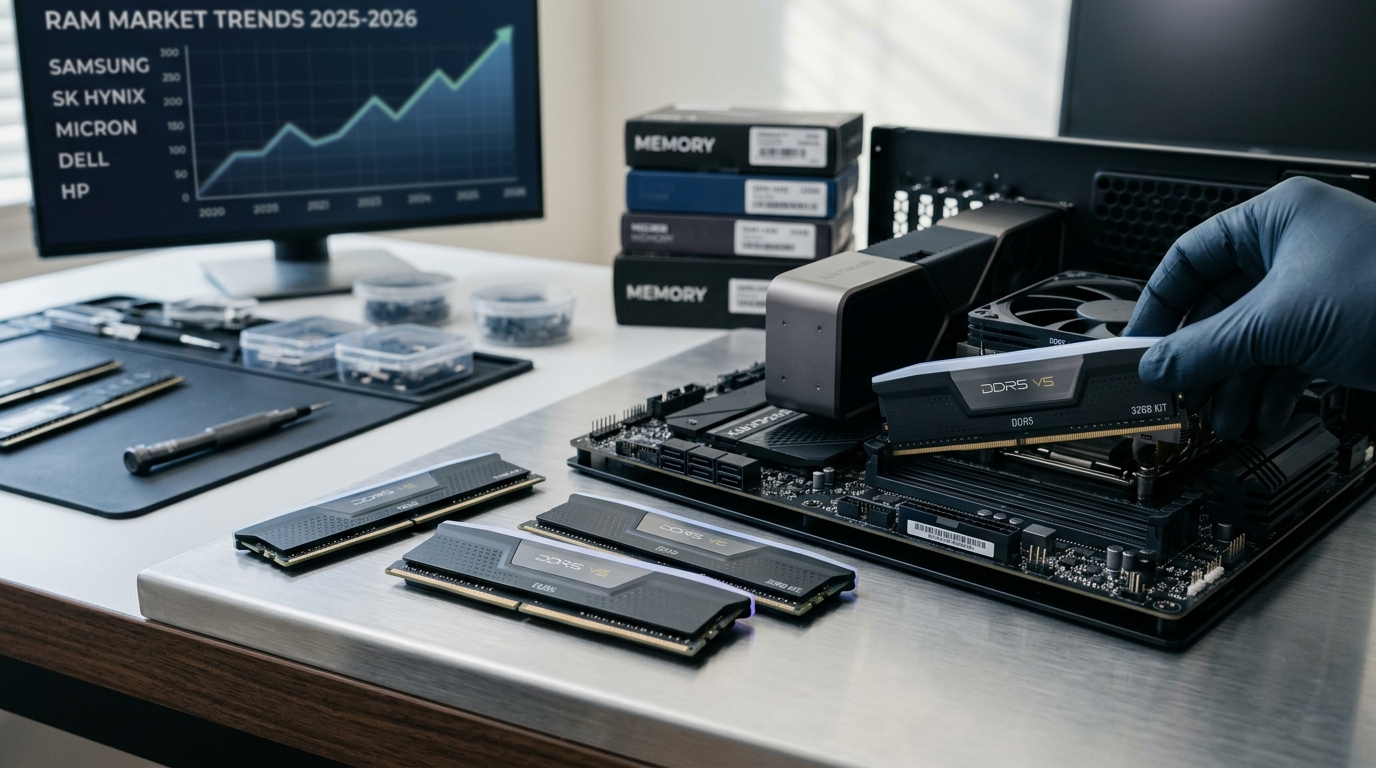
Hey there, bargain hunter. A 32GB DDR5-6000 kit cost under $90 a year ago. It is now running around $450. That is not a rounding error. That is a 400%-plus move on the component that sits in every laptop, desktop, and server you own. And it is not slowing down.
The #1 Commodity Trade of 2026
Gold bugs are going to hate this. The #1 commodity trade of 2026 isn’t gold, silver, oil, or any rare earth metal. It’s something far more valuable – something The New York Times says “powers the world’s tech.”
And America controls over 80% of the world’s supply. When Trump restricts exports, Morgan Stanley estimates it could trigger a $10 trillion boom. And you have the rare opportunity to get in on the ground floor.
Scoreboard
As of mid-October 2026, mainstream 32GB (2x16GB) DDR5 kits are commonly listing in the mid-$400s to low-$500s, and many of the “cheap” options are still hovering around the $450 mark. That same class of kit was broadly in the $100 to $200 range in October 2025. Move up the capacity ladder and it gets uglier: a 64GB DDR5-6000 kit is now around $915, against a historical low of $159.
The Real Reason
Major memory makers have shifted production toward memory used in AI data centers, such as high-bandwidth memory and high-capacity DDR5, restricting the supply of general-purpose modules and driving up prices across the board. The mechanism is straightforward: multiple industry analyses have warned that HBM is dramatically more wafer-intensive than commodity DDR5 on a per-gigabyte basis, so every AI-grade stack produced effectively cannibalizes the capacity that would have gone to plain-vanilla PC DRAM.
Samsung’s CFO said on the company’s Q1 2026 earnings call that customer demand had concentrated on HBM4 and that its HBM4 sales volume was already completely sold out. Separately, SK hynix executives have also described 2026 HBM volume as sold out. When the whole output is pre-sold to hyperscalers, the retail shelf gets whatever is left.
Who Is Collecting
Micron is the most transparent data point on what this pricing environment means for a seller. Micron posted fiscal Q4 2026 revenue of $54.23 billion, a 379% jump year over year. Gross margin hit 87% in fiscal Q4, with adjusted free cash flow of $33.2 billion in that quarter alone. For fiscal Q1 2027, Micron guided to roughly $61.5 billion in revenue (midpoint). That is not a memory company. That is a royalty stream with a fab attached.
Is the longest-running bull market on record finally running out of steam?
It looks that way. But truthfully? It doesn’t matter.
Because this strange formula gives you a way to study a defined setup during a short morning window… even if the market crashes.
One ticker retirement traders are quietly using every morning.
One short morning window between 9:30 and 10:45 AM.
One approach with entry and exit plans fully defined before you ever place a trade…
Don’t even think about making another trade until you see this free report.
Samsung and SK hynix are running the same playbook. TrendForce said in late September that blended HBM average selling prices are projected to jump 121% year over year in 2027, and Seoul Economic Daily reported industry estimates that a 12-high 36GB HBM4 stack could move from roughly $600 in 2026 to about $1,300 in 2027. Supply-chain and media reporting around Nvidia’s Vera Rubin has also circulated estimated allocation splits that put SK hynix in the lead, Samsung second, and Micron with the remainder, though Nvidia has not published official percentage allocations.
Who Is Paying
Dell and HP are the most exposed consumer-facing names. A widely circulated channel claim says Dell implemented an approximately 17% list price increase effective March 30 across OptiPlex, Latitude, Precision, and PowerEdge lines, though public, primary documentation is limited. HP executives have been much more explicit: HP has said memory and storage now account for roughly 35% of its PC bill of materials, up from a historical 15 to 18%. Digitimes has also reported, via supply-chain sources, that memory pricing could stay elevated into 2027 because of ongoing manufacturing constraints.
HP’s exposure runs deeper than a single quarter of margin compression. HP warned the SEC that rising memory costs are squeezing Personal Systems margins and that global PC unit volumes could shrink in 2027.
Is It Cheap?
Micron trades above $1,000 after rallying more than 270% in 2026. At 87% gross margins and $61.5 billion in forward quarterly revenue guidance, the multiple has expanded with the business. It is not cheap by any conventional screen. But consider the alternative framing: Micron’s own earnings materials and call commentary have emphasized that industry demand remains strong and that long-term supply agreements are locking in significant future volume. A business that cannot meet its own orders is not a business where pricing power fades quietly. Samsung and SK hynix are priced in Korean won, carry geopolitical risk, and trade on local exchanges. Micron is the only pure-play U.S. DRAM name, and that matters to investors who want the trade without the currency overlay.
5 Little-Known Stocks Behind Today’s Defense Tech Shift
Behind the headlines, a major transformation is underway.
Modern warfare is being driven by AI, autonomous systems, and next generation technology. A handful of lesser known companies are helping power this shift.
This report uncovers five stocks quietly playing a critical role in the future of defense.
Bull / Base / Bear
- Bull: HBM4 supply stays constrained through 2027. Micron’s fiscal Q1 2027 guidance of $61.5 billion proves conservative. Consumer DDR5 stays above $400 into mid-2027, extending margin expansion.
- Base: SK hynix continues ramping HBM4 and extends capacity via long-term contracts, which gradually takes the edge off the cycle without forcing a crash. Pricing plateaus but does not collapse. Micron earns into its multiple over 18 months.
- Bear: Samsung’s HBM4 ramp and competitive progress closes the gap faster than expected, and aggressive competition accelerates price normalization. Dell and HP margin pressure becomes a demand problem if PC buyers defer purchases.
Action Plan
For the memory sellers: Micron is the most liquid U.S. entry. At these margins, the stock is pricing in a long cycle, which is the base case given capacity constraints. A scale-in below $950 captures more of the risk-reward. Avoid chasing the all-time high this week.
For Dell and HP: both are in the penalty box on margins. Dell’s reported 17% price increases protect revenue, not profit. Hold existing positions; neither is a buy until memory costs show a credible reversal.
Cheap Investor Checklist
- 32GB DDR5-6000 retail price: watch for a sustained move below $400 as the first signal the squeeze is easing
- Micron gross margin: fiscal Q4 hit 87%; any sequential decline signals pricing power is peaking
- HBM4 contract price trajectory: a 12-high 36GB stack is widely estimated around ~$600 in 2026 and ~$1,300 in 2027
- Samsung HBM4 yield: treat social and channel yield numbers cautiously; the investable signal is what shows up in shipment momentum and customer qualification wins
- Dell and HP gross margin: watch quarterly filings for whether price increases are offsetting input costs or merely covering them
- Micron fiscal Q1 2027 revenue vs. $61.5 billion guide: a miss here is the first real warning sign for the cycle
- Digitimes supply-chain commentary: monthly check on whether “elevated into 2027” is being revised earlier or later
Bottom Line
If the AI buildout continues at its current pace, Samsung, SK hynix, and Micron keep collecting. If capacity expands faster than hyperscaler demand, the cycle turns and Dell and HP get their margins back. Right now the evidence overwhelmingly favors the sellers. For consumers and enterprises alike, this signals the end of an era of cheap, abundant memory, at least in the medium term, with 2026 shaping up as a year when technology becomes more expensive driven by supply constraints rather than demand growth. Bargain hunters do not chase a 270% rally, but they do take notes on where the toll booth is. Right now, it is between the fab and everything else you want to buy.