October 19, 2026
Bonus Content: Indonesia’s Stock Market Is Down 16% in Two Days. Here Is the Hard Question.
Hey,
From September’s Fed statement…
“Inflation remains elevated. Today’s policy action will support a timelier return to the Committee’s 2 percent goal.”
That’s the first rate hike since 2023. And they already signaled another one is on the table.
You don’t need a 400-page playbook on what the Fed might do next. You need a simple, defined step-by-step way to find, set up, and trade the market in this environment.
That’s why I want you to have this…
11-Hour Options For Beginners guide.
100% free download.
Grab it now while it’s still live.
In your corner,
Dave Aquino
Base Camp Trading
Indonesia’s Stock Market Is Down 16% in Two Days. Here Is the Hard Question.
Hey there, bargain hunter. When a market drops 11.6% on Friday and another 5% on Monday, the reflex is to reach for the buy button. Prices are low. Sentiment is broken. That is usually where the money gets made.
Not always.
Scoreboard
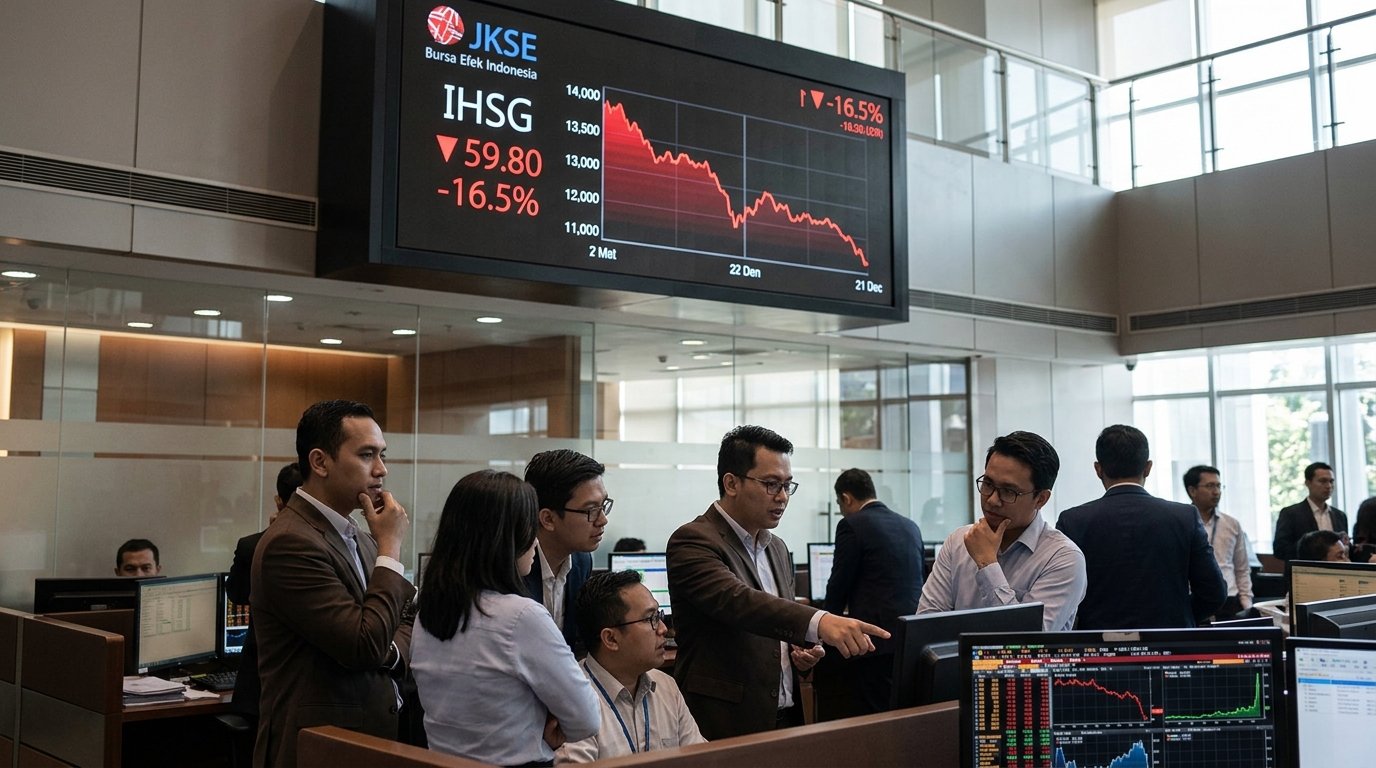
The Jakarta Composite Index hit a six-year low after plunging 11.57% on Friday, after MSCI launched a consultation on a proposal to reclassify Indonesia from an emerging market to standalone market status. Monday brought another drop of over 5%, extending the rout to its lowest level since 2020. The selloff has also hit the rupiah and Indonesian government bonds. For US investors tracking the market through EIDO, the iShares MSCI Indonesia ETF, the fund’s NAV total return was down about 36.10% year-to-date as of October 15.
What Actually Happened
This is not a routine valuation correction. MSCI pointed to persistent opacity in shareholding structures and suspected coordinated trading behavior as key investability concerns, and said a reclassification to frontier markets would not properly recognize the depth of the market problems. Indonesian equities have also been under an interim freeze in MSCI indexes since late January 2026, meaning certain index-related changes have been halted while MSCI solicits feedback and assesses progress.
MSCI is considering what is effectively a double downgrade for Indonesian equities, bypassing frontier status and relegating the country to standalone-market status. The move would classify Indonesia alongside the likes of Argentina, Lebanon, and Palestine.
The Real Reason This Hurts
Standalone is not a sentiment label. It is an eviction notice from every passive fund that tracks MSCI benchmarks. Goldman Sachs warned in a Sunday note that a full removal from MSCI’s emerging-market indexes could trigger approximately $5.6 billion in passive fund outflows, equivalent to 18 days of average daily trading volume for constituents of the MSCI Indonesia Investable Market Index. An additional $2.7 billion could be at risk if FTSE Russell subsequently takes similar action, although Goldman stressed that such a move would be a separate scenario.
Forced selling of this scale does not happen in a vacuum. Rising Treasury yields at multi-decade highs are already pulling capital away from emerging markets and toward dollar-denominated assets, compressing the pool of foreign buyers available to absorb any Indonesian liquidation.
Goldman estimated that active funds benchmarked to MSCI and FTSE indexes hold more than $8 billion in Indonesian equities, although any selling by these investors would be discretionary rather than automatically triggered by a downgrade. That discretionary pool matters: active managers who benchmarked to MSCI are now running career risk by holding a market that may no longer appear in their benchmark at all.
Is It Cheap?
On the surface, yes. Indonesian banks, which dominate EIDO, carry a forward P/E of roughly 8.5x with return on equity between 18.5% and 22%. Those are genuinely attractive numbers in isolation. The problem is the seller is not discretionary. Foreign investors have already pulled $4.7 billion from the market this year before today’s rout added more. Foreign ownership of Indonesian stocks has declined to 25% in October from 27% in January. The mechanical selling from a confirmed MSCI removal has not started yet. Buying into a forced liquidation before it clears is a trade with a known headwind of known size.
Goldman maintained its underweight rating on Indonesian equities, citing persistent index uncertainty, weak corporate earnings, and macroeconomic challenges.
Indonesia has also faced Moody’s and Fitch cutting their sovereign rating outlooks to negative, citing reduced predictability in policymaking and rising policy uncertainty.
Bull / Base / Bear
- Bull: MSCI will run a consultation until April 2027 and announce its final decision by the end of June 2027. A credible reform package before then reverses the outflow clock entirely.
- Base: Indonesia enters a prolonged limbo. Prices stabilize at depressed levels while the consultation plays out, offering a dead-money trade for eight months with an uncertain exit.
- Bear: The Indonesia Stock Exchange has already lowered its daily downside price limit to 7% to manage volatility. If FTSE Russell follows MSCI, the combined $8.3 billion forced selling pressure hits a market that has already lost most of its foreign buyer base.
Action Plan
Do not chase this. The valuation discount is real, but it exists for reasons that are structural, not cyclical. If you want a position, wait for the MSCI consultation and the policy response from Indonesian authorities to show concrete enforcement action. A small, defined-risk starter in EIDO under $10 is defensible only if you can hold through potential further forced selling and treat it as a multi-year reform bet, not a bounce trade.
Cheap Investor Checklist
- Jakarta Composite level vs. six-year low: breached today
- MSCI consultation deadline: April 2027
- MSCI final decision: by the end of June 2027
- Goldman passive outflow estimate on full removal: $5.6 billion
- FTSE Russell follow-on risk: additional $2.7 billion
- EIDO year-to-date return (NAV total return) as of October 15: about negative 36.10%
- Foreign ownership share of Indonesian equities: 25%, down from 27% in January
- Net foreign selling year-to-date: $4.7 billion
- Watch: OJK enforcement action against named market manipulation cases
- Watch: Rupiah stability as a leading indicator of capital flight pace
Bottom Line
If Indonesian regulators deliver credible, documented enforcement before the April 2027 consultation closes, this market prices sharply higher and EIDO becomes one of the best risk-adjusted recoveries in emerging markets. If they do not, the $5.6 billion in passive outflows is a floor that has not been reached yet. Right now, the odds favor patience over urgency. The bargain is real. The trap is also real. Know which one you are buying before you act.