October 2, 2026
Bonus Content: Corteva Shareholders Got Two Companies for the Price of One. Now What?
For a while now, I’ve been showing regular traders like you how to take advantage of a specific 60-minute window…
One that lets us go after 50% returns every morning – whether the market opens higher… or lower.
Here’s what I mean…
If you had spotted this 60-minute opportunity yesterday morning… all you would’ve had to do was place a quick trade before 10 am…
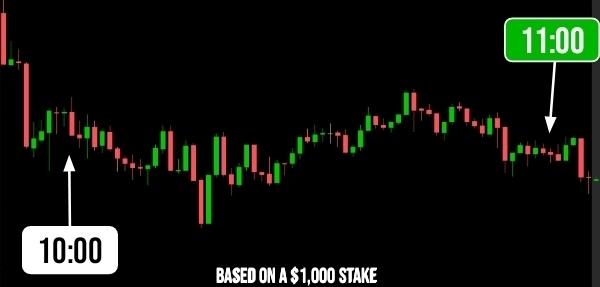
Went ahead with your morning plans and when you return a couple of minutes later, there’s a good chance you’d find $500 in extra income sitting in your account (on a 1k stake)
It wouldn’t have mattered what happened with the overall market… this 60-minute window would have been all you needed to target cash.
Today? Same story.
Place a quick trade, grab your coffee… and let the setup do the heavy lifting.
And just 60 minutes later… come back to what could be a nice $500 in extra income sitting in the brokerage account.
I designed the setup to be that straightforward.
Granted, there will be trades that won’t work out
But if you want in?
Corteva Shareholders Got Two Companies for the Price of One. Now What?
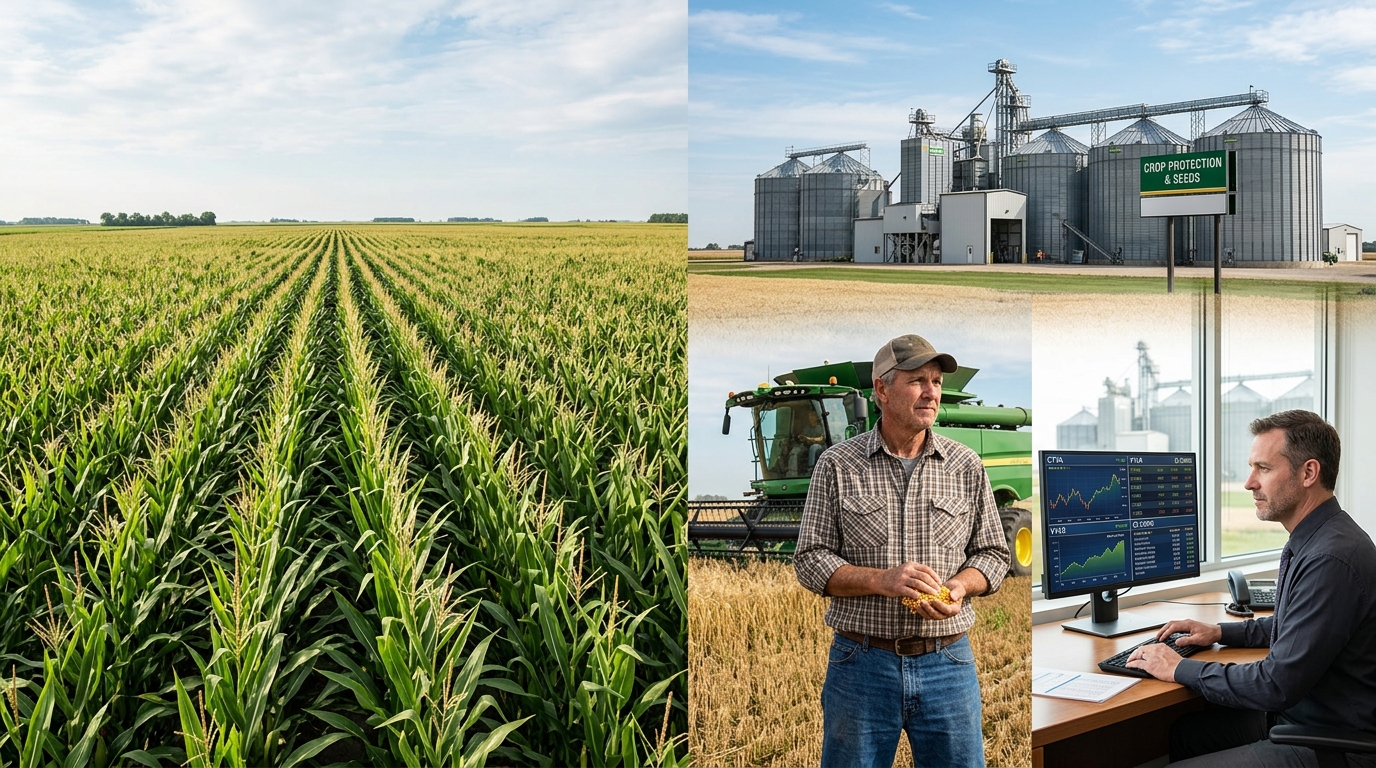
Hey there, bargain hunter. Yesterday morning, Corteva’s ticker shed about 84% and every retail alert from here to Iowa lit up red. Nobody necessarily lost 84% overnight. That is the thing worth understanding before anything else.
Scoreboard
CTVA closed October 1 at $12.57, down from a prior close of $77.65. Vylor (VYLR) opened at $66 and finished the day at $68.26, putting its market cap at roughly $45.5 billion. Add the two together and you get about $81 in combined value per share, a few dollars above where the old CTVA was trading just a week ago.
The mechanics: every Corteva shareholder of record as of September 24 received one VYLR share for every CTVA share held, a tax-free 1-for-1 distribution for U.S. federal income tax purposes (except for any cash received in lieu of fractional shares). Index funds had to buy Vylor. Option chains reset. Cost bases split. The 84% drop in the CTVA quote is largely arithmetic, not a verdict on the business.
What Happened and Why
Corteva announced this split exactly one year ago, on October 1, 2025. Management’s argument was simple: the seed market and the crop-protection market evolve differently, and two focused companies can allocate capital and strategy better than one combined one. Seven years after Corteva itself spun out of DowDuPont, the split completed on schedule.
Corn sitting at $5.02 per bushel (December 2026 corn futures settled at about 502 cents on October 1) matters for both businesses. It is not $7 corn, but it is not $3.50 either. Farmers are cautious buyers, not distressed ones. That is a reasonable backdrop for both spincos to go public into.
Meet the Two Businesses
Vylor (VYLR): The seed and genetics company, home to the Pioneer brand, launched with roughly $10 billion in annual revenue and 27% EBITDA margins. It holds a leading position in North American corn seed alongside Bayer’s Dekalb. Vylor targets net sales of $11.2 billion to $11.9 billion by 2029, with operating EBITDA of $3.3 billion to $3.7 billion, representing 3% to 4% annual growth. The licensing arm, Vylor One, is the real long-term story: management expects gross licensing income above $500 million in 2027 and approaching $2 billion by 2040. Crucially, Vylor recently flipped from a net payer of seed-trait royalties to a net receiver, improving its royalty position by over $500 million over five years. It enters the market with $1.1 billion in new senior notes but carries a technology pipeline that management values at $19 billion, anchored by 12 platform launches in corn, soy, and wheat over the next decade.
New Corteva (CTVA): The standalone crop-protection company, led by new CEO Luke Kissam, projects standalone 2026 sales of roughly $7.8 billion, growing to $8.4 billion to $8.7 billion by 2029. At the September 15 investor day, management guided for 2027 to 2029 cash flow from operations of $2.2 billion to $2.6 billion. Its $11 billion innovation pipeline includes seven new active ingredients over the next decade, with about 65% of sales already coming from differentiated technologies. First-half 2026 crop-protection EBITDA was $776 million, up 9% year over year. The headwind is Latin American pricing: competitive pressure there has crimped price realization for two years running.
Is It Cheap?
- VYLR at $68.26: One pre-split analyst sum-of-the-parts pegged Vylor’s standalone value at $58 to $67 per share on 2026 EBITDA, with a long-term range of $77 to $98 as licensing income compounds. At current prices the stock is trading near the top of the near-term range. Not a screaming bargain, but a premium-quality seed franchise rarely is.
- CTVA at $12.57: Market cap is roughly $8.5 billion on a business generating roughly $1.5 billion to $1.6 billion in standalone EBITDA annually. That is 5 to 6 times forward EBITDA for a company with a credible 6% EBITDA growth target and a biologicals platform that peers like FMC and Bayer do not fully replicate. Analysts who cover the name had been flagging that the market was pricing new Corteva like a no-growth commodity chemical stock. At $12.57, you get a case for that being correct.
Bull / Base / Bear
Bull: Corn holds above $5, Vylor’s licensing royalty flip drives margin expansion ahead of schedule, and new Corteva’s biologicals pipeline earns a premium multiple over 12 to 18 months as standalone financials become legible to generalist investors.
Base: Both companies execute near guidance. VYLR settles in the $65 to $80 range. CTVA grinds from $12 toward $20 as Latin American pricing stabilizes and new-product volumes offset legacy product pressure.
Bear: Corn drops to $4 or below. Farmer demand for premium seed weakens. CTVA crop-protection pricing stays negative in Latin America. The $50 million in separation dis-synergies baked into 2026 guidance prove to be an underestimate.
Action Plan
Do not confuse the mechanics with the message. If you held CTVA before October 1, you now hold both names, and your cost basis split between them. Selling either one reflexively because the ticker is down is a tax event masquerading as a thesis.
For new buyers: CTVA at current prices is the more asymmetric bet, priced for continued commodity-chemical skepticism. Scale in slowly; crop-protection Q3 is seasonally weak and management has guided for an EBITDA loss in the period. VYLR is a quality compounder at a fair price, not a cheap one. It belongs in a watch list if you want a better entry.
Cheap Investor Scorecard
- CTVA market cap vs. standalone EBITDA: currently 5-6x. Watch for re-rating above 8x as financials clarify.
- VYLR royalty net position: flipped positive for the first time ever in 2026. Track licensing revenue quarterly.
- Corn December futures: at about 502 cents. A sustained break below 450 cents changes both models.
- CTVA Latin America pricing: guided low-to-mid single-digit declines in H2. Any improvement is upside.
- VYLR licensing income 2027 target: $500 million. Watch for first standalone guidance update.
- New Corteva dis-synergies: guided at $50 million for 2026. Monitor for creep.
- VYLR S&P 500 inclusion: completed, replacing Corteva. Index-driven selling of CTVA may be creating short-term pressure worth watching.
- VYLR debt load: $1.1 billion in new notes at 5.125% and 5.625%. Manageable at 27% EBITDA margins; worth watching at roughly $5.7 billion of total indebtedness around the time of the spin-off.
Bottom Line
If corn stays near $5 and new Corteva’s biologicals pipeline delivers even half of its stated promise, CTVA at $12 looks like a classic post-spin orphan that will be re-rated upward once two or three quarters of clean standalone numbers land. Vylor is the better business at a full price. Own both if you held CTVA on September 24. Otherwise, CTVA is where the discount is today.