
August 11, 2026
SMCI’s Margin Flip Looks Real. Cash Is the Trap.
Featured: SMCI’s Margin Flip Looks Real. Cash Is the Trap.
Dear Friend,
This is the last time I’ll write you about this.
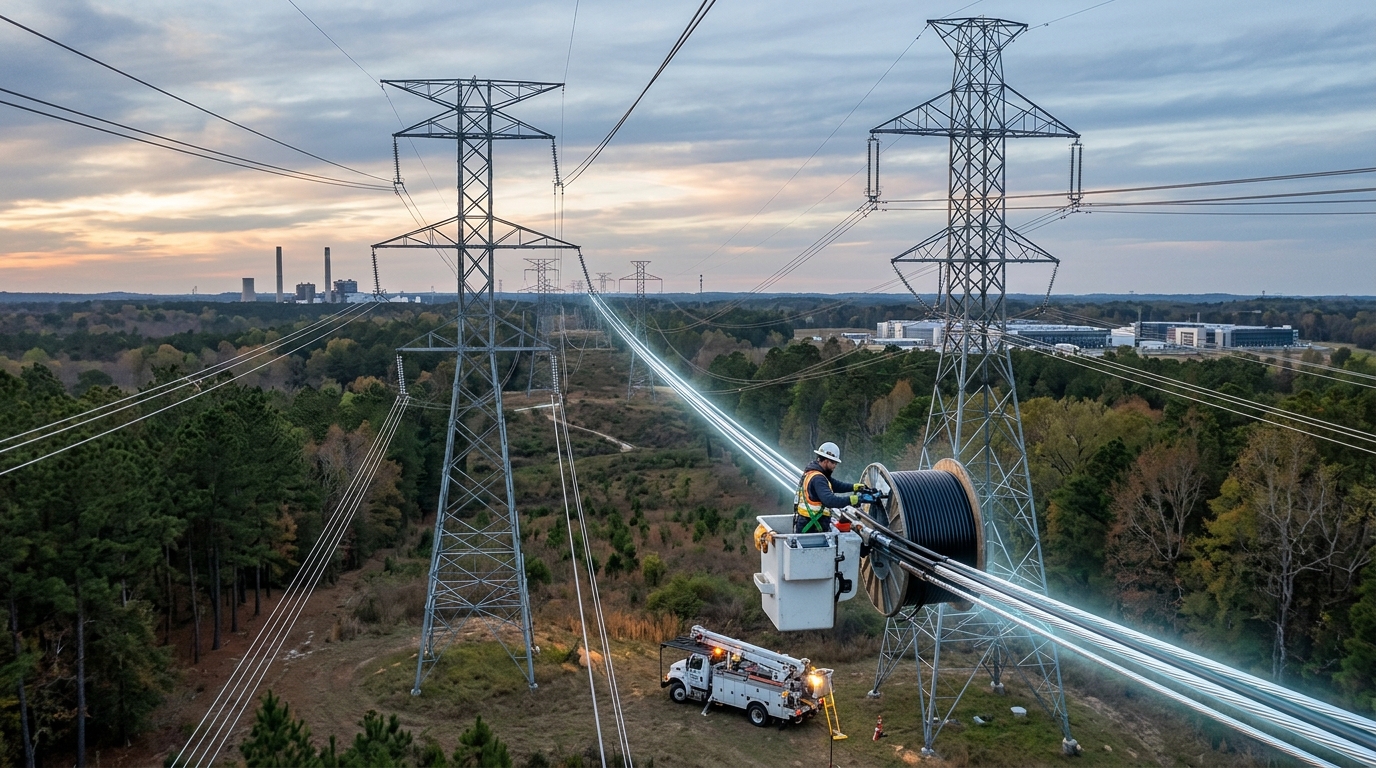
On August 18th, Washington hands one energy source a competitive edge it has never given anything. Not oil. Not solar. Not wind. Not nuclear.
An edge that runs through 2033.
Everything else is already in place.
The discovery came first. An energy source 140 times global electricity demand, confirmed near the Grand Canyon.
Then the breakthrough. 3 miles of solid rock, drilled in 16 days instead of 64.
Then the validation. Google’s 15-year contract. Gates’ $100 million. The Pentagon’s priority one designation.
And now the desperation. America’s largest grid just failed to secure enough power for the third year running. Costs are up more than 60%, and the failures have already cost ratepayers nearly $30 billion. That’s the running price of waiting, and it comes out of your pocket whether you act or not.
August 18th is the last piece. After that, the story writes itself, and the crowd shows up.
One company sits at the center. 60 years of work. A window that slams shut on August 18th.
After the 18th, you’re reading about it. Before the 18th, you’re ahead of it.
“The Buck Stops Here,”
Kelly Maguire
Behind the Markets
SMCI’s Margin Flip Looks Real. Cash Is the Trap.
Hey there, bargain hunter. Tonight Supermicro reports after the bell, and here is the honest version of the story: a margin reversal that would be genuinely remarkable at any other company is sitting on top of a balance sheet that just showed a brutal working-capital squeeze, including $6.6 billion of cash used in operations in Q3 fiscal 2026 alone. The preliminary numbers sent the stock up hard last month. The full numbers, and whatever management says about how they plan to fund that record backlog, are what actually matter.
Scoreboard
What the preliminary update said:
- Q4 revenue: near the low end of $11.0B to $12.5B guidance
- Q4 gross margin: 15% to 17%, versus prior guidance of 8.2% to 8.4%
- New Q4 orders: more than $60 billion, a company record
- SMCI stock reaction: up more than 20% in after-hours on July 21
What Wall Street expected for tonight:
- EPS consensus ranges from $0.71 (Investing.com) to $1.33 (Bloomberg) depending on the source, reflecting genuine analyst disagreement about the margin math
- Revenue consensus near $11.2B to $11.6B across major platforms
- Options market pricing a roughly 12% move in either direction
For context on the year-over-year: Q4 fiscal 2025 saw non-GAAP EPS of $0.41. Tonight’s report, if it confirms the preliminary, shows a company that nearly doubled revenue and potentially tripled EPS in twelve months.
The Real Reason This Quarter Is Complicated
The margin story is genuinely good. Going from sub-9% to a 15-to-17% gross margin in a single quarter is not incremental improvement. It is a structural shift. Management attributed it to a favorable customer and product mix, which in plain English means higher-value, higher-margin AI configurations rather than commodity server builds. That is a different product category with different economics.
But the preliminary update came with a quiet asterisk: revenue landed near the low end of guidance, not the midpoint. Mizuho analyst Vijay Rakesh attributed the revenue bottleneck to component and memory shortages as well as delays in shell construction. So Supermicro booked a record $60 billion in new orders during the quarter and still had trouble shipping enough product to hit the midpoint of its own guidance. That tension does not resolve itself on its own.
Then there is the SpaceX/xAI angle. In June, CEO Charles Liang posted on X that Supermicro was co-building a gigawatt-scale AI data center connected to xAI’s infrastructure efforts. Liang also noted that his team had previously built the original Colossus cluster in 122 days. The inference the market made: that one customer relationship could be behind a meaningful portion of the $60 billion backlog. Supermicro has never confirmed that. It is an assumption that is worth keeping in that category until management addresses it on the call.
Deep Dive: What Supermicro Actually Is
Supermicro designs and manufactures servers, GPU platforms, storage systems, and networking solutions for AI data centers, cloud computing, and enterprise customers. Its core competitive advantage is deployment speed. Liang built the original xAI Colossus cluster in 122 days. That clock speed matters to hyperscalers and frontier AI labs more than almost anything else, because time-to-production in AI infrastructure is a direct cost. Every day a cluster sits unbuilt is a day of GPU time that cannot be sold or used.
The company does not make chips. It buys GPUs from Nvidia, AMD, and Intel and integrates them into complete server systems. That makes Supermicro structurally dependent on chip allocations from those suppliers, which is both a risk and, when allocations are flowing, a moat of a different kind: customers who need rapid deployment cannot wait for a competitor to get their own allocation sorted out.
Manufacturing is expanding across Silicon Valley, Taiwan, Malaysia, and the Netherlands. The company has described its U.S. facilities as a strategic advantage in a tariff environment where domestic manufacturing matters to buyers who face export-control exposure or contract requirements.
Cheaper Phones Could Send EarnPhone Soaring
Apple’s push for lower-cost Chinese memory chips says it all: the smartphone race is shifting toward phones more people can afford.
Mode Mobile is built for this shift. Their EarnOS turns everyday smartphone activity into earnings. Like Uber turned cars into taxis, Mode is turning phones into EarnPhones, reaching 490M+ users and helping them earn and save $1B+.
As AI demand grows, Mode’s first-party data economy could become more valuable for model training while users share in the upside. With 32,481% revenue growth and Nasdaq ticker $MODE secured, investors can still invest at $0.52/share.
Click to explore Mode’s pre-IPO offering before the share price changes.
Please read the offering circular at invest.modemobile.com. This is a paid advertisement for Mode Mobile’s Regulation A+ Offering.
Data Section
Here are the numbers that define the investment case today:
- Q3 FY2026 revenue: $10.24 billion, up 123% year-over-year
- Q3 FY2026 non-GAAP EPS: $0.84 (Q3 FY2025: $0.31)
- Q3 gross margin: 10.1% non-GAAP (still compressed vs. historical levels)
- Q4 preliminary gross margin: 15% to 17%, a sharp step-up versus the 8.2% to 8.4% range previously guided
- Q4 new orders: over $60 billion in a single quarter
- Operating cash flow signal: cash flow used in operations was negative $6.6 billion in Q3 FY2026, highlighting how working capital can swamp reported earnings in this model
- June 2026 equity raise: $7.0 billion in equity and equity-linked financing to fund component purchases
- 1-year stock range: $19.48 to $62.36
That accrual-quality point is worth a separate line, but the precise third-party statistic in the draft is not something you should take as gospel without the underlying methodology in front of you. The plain-English version remains the same: reported profitability matters, but in this business, working-capital swings can dominate the cash outcome quarter to quarter. If margins are improving while cash stays ugly, you need to know exactly why.
Is It Cheap?
This is the most interesting part of the SMCI thesis, and also the most uncomfortable.
On many common screens, SMCI still looks cheap versus other AI infrastructure names. Revenue growth from $5.7 billion in Q4 FY2025 to an expected $11-plus billion in Q4 FY2026 is not a declining business.
But cheap on earnings and cheap on risk are two different things. The reason the valuation discount exists is not a mystery. Ongoing legal exposure tied to U.S. export-control enforcement and a Taiwan export-control investigation that came to light in early July, plus the company’s own working-capital intensity, all create a discount that the market is applying deliberately.
The margin flip, if it holds, narrows the discount case meaningfully. Moving gross margin from about 8.3% to 16% on near $40 billion in annual revenue adds roughly $3 billion of gross profit without a single additional server shipped. That is the arithmetic behind the July 21 rally. But one quarter of favorable product mix is not the same as a permanent structural change. The call tonight will need to address whether 15-to-17% is repeatable or whether it was a one-quarter event driven by a specific customer configuration.
Bull / Base / Bear
Bull Case: $50 to $58
The margin improvement is structural. High-margin AI configurations represent a growing share of the mix as hyperscaler and frontier AI lab customers shift from volume server builds to specialized, high-density GPU clusters. The $60 billion backlog converts to revenue over the next four to eight quarters, gross margin stays above 14%, and the $7 billion equity raise funds the working capital ramp without another dilutive event. A flagship build becomes a reference win that attracts comparable RFPs from Microsoft, Google, and Amazon. The export-control matters resolve without material penalties. At 18x to 20x forward earnings on roughly $2.97 in FY2027 EPS, the stock has a clear path to $50-plus.
Base Case: $34 to $38
The margin improvement is real but partially mix-driven. Gross margin settles in the 12-to-14% range over the next year as the backlog is fulfilled across a broader product range. Revenue growth moderates to 40-to-50% as supply constraints ease. The balance sheet stabilizes following the equity raise, and the cash conversion cycle gradually improves. Legal risk stays contained but adds a persistent discount. The stock trades toward the Barclays and Northland target range of $36 to $38.
Bear Case: $15 to $20
The $60 billion backlog is not contractually firm. A portion cancels or defers. Gross margin reverts toward 10-to-12% as the favorable mix quarter proves to be a one-time event. Export-control restrictions limit chip allocations from Nvidia and AMD, and another capital raise is required within the next 12 months at a price that dilutes existing holders materially. Goldman Sachs, which carries a Sell rating, cited ongoing margin pressure and limited visibility into profitability in Tier 2 cloud markets as its core concern. A retest of the 52-week low near $19.48 is not far from the bear case floor.
Action Plan
If you already own SMCI: Hold through the call tonight. The preliminary has already de-risked the gross margin number. The open questions are operating cash flow, guidance for Q1 FY2027, and anything management says about major customer concentration or the legal timeline. If the Q1 revenue guide comes in at $12 billion or above with gross margin guidance above 13%, the thesis has legs. If guidance disappoints or management declines to address the backlog composition, trim to a smaller position and wait for a clearer confirmation quarter.
If you are considering a new position: Do not chase the pre-earnings move. The stock is up materially from its post-June-raise lows. The options market is pricing a 12% swing, which means the risk-adjusted entry is much better the day after the report than the day before. A confirmed margin improvement with clean Q1 guidance would justify building a position in the $28 to $32 range. Wait for the call, then decide.
Scale-in framework: This is not a one-trade thesis. Given the legal overhang and balance sheet complexity, position sizing matters more than usual. A reasonable approach: 40% of intended position on the post-earnings open if the numbers confirm the margin story, 30% more if Q1 FY2027 guidance comes in above $12.5 billion, and the final 30% only after the next quarter confirms that margin above 13% is repeatable rather than mix-driven. Do not rush the last tranche.
Cheap Investor Scorecard
- Gross margin confirmation: Does Q4 land at 15% or above? Pass/Fail.
- Q1 FY2027 revenue guide: Above $12B is a green light; below $11B is a warning.
- Operating cash flow direction: Is cash use improving after the negative $6.6 billion Q3 swing? The magnitude matters.
- Backlog composition: Does management confirm contractual status, major customers, or timeline for delivery?
- Major customer concentration: Does management clarify whether one buyer drove the $60B order surge?
- Legal update: Any material change to the Taiwan export investigation timeline?
- Capital needs: Does management signal another equity raise is coming, or does the June $7 billion round cover FY2027?
- Cash conversion cycle: Any concrete improvement, with numbers, not vibes.
- Diluted share count: Post-equity-raise share count and its effect on forward EPS math.
- FY2027 guidance: Does management validate or walk back the Street’s growth expectations?
Bottom Line
If the margin flip holds above 14% and management provides Q1 guidance above $12 billion with a credible path to sustainable cash generation, SMCI at a discounted earnings multiple is one of the most mispriced AI infrastructure stocks in the market. The legal and balance sheet overhang is real, but it is also why the stock is priced like a problem instead of a winner.
If the margin improvement turns out to be a one-quarter mix event and working capital keeps eating the cash flow while the backlog stays vague, the discount is not a bargain at all. It is the market doing its job.
Tonight’s call does not just report a quarter. It either validates a structural margin story or exposes it as a favorable coincidence. Those are two completely different investments wearing the same stock ticker. Watch the gross margin guidance for Q1 FY2027, the operating cash flow number, and whatever Liang says about the composition of that backlog. Those three data points will tell you more than the headline EPS ever could.