July 26, 2026
Huang’s First Post Was a Warning
What the open-weight AI fight tells long-term investors about Nvidia’s real moat.
First a note from Mode Mobile
Breaking news:
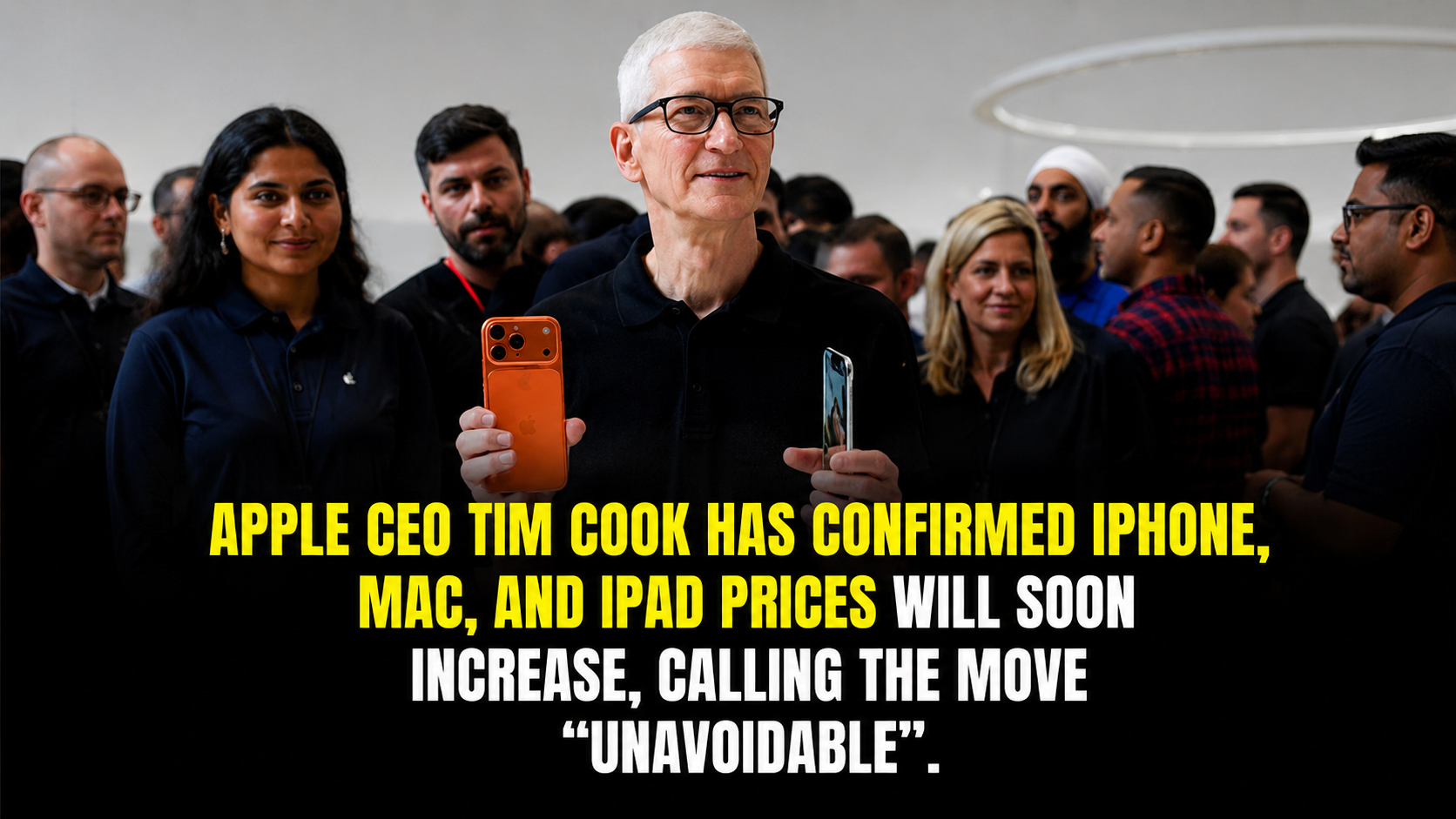
Apple just made smartphones even more expensive, raising the price on most of their products by $200 or more.
Consumers are paying more than ever for technology that gives them nothing back.
More expensive devices. Higher upgrade costs. Still no way for users to share in the value their phones create.
Mode Mobile is building the opposite model.
Instead of a smartphone that only costs money, Mode gives users the opportunity to earn from the devices they already own.
Just like Uber turned cars into taxis, and Airbnb turned homes into hotels.
And the results speak for themselves:
- 490M+ users reached
- $1B+ earned and saved by EarnOS users
- $115M+ cumulative revenue
- 32,481% 3-year revenue growth, Deloitte’s #1 fastest-growing software company in North America in 2023.
- $MODE Nasdaq ticker secured
As premium devices get pricier, Mode’s timing looks even more compelling.
Consumers need technology that gives value back.
Advertisers and AI companies need permissioned first-party data.
Mode sits at the intersection of both, creating a platform where users can participate in the value their phone activity creates.
Pre-IPO shares are still available at $0.52, with up to 20% bonus shares for a limited time.
Click now to review the pre-IPO offering while it’s still open.
Hey there, bargain hunter.
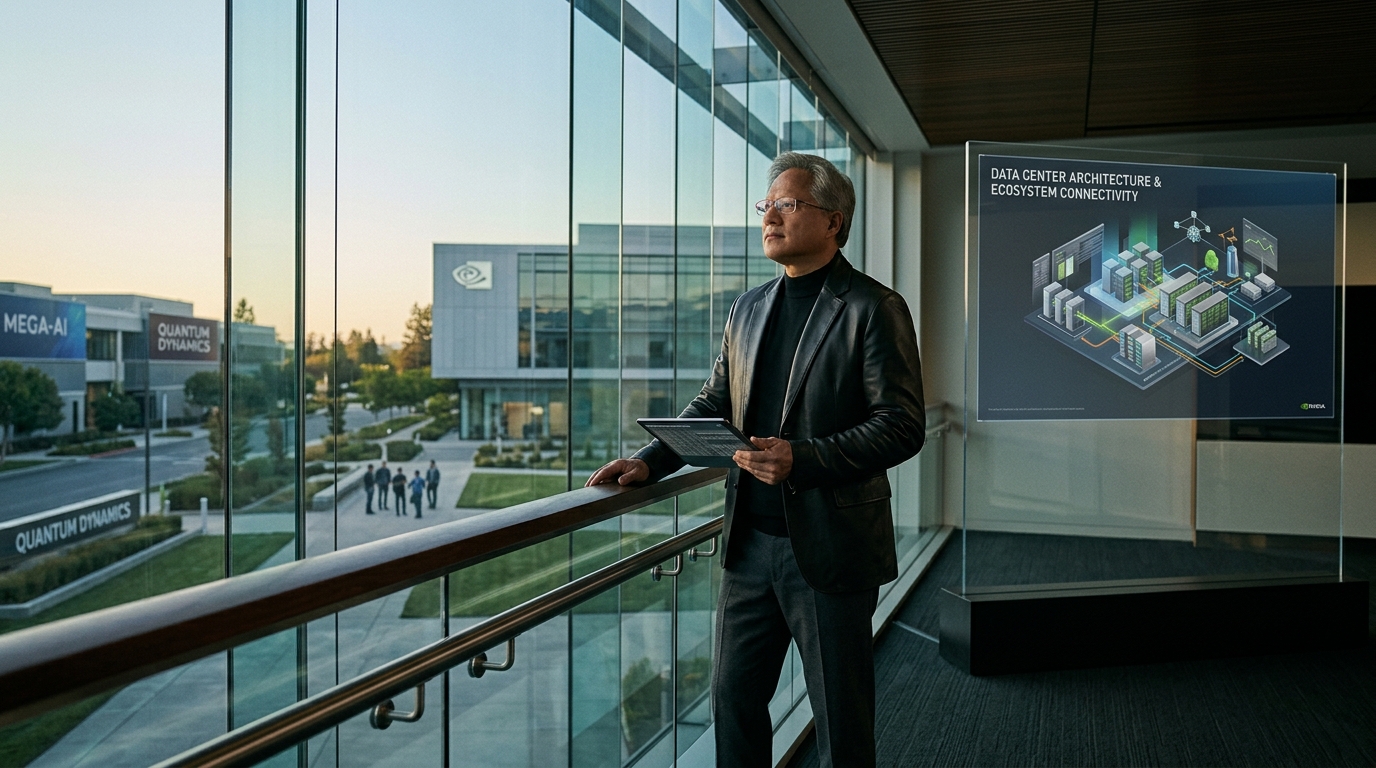
Jensen Huang has been running Nvidia for more than three decades. He has never posted on X. Not once. So when he finally did, on July 24, 2026, the choice of subject matter was worth paying close attention to.
He didn’t announce a chip. He didn’t celebrate a revenue record. He shared an open letter signed by 25 companies, including Microsoft, Meta, Palantir, IBM, Andreessen Horowitz, and Nvidia itself, warning Washington not to restrict open-weight AI models. The letter, titled “Open Weights and American AI Leadership,” argued that broad restrictions would weaken U.S. leadership in AI, not protect it.
That’s the kind of move you make when you’re genuinely worried something is about to go wrong.
What Actually Happened
The trigger was Kimi K3, a 2.8 trillion parameter open-weight model released by China’s Moonshot AI on July 16. Demand surged immediately, drawing comparisons to the DeepSeek moment that rattled global markets in January 2025, when Nvidia briefly shed nearly $600 billion in market value in a single day.
This time, Washington responded differently. The Trump administration began exploring potential bans or sanctions on Chinese open-weight models. Treasury Secretary Scott Bessent said Chinese AI companies could face sanctions if they improperly distilled American models. White House science adviser Michael Kratsios alleged that Moonshot used distillation from Anthropic’s Fable model while building K3, and that restricted Nvidia GB300 chips were accessed through servers in Thailand.
In at 9:35 AM. Out by 10.
I call it the “Opening Bell Breakout.” It’s the same setup I used to catch moves like 113% on GOOGL and 240% on META. I trade one simple 15-minute window each morning – and I’m usually done by 10 AM.
Here’s the split that matters for investors. OpenAI and Anthropic did not sign Huang’s letter. In fact, both labs have been quietly warning Washington that powerful Chinese open models pose genuine national security risks. Closed-model labs, it should be noted, have a financial interest in more scrutiny of open alternatives. Critics, including Trump adviser David Sacks, have called this out directly as potential regulatory capture.
Huang’s counter-argument draws a deliberate historical parallel. He compared the current fight over open-weight AI to the open-source software movement of the 1980s, arguing that just as open-source code became foundational to the modern internet despite early skepticism, open AI models represent a strategic asset rather than a liability.
Why This Is a Value Question, Not Just a Policy Question
Slight tangent, but it matters. Huang’s letter is not purely philosophical. It is a business position. Nvidia builds the hardware that runs both open and closed models. Restrictions on open-weight AI shrink the addressable market for Nvidia chips. Fewer developers building on open models means fewer GPU clusters, fewer training runs, fewer inference workloads. The math is not subtle.
This is what long-term investors need to separate: the policy risk from the business fundamentals. They are not the same thing.
On fundamentals, Nvidia is not a speculative story right now. Full-year fiscal 2026 revenue came in at a record $215.9 billion, up 65% from the prior year. Q4 fiscal 2026 revenue was $68.1 billion, up 73% year over year. Data center revenue for that quarter hit $62.3 billion, up 75%. The most recent quarterly report, for Q1 fiscal 2027, delivered $81.6 billion in revenue, an 85% year-over-year increase that exceeded Wall Street’s estimate of $78.8 billion. Adjusted EPS of $1.87 beat consensus by roughly six cents. That was the 22nd earnings beat in the past 24 quarters.
Free cash flow over the trailing twelve months reached $119 billion. Operating margins are running at 64%. Gross margins are 74%. Return on equity is above 114%. Return on invested capital is above 104%. The company holds $53 billion in cash against just $12.8 billion in debt.
During the first nine months of fiscal 2026 alone, Nvidia returned $37 billion to shareholders through buybacks and dividends. The company recently authorized an additional $80 billion buyback. These are not the numbers of a business in distress.
The Valuation Shift Nobody Is Talking About
Here is where the Cheap Investor lens gets interesting. Nvidia’s trailing P/E ratio as of July 24, 2026 is approximately 31.5x, based on a closing price of $206.84 and trailing EPS of $6.56. The forward P/E is roughly 20 to 23 times, depending on the source, using consensus earnings estimates for the next twelve months. The PEG ratio sits at 0.47.
Compare that to history. Nvidia’s three-year average P/E is around 52x. The ten-year average is above 53x. The current multiple is 41% below the decade average. Nvidia’s current P/E is also below the broader technology sector average of roughly 35x, and well below its semiconductor peer group average of 46x.
The AI Boom’s Most Profitable “Tollbooth” Stock?
A little-known company is quietly building what may be the closest thing to a virtual monopoly the AI era has ever seen.
Whitney Tilson – the man CNBC calls “The Prophet” – calls it the world’s most profitable tollbooth. One billionaire put more than half his $9 billion fund into it.
Right now it’s trading at a rare discount…the same kind that’s previously turned $10,000 into $55,000…in just over 12 months.
A stock growing revenue at 70% and earnings at over 100% annually, trading at 31x trailing earnings and 21x forward earnings, with a PEG ratio below 0.5. That is not a typical profile for a fully priced stock. The market appears to be discounting execution risk, China export restrictions, and policy uncertainty. All of those risks are real. None of them, so far, have stopped the revenue from compounding.
What the Market Is Getting Wrong
The market tends to treat Nvidia as a momentum trade. When sentiment toward AI cools, NVDA sells off. When a Chinese model causes panic, NVDA sells off. The stock sits about 12% below its all-time closing high of $235.47, reached in May 2026.
The perception risk is real. But the actual business has continued to grow through every scare. DeepSeek panic in January 2025. H20 export restrictions. China revenue zeroed out of forward guidance. Each time, the data center segment absorbed the blow and kept accelerating. Blackwell sales, per Huang’s own words in Q3 fiscal 2026, were described as “off the charts” with cloud GPUs sold out.
The open-weight AI debate adds a new layer of uncertainty. If Washington restricts open models aggressively, smaller developers building on Meta’s Llama or Mistral’s open infrastructure lose ground. That may seem counterintuitive, but it actually reduces the diversity of chip customers Nvidia has been building. The company has deliberately expanded beyond hyperscalers, with hyperscaler revenue still above 50% of data center revenue but growth increasingly led by the rest of the customer base. Anything that concentrates AI infrastructure back into the hands of two or three closed-model labs narrows that customer diversity. That is a structural risk worth monitoring.
Bull, Base, and Bear
- Bull case: Open-weight AI policy remains favorable. Demand for Nvidia GPUs expands across enterprise, sovereign AI, and startup markets. Revenue compounding continues toward fiscal 2027 estimates of $250 billion or more in data center alone. The multiple re-rates upward as growth sustains.
- Base case: Policy uncertainty creates noise but no material restriction on open models. Nvidia continues winning across both open and closed AI infrastructure. The valuation gap to historical averages narrows slowly as earnings grow into the current price.
- Bear case: Washington imposes meaningful restrictions on open-weight AI. The customer base for Nvidia chips concentrates. China export restrictions bite harder than expected. Hyperscaler capex cycles down sharply in 2027. Revenue growth decelerates faster than the multiple can absorb.
The Cheap Investor Scorecard
- Business Quality: Dominant. Unmatched accelerated computing platform. Near-monopoly in AI training hardware.
- Revenue Growth: 85% year over year in the most recent quarter. Three consecutive years of 60%+ annual growth.
- Margins: Gross margin 74%, operating margin 64%. Both expanding.
- Free Cash Flow: $119 billion trailing twelve months. Exceptional.
- Balance Sheet: $53 billion cash, $12.8 billion debt. Net cash position of $40 billion.
- Capital Returns: $37 billion returned to shareholders in nine months. $80 billion new buyback authorized.
- Valuation vs. History: Trailing P/E 41% below decade average. Forward P/E in the low 20s.
- PEG Ratio: 0.47. Historically attractive for a business growing this fast.
- Competitive Position: CUDA ecosystem, GB300 ramp, NVLink fabric, software stack. Deep and widening moat.
- Policy Risk: Elevated and worth watching. Open-weight AI debate is live and unresolved.
The man CNBC calls “The Prophet” just revealed his biggest AI trade
And it isn’t Nvidia, Microsoft, or any chip stock you’ve seen on CNBC.
It’s a little-known company that controls the rare assets the entire AI boom can’t exist without.
One billionaire already put over half his $9 billion fund into it.
Right now it’s trading at a rare discount – weeks before the next dividend hits.
Wall Street Legend Whitney Tilson reveals the name and ticker, completely free.
Action Plan
This is not a screaming value opportunity the way a beaten-down industrial or a misunderstood small-cap might be. Nvidia is widely followed and broadly owned. But the valuation compression relative to history is real, and the fundamentals are still accelerating. At roughly 21x forward earnings with a PEG below 0.5 and $119 billion in annual free cash flow, there is a reasonable argument that the market is pricing in more permanent damage from policy risk and competition than the evidence currently supports.
For patient, long-term holders, the discipline here is not to react to Huang’s first X post as a headline event. It is to recognize that the post revealed something important: the CEO of the most consequential semiconductor company in the world is spending political capital on open AI access because he believes restricting it would hurt the ecosystem his chips power. That is a business read, not just ideology.
Watch the policy resolution closely. Watch Q2 fiscal 2027 results, due in late August, for any signs of demand softening outside hyperscalers. If the open-weight AI fight resolves in the industry’s favor and Nvidia’s customer base continues broadening, the current price looks more like a patient entry point than a stretched one.
If the bear case materializes and Washington severely curtails open AI infrastructure, the thesis changes. That’s the conditional that matters. It hasn’t happened yet. Worth a close look.
The Cheap Investor