July 24, 2026
The Tariff Wall Is Back
Featured: The Tariff Wall Is Back
Editor’s Note: JP Morgan’s Jamie Dimon warned this day was coming. Now the investment expert who called Nvidia before it soared 1,000%, says it’s finally here. Full story…
Dear Reader,
JPMorgan CEO Jamie Dimon… the most powerful banker in America… told his peers something shocking not too long ago.
He said, “banks should be scared s**tless.”
Not about a recession or interest rates…
It’s the moment big tech finally comes for Wall Street.
And that moment just arrived.
At the center of everything is Elon Musk.
And Elon just launched the most direct assault on traditional banking America has ever seen.
He’s secured money-transfer licenses in all 50 states. He’s signed a deal with Visa. And he’s already mailing physical banking cards to Americans across the country.
Most surprisingly, he’s offering yields on cash that are 10 times what your bank is paying you right now.
Dimon saw it all coming. As did The Federal Reserve, IMF, Goldman Sachs, and BlackRock.
In fact, they’ve all been warning about this for years.
And while the banks figure out how to respond, there’s a narrow window for regular investors to get in early, before this becomes front page news.
My name is Luke Lango. I was voted America’s #1 stock picker in 2020. My readers have had the chance to see gains as high as AMD +13,500%… Nvidia +5,000%… Palantir +1,200%.
And I’ve put together a full briefing on exactly what to do with your money right now because of this.
You can find everything on this page here.
Best,
Luke Lango
Senior Investment Analyst, InvestorPlace
P.S. Your bank has been skimming off every transaction, every deposit, every paycheck for your entire life. Elon just decided to end that. The investors who move first on this story could make incredible profits. In fact, my readers have had the chance at gains as high as 13,500% or more when I’ve spotted stories like this early. Get the full briefing here.
The Tariff Wall Is Back
Hey there, bargain hunter.
Here is a question worth sitting with this morning: when the government wraps a fiscal policy decision inside a human rights argument, how long before the markets figure out which one is actually driving the bus?
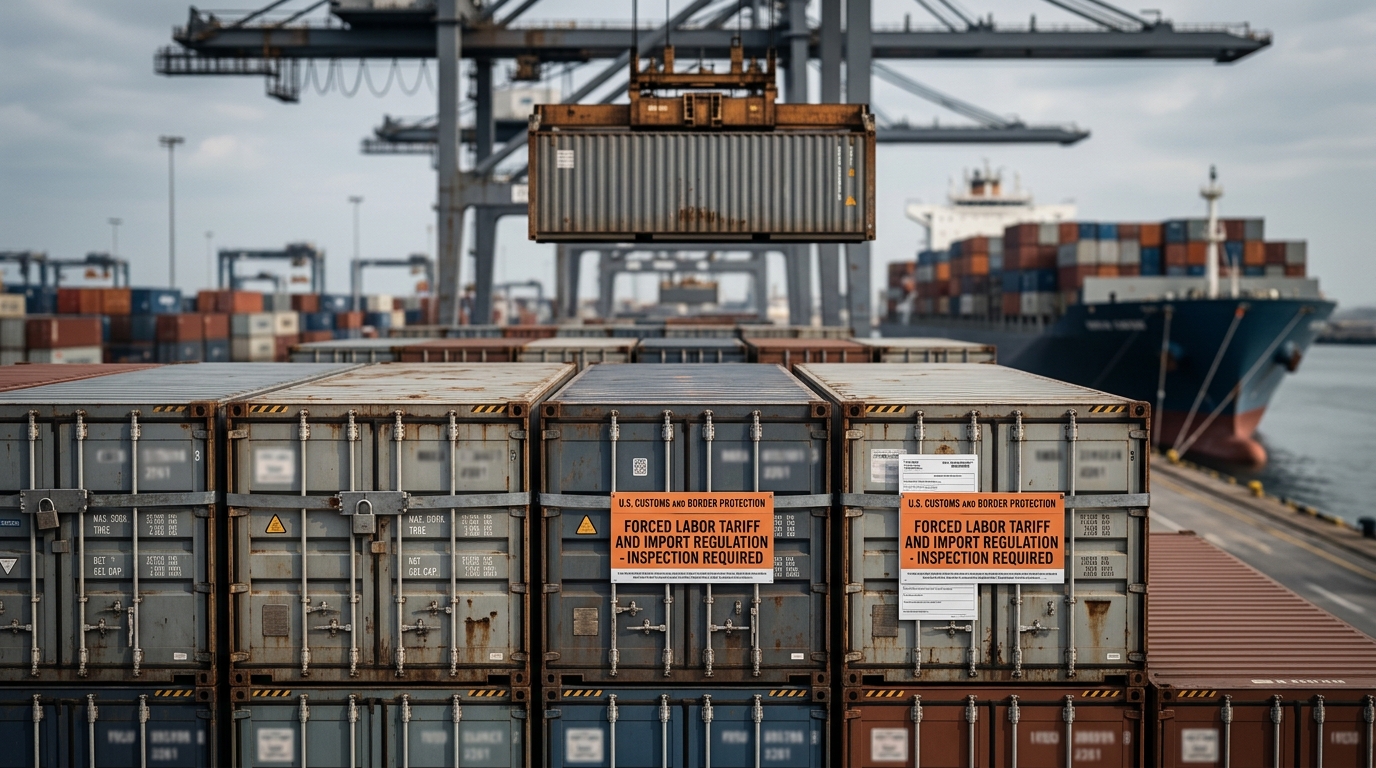
That question is very much alive today. As of 12:01 a.m. on July 24, 2026, the United States imposed fresh tariffs of 10% to 12.5% on imports from 60 of its largest trading partners. The justification: those countries had failed to adequately enforce bans on goods produced with forced labor. The mechanism: Section 301 of the Trade Act of 1974. The timing: precisely as the prior stopgap 10% global tariff expired after its 150-day clock ran out.
Convenient. Very convenient.
What Actually Happened
The backstory matters here. In February 2026, the U.S. Supreme Court struck down the administration’s sweeping “reciprocal” duties of 10% to 50% that had been imposed under national emergency law. The Court ruled 6-3 that the statute did not provide clear congressional authorization for the president to enact broad duties unilaterally. That was a significant legal blow. So the White House reached for a temporary fix under Section 122 of the Trade Act, slapping a flat 10% tariff on nearly all trading partners. That provision, however, caps out at 150 days without congressional approval. The clock expired Friday morning.
Enter the forced labor argument.
The Office of the U.S. Trade Representative had been conducting Section 301 investigations since March 2026, examining whether 60 economies had failed to enforce bans on goods produced with forced labor. The findings, released in June, concluded they had. The result: a fresh round of tariffs covering countries that account for 99.4% of all U.S. imports. Countries that had made some commitment to enforce forced labor prohibitions face the 10% rate. Everyone else gets hit with 12.5%.
Canada, Mexico, the UK, and India are in the 10% camp. China, Japan, the EU, South Korea, Switzerland, and Taiwan face the higher combined rate. Australia gets 12.5% too, despite being one of the world’s more robust enforcers of modern slavery legislation.
Elon’s Latest Take-Over: The U.S. Dollar?
Elon Musk is on the brink of his biggest launch to date. It has nothing to do with satellites… or cars… or even AI. And one analyst close to the story says – it could dwarf all his innovations, combined.
Trading Partners Are Not Buying It
The international response has been sharp. Australia’s trade minister called the tariffs “completely unjustified,” pointing out that Australia is a serious enforcer of modern slavery laws and a major exporter of beef, gold, and copper. New Zealand’s prime minister called them “extremely disappointing” and harmful to trade. The EU’s foreign policy chief questioned the entire premise, noting that the European Union has strong labor protections including paid leave and worker conditions that exceed U.S. standards in several areas. Brazil said the tariffs were arbitrary and announced plans to pursue action at the World Trade Organization.
The U.S. investigation, multiple trading partners noted, did not provide what they considered meaningful evidence linking their countries to forced labor failures.
Here is where it gets interesting. The Peterson Institute for International Economics described the action plainly: the investigation is not a labor-standards exercise but a mechanism for spreading America’s import ban on Chinese goods and rebuilding the tariff regime the Supreme Court dismantled. That framing is hard to dismiss. Canada, the EU, and Mexico already have their own prohibitions on importing goods made with forced labor. They were still hit with tariffs on the grounds that their enforcement is not aggressive enough.
Slight tangent, but it matters: the Uyghur Forced Labor Prevention Act, signed in late 2021 and in force since June 2022, already established a rebuttable presumption that goods from China’s Xinjiang region are made with forced labor. That law has 144 entities on its enforcement list and has been stopping shipments at the border for years. The new Section 301 action is a different and far broader instrument, one that sweeps in virtually every major economy on earth under the same brush as Xinjiang. The distinction is not trivial.
The Real Costs
Markets reacted cautiously Friday morning. Bond yields edged higher on inflation risk. Asian equities sold off, with South Korea’s Kospi and Japan’s Nikkei 225 leading the decline. U.S. futures pointed to a more muted open, partly because markets were already absorbing the Middle East conflict and big tech earnings volatility. But the tariff overhang is real.
Who actually pays these tariffs? Not the foreign exporters. U.S. importers pay the duties when goods cross the border. The Federal Reserve Bank of New York has estimated that roughly 90% of the economic burden falls on U.S. firms and consumers. Forbes analysis puts the potential household cost increase at $550 to $1,500 annually, with consumer prices rising 0.4% to 1.1% as a result. Those are not small numbers at a moment when inflation is already a political and monetary policy sore spot.
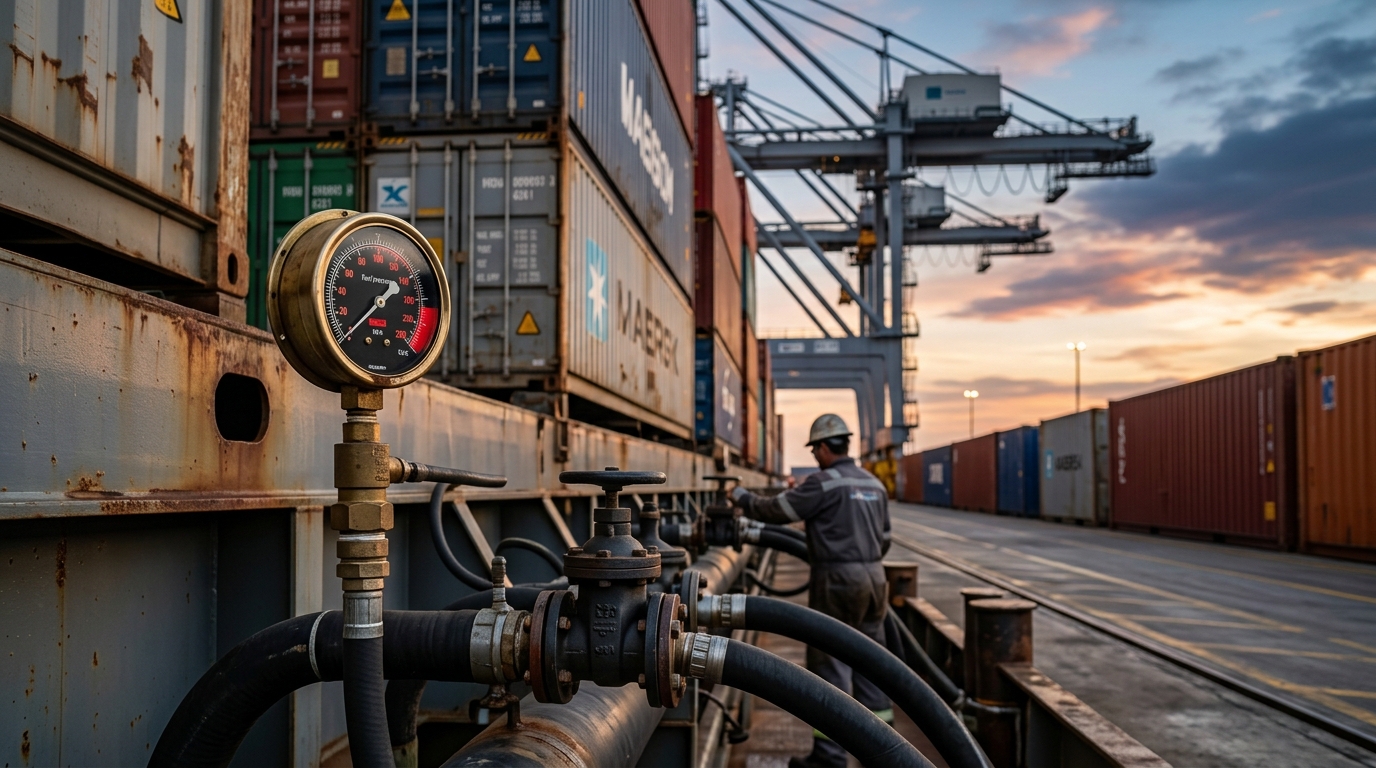
The sectors most exposed: automakers, electronics importers, and any brand reliant on global supply chains for component sourcing. The sectors that stand to benefit: domestic steel producers, manufacturers competing with lower-cost imports, and companies whose supply chains are already substantially onshored. Worth noting that more Section 301 tariffs are likely coming. The USTR has also launched a separate probe into excess industrial capacity in 16 countries, and those findings have not yet been released.
Is This Permanent? The Legal Wild Card
Here is what separates this round of tariffs from the ones that got thrown out. Section 301 has a track record. It survived court challenges when Trump used it against China in his first term. The administration is betting that its legal footing is considerably sturdier this time around. Alan Wolff of the Peterson Institute disagrees, writing that the tariffs represent another case of presidential overreach and that the Supreme Court would likely strike them down if challenged. That legal uncertainty is real and meaningful for investors trying to plan around cost structures.
The administration itself seems aware of this. It front-loaded the argument with moral language about human rights and worker welfare, knowing that framing makes legal challenges politically awkward. Whether that framing holds up in court is a different matter entirely.
What Cheap Investors Should Be Watching
- Supply chain geography: Companies with manufacturing already in the U.S. or in lower-tariff geographies carry a structural cost advantage right now. That advantage is underappreciated by a market still anchored to pre-2025 globalization assumptions.
- Pricing power: Businesses that can pass cost increases to customers without losing volume will absorb these tariffs differently than those squeezed between rising input costs and price-sensitive buyers. This is a moment that separates quality businesses from mediocre ones.
- Legal duration risk: Section 301 is more durable than the tools the administration used before, but it is not bulletproof. Companies planning multi-year capital allocation decisions around current tariff levels are taking on legal duration risk that the market may be pricing poorly in either direction.
- Retaliation lag: Most trading partners signaled they will negotiate rather than retaliate immediately. Brazil is an exception, heading toward WTO action. Watch for retaliatory signals from the EU and Japan in the coming weeks. Agricultural exporters, in particular, are vulnerable to counter-tariffs if negotiations break down.
- The capacity probe: The USTR’s parallel Section 301 investigation into industrial overcapacity in 16 countries has not concluded. If those tariffs arrive on top of the forced labor duties, the cumulative effect on import costs and inflation will be substantially larger than what markets are currently factoring in.
The Part People Skip
The forced labor issue is real. Walk Free, a human rights organization, estimated that as of 2023 roughly 28 million people were in some form of forced labor worldwide, with the International Labor Organization placing approximately 5.5 million of those in tradable-goods industries. The Xinjiang situation is documented, serious, and has been the legitimate basis for enforcement actions under existing U.S. law for years.
The problem is that bundling Australia, Canada, the UK, and the EU into the same enforcement framework as state-directed forced labor programs in authoritarian regimes stretches the moral argument past the breaking point. And trading partners know it. Which is why the diplomatic blowback has been louder and more unified than in prior rounds of tariff escalation.
What matters for investors is not whether the argument is persuasive. What matters is whether these tariffs last long enough to reshape supply chains, investment decisions, and competitive positioning across industries. The answer right now is: we do not know. And that uncertainty, not the tariff rate itself, is the real variable that patient investors need to account for.
The businesses that will come out ahead are the ones whose competitive advantages do not depend on the stability of any particular trade regime. That is not a new idea. It is just one the market keeps rediscovering the hard way.
Keep hunting.
The Cheap Investor