June 30, 2026
GOOGL Is a Dow Stock Now
Featured: GOOGL Is a Dow Stock Now
 Editor’s Note: Dan Ferris is a 26-year market vet who shares his research with at least 20 Wall Street firms and top financial pros. Luke Lango, who picked Nvidia before it spiked 5,500%, was also once named world #1 stock picker. Together, they’ve uncovered one of the today’s most urgent market opportunities. See below for details…
Is it finally time to DUMP your “safe” Mag Seven stocks?
One of the richest, most powerful tech billionaires on the planet seems to think so. In fact, he recently did exactly that.
He quietly filed a 13F form with the SEC that says he’s just dumped all 537,742 shares of Nvidia that he had in his portfolio.
He did the same with his entire position in Apple. And then Microsoft. Even Tesla. All gone. Every… single… share…
Dan Ferris
Senior Analyst, Stansberry Research
P.S. Just so you’re clear, this has nothing to do with buying more Mag Seven shares. It isn’t crypto, gold, or silver. See here for full details.
FEATURED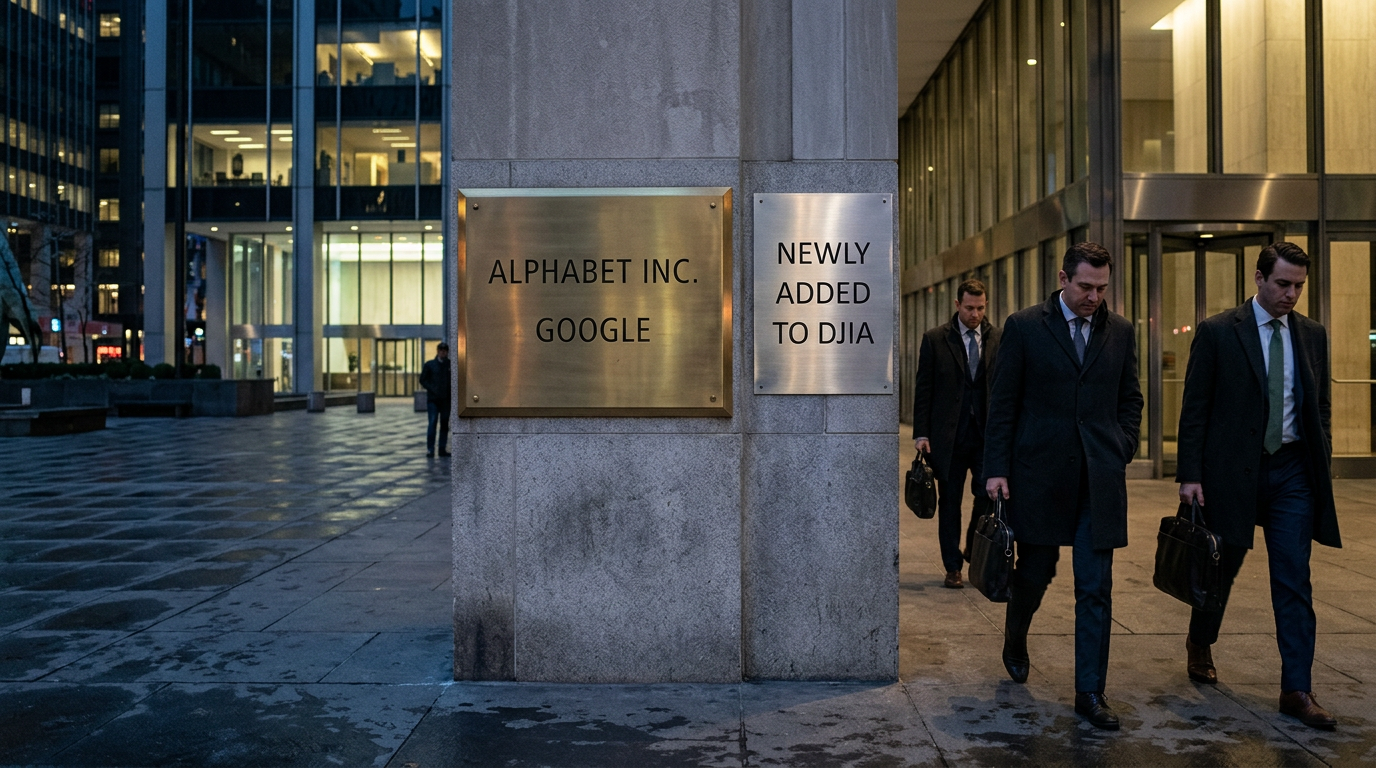
Hey there, bargain hunter.
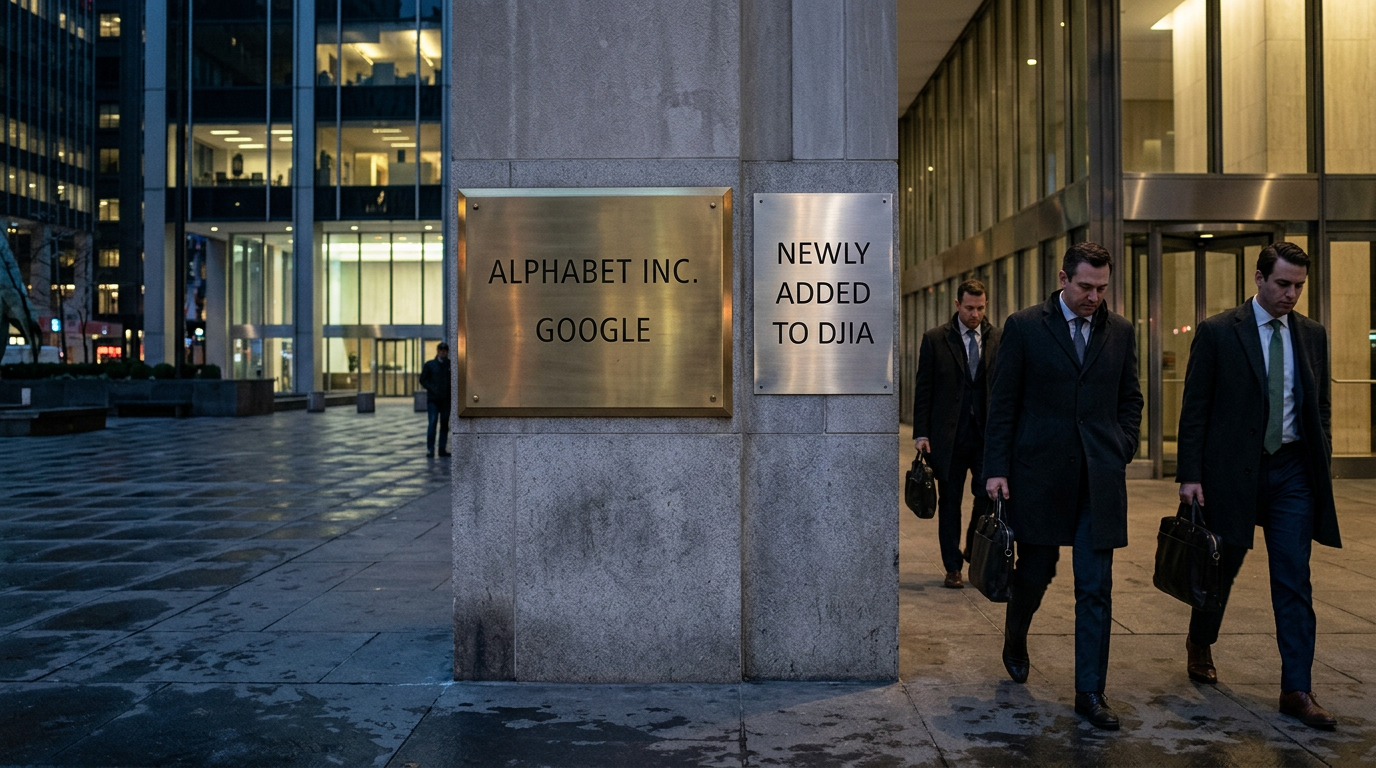
On June 29, Alphabet walked into the Dow Jones Industrial Average and the index closed above 52,000 for the first time in its 130-year history. GOOGL popped about 4% on its debut day. The Dow hit a milestone. Everyone applauded.
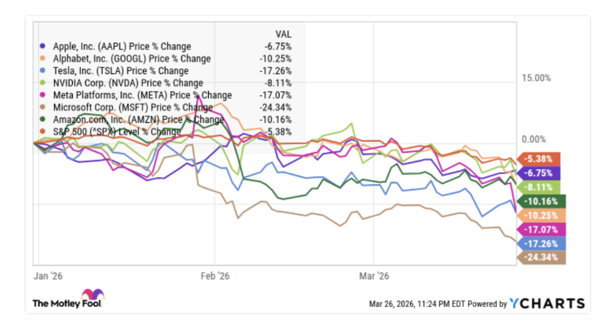
And the stock is still down more than 13% over the past 30 days.
That’s the whole thing, right there. The symbolic story and the financial reality are running in completely different directions at the moment, and figuring out which one wins from here is what this email is actually about.
What Just Happened
Alphabet replaced Verizon, which had spent 22 years in the index and shrunk to roughly 0.5% of its total weighting. Because the Dow is price-weighted, Verizon’s low share price made it nearly invisible. Alphabet’s share price near $350 at debut gives it roughly seven times more daily influence over the index than Verizon had. That math was always going to happen eventually.
With the addition, five of the so-called Magnificent Seven now sit inside the Dow. Nvidia, Amazon, Apple, and Microsoft were already there. Meta and Tesla still aren’t.
Worth noting: Jefferies data suggests recent Dow additions have not reliably produced near-term outperformance. The badge is real. The index-inclusion trade is not a free lunch.
The Numbers First
Because the business actually looks good, which makes the stock’s June behavior more interesting, not less.
- Q1 2026 revenue: $109.9 billion, up 22% year over year — the fastest top-line growth Alphabet has posted in over two years
- Operating margin: 36.1%, up 2 percentage points from a year ago
- Google Cloud revenue: $20.0 billion, up 63% year over year, with a 32.9% operating margin
- Google Search revenue: $60.4 billion, up 19% — not decelerating
- YouTube ads: $9.9 billion, up 11%
- Cloud backlog: approximately $462 billion in contracted future revenue
- Q1 capex: $35.7 billion (roughly 60% servers, 40% data centers and networking)
- Full-year 2026 capex guidance: $180 to $190 billion, up from the original $175 to $185 billion range
- Cash and marketable securities: $126.8 billion; long-term debt at $77.5 billion
One number that’s harder to ignore: consensus projects 2026 free cash flow at roughly $20.5 billion, down around 72% from 2025’s actual $73.3 billion. That’s what a $180-plus billion capex year looks like in practice. The recovery thesis assumes FCF climbs back toward $35 billion in 2027 and $68 billion in 2028 as infrastructure spending matures. That’s a long time to wait.
What the Market Is Actually Arguing About
Nobody is debating whether Alphabet is a good business. The debate is about whether $180 to $190 billion in annual capex — six times what they spent in 2022, double what they spent last year — converts to returns that justify compressing free cash flow this aggressively. CFO Anat Ashkenazi told analysts that 2027 capex will “significantly increase” compared to 2026. That’s not a typo. The spending doesn’t stop here.
Slight tangent here, but it matters more than the press gave it credit for. John Jumper, a DeepMind vice president known for AlphaFold, left for Anthropic in June. One departure doesn’t break Gemini. But it fed a market anxiety that was already looking for reasons to sell, and it reinforced a perception that top AI researchers now have genuine optionality in where they work. Alphabet’s historical grip on frontier talent is loosening, or at least it’s being tested.
Meanwhile, Sundar Pichai said on the Q1 call: “We are compute constrained in the near term. Our cloud revenue would have been higher if we were able to meet the demand.” That’s a remarkable thing to say when you’re spending $35.7 billion in a single quarter on infrastructure. It also suggests the backlog is real and the constraint is temporary — but it still makes investors nervous about execution timing.
The Stock Itself
GOOGL hit an all-time closing high of $402.38 on May 13, 2026, capping what was reportedly Google’s best month on Wall Street since 2004. Then the equity raise announcement hit — an $84.75 billion package spanning common stock, mandatory convertible preferred securities, a $40 billion at-the-market program, and a $10 billion private placement by Berkshire Hathaway. Tapping external equity at one of the most cash-generative businesses in the market sent a clear message about the scale of what’s being built. The stock didn’t love it.
From the May high near $408 to around $337 before the Dow debut pop — that’s close to a 17% drawdown in about six weeks. The Dow-inclusion bounce brought it back toward $353 at close on June 29. Whether that level holds going into Q2 earnings is the near-term technical question worth watching.
Three Ways This Plays Out
Bull: Cloud growth holds above 60% in Q2 and the backlog starts converting faster as capacity comes online. Search holds its own against AI competitors. Free cash flow recovers ahead of schedule in 2027 and the stock re-rates sharply off a lower base. At $353, you’re paying for a business that grew revenue 22% last quarter — the question is whether the market finally gives the capex story credit instead of penalizing it.
Base: Alphabet grinds sideways for two or three quarters while the market waits for FCF evidence. The Dow inclusion builds a modest institutional floor but doesn’t create urgency to buy. Q2 earnings on July 28 are good but not good enough to reset sentiment on their own. Patience is required.
Bear: The DOJ antitrust appeal, filed in February 2026, moves toward structural remedies that threaten Search distribution. Capex for 2027 comes in well above expectations. DeepMind talent exits accelerate. At that point the market stops debating timing and starts questioning the thesis entirely. The valuation compression that followed the equity raise was just the beginning.
What to Watch Before You Do Anything
- July 28, 2026: Q2 earnings — first report as a Dow component; Cloud growth rate vs. the 63% Q1 bar is the headline number
- Free cash flow trajectory: Any signal that FCF is recovering faster than the $20.5B 2026 consensus is a potential re-rating catalyst
- AI talent: Any further DeepMind or Gemini team departures get outsized attention right now, fairly or not
- DOJ antitrust: Remedies in the Search distribution case are the structural risk that purely financial models can’t fully capture
- Capex 2027 guidance: When management gives the first concrete number for next year’s spend, that shapes the FCF recovery story more than any single quarter
- Competitor pricing: Chinese AI providers on enterprise cloud are worth monitoring for margin pressure on the backlog
Here’s where I land on this. The business is not broken. Revenue growing 22%, Cloud at 63% growth with nearly half a trillion in contracted backlog, Search still accelerating despite every prediction that AI would kill it — that’s not a broken business. That’s a business making the biggest infrastructure bet in its history and asking investors to trust the payoff timing.
The Dow badge doesn’t change that math. July 28 does. That’s when the market gets its first real look at whether the capex is actually building toward something, or just building.
Stay patient, and don’t mistake a symbolic milestone for a fundamental one.