June 1, 2026
The Year of the Robot
Featured: Nvidia is turning robots into a platform business
Dear Reader,
Nvidia CEO Jensen Huang recently said something that shocked most investors …
Stating that robotics is the tech giant’s biggest opportunity after AI.
“We’re working towards a day where there will be billions of robots, hundreds of millions of autonomous vehicles and hundreds of thousands of robotic factories that can be powered by Nvidia technology,” Huang said.
The market reacted …
Helping Nvidia become the world’s first five-trillion-dollar company.
Thanks to its entry into the lucrative robotics market.
But here’s what the headlines missed …
Nvidia didn’t do this alone.
There’s a $7 stock critical to their robot business.
And if history is any indicator …
Nvidia’s $7 silent partner could be due for a big move up.
Click here to find out more about the company behind Nvidia’s trillion-dollar robot.
Michael Robinson
Weiss Ratings
FEATURED
☰
Nvidia is turning robots into a platform business
Most humanoid robot investing reads like a talent show. Cool demo, cool video, cool promises.
Nvidia is taking a different approach. It wants robots to look less like a gadget category and more like a repeatable computing platform: a standard way to train, simulate, validate, and run these machines at scale.
Slight tangent, but it matters: the first company to make robotics feel boring will make the most money. Boring means standards, tools, and budgets that renew. Not one-off prototypes.
Scoreboard (confirmed)
- Nvidia Q1 FY2027 (quarter ended April 26, 2026): revenue $81.6B, up 85% year over year and up 20% quarter over quarter.
- Data Center: $75.2B, up 92% year over year.
- GAAP gross margin: 74.9%.
- GAAP diluted EPS: $2.39.
Those figures are from Nvidia’s earnings release dated May 20, 2026.
That quarter is not “robot revenue.” It is something more useful: proof that Nvidia can turn a fast-moving technology wave into very real dollars. And it is now applying the same playbook to physical AI.
What Nvidia is actually doing in robotics
When Nvidia talks about humanoids, I focus less on the headline market size and more on the stack. It is building the stack end to end:
- Simulation and digital twins with Omniverse libraries and Isaac simulation frameworks, so developers can test robot behavior and full production lines before deploying in the real world.
- Robot learning and models with the Isaac GR00T family, including newer updates positioned for real-world deployment.
- On-robot compute with Jetson Thor, aimed at running the robot software stack onboard.
And today, June 1, 2026, Nvidia added a very specific piece that makes the strategy easier to understand.
Today’s update: Isaac GR00T Reference Humanoid
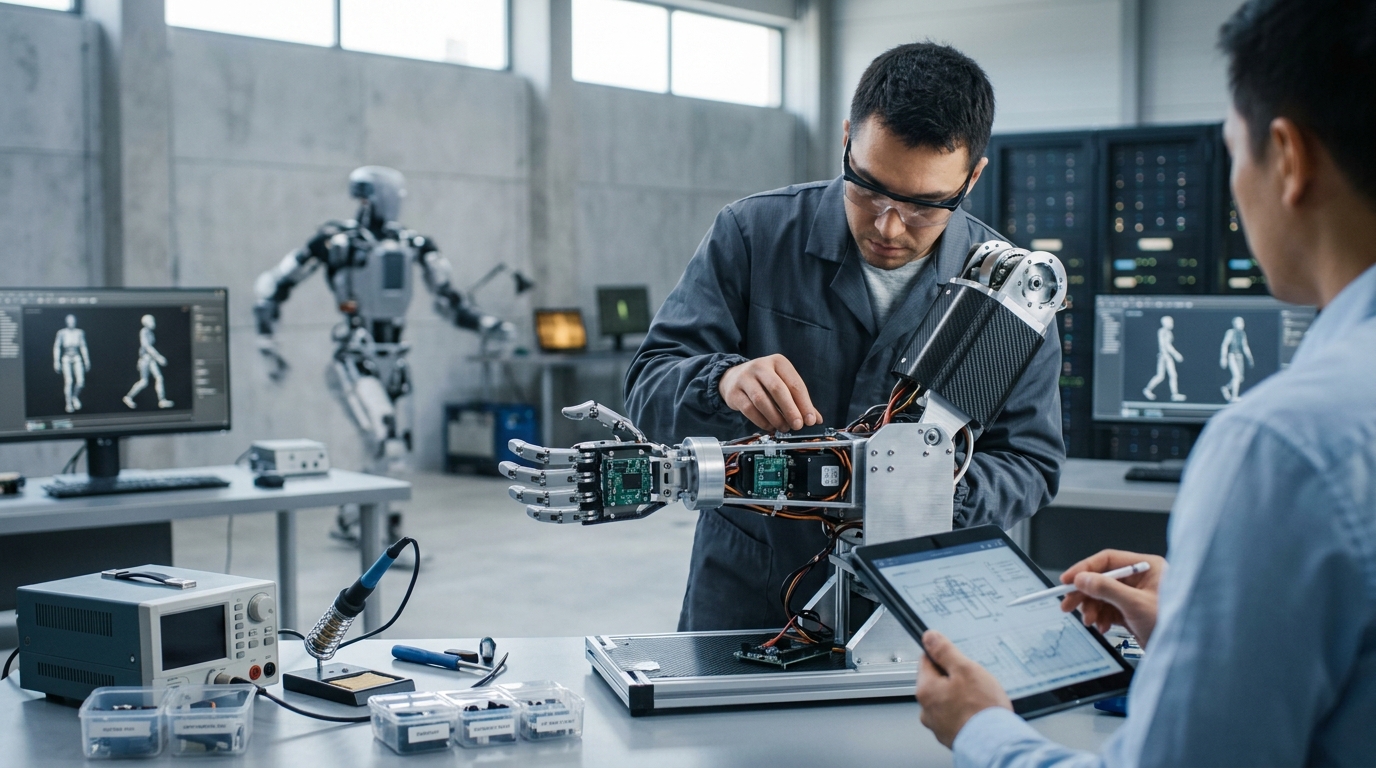
At GTC Taipei on June 1, 2026, Nvidia announced the NVIDIA Isaac GR00T Reference Humanoid Robot, an open reference design built on Jetson Thor and the Isaac GR00T development platform.
The simple version: body plus hands, compute, and workflows, packaged as a reference so research teams can move faster from bring-up to skill development and real-world validation.
Why that matters for investors: reference designs are a classic platform move. They reduce friction, standardize toolchains, and quietly steer the ecosystem toward Nvidia’s preferred building blocks.
Claim Your Starlink
This is a critical and time-sensitive message.
It’s regarding Starlink, which is expected to be the largest IPO in history – set to take place in as little as a few weeks.
And for the first time ever, we’ve found a way for you to profit BEFORE the IPO happens.
One of the world’s top venture capitalists and Silicon Valley insiders has just released all of the details… including a prospectus… in this short message.
Click here now to discover how to take action BEFORE the IPO on June 9th.
The ecosystem pull is the point
Nvidia is not trying to be the humanoid robot brand you see on a warehouse floor. It is trying to be the default toolkit underneath many of them.
In March 2026, Nvidia said major industrial robotics players including FANUC, ABB Robotics, Yaskawa, and KUKA are integrating Nvidia Omniverse libraries and Isaac simulation frameworks into virtual commissioning solutions for digital twins and production line validation.
If you are a bargain hunter, that’s the part you want. It is the difference between “one company sells a robot” and “one company collects spend from lots of robot deployments and the tooling around them.”
So how do you play it without getting cute?
I still like keeping this simple:
- Concentrated: NVDA, if you want the platform leader and you can stomach the valuation risk that comes with it.
- Broader basket: KOID if you want diversified exposure across the “brains, bodies, and integrators” angle and you accept ETF fees.
- Supporting cast: sensors, connectivity, and industrial automation suppliers that benefit if robotics deployments expand, even if humanoids take longer than people hope.
One thing I would not do is pretend the timeline is clean. Robotics adoption can be lumpy. Safety, reliability, and maintenance costs have a way of slowing down optimistic plans.
Cheap Investor scorecard (Nvidia edition)
- Do Isaac and Omniverse keep showing up inside industrial workflows, not just labs?
- Does Jetson Thor become a standard on-robot computer for higher-end platforms?
- Do Nvidia’s physical AI model releases stay frequent and practical for developers?
- Does Data Center growth remain strong enough that robotics can be “bonus upside,” not a required driver?
- Do you still like the stock if humanoids take 5 years longer than expected?
Bottom line: as of June 1, 2026, Nvidia is not just talking about humanoids. It is shipping the pieces that make humanoids easier to build. If that ecosystem standardizes around Nvidia’s stack, the company does not need to win the robot beauty contest to keep earning.
Worth a look: read the May 20, 2026 Q1 FY2027 release, then skim the June 1, 2026 Isaac GR00T Reference Humanoid announcement. You will see the pattern pretty clearly.