
May 24, 2026
This Download Link Won’t Last Forever
Featured: Goldman Blessed UNH. Is the Worst Actually Over?
Quick question…
Would you spend 60 seconds to save yourself $19.97?
That’s what my “Simple Options Trading For Beginners” book costs on our website right now. But today, I’m giving it away – no charge, no strings.
Inside, you’ll discover a simple approach to options trading that doesn’t require you to sit in front of a screen all day… or risk your shirt on any single trade.
It’s the same book that sells for $19.97 on our website right now, but is yours on the house today.
All you have to do is click here and tell me where to send it.
Good Trading,
Bill Poulos
P.S. This won’t stay free forever – $19.97 is a fair price and I’ll be going back to it soon.
Grab your copy here before that happens.
FEATURED
Goldman Blessed UNH. Is the Worst Actually Over?
Hey there, bargain hunter.
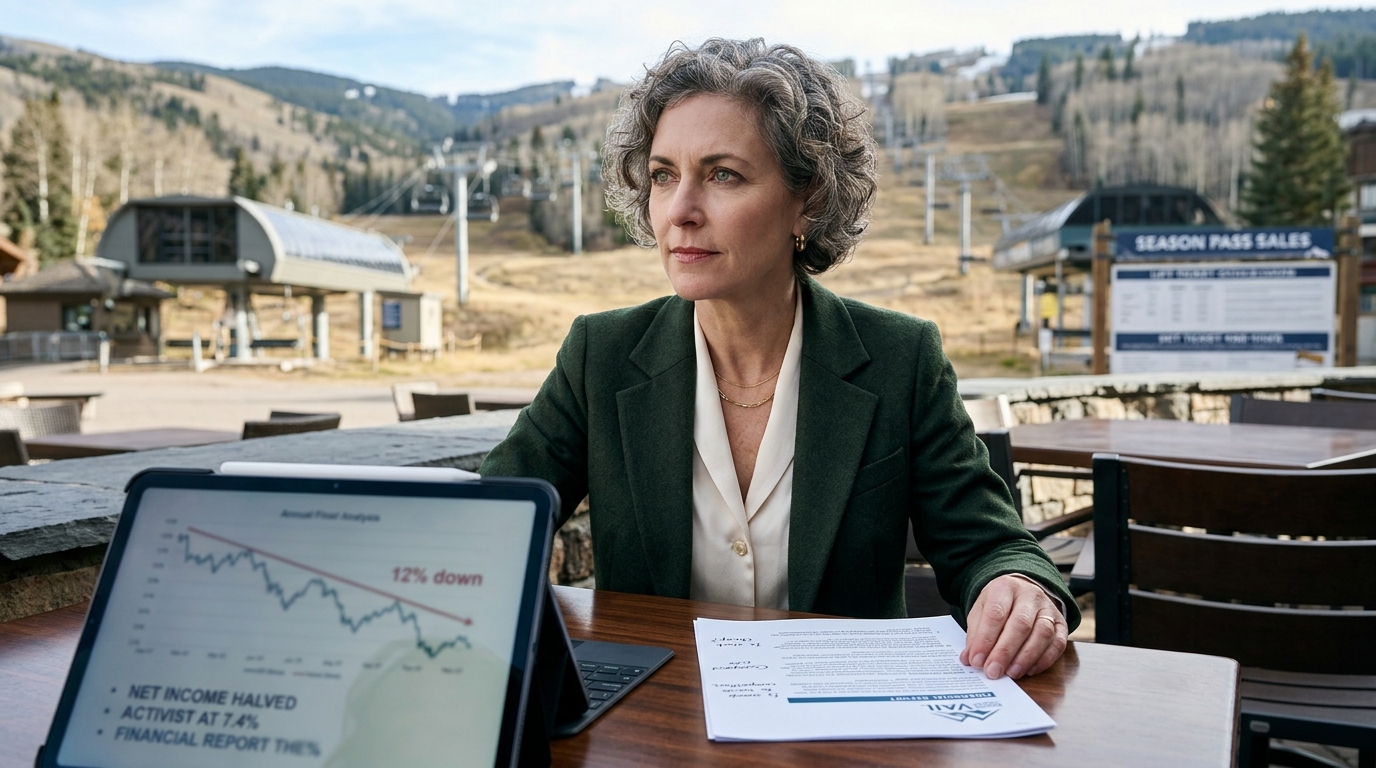
Eighteen months of damage. A stock that fell more than 50% from its all-time high. A DOJ criminal probe that is still open with no resolution date anywhere on the calendar. And then, on May 1, Goldman Sachs quietly added UnitedHealth Group (NYSE: UNH) to its U.S. Conviction List — the short roster reserved for Goldman’s highest-conviction buy ideas — with a $435 price target.
Whether that move means anything depends on how much weight you put on Q1 2026 fundamentals versus the legal overhang that no model can cleanly price. Both deserve a real look.
Start with what actually happened on April 21. Revenue came in at $111.7 billion, up 2% year-over-year. Adjusted EPS hit $7.23 against a $6.61 consensus estimate — a beat of roughly $1.05 per share after adjustments, with adjusted EBIT coming in about $790 million above estimates. The medical care ratio landed at 83.9%, down 90 basis points from the same quarter last year. Cash flow from operations was $8.9 billion, or 1.4 times net income. Full-year 2026 guidance was raised to greater than $18.25 per share in adjusted net earnings.
That medical care ratio improvement is not a small thing. It was the metric that destroyed this stock through 2025. Its reversal is the core of every bull case on the board right now.
Goldman’s thesis is relatively clean: UNH is nearing the bottom of its Medicare Advantage underwriting cycle, which represents roughly 40% of its business. The company made a deliberately painful decision — exiting Medicare Advantage markets across 109 counties in 16 states that were not generating adequate returns. Margin over volume. It costs members in the short run. It buys back pricing discipline over time. UnitedHealthcare CEO Tim Noel said on the Q1 call that the 2026 approach explicitly favored margin recovery over membership targets. That is a meaningful internal signal.
The CMS rate picture also improved. Earlier in 2026, CMS had proposed a near-flat rate increase for Medicare Advantage providers in 2027 — a proposal that sent the stock down nearly 20% in a single session back in January. The final 2027 rate increases came in significantly higher than that initial proposal, which removed one of the more structural concerns hanging over the name.
“I’ve been tracking this one ticker for months. It’s the clearest setup I’ve seen in a long time…”
It has nothing to do with SpaceX, Tesla, or anything you’d associate with Elon.
Most investors have never heard of it.
But when the “Final Phase” of Elon’s “Master Plan” triggers, Larry Benedict says this is where the money goes. He has 40 years of finding trades everyone else walked past.
He’s giving away the name – and a full briefing – completely free.
Click here to get the ticker before the “Final Phase” kicks in.
What the street is saying
- Goldman Sachs — Buy | $435 PT (Conviction List, added May 1; target raised from $400 on April 22)
- Bank of America — Buy | $420 PT (raised from $380 on May 13)
- JPMorgan — Overweight | $420 PT (raised from $389 on April 28)
- Raymond James — Outperform | $370 PT (raised from $330 on April 21)
Slight tangent, but it matters: Goldman cited Q1 performance, raised full-year guidance, and a turnaround it described as still in its early stages. That framing — early stages — is doing a lot of work. It’s bullish, but it also signals that the easy move off the lows may already be behind us. Shares climbed 37% in April alone. That kind of single-month move in a $300 billion company is not subtle.
Here’s where it gets interesting. The AI angle is real and mostly underappreciated. UNH budgeted $1.5 billion in AI spending for 2026. The operating cost ratio rose to 13.8% from 12.4% last year — that increase is partly the cost of those AI and technology investments. Management is targeting nearly $1 billion in operating cost reductions this year as the AI infrastructure starts producing. Over 80% of member calls already leverage AI tools. Optum Rx signed over 800 new customer relationships in its 2025 selling season, a pipeline management says will scale through 2026 and into 2027. Patrick Conway, who leads Optum, said on the Q1 call that OptumHealth margins should steadily improve in 2026 and accelerate into 2027.
The integrated model — UnitedHealthcare plus Optum — is what makes UNH structurally different from pure-play insurers. That closed-loop platform is also what the DOJ is scrutinizing most closely.
The thing nobody can model cleanly
The DOJ probe — both criminal and civil — into Medicare Advantage billing practices remains open. The core allegation is that UNH inflated patient diagnoses to trigger higher government reimbursements, with specific focus on in-home nurse assessments. One WSJ analysis of Medicare data found those in-home visits triggered an average of $2,735 in added federal payments per visit, with some diagnoses added to patient charts without a treating physician’s determination. Reports from August 2025 indicated the investigation had expanded beyond Medicare Advantage to include Optum Rx billing practices and how UNH reimburses its own physicians. No charges have been filed. The company is cooperating, has launched a third-party review, and points to a court-appointed Special Master in a prior decade-long civil case who found no evidence of wrongdoing.
Analysts broadly call the risk serious but not existential. That is not the same as resolved.
Outcomes range from a manageable settlement to, in the worst case, forced restructuring of Optum’s physician business — the asset that sits at the center of the integrated care model the whole bull thesis depends on. Both scenarios are live.
Then there’s Berkshire. On May 15, Berkshire Hathaway confirmed it had fully exited its roughly 5.04 million share position in UNH — a holding it had built during the stock’s brutal 2025 selloff and that was valued at roughly $1.6 billion. The exit was part of a wider Q1 portfolio reshuffle under new Berkshire CEO Greg Abel, which also included exits from Visa, Mastercard, Amazon, and Domino’s Pizza. Most analysts attributed the UNH sale to Berkshire’s internal leadership transition rather than a negative fundamental view. The stock still dropped more than 5% in premarket trading the morning the news broke. The optics matter whether the thesis is right or wrong.
Valuation context: at roughly 15.5x forward earnings and against a 10-year revenue CAGR of around 11%, UNH is trading at some of its lowest forward multiples in years. The dividend yield sits near 2.4%, backed by five consecutive years of double-digit dividend increases. The stock is up approximately 12% year-to-date but remains about 7% below where it was a year ago.
What I’m watching: the Q2 2026 medical care ratio. If it holds near 83.9%, the Goldman thesis gets legs. If elevated utilization and unit cost trends — which were cited as a partial offset even in Q1 — start winning again, the story gets more complicated. The Alegeus Technologies acquisition is expected to close in the back half of 2026 and will be earnings neutral, but it signals continued commitment to consumer-directed healthcare infrastructure. Watch DOJ developments above everything else. A partial resolution — even just clarity on scope — could matter more than any single earnings quarter.
This is not a clean recovery. It’s a turnaround with real landmines still in the field, a valuation that prices in risk, and institutional money starting to lean back in. Whether that’s enough depends on which unknowns resolve first.
For informational purposes only. Not financial advice.