August 13, 2026
$4 Gas in Mid-August. It Has Never Happened Before.
Featured: $4 Gas in Mid-August. It Has Never Happened Before.
A note from Weiss Ratings
Dear Reader,
In a few short months, the US government could make a sweeping change to bank accounts nationwide.
It will give them unprecedented powers to control your bank account.
They could closely track every transaction… even freeze it.
Fortunately, there are 4 simple steps you can take today that could safeguard your savings.
Discover these 4 simple steps here.
Good luck and God bless!

Martin Weiss
Dr. Martin D. Weiss, Founder
$4 Gas in Mid-August. It Has Never Happened Before.
Scoreboard
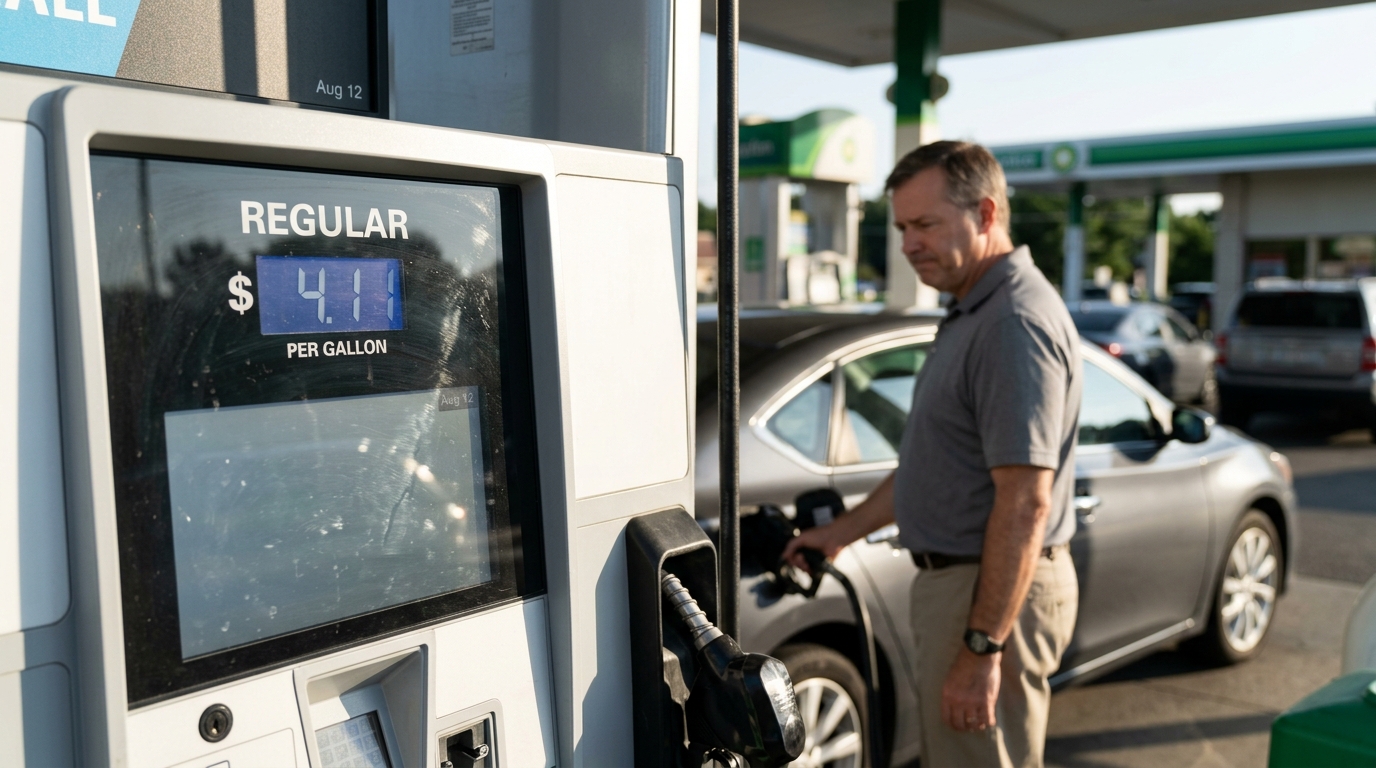
Hey there, bargain hunter. Today is August 12, 2026, and the pump just made history in the worst possible way for your wallet and the best possible way for one overlooked corner of your portfolio.
The AAA national average for a gallon of regular gasoline is about $4.11 today. That sentence sounds routine until you check the calendar. GasBuddy head of petroleum analysis Patrick De Haan has noted that the national average has never been above $4 a gallon this late in the summer in the AAA era of daily national averages. Diesel is sitting a little above $5 nationally, not a record for this date. The same gallon of regular cost about $3.14 a year ago.
At the same time, the Bureau of Labor Statistics released the July CPI reading this morning: energy prices fell in July, with gasoline down on the month. The bigger takeaway for markets was that overall inflation continued to cool at the margin, even as the Middle East shock has kept the energy conversation loud.
The Real Reason
War and a chokepoint are doing the work. The Iran conflict has repeatedly disrupted shipping risk in and around the Strait of Hormuz, which in peacetime handles roughly a fifth of the world’s oil flows. Even when crude itself isn’t exploding higher, the risk premium shows up fast in products.
Russia is compounding the squeeze from the other direction. Moscow has extended restrictions on fuel exports into 2027, with gasoline export limits extended to January 31, 2027. Policy details around diesel have shifted more often, but the direction has been consistent: protect domestic supply when refineries are hit and markets tighten. Europe, which has restricted imports of Russian seaborne oil products, is still competing globally for distillate barrels whenever supply gets pinched.
Domestically, the EIA has been showing tight product balances through the summer, with inventories running below typical seasonal levels and refineries running in the mid-90% range on utilization in recent weekly data. There is not much slack left when demand is high and disruptions hit.
Prices did pull back from their peak. AAA has said the national average peaked around $4.56 on May 21, 2026. The current level represents a partial retreat, but one that stubbornly refuses to continue falling. Seasonal demand should be easing by now. Instead, supply constraints are overpowering the usual late-summer cooling.
Deep Dive: How the Refining Business Actually Works
When most investors think about energy, they think about oil producers. That is usually the wrong call in a market like this one.
Refiners sit between crude oil producers and the consumer. They buy crude, process it into gasoline, diesel, and jet fuel, and sell the finished products at wholesale prices. The margin between what crude costs and what finished fuel fetches is called the crack spread, named for the chemical process of cracking crude into lighter products. A refiner does not need crude prices to be high. It needs the gap between crude and finished product prices to be wide.
Right now, that gap is historically wide. The NYMEX 3-2-1 crack spread has pushed to fresh all-time highs in the mid-$60s per barrel range in recent weeks, and multiple market commentaries have highlighted it flirting with roughly $70 per barrel during the summer spike. Refiners are cashing the check that every driver at the pump is writing.
Data Section
The three major publicly traded U.S. refiners have delivered some of 2026’s biggest gains by a wide margin:
- Valero Energy (VLO): Valero reported Q1 EPS of $4.22, a sizable beat versus consensus estimates around the low-$3 range. The company reported Q2 results on July 30. VLO carries a conservative balance sheet by sector standards and substantial liquidity. Forward P/E sits around the low double-digits, even after the run.
- Marathon Petroleum (MPC): Marathon is up sharply year to date, and it continues generating substantial cash flow through its large refining network and its MPLX midstream partnership.
- Phillips 66 (PSX): Phillips 66 is also up meaningfully year to date. Phillips 66 adds midstream fee income and chemical exposure that softens the pure crack-spread volatility.
Valero COO Gary Simmons, on the Q2 call, stated that the company sees “a much more bullish view of a future mid-cycle” than historical margins would suggest. His argument: crack spreads are increasingly being set by hydroskimming capacity in Northwest Europe, where carbon credit costs and inflation are structurally raising the floor. That is not a temporary tailwind. That is a structural reset of what a normal refining cycle looks like going forward.
Valero also flagged distillate inventories at low levels and U.S. product exports running above year-ago levels. The company has been a significant U.S. processor of Venezuelan heavy crude in recent years, and it continues to emphasize feedstock flexibility as a competitive edge.
One Shark Missed Billions… Another Saw This Coming
Mark Cuban passed on Uber at a $10M valuation only to watch it go public at $80B.
Kevin Harrington, one of the original shark tank investors, invested early in Mode Mobile.
Like Uber turned vehicles into income-generating assets, Mode is turning smartphones into income streams. Deloitte named Mode the #1 fastest-growing software company.
Last chance to invest at $0.52/share. Price changes 8/14.
Please read the offering circular at invest.modemobile.com. This is a paid advertisement for Mode Mobile’s Regulation A+ Offering.
Is It Cheap?
About ten times forward earnings for a business running very strong margins in an environment that looks structurally tighter than it was three years ago is not an obvious sell. The broader S&P 500 trades at roughly 21 to 22 times forward earnings. Large-cap tech names with far more speculative revenue ramps trade at 30 to 40 times. Refiners are generating real cash today, returning it to shareholders via buybacks and dividends, and trading at a fraction of the multiple the market hands to anyone with the word AI in the press release.
The risk is equally real. Refining margins are cyclical by definition. If a Hormuz deal materializes and crude supply loosens while demand softens in Q4, crack spreads could compress faster than the stocks can adjust. HF Sinclair (DINO), another name up sharply this year, has less geographic diversification and more single-refinery concentration risk than VLO or MPC.
The valuation is cheap relative to earnings power. Whether that earnings power is durable is the only real question.
Bull / Base / Bear
Bull: Hormuz stays meaningfully disrupted through year-end. Russian fuel export restrictions remain tight. U.S. gasoline inventories stay below the five-year seasonal range. Crack spreads hold at elevated levels. Valero’s St. Charles FCC unit optimization project comes online in Q3 as planned and adds incremental throughput. All three refiners continue trading at single-digit or low double-digit forward multiples while generating cash at very high rates. The EIA’s forecast of gasoline prices averaging just under $3.80 in Q3 proves optimistic, keeping retail prices high and refiner margins wide.
Base: Partial diplomatic progress on Hormuz allows crude flows to normalize partially by October. Gasoline prices fall toward $3.60 to $3.70 by November, easing some pressure. Crack spreads compress from current extremes but hold well above the 2024 floor. Refiners deliver strong Q3 results but guide conservatively for Q4. Stocks give back 10% to 15% of year-to-date gains but remain well above pre-war levels.
Bear: A full Hormuz reopening, combined with OPEC supply restoration and a U.S. demand slowdown, collapses crack spreads toward 2023 levels within 60 days. History shows geopolitical premiums can reverse fast: WTI dropped sharply from earlier-2026 highs before stabilizing. Refiners with the biggest year-to-date gains face the steepest corrections when the margin environment normalizes. The EIA’s July Short-Term Energy Outlook forecasted retail gasoline falling about 41 cents per gallon in Q3, which, if it arrived earlier than expected, would signal margin compression is already beginning.
Action Plan
This is not a buy-the-headline trade. The headline happened months ago when the war started and refiners launched from their 2025 bases. The question for a bargain hunter today is whether what remains is still a bargain.
For VLO specifically: The forward P/E in the low double-digits, the liquidity cushion, the structurally higher mid-cycle argument from management, and the Q2 beat all argue for a hold or a small add on any pullback toward the pre-Q2-report price level. If the stock gaps hard after earnings, that kind of move invites profit-takers. A retracement toward a prior support range, if it comes, is the entry a bargain hunter actually wants.
For MPC: The midstream MPLX cushion provides earnings stability that pure refiners lack. MPC is the name to favor if you expect some crude supply normalization, because MPLX fee income holds up regardless of the crack spread environment.
For PSX: The chemicals and midstream exposure makes it the most defensive of the three, also the least leveraged to pure crack-spread upside. It has lagged peers slightly on a percentage basis for that same reason.
Scale into any of these in thirds. Do not chase the post-record-gas-price headline. Wait for the position to come to you. If crack spreads compress and stocks pull back 10% to 15%, that compression is the opportunity, not the threat, assuming the supply backdrop has not permanently normalized.
Cheap Investor Checklist
- National average gasoline: track AAA data weekly. $4.00 is the key psychological floor. A sustained break below it signals margin compression ahead.
- NYMEX 3-2-1 crack spread: the single most important number for refiner earnings. Watch for a move below $45 per barrel as a caution signal.
- Hormuz vessel traffic and insurance risk: follow credible shipping and energy-market reporting. Improving transit reliability is your tell that the supply squeeze is fading.
- EIA weekly gasoline inventory report: released every Wednesday. Below-normal seasonal stocks support the bull case. A move back toward typical levels removes one pillar of it.
- Russia fuel export restrictions: currently extended into 2027 on gasoline, with policy risk around diesel. Any relaxation changes the global distillate picture quickly.
- VLO forward P/E: if the stock runs above 14 times forward earnings, the valuation cushion narrows materially. Below 10 times is where the bargain argument is strongest.
- July CPI gasoline subindex trend: watch whether gasoline inflation is accelerating again after the mid-summer pullback in monthly prices.
- Valero St. Charles FCC project: expected Q3 2026 completion. Any delay signals throughput constraints that limit Q3 upside.
- MPC and PSX Q3 guidance: confirm the actual earnings calendar as the quarter closes. The guidance tone will be the first real read on whether Q4 margins hold.
- Consumer demand destruction signal: the EIA has warned high prices can dent consumption. If demand destruction accelerates faster than supply normalizes, the spread compresses from both ends.
Bottom Line
Gas above $4 in mid-August is not just a record-feeling number. It is a policy problem, an election liability, and an inflation wildcard all rolled into one number above every intersection in America.
For the bargain hunter, the angle is not to mourn the pump. The angle is to own the companies cashing the check. If Hormuz stays disrupted and Russian fuel exports stay restricted, VLO, MPC, and PSX are operating in one of the widest margin environments the downstream business has seen, at forward multiples that would look cheap in any other sector. If a diplomatic deal materializes and crude flows normalize, take profits on any position built below the post-war rally prices and wait for the next entry.
The trade has a clear if/then logic: if supply stays constrained, refiners win big at bargain valuations. If supply normalizes fast, the pump price becomes a memory and so does this year’s refiner outperformance. Watch the Hormuz risk pulse and the weekly EIA inventory report. Those two data points will tell you which story you are living in before the stocks do.