
August 7, 2026
The Jobs Miss Nobody Expected
Featured: The Jobs Miss Nobody Expected
Editor’s note: Please see the following from Professor Joel Litman, a former consultant to the Pentagon and FBI, who just flew a small helicopter near one of the most secure sites in America to uncover what he says could soon become the biggest stock market story of 2026…
Potential $10 Trillion Breakthrough
I just traveled halfway around the world to one of the most remote and possibly dangerous sites in America… to witness a potential $10 trillion technology backed by Elon Musk and Sam Altman.
The site I visited is in an area marked as a “top 7 nuclear target” by Russia – alongside Camp David and the Pentagon.
And every morning, at 6 a.m., you may hear bombs going off.
This is me flying in on a small helicopter…

You’d be arrested if you got too close to this place…
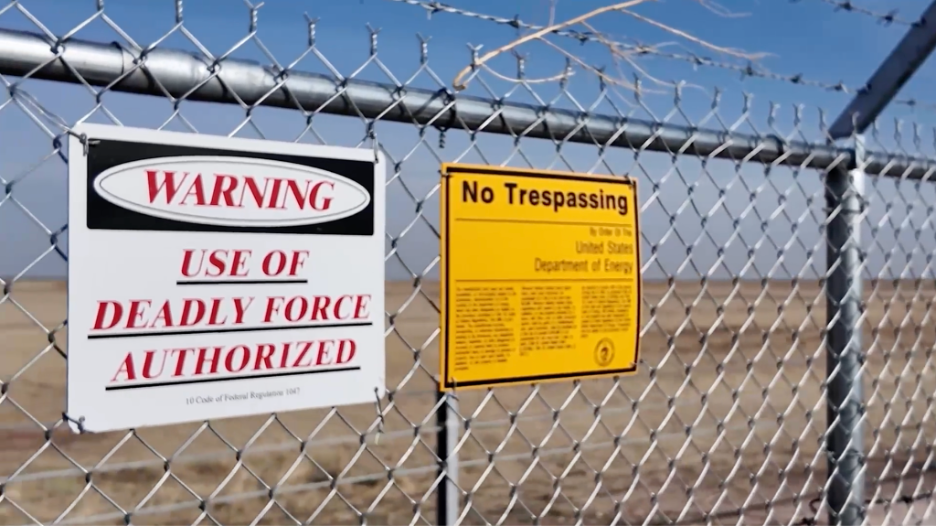
But I got special permission to enter… because I know what’s hiding in plain sight there…

And it’s quickly becoming one of the most sought-after products in the world, with “years-long” backlogs already forming.
The Financial Times reports that Sam Altman has been begging a small company over the phone to build this for him.
This is supported by Meta, Google parent Alphabet, Amazon, and Nvidia CEO Jensen Huang…
And even President Trump has stepped in to greenlight this underlying technology with an emergency executive order.
But most importantly for you…
I believe the stocks involved in this could soar in the days ahead as this news breaks.
That’s because no one – not even Elon Musk – can get their hands on this without going through a small group of little-known companies that own the rights to this technology.
You could back these companies right now, in your regular brokerage account – before this goes mainstream.
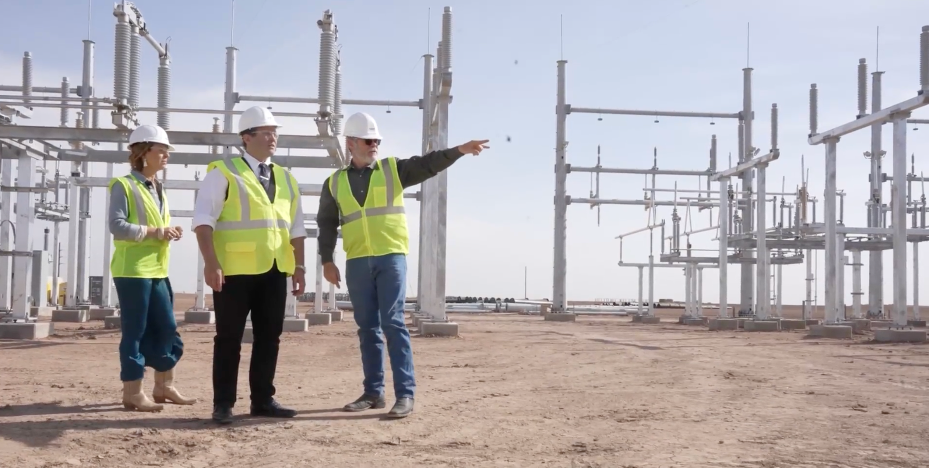
I’m sharing all the details on the ground at this heavily secured site in West Texas, where this technology is about to go live…
Click here to see my full report.
Regards,
Joel Litman
Chief Investment Officer, Altimetry
P.S. I’m sharing the name of the company that Sam Altman has asked to build this tech for OpenAI – for free.
The Jobs Miss Nobody Expected

Hey there, bargain hunter.
Here is a question worth sitting with this Friday morning: when does bad economic news become the best thing that could happen to a patient, long-term investor?
The answer is almost always the same. It happens when bad news compresses valuations in quality businesses that have nothing to do with the bad news itself. It happens when fear is the selling mechanism, not fundamentals. And it happens when the market extrapolates a short-term data point so aggressively into the future that it creates a gap between what a business is worth and what you can pay for it today.
Today’s July jobs report is one of those moments. Not because a labor market contraction is good news. It is not. But because the chain of events it has set in motion, rate expectations collapsing, Treasury yields dropping, and the Federal Reserve suddenly on the defensive, reshuffles the valuation deck for entire categories of quality businesses that have been sitting in the penalty box for months.
The bargain hunter’s job is not to celebrate a weakening economy. It is to understand what the data actually says, separate the noise from the signal, and identify where the mispricing has become too wide to ignore.
Let’s start with what actually happened.
The Scoreboard
The Bureau of Labor Statistics released the July Employment Situation at 8:30 a.m. ET this morning. Here is what it said.
- Nonfarm payrolls: minus 23,000 (consensus: plus 83,000 — a miss of 106,000)
- Unemployment rate: 4.1%, down from 4.2% in June
- Labor force participation rate: 61.4%, the lowest level in more than five years
- Average hourly earnings: up 2 cents to $37.62; year-over-year wage growth slowed to 3.2%, the weakest since May 2021
- May payrolls revised down 66,000, from 129,000 to 63,000
- June payrolls revised down 37,000, from 57,000 to 20,000
- Combined downward revisions for May and June: 103,000
- Trailing 12-month average nonfarm payroll gain: 34,000 per month
- Workers on temporary layoff: rose 153,000 to 921,000
- Long-term unemployed (27 weeks or more): 1.8 million, representing 25.5% of all unemployed
The market’s immediate response told you exactly how the rate calculus shifted. The S&P 500 advanced roughly 0.5%, the Nasdaq climbed about 1%, and the Russell 2000, most sensitive to rate expectations, rose 0.9%. The 10-year Treasury yield fell to approximately 4.6%, and the 2-year note, which most directly tracks Fed policy expectations, dropped 8 basis points to 4.16%. Fed funds futures moved to price a 40% probability of a September hike, down from 55% before the data.
Six weeks ago, this same futures market was leaning toward a hike. Today it is leaning toward a hold. That is a meaningful shift.
What the Market Believes vs. What the Evidence Suggests
Before this report landed, Wall Street’s operating assumption was that the labor market was softening but stable. The consensus expected 83,000 new jobs. That assumption was built on a first-half average of 92,000 monthly gains. The economy delivered minus 23,000.
That is not a rounding error. That is the headline flipping from positive to negative for the first time since February, with the prior two months revised down by a combined 103,000 to boot. The trailing 12-month average has now collapsed to 34,000 per month. Six months ago it stood at 92,000.
The unemployment rate dropped to 4.1%. Before you take comfort in that, consider the mechanism. The labor force shrank by 264,000 workers in July. The participation rate fell to 61.4%. Workers did not find jobs. They stopped looking for them. That is the most important number in the entire report, and it is the one that will take the longest to reverse.
What does this mean for the Fed? Before July’s data, Chair Kevin Warsh had made clear that a September hike remained on the table if inflation stayed elevated. The committee voted 9-3 to hold at the July meeting, with three dissenters favoring an immediate increase. J.P. Morgan had been penciling in a September hike as its base case. The June dot plot showed nine of eighteen FOMC members favoring at least one hike before year-end.
All of that now needs to be reconsidered. A central bank that was already split cannot hike into a negative payroll print with wage growth at its softest level since May 2021. The calculus has changed, even if not all the data has.
The complication is inflation. Core CPI sits at 2.6%. Core PCE at 3.3%. The ongoing conflict affecting the Strait of Hormuz has kept energy costs elevated throughout 2026. The July CPI print, due August 12, is the next critical data point. Economists expect headline inflation to ease to 3.4% from 3.5%, and core to drift to 2.5% from 2.6%. If that materializes, the dovish case for September firms up considerably. If energy prices re-accelerate and CPI surprises to the upside, the Fed is back in a genuine dilemma: a weakening labor market and still-hot prices, simultaneously.
That is not a comfortable position for any central bank. But for the disciplined value investor, that tension is exactly where opportunity lives.
The Sector Breakdown: Where Is This Structural and Where Is It Noise?
Not all of July’s job losses carry equal weight. A disciplined investor separates seasonal distortion from genuine deterioration.
Local government education: minus 50,000. This is the single largest drag on the headline number. July is notoriously susceptible to seasonal adjustment anomalies around school-calendar transitions. Raw employment counts swing dramatically in this category every July. Treat a significant portion of that 50,000 as statistical distortion that may reverse in August. It does not represent 50,000 people whose jobs disappeared.
Retail trade: minus 19,000. This one is real and consistent with what major retailers have been saying in earnings calls. Supercenters and general merchandise retailers shed 21,000 positions. That confirms the consumer spending deceleration showing up across the sector. Retail employment has shown little net change over the trailing twelve months, meaning this is confirmation of a trend already in motion, not a new signal.
Financial activities: minus 14,000. Credit intermediaries lost 9,000 positions. Insurance carriers fell 7,000. Financial sector employment now sits 121,000 below its May 2025 peak. In a rate-sensitive sector where net interest margins and loan demand have been compressing, this is not surprising. It is worth watching.
Healthcare: plus 22,000. The economy’s most consistent hiring engine in 2026 added only 22,000 against its 12-month average of 36,000. That deceleration deserves a note. Healthcare employment does not typically slow unless something broader is happening with utilization trends or labor availability. Watch hospital operator guidance in the next round of earnings.
Temporary layoffs: the number that matters most. The jump of 153,000 workers to 921,000 on temporary layoff is the most actionable data point in the entire release for a forward-looking investor. Temporary layoffs either reverse as companies rehire, or they convert to permanent separations if demand does not recover. That bifurcation will be visible in the August and September payroll reads. It is the single number most worth tracking over the next sixty days.
Special system spots Wall Street moves – before the market
I created a proprietary indicator…
That flags Wall Street money moves – before the market sees them.
Our backtest shows 85% of the stocks my system flags have gone up.
In fact, the average stock doubled…
And that includes the losers.
The Cheap Test: Where Has the Mispricing Become Interesting?
The question The Cheap Investor always asks is not what the market is doing. It is what the market is getting wrong. Today’s data reshapes the valuation environment in specific, identifiable ways. Here is where the gaps are worth examining.
Rate-Sensitive Businesses With Durable Economics
Homebuilders, select REITs, and infrastructure businesses with long-dated contracted cash flows have been discounted throughout 2026 under the assumption that rates stay elevated or move higher. Today’s payroll miss materially reduces the probability of a September hike and nudges the 10-year yield toward 4.5%. That is not a revolution. But at the margin, it changes the discount rate applied to future cash flows in businesses where the underlying demand has not changed.
D.R. Horton (DHI) and Lennar (LEN) are the most obvious homebuilder names in this context. The housing shortage is structural. Mortgage rates derived partly from the 10-year move modestly in the right direction today. The question for any homebuilder position is not whether rates matter but whether the business quality justifies the current price if rates stay above 4.5% longer than expected. The bear case is rates don’t fall enough to move the needle on affordability. The bull case is that any sustained yield relief, compounded over two or three Fed meetings, accelerates the demand backlog these companies already hold.
Brookfield Infrastructure Partners (BIP) is worth a separate mention. It trades at approximately a 40% discount to its sector and roughly 35% below its own historical highs, at around 10.5 times forward earnings. The business generates contracted, inflation-linked cash flows from utilities, transport, and data infrastructure globally. Projected earnings growth of approximately 9% in 2026 and 11% in 2027 is not speculative. It is backed by a backlog of long-term take-or-pay contracts. That is the kind of business that becomes interesting when rates are high and investors are pricing it as if rates stay high forever.
Small-Value: The Most Ignored Category in the Market
Morningstar’s equity team noted recently that small-value stocks are the most undervalued category in the market by their estimates, trading roughly 21% below fair value. Today’s Russell 2000 gain of 0.9% on the rate reset is a reminder of how sensitive smaller, rate-dependent businesses are to shifts in Fed expectations. The question is whether that sensitivity is a trading dynamic or a longer-term valuation opportunity.
For bargain hunters, the answer requires going one level deeper than the index. Small-value as a category is cheap in aggregate. Individual names within it vary enormously on quality. The Cheap Investor framework does not recommend cheap indexes. It recommends cheap businesses within cheap categories, where the discount reflects a temporary condition rather than a structural impairment.
The current environment, slowing wages, falling participation, and a Fed that cannot easily tighten, is precisely the backdrop that historically favors patient capital in quality businesses that have been priced as if the headwinds are permanent.
Bull / Base / Bear
Bull Case: The Seasonal Distortion Corrects and the Fed Holds
Local government education adds back 20,000 to 30,000 jobs in August as the seasonal adjustment normalizes. The August 12 CPI print comes in at or below consensus of 3.4%, consistent with the disinflationary trend seen in June. The Fed holds at the September 16 meeting, the 10-year stabilizes near 4.4% to 4.5%, and rate-sensitive quality businesses get a sustained re-rating. BIP, homebuilders, and select small-value names outperform through the fourth quarter. Citi’s out-of-consensus call for rate cuts before January 2027 starts to look prescient. Patient capital gets rewarded.
Base Case: Stagflationary Limbo
Payrolls recover modestly in August, perhaps 40,000 to 60,000, but the trailing average stays weak. The August 12 CPI reading comes in near 3.6% to 3.8% as energy prices remain elevated due to ongoing Hormuz restrictions. The Fed holds in September but keeps the November meeting live. The 10-year oscillates between 4.5% and 4.7%. Equities drift sideways to modestly lower as the growth and inflation tension keeps institutional positioning cautious. The mispricing in quality rate-sensitive businesses narrows slowly rather than rapidly, rewarding investors willing to scale in over multiple months rather than buying the full position on one data point.
Bear Case: Temporary Layoffs Convert
This is the scenario that invalidates the thesis. The 153,000 jump in temporary layoffs does not reverse. August payrolls come in flat or negative for the second consecutive month. Simultaneously, the Hormuz situation re-escalates, energy prices move back toward year-to-date highs, and July CPI surprises above 3.8%. The Fed faces a genuine stagflationary dilemma: a labor market in deterioration alongside inflation that has not cooperated. In this environment, the rate-relief trade reverses, bond yields move erratically, and the discount applied to rate-sensitive businesses expands rather than narrows. The value case requires more patience than most investors have. This is the scenario where the Cheap Investor framework demands discipline: hold the position or add carefully on further weakness, but do not average down into a business whose fundamentals have changed, only into one whose price has moved further from fair value.
Action Plan for the Patient Investor
The Cheap Investor does not recommend buying or selling anything based on a single morning’s data. What it recommends is using the data to sharpen your thesis and calibrate your entry framework.
- August 12 CPI is the next real gate. Investors who got long rate-sensitive equities on today’s dovish reset need a clear view on inflation risk before adding to those positions. The June energy component dropped 5.7% in a single month and provided the disinflationary cover for the prior CPI beat. That is not guaranteed to repeat. If July CPI comes in above 3.5%, September hike odds rebuild. Plan your position sizing accordingly.
- Watch the temporary layoff count through August and September. The 921,000 workers on temporary layoff is the highest single-month reading of 2026. A conversion of even one-third of those to permanent separations would materially change the August payroll read and the investment environment for consumer-facing businesses. The ADP report due September 2 will offer an early read.
- Scale in, do not load in. The macro environment has shifted today, but it has not resolved. Rate-sensitive quality businesses are more attractively valued after months of being priced for higher-for-longer. That does not mean they will re-rate this week. Build positions in tranches over the next sixty to ninety days, anchored to the two CPI prints and the August and September payroll releases as your checkpoints.
- Do not chase the initial bounce. The S&P 500 touching record territory on the back of a negative payroll report is a reminder that markets are pricing relief from the hike threat, not an improving economy. The underlying fundamentals, slowing wage growth at 3.2%, declining participation, and a 34,000 monthly jobs average, are not the foundation of a broad rally. Selectivity is the edge.
The Cheap Investor Scorecard: July Jobs Report Edition
| Dimension | Assessment | Watch For |
|---|---|---|
| Labor market trajectory | Deteriorating | August payrolls; temp layoff reversal |
| Fed policy risk (Sept.) | Reduced, not eliminated | August 12 CPI; Warsh commentary |
| Wage pressure | Easing (3.2% YoY, 5-yr low) | Whether consumers reduce spending further |
| Rate-sensitive value names | Improving opportunity | 10-year yield direction post-CPI |
| Consumer discretionary | Headwind | Retail sales; mass-market earnings guidance |
| Small-value category | Most undervalued in market (Morningstar: ~21% below fair value) | Individual business quality — category alone is not enough |
| Inflation trajectory | Mixed; still above target | Energy prices; Hormuz developments |
| Participation rate signal | Structural concern (61.4%, 5-yr low) | Whether this stabilizes or declines further in August |
| Infrastructure / BIP thesis | Compelling at current valuation | Q2 earnings execution; distribution growth |
| Margin of safety | Present in select rate-sensitive names | Do not confuse a dovish bounce with a durable re-rating |
The Bottom Line
The July jobs report delivered the first nonfarm payroll contraction since February, a miss of 106,000 against consensus, downward revisions totaling 103,000 across May and June, and a trailing monthly average that has compressed from 92,000 to 34,000 in six months. The unemployment rate fell to 4.1% because participation declined, not because employment improved.
The market celebrated. Equities rose. Bond yields fell. September hike odds dropped from 55% to 40%. That reaction is rational as far as it goes: a central bank that was openly split on whether to tighten cannot easily hike into negative payrolls. The immediate pressure has come off.
But the story is not over. If CPI on August 12 comes in above expectations, the hike debate returns. If the 921,000 workers on temporary layoff do not return to their jobs in August, the labor market deterioration deepens. Those are the two variables that determine whether today’s dovish shift is durable or temporary.
For the disciplined bargain hunter, the conditional framework looks like this: if August CPI cooperates and temporary layoffs reverse, quality rate-sensitive businesses, selected infrastructure, homebuilders with strong order backlogs, and the most financially sound names in the small-value category, deserve a closer look at current prices. If either condition fails, the opportunity becomes more compelling on further weakness, not less. A lower price on the same quality business is not a reason to sell. It is the reason you kept the dry powder.
The market’s job is to be impatient. Ours is not.