July 13, 2026
BABA Is Down 40% From Its Peak
Featured: BABA Is Down 40% From Its Peak
Dear Reader,
Every week, these strange white crates leave a high-security Tesla compound in Lathrop, California.
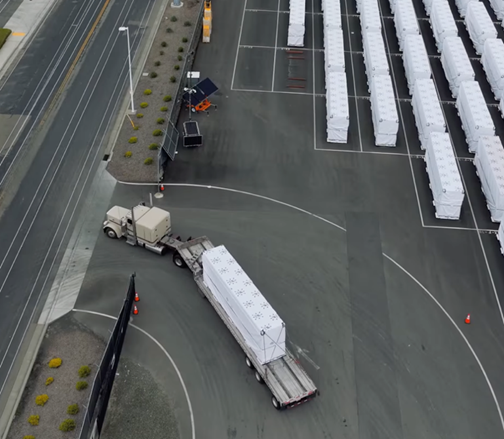
They’re showing up near the Hoover Dam. At an Air Force base in Georgia. In the heart of New York City…
An estimated 4,000 of them are now spread across 48 locations in 14 states. And more roll out every week.
But you won’t see this on CNBC, and you won’t read about it in the Wall Street Journal.
Because these mystery Elon crates have nothing to do with electric vehicles, space, social media, crypto, biotech, robots or AI…
But former hedge fund manager Adam O’Dell knows what’s inside them…
(And he reveals it all in this urgent investment briefing)
Which is why he believes they will go down as Elon’s greatest-ever invention… his biggest ever disruption.
On July 22, Elon is expected to share this new venture with the world.
Once he does, this is going to be everywhere – from Fox Business to your family’s group chat.
Adams believes investors who get positioned before that date could walk away wealthier than they ever thought possible. Everyone else will be reading about it after the stocks have already run.
I’d hate for you to be in the second group.
Click here to watch Adam’s full briefing right now.
He’ll show you exactly what Elon is building, what’s inside these strange white crates… and he’ll give you the name and ticker of one of his top picks to play it – completely free.
Watch it now while you still have time to position yourself.
FEATURED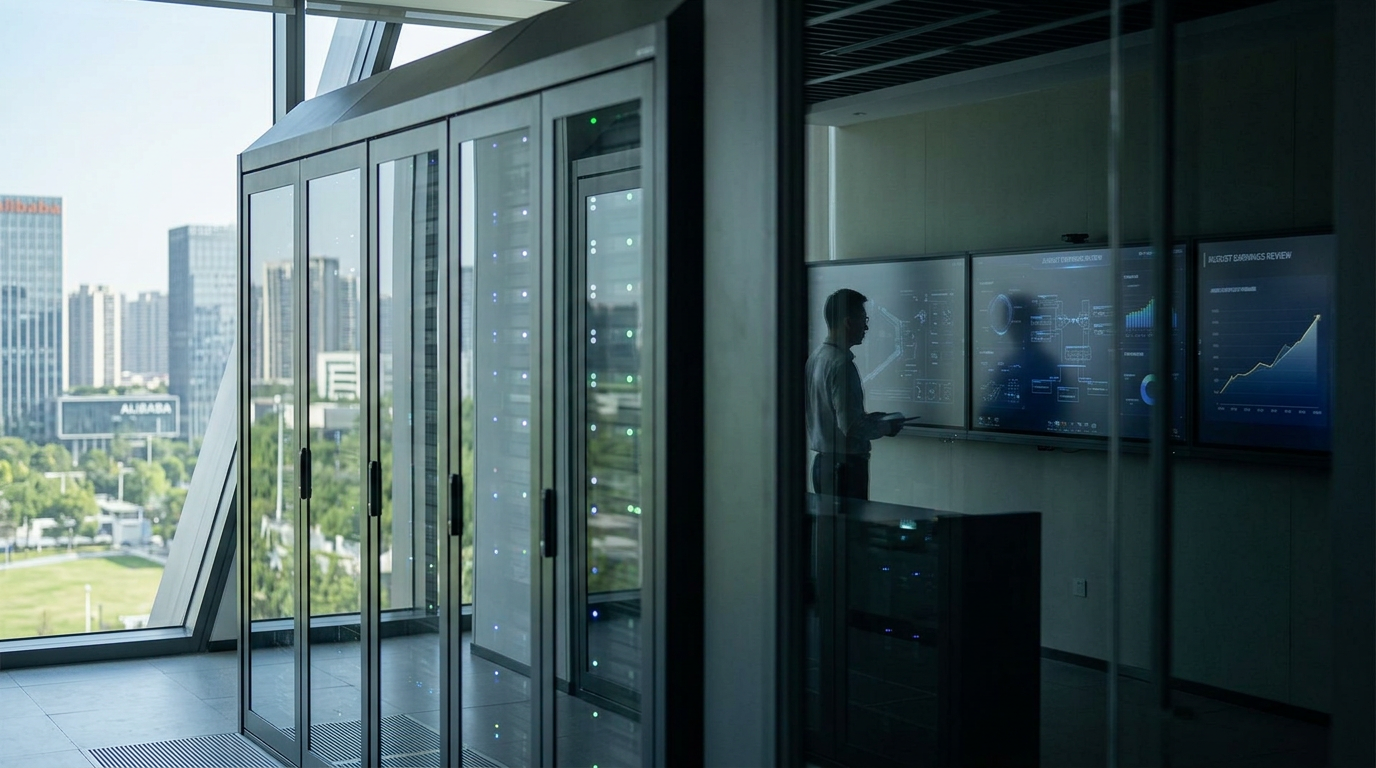
BABA Is Down 40% From Its Peak
Something shifted in Chinese tech on July 8. Not gradually. All at once.
Quick Summary
- BABA jumped 10.4% on July 8, closing near $108, after bottoming at a 52-week low of $91.99 on June 26
- Four catalysts hit the same day: a bullish cloud revenue forecast, a $600M DOJ settlement, a court-ordered Pentagon blacklist reprieve, and accelerating AI cloud data
- Cloud external revenue grew 40% year-over-year in the March 2026 quarter; AI-related revenue hit triple-digit growth for the 11th consecutive quarter
- Full-year FY2026 net income fell 19% and free cash flow turned negative as Alibaba poured capital into quick commerce and AI infrastructure
- 38 analysts rate BABA a Strong Buy with an average 12-month price target of $190.10, roughly 69% above current levels near $112
- Insider selling totaled $70.8 million over the past three months, with no reported buying activity
- Alibaba approved a $1.05 per ADS annual dividend, payable this month. You are getting paid to wait
- August 28 earnings report is the next major catalyst. Cloud revenue growth and quick-commerce loss trajectory are the two numbers that will decide everything
What Actually Happened
BABA hit a 52-week low of $91.99 on June 26. A company generating over a trillion yuan in annual revenue was trading near its lowest level in years, down sharply for 2026 and nearly 42% off its 52-week high of $192.67. Then, in a single session on July 8, it clawed back 10.4%, closing near $108.38. By July 13 it was trading around $112.
Four things triggered that move. Each one pointed the same direction.
The Biggest Unsolved Problem in Medicine?
Over half a billion people battle osteoarthritis* in a $560B market with no cure. Thankfully, Cytonics may have cracked the code.
They discovered the body already produces a naturally occurring protein that helps protect cartilage, just not enough where it’s needed most. So they developed a therapy that has already been used in more than 10,000 patients, and are now advancing a version that’s 200% more potent toward FDA approval.
If approved, it would be the first therapy to halt cartilage destruction and promote regrowth.
Invest in Cytonics before this month’s deadline.
*Source: The Lancet Rheumatology
This is a paid advertisement for Cytonics Regulation CF offering. Please read the offering circular at https://cytonics.com/
Forward-looking statements are subject to risks and uncertainties. There is no guarantee of performance. Past performance does not predict future results. All investments involve risk, including loss of principal.
Four Catalysts That Moved the Stock
First: analysts at Kiwoom Securities projected cloud revenue growth of 45% year-over-year for the June quarter, well above Bloomberg consensus of 38%, citing surging AI computing demand. That one data point started the session.
Second: Alibaba and its U.S. payment arm accepted a $600 million non-prosecution settlement with the U.S. Department of Justice. Messy, but finite. Markets prefer a known number to an open-ended liability, and this turned a multi-year legal overhang into a defined cash cost.
Third: A U.S. federal judge granted BABA a temporary reprieve from the Pentagon blacklisting rules under Section 1260H. That lets the company keep lobbying in Washington while the law’s constitutionality is tested.
Fourth and most important: the cloud numbers themselves. Cloud Intelligence Group external revenue grew 40% year-over-year in the March 2026 quarter. AI-related product revenue hit triple-digit growth for the eleventh consecutive quarter and now accounts for 30% of cloud external revenue. Management has said it expects that figure to exceed 50% within a year.
Slight tangent, but it matters: Alibaba Cloud is the largest IaaS provider in Asia Pacific by revenue, with regional market share rising to 22.5% in 2025, up from 20.8% in 2024, according to Gartner. The #2 player in China, Huawei Cloud, actually saw external cloud revenue decline in 2025. Alibaba is capturing share in a market where its biggest domestic rival is shrinking.
The Business Behind the Bounce
Alibaba is not a single company. It operates through four major segments: China e-commerce (Taobao, Tmall), international commerce (AliExpress, Lazada, Trendyol), Cloud Intelligence, and a logistics and everything-else bucket. The e-commerce side is cash-generating but mature. Cloud is where the growth is concentrated.
Cloud revenue hit RMB 41.6 billion in the March quarter, up 38% year-over-year. Cloud adjusted EBITA grew 57% in the same period. Margins are expanding even as Alibaba pours money into AI infrastructure. For the full fiscal year 2026, cloud revenue rose 34% to RMB 158.1 billion (roughly US$22.9 billion).
The drag is quick commerce. Alibaba’s fast-delivery push has burned through capital and pressured overall profitability hard. Full-year FY2026 net income fell 19% year-over-year to RMB 102.1 billion. Adjusted EBITA dropped 56%. Free cash flow flipped from a RMB 73.9 billion inflow in FY2025 to a RMB 46.6 billion outflow in FY2026. That is the honest version of the story, and it is worth sitting with.
Management says the quick commerce unit’s unit economics should turn positive by end of fiscal 2027. Investors who want near-term profit improvement should know that is still a runway, not a guarantee.
Is It Cheap?
At recent prices around $112, BABA trades at roughly 26x normalized earnings, per Morningstar data. The average 12-month price target across 38 analysts is $190.10, implying roughly 69% upside. Morgan Stanley cut its target slightly to $180 but kept its Overweight rating. Daiwa trimmed to $175, Nomura to $178. Both kept Buy ratings.
When a street full of analysts lowers targets and still says buy, that is worth paying attention to.
What is interesting is the valuation math does not require AI to deliver its full promise. A recovery in cloud margins alone, combined with narrowing quick-commerce losses, gets you back toward prior valuation levels. The market is not pricing in CEO Eddie Wu’s stated five-year target of exceeding $100 billion in external cloud and AI revenue. That delta between current price and stated ambition is where the opportunity lives, if you believe the execution story.
What Could Go Right. What Could Go Wrong.
Bull case: Cloud growth accelerates toward the 45% range in the August report, quick-commerce losses narrow on schedule, the DOJ deal removes a major regulatory wildcard, and global investors rotate back into discounted Chinese tech after chasing semiconductors for months. Analyst base case targets cluster around $175 to $190.
Bear case: Chinese equities face persistent macro and regulatory pressure that is hard to model. A single Beijing policy shift can undo months of gains overnight. Insider selling has been notable, with $70.8 million in stock sold over the past three months and no reported buying. Alibaba’s president J. Michael Evans alone unloaded 720,000 shares near $95 on June 29. The quick-commerce bet could keep bleeding longer than expected. And a stock that rallies 10% into an earnings event has a tendency to sell off even on a solid result.
The risk is real. Size positions accordingly.
Jim Rickards: “This AI Giant is About to Go Bust”
Jim Rickards just released shocking new research predicting this AI giant is about to go bust…
Triggering a full-blown AI meltdown that could wipe out 80% of the stock market.
He says this could be 10 times bigger than Lehman Brothers.
Click here to get the name of this company, completely free of charge…
And learn the five steps he’s recommending you take.
Cheap Investor Checklist
- Cloud external revenue growth: watch for 40%+ in August report to confirm continued acceleration
- AI revenue share of cloud: progress toward the 50% target is a key signal
- Quick-commerce unit economics: any narrowing of losses or positive UE by end of FY2027 is on track
- DOJ and Pentagon blacklist: monitor for further legal developments on both fronts
- Insider activity: sellers-only trend over the past 90 days is a caution flag worth tracking
- Stock holds above $100 into earnings: key support level to watch
- Analyst consensus: 38 analysts at Strong Buy with $190.10 average target
- Alibaba Cloud market share: any Gartner or IDC data showing share gains in Asia Pacific is a positive signal
One more thing worth mentioning: BABA pays a dividend. The board approved $1.05 per ADS annually, payable this month. For a stock trading well off its highs, you are getting paid to wait for the August 28 report.
Whether this bounce is the start of a real recovery or a temporary move that unwinds into earnings, August 28 is when the question gets answered. Watch what the cloud numbers say. The rest is noise.