June 22, 2026
How SpaceX Ends the Bull Market
Featured: Oil Is Still the Most Important Trade in the Market
Dear Reader,
Did the SpaceX IPO just trigger the end of the bull market?
It’s already being called “the biggest insider cashout in market history”, as insiders will begin selling $1.6 trillion in paper wealth.
And it marks the final and most dangerous phase of the bull market.
It’s happened before, of course…
In 1999, as the dot-com bubble roared toward its final, explosive peak, three mega-IPOs hit the market in rapid succession: UPS, Goldman Sachs, and AT&T Wireless.
Together, they helped fuel the final, furious surge that sent markets parabolic, before they crashed back down to earth.
Now, history appears to be repeating itself.
Back in 1999, many individual stocks soared 500% or more.
I expect this time around to be no different.
But given the wild volatility we’ve seen throughout the SpaceX IPO, it’s critical that you position your money today.
Here’s exactly where to move your money, before this bull market reaches its dramatic conclusion.
Regards,
Brett Eversole
Senior Editor & Analyst, Stansberry Research
P.S. Most investors don’t realize the real money – the potentially once-in-a-generation profits – WON’T come from SpaceX.
The Melt Up is already sending stocks soaring in recent months, like Micron, up 986%… SanDisk, up 4,498%… and Bloom Energy, Lumentum, and Planet Labs… ALL UP more than 1,100% in recent months.
But you haven’t missed it yet. I believe the biggest gains are right around the corner. And when the Melt Up spreads to the rest of the market, stocks will take off FAST. I explain everything you need to know right here.
FEATURED
Oil Is Still the Most Important Trade in the Market
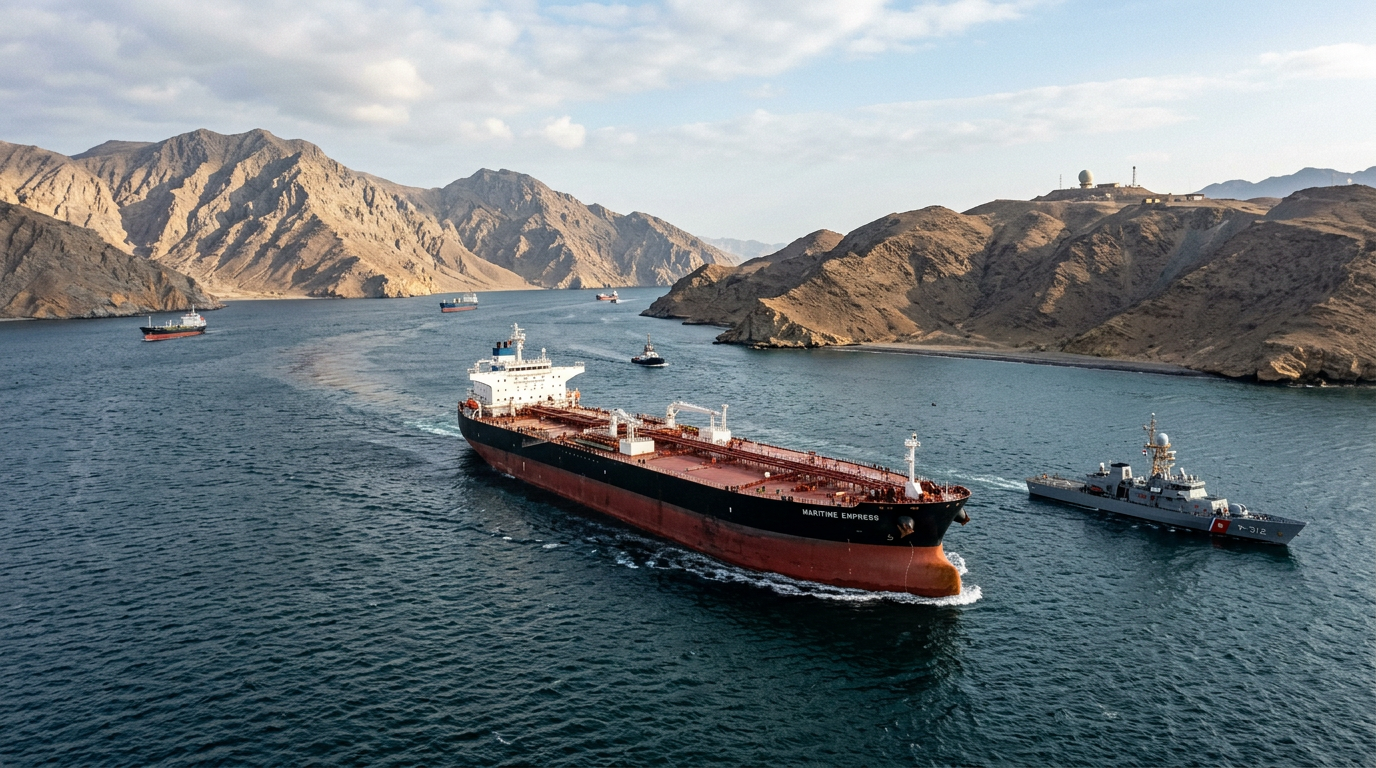
Here is the honest state of the world as of late June 2026: the U.S. and Israel struck Iran on February 28. The Strait of Hormuz, the chokepoint for roughly one-fifth of global petroleum and 20% of global LNG, was effectively closed for months. A U.S.-Iran memorandum of understanding was signed in mid-June, calling for a 60-day ceasefire and full reopening of the Strait. But as of June 21, Iran’s military had declared the Strait closed again while its foreign ministry said shipping was operating normally. U.S. CENTCOM reported 55 ships transiting that same day, with the central channel still mined.
That tells you everything you need to know about the reliability of any single headline right now.
Brent crude spiked from around $70 a barrel before the conflict to above $119 in early March. It has since fallen sharply to near $80 per barrel as of mid-June, as the interim deal removed some of the fear premium. Goldman Sachs lowered its Q4 2026 Brent forecast to $80 per barrel (cut from $90) after Trump’s announcement of the deal, now assuming Persian Gulf exports return to pre-war levels by end of July. The EIA’s June Short-Term Energy Outlook, completed before the deal news broke, assumed the Strait would stay largely closed near-term and pegged Brent at an average of $105/barrel for June and July. That forecast is almost certainly being revised.
The volatility is real. Oil dropped, then whipsawed. This is the environment. Now here is the part that matters for your portfolio.
Washington Is Starting to Pay Attention
When lawmakers start asking questions, big money has often already moved.
Learn why AI infrastructure is attracting serious attention by clicking here.
The Cash Flow Story
This is not a sentiment story. It is a cash flow story. When oil spikes, every dollar of price increase flows nearly directly to the bottom line for producers with low cost structures. And all four of the names we are watching beat Q1 2026 estimates decisively, even as headline earnings were messy from derivative timing effects and geopolitical disruptions to physical supply chains.
The theme of this cycle is also different from the last one. Unlike 2014 or 2019, major CEOs are talking about capital returns, not production heroics. Cash returns are non-negotiable. Balance sheets are intentionally boring. That means higher oil prices are going to shareholders faster than in prior cycles.
The Numbers on Each Name
- ExxonMobil (XOM): Q1 2026 adjusted EPS of $1.16, beating estimates of roughly $1.02-$1.03. GAAP net income came in at $4.2 billion, weighed down by $3.33 billion in negative derivative timing effects tied to the Hormuz disruption. Operating cash flow was $8.7 billion. Production averaged 4.6 million oil-equivalent barrels per day, including record output in Guyana. The company declared a Q2 dividend of $1.03 per share and has $20 billion in buybacks planned for 2026. XOM also achieved first LNG at Golden Pass Train 1 in March, boosting U.S. LNG exports by roughly 5%. On breakeven: XOM is targeting a global breakeven cost of $30 per barrel by 2030, with Permian sub-basin new well breakevens currently running in the $63-69 per barrel range per Dallas Fed data. The full-year analyst EPS consensus for Q2 is around $3.75, implying significant recovery as derivative positions settle.
- Chevron (CVX): Q1 2026 adjusted EPS of $1.41, versus consensus near $0.97, a 45% beat. The company returned $6.0 billion to shareholders in the quarter through $2.5 billion in buybacks and $3.5 billion in dividends, marking 16 consecutive quarters above $5 billion in total shareholder returns. Chevron extended its dividend growth streak to 39 consecutive years, with the quarterly dividend at $1.78 per share following a 4% increase announced in early 2026. The Hess acquisition, completed in 2025, added a 30% stake in Guyana’s Stabroek Block, a world-class asset that provides steady production growth through the rest of this decade.
- Occidental Petroleum (OXY): Q1 2026 adjusted EPS of $1.06, nearly 80% above analyst expectations of $0.59. Production reached 1.43 million BOE per day, exceeding guidance. Free cash flow surged to $1.7 billion for the quarter. Principal debt was reduced to $13.3 billion from $20.8 billion six months prior, a meaningful balance sheet improvement following the OxyChem sale that closed January 2, 2026. OXY trades like a levered call on crude and moves wider on headlines than the integrated majors. That is the opportunity and the risk.
- ConocoPhillips (COP): Q1 2026 adjusted EPS of $1.89, beating estimates of roughly $1.72. Net income was $2.2 billion. Full-year 2025 net income was $7.99 billion. The company returned $2.0 billion to shareholders in Q1 through equal parts dividends and buybacks, and reiterated its objective to return 45% of cash from operations to shareholders for the full year. Production averaged 2,309 thousand BOE per day, with $4.3 billion in operating cash flow funding $2.95 billion in capital expenditures.
Trump named it. Scientists built it. Here’s what it means for you.
The name is “Golden Dawn.” That’s what President Trump’s team is calling America’s new Manhattan Project – but for AI. It will span more than 700 miles – making it by far the largest AI infrastructure project ever built. When Trump flips the on switch, Louis Navellier believes it will trigger a $100 trillion reset of the AI markets. For investors who get ahead of it, the timing could mean everything.
Louis’ revealing the one stock at the center of it all right here.
The Real Risk
I want to be direct about this because it is easy to underweight. The biggest risk to energy right now is not structural. It is binary and geopolitical. If the Iran conflict resolves durably and the Strait normalizes faster than expected, oil pulls back hard. Brent was around $70 before the war began. That is a meaningful drop from where we are now.
Goldman’s downside scenario is worth noting: under faster export normalization, stronger supply growth, and weaker demand, Brent could average below $70 per barrel in Q4 2026 and below $60 in 2027. That is not the base case, but it is a real range.
Clearing the backlog physically is also not instant. Roughly 500 commercial vessels remain in the Persian Gulf. Analysts at Kpler estimate mine-clearing alone could take six months, vessels clearing and reloading two to three months, and some production restarts in countries like Iraq up to a year. The physical reopening and the commercial reopening are two different events separated by a confidence-building timeline that no diplomatic agreement can fully compress. War-risk shipping insurance premiums remain significantly elevated.
Slight tangent, but it matters: the IEA characterized this closure as the largest supply disruption in the history of the global oil market, surpassing the 1973 OPEC embargo. The infrastructure to reroute around the Cape of Good Hope adds 14 to 24 days of transit time per voyage. That does not just disappear because a memorandum of understanding gets signed.
How to Think About Sizing
Three ways to play this.
The majors, XOM and CVX, pay you to wait. Solid dividends, disciplined buybacks, lower sensitivity to daily spot moves. You are collecting cash flow while watching the geopolitical situation resolve. That is the defensive position.
The E&Ps, OXY and COP, give you more torque. OXY especially moves wider on headlines than the integrated majors. Its debt reduction story is compelling, but it is not a slow-and-steady hold. If your view is that oil stays elevated through Q3, OXY has the most upside. If your view is genuine uncertainty about how long the conflict or its aftereffects last, XOM or CVX is the cleaner position.
Cheniere Energy (LNG) is the sleeper in this group. The conflict also disrupted Qatari LNG supplies. Cheniere, the leading LNG exporter in the United States, is nearing completion of its Corpus Christi Stage 3 expansion. Six of seven midscale trains have been completed, with Train 6 finishing ahead of schedule in June 2026. The full seven-train, 10-plus million-tonne-per-annum expansion is expected to wrap by year end, bringing the facility’s total capacity above 25 mtpa. Cheniere also filed its Stage 4 application with FERC in February 2026, which was accepted into the formal review process. That is a long runway of visible capacity growth.
The 7 Things I Wish I’d Known Sooner
I’ve been trading for over 50 years. In that time, I’ve made every mistake an options trader can make – and watched plenty of other people make them too.
Here’s what I learned: the losses you regret most almost never come from a lack of knowledge. They come from skipping a step you already knew to take.
So, I wrote down the 7 steps that matter most. On one page. Run it before any options trade.
It’s called the Smart Trade Options Checklist. Normally $29.97. Free today.
Cheap Investor Checklist
- Cash flow holding through the cycle? XOM: $8.7B operating cash flow in Q1. CVX: $6B returned to shareholders in Q1. COP: $4.3B operating cash flow in Q1. OXY: $1.7B free cash flow in Q1.
- Buybacks active and funded? XOM ($20B planned for 2026): yes. CVX ($2.5B in Q1 alone, 16 consecutive quarters above $5B total): yes. COP (45% of CFO targeted to shareholders): yes.
- Dividend growth sustained? CVX: 39-year consecutive growth streak, confirmed. XOM: multi-decade growth record. COP: $0.84/share quarterly, maintained.
- Balance sheet improving? OXY: principal debt cut to $13.3B from $20.8B in six months. COP: 27% debt-to-capital ratio, ended Q1 with $6.7B in cash and equivalents.
- Peace deal durability? Monitor Hormuz transit volumes, war-risk insurance premiums, and mine-clearing progress. The MOU is 60 days. Nuclear talks are the sticking point.
- Cheniere LNG expansion on track? Stage 3: six of seven trains done, ahead of schedule. Stage 4: FERC application accepted February 2026, DOE review in process.
- EIA and analyst forecasts converging? Watch the July EIA STEO for the post-deal revision. Goldman’s base case now implies Gulf exports at pre-war levels by end of July.
These stocks have already moved. They are not hidden values in the traditional sense. What they are is cash machines in an environment where supply normalization is months away, not days, and where the geopolitical situation can reverse on a single headline.
Peace could hold and Brent drifts to $70. Or the deal collapses and we are back above $100. That range, and the uncertainty between them, is what makes this worth watching closely right now. Position accordingly.