May 21, 2026
White House Grid Plan: New Potential Tech Could Save America
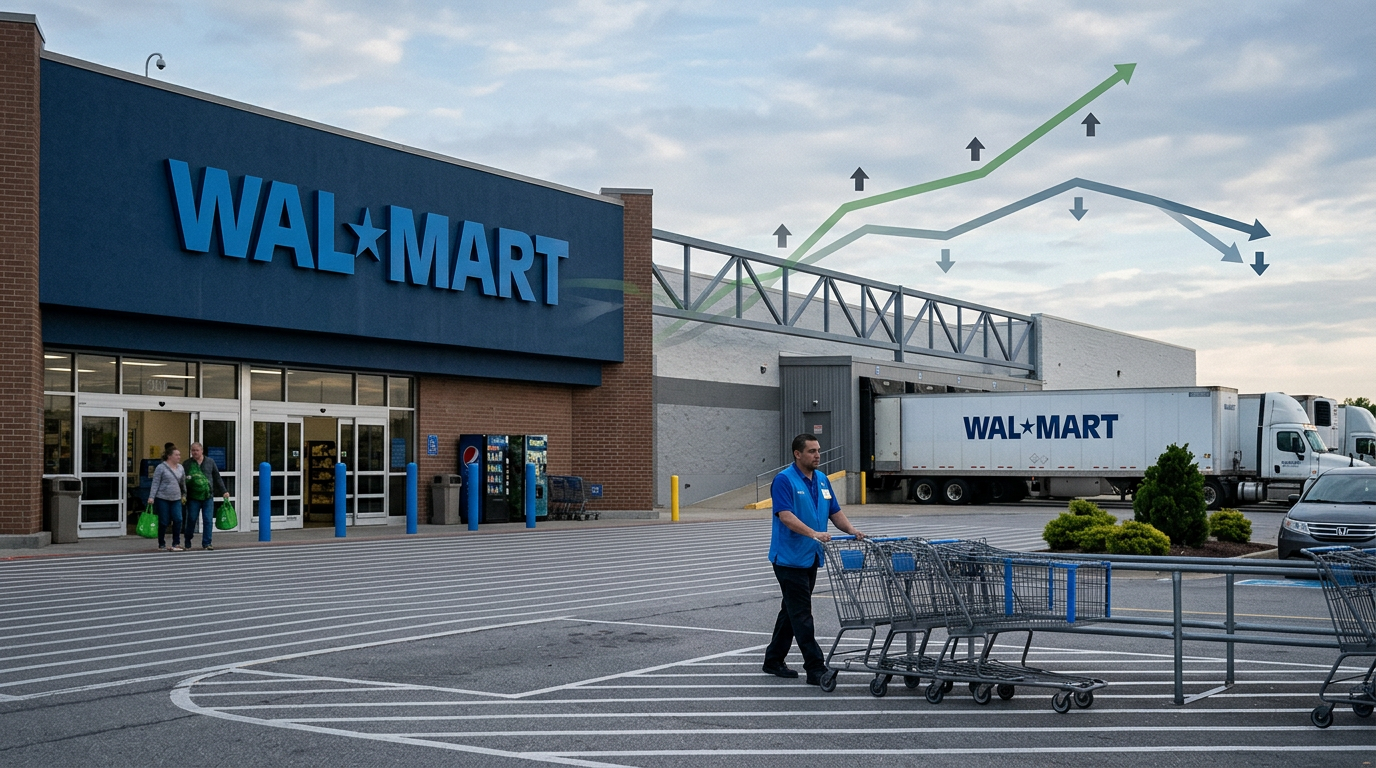
Featured: Walmart Beat Sales. Then Guidance Did the Damage
Dear Reader,
Without most people noticing, Elon Musk has started a new venture that has nothing to do with rockets, EVs, Neuralink, or tunnels.
Trump has personally issued emergency support to roll this underlying tech out as fast as possible.
It’s already live in multiple states.
Behind the scenes, demand for this is already spiking…
The Financial Times says Sam Altman is begging people on the phone to build this for him and OpenAI.
And the best part for you and your wealth is:
A few little-known companies control the supply chain.
Anyone who wants this tech – be it Sam Altman or even Elon himself – must go through these companies to get it.
You can simply buy their stocks right now… before this news becomes common knowledge.
But you ought to move fast. Because leaked satellite images are already showing up online…
Click here to see how you could back Elon Musk’s next venture from your regular brokerage account.
Regards,
Joel Litman
Chief Investment Officer, Altimetry
Walmart Beat Sales. Then Guidance Did the Damage
Walmart handed Wall Street a revenue beat this morning. Then it handed them a Q2 guidance miss. Shares slipped roughly 2% premarket, and that’s the part worth unpacking.
What the Numbers Actually Said
Q1 FY27 revenue came in at $177.8 billion, up 7.3% year over year (5.9% in constant currency). That cleared the analyst consensus of roughly $174.8 billion by a meaningful margin. Adjusted EPS matched expectations at $0.66, up 8.2% from a year ago. Adjusted operating income in constant currency grew 5.1% to $7.5 billion. Gross profit rate ticked up 6 basis points, led by the U.S. segment. On the surface, a solid quarter.
Then came Q2.
Management guided Q2 adjusted EPS of $0.72 to $0.74 — the Street was sitting at $0.75. Full-year FY2027 EPS guidance of $2.75 to $2.85 also came in below the consensus of $2.92. Walmart kept its full-year net sales growth outlook unchanged at 3.5% to 4.5% in constant currency. That’s the tension: the top line held, the bottom line guidance didn’t.
Iran War Shock: What I Was Told In That Private Meeting
On January 7th… just outside Washington, D.C… I sat across from a man whose family has been tied to global power for decades.
Oil deals. Intelligence circles. Government insiders.
He leaned in and told me something that changed everything I thought I knew about the Iran war.
What you’re seeing on the news? It’s not the real story.
The strikes… the chaos… the escalation…It’s all part of something much bigger.
And the only reason I know this is because of him – an anonymous contact who risked everything to pass this information along.
The Part That Actually Matters
Walmart doesn’t trade on what happened last quarter. It trades on what management thinks is coming. And what management is signaling — through guidance rather than headlines — is that the consumer environment is getting harder to call.
Consumer confidence recently hit its lowest level since 1952. Gas prices have been climbing since the Iran conflict began pushing oil higher in March, and Walmart executives have previously noted that shopper attitudes sour meaningfully once gas crosses $3.50 to $4 a gallon. Tax refunds this quarter were notable but appear to have been saved rather than spent — particularly by middle and upper-income households. That cohort matters more to Walmart now than it did five years ago. The company has been gaining market share among households earning over $100,000, which changes the defensive math. A value retailer pulling in wealthier shoppers during uncertainty is great. Until those shoppers feel comfortable spending freely again — which they’re clearly not right now.
Slight tangent, but it connects: Walmart flagged last year that some prices on imported general merchandise would likely have to rise due to tariffs. That’s still live. Dollar stores import a higher share of general merchandise and have less supplier leverage, so whatever tone Walmart sets on tariff pass-through this morning ripples directly into Dollar General and Dollar Tree. This isn’t a single-stock story today.
The Business Under the Hood
Walmart’s FY26 full-year revenue was $713 billion. It serves roughly 280 million customers weekly across more than 10,900 stores in 19 countries. Groceries account for approximately two-thirds of U.S. revenue — which gives it a structural floor when discretionary spending softens. What’s changed over the last few years is the profit mix. Global advertising grew 37% in Q1, with Walmart Connect (the U.S. ad business) up 36%. Membership fee revenue grew 17.4% globally, with total memberships around 30.7 million entering 2026. These are the segments that actually move the margin needle — operating margins on advertising and membership run well above 70%, compared to razor-thin retail margins. This is why Walmart can keep prices low and still grow operating income faster than sales.
Valuation Check
WMT was trading near $131 heading into this morning, up roughly 18% year-to-date. The trailing P/E sits around 49x. Forward P/E is approximately 45x. Five-year average is closer to 36x. That’s a meaningful premium, and it’s entirely justified by the flywheel story — advertising, membership, eCommerce, automation. But it also means the market is pricing in continued execution. A Q2 EPS guidance miss, even a modest one, is not a minor event at this multiple. There is very little cushion for disappointment when the stock is priced for near-perfection.
- Q1 Revenue: $177.8B vs. $174.8B consensus (beat)
- Adjusted EPS: $0.66 vs. $0.66 consensus (in-line)
- Q2 EPS Guidance: $0.72–$0.74 vs. $0.75 Street estimate (miss)
- FY27 EPS Guidance: $2.75–$2.85 vs. $2.92 consensus (miss)
- FY27 Net Sales Growth: 3.5%–4.5% constant currency (unchanged)
- Global eCommerce growth: +26%
- Global ad revenue growth: +37%
- Membership fee revenue growth: +17.4%
- Walmart U.S. comp sales: Expected ~3.9%–4.5% range
- Trailing P/E: ~49x | Forward P/E: ~45x
Modern Defense Has a Redundancy Problem
Modern military defense strategy is built around one key idea: redundancy. Instead of relying on a few large, vulnerable systems, the U.S. is shifting toward distributed networks – constellations of satellites, layered communications, and backup capabilities that keep working even if one piece fails.
Redundancy only works if replacement and testing can happen quickly. A satellite that takes a year to replace isn’t real redundancy. A system that can’t be validated fast enough doesn’t stay reliable.
That’s where logistics – not just technology – become strategic. A small aerospace company is building its model around speed, flexibility, and rapid access – helping reduce the time between need and deployment.
In a world where resilience defines readiness, that capability is gaining attention.
See why investors are watching this overlooked layer of defense and space infrastructure
What Goes Right, What Goes Wrong
Bull case: Tariff absorption proves manageable, eCommerce holds above 25% growth, advertising scales past 35%, and Walmart continues pulling in higher-income households that sustain basket size. General merchandise inflects positive, which would be the first clean read on discretionary recovery in several quarters. If advertising and membership scale faster than core retail, operating leverage expands even as comp growth moderates. That’s the thesis at this multiple.
Bear case: Gas prices stay elevated above $4 and consumer behavior deteriorates more broadly. Tariff pass-through on imported merchandise compresses margins or pushes price-sensitive shoppers to pull back further on general merchandise. The low-income cohort – still a meaningful portion of Walmart’s traffic – faces continued pressure from reduced government support payments. At 49x trailing earnings, any crack in the margin expansion story hits hard.
Base case: Grocery holds the comp, eCommerce continues growing in the mid-20s, advertising revenue keeps expanding, and the full-year 3.5%–4.5% net sales guidance proves achievable. Operating income grows faster than sales as the mix shift toward higher-margin businesses continues. WMT consolidates in a $122–$135 range while the market waits for clarity on Q3 and the back half of the consumer cycle.
The Cheap Investor Scorecard
- U.S. comp sales – watch for 3.9%+ to confirm grocery floor is intact
- General merchandise – any positive inflection is a discretionary recovery signal
- Global ad revenue – needs to hold above 30% growth to justify premium multiple
- Membership fee revenue – 17%+ growth supports the flywheel thesis
- Tariff commentary – specific language on pass-through vs. absorption is the wildcard
- Low-income cohort traffic – weakness here bleeds into dollar stores
- Q2 operating income guidance – $0.72–$0.74 EPS range needs context on margin direction
- eCommerce penetration – global at 26% growth; watch for mix between marketplace and 1P
- Full-year FY27 EPS confirmation – $2.75–$2.85 range already below consensus at $2.92
- WMT valuation vs. peers – 49x trailing P/E vs. Costco at ~55x; premium is structural, not speculative
Here’s where I land on this. Walmart beat on revenue. The underlying business – eCommerce, advertising, membership – is executing. But the guidance miss on Q2 EPS is what the market is reacting to, and rightly so. When you’re priced at 49x trailing earnings, the forward numbers aren’t a footnote. They’re the whole story.
If tariff commentary on the call is measured and the low-income cohort holds, today’s dip is a noise event. If management flags meaningful softness in general merchandise demand or signals caution about the back half, the multiple compression case gets more interesting.
Watch the call. The numbers were fine. The words are what matter today.
– The Cheap Investor