
June 14, 2026
The SpaceX IPO Just Jumpstarted This Rare Market Phenomenon
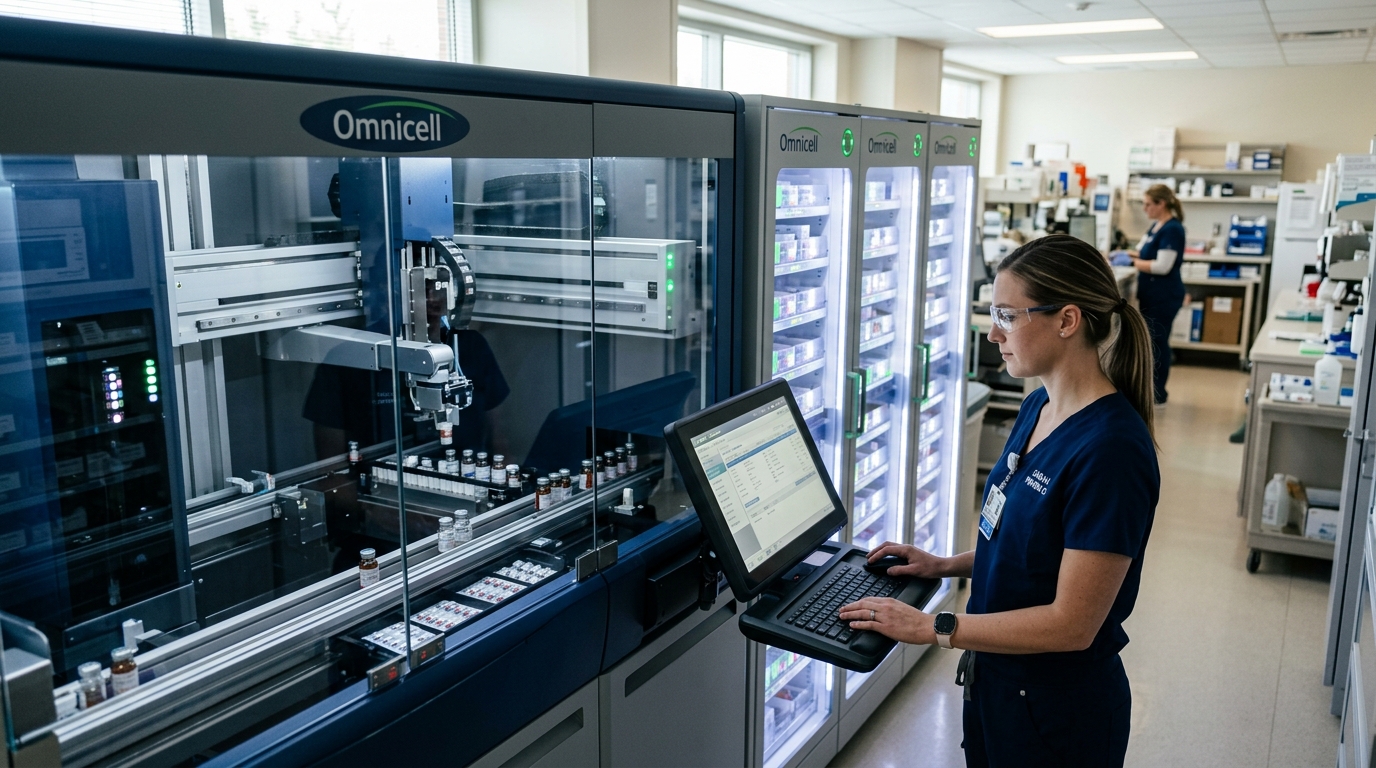
Featured – Omnicell (OMCL): The Pharmacy Robot Getting a Second Look
Dear Reader,
I hope you’re paying attention to what’s happening in the stock market…
Because history is repeating itself in a way that only happens once in a generation.
In 1999, as the dot-com bubble roared toward its final, explosive peak, three mega-IPOs hit the market in rapid succession: UPS, Goldman Sachs, and AT&T Wireless.
They were household names… And their IPOs were so hot, they nearly broke Wall Street.
Within five short months, the Nasdaq nearly doubled during a phenomenon known as a “Melt Up.” Many individual stocks went parabolic, soaring 300%, 500%, even 1,000% or more.
Now, let’s fast forward to 2026…
Three mega-IPOs debuting, all household names: SpaceX, Anthropic, and OpenAI.
SpaceX alone was the single biggest IPO event in history. And it’s the clearest signal we’ve seen that the Melt Up has arrived again.
In the same way that those 1999 IPOs caused a full-blown Melt Up in stocks, I believe we’ll look back at the SpaceX IPO as be the match that ignited the mother of all Melt Ups.
Position yourself for the Melt Up by clicking here.
Regards,
Brett Eversole
Senior Editor & Analyst, Stansberry Research
P.S. Most investors don’t realize the real money – the potentially once-in-a-generation profits – WON’T come from SpaceX.
The Melt Up is already sending stocks soaring in recent months, like Micron, up 986%… SanDisk, up 4,498%… and Bloom Energy, Lumentum, and Planet Labs… ALL UP more than 1,100% in recent months.
But you haven’t missed it yet. I believe the biggest gains are right around the corner. And when the Melt Up spreads to the rest of the market, stocks will take off FAST. I explain everything you need to know right here.
Omnicell (OMCL): The Pharmacy Robot Getting a Second Look
Hey there, bargain hunter.
Omnicell does not exactly make headlines at cocktail parties. It automates hospital pharmacies. Cabinets that dispense medication. Robots that handle central pharmacy workflows. Software that ties it all together. Unglamorous, essential, and quietly becoming a recurring revenue machine.
That quiet part matters right now. Because the estimate revisions on this stock have been anything but quiet.
What Just Happened
Omnicell reported Q1 2026 results on April 28. The numbers were not close to expectations – they blew past them.
- Revenue: $309.9 million, up 15% year over year
- Non-GAAP EPS: $0.55, up 111.5% year over year
- Beat vs. consensus EPS: 67.9% above the Zacks estimate
- Gross margin: 45.3%, expanded 416 basis points year over year
- Operating cash flow: $54.5 million, more than doubled from the prior year period
- Cash on hand: $239.2 million as of March 31, 2026
The stock responded. Shares jumped 20.9% on the day of the announcement.
After years of margin compression and a revenue dip in 2024 – full year 2024 revenues were $1.112 billion, down 3% from 2023 – this was a genuine inflection. Not a rounding error.
What the Business Actually Does
Omnicell sells into hospitals and health systems. Its core product is the automated dispensing cabinet – a connected device installed at nursing stations and pharmacy floors that controls, tracks, and dispenses medications. Think of it as the ATM for hospital drugs. Clinicians pull what they need, the system logs it, flags discrepancies, and syncs with the pharmacy.
Beyond the hardware, the company earns from technical services, SaaS contracts, specialty pharmacy services, and consumables. That recurring slice of the revenue base is what management has been building toward. Annual recurring revenue (ARR) is now guided to $680–700 million for full year 2026.
Slight tangent worth noting: the company’s broader ambition is what it calls the Autonomous Pharmacy – a fully automated, near-zero-error medication management environment. Titan XT, its next-generation dispensing system launched in December 2025, is the hardware anchor for that vision. OmniSphere is the software layer. Hardware shipments begin in H2 2026. OmniSphere functionality rolls out in phases starting H1 2027. Customer engagement is underway, but management is deliberately managing expectations on near-term revenue contribution from both. In October 2025, Omnicell also acquired ANiGENT, expanding its footprint in drug diversion detection and adding another recurring revenue stream.
Jim Rickards Predicts: Trump’s Next Big Buy
This tiny $2 stock holds the exclusive rights to the largest gold reserve in the country.
And it has the potential to be the biggest fortune maker in Trump’s second term.
According to Jim Rickards…
Trump is about to take a direct stake in this $2 stock.
And if you’d like to learn how to stake your claim in this asset before President Trump and his administration make a move…
You need to act before June 30.
Click here to see Jim’s big prediction: “Trump’s Next Big Buy.”
The Numbers That Matter
- Full year 2026 revenue guidance: $1.215B – $1.255B
- Non-GAAP EBITDA guidance: $153M – $168M (raised after Q1)
- Non-GAAP EPS guidance: $1.80 – $2.00 (raised 8.6% post-Q1)
- Q2 2026 revenue guidance: $307M – $313M
- Product bookings guidance (FY2026): $510M – $560M
- Tariff headwind baked in: ~$12 million for full year 2026
- TTM revenue: ~$1.23B | Market cap: ~$1.72B
- EV / Revenue: 1.36x | EV / EBITDA: ~14x
- Levered free cash flow (TTM): $112.6 million
Revenue was down 5.1% over the prior three years cumulatively. That context matters when reading the 15% Q1 growth. This is a recovery story, not a hypergrowth one.
Is It Actually Cheap?
Here’s where it gets complicated. On a trailing basis, OMCL is expensive. The trailing P/E sits near 86x with a diluted EPS (TTM) of just $0.44. That is not bargain territory on its face.
But the forward picture looks different. Analysts now forecast non-GAAP EPS of roughly $1.93 for full year 2026, with the highest estimates reaching $2.10. At a current price around $38–$47, that puts the stock at approximately 20–24x forward earnings. For a company guiding to 15%+ revenue growth, expanding margins, and a recurring revenue base pushing toward $700 million in ARR – that multiple is not demanding.
On the sell-side, the picture is broadly constructive. The median analyst price target sits at $54, with a range from $46 to $63 across 14 Wall Street analysts. KeyBanc recently raised its target to $70. Piper Sandler carries an Overweight rating with a $55 target. Barclays moved from $39 to $58. Wells Fargo, arguably the most cautious of the group, is at $40 but carries an Overweight rating. The average analyst consensus is Buy, with 6 Buy ratings, 2 Holds, and zero Sells in the most recent tracker data.
The part worth watching: the market still largely prices Omnicell as a hardware company. If the ARR build succeeds and the company sustains software-level margins, the multiple it commands could shift meaningfully. The bull case – ARR exceeding $1.5 billion and the stock getting a Healthcare IT multiple rather than a med-device multiple – would look very different from where the stock sits today.
Bull, Base, and Bear
Bull: Titan XT ships on schedule, OmniSphere gains early traction, ARR accelerates past $700M in 2026 and toward $1B+ over the following two years. The market begins to re-rate OMCL toward a SaaS comp. Tariff headwinds – currently guided at $12M for the full year – get mitigated ahead of schedule, as Piper Sandler expects mitigation to eliminate effectively all China tariff impact by Q4 2026. EPS estimates continue to move higher. The stock closes the gap to its $54+ median price target and then some.
Base: OMCL delivers on its full year 2026 guidance range. Revenue lands in the $1.215B–$1.255B band. Non-GAAP EPS comes in at $1.90–$2.00. The stock grinds toward the $50–$55 range as execution builds confidence. No dramatic multiple expansion, but solid total return from here.
Bear: Titan XT shipment delays push out revenue contribution. Bookings come in below the $510M floor of guidance. Hospital capital spending softness pressures the product segment. Margins stall. The stock retests the low $30s, which is where it spent much of late 2025. Bears also point to this: on a trailing basis, five-year earnings have declined at roughly 38% per year. That history matters when valuation requires near-perfect execution going forward.
Action Plan
This is not a name you back up the truck on after a 20% earnings-day pop. The smarter move is a measured scale-in.
- Aggressive posture: Start a half position at current levels ($38–$47). Add on Q2 confirmation of bookings trend and Titan XT shipment timeline. Full position if ARR guidance gets raised mid-year.
- Conservative posture: Wait for Q2 2026 results (expected late July 2026). Look for bookings above the $510M guidance floor, gross margin at or above 45%, and a second consecutive quarter of ARR growth. Enter on any post-earnings pullback.
- Risk management: A close back below $34 would suggest the Q1 beat was a one-quarter event rather than a durable inflection. That is your line in the sand.
Cheap Investor Scorecard
- Q2 2026 revenue vs. guidance midpoint of $310M: Watch
- Full year bookings vs. $510M–$560M guidance range: Watch
- ARR growth trajectory toward $700M 2026 target: Green
- Gross margin hold above 45%: Green (45.3% in Q1)
- Titan XT shipment launch in H2 2026: Pending
- Tariff mitigation progress – full elimination by Q4 2026: In progress
- EPS estimate revisions (upward trend post-Q1): Green
- Cash position above $200M: Green ($239M as of March 31)
- Debt-to-equity: Low at 16.1% – not a concern at current levels
- Analyst consensus drift: 6 Buy / 2 Hold / 0 Sell – constructive
Bottom Line
If Q1 2026 was a one-off, OMCL is expensive at current levels and the trailing history offers no comfort. If it was the start of a real margin and ARR inflection, the stock is quietly underpriced relative to what it could earn over the next two to three years.
The honest answer is: you do not know yet. One quarter does not make a trend. But the estimate revision momentum, the guidance raise, the cash flow improvement, and the product cycle timing all point in the same direction. That does not happen by accident.
What I’m watching next: Q2 bookings. That number will tell you whether hospital customers are actually committing capital to Titan XT or just kicking the tires. The answer matters more than any price target on the Street right now.