May 9, 2026
Tesla Crates at a U.S. Air Force Base
Featured: Who Wins When Hyperscalers Spend $700B
Dear Reader,
Every week, these strange white crates leave a high-security Tesla compound in Lathrop, California.
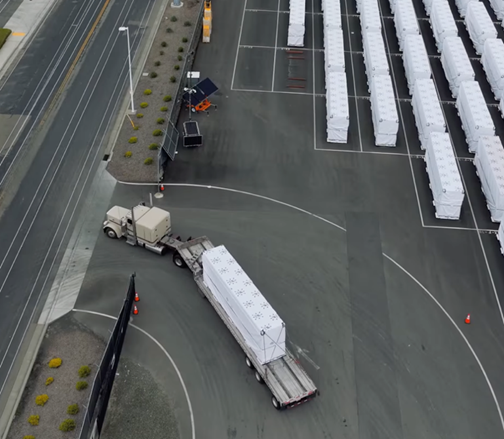
They’re showing up near the Hoover Dam. At an Air Force base in Georgia. In the heart of New York City…
An estimated 4,000 of them are now spread across 48 locations in 14 states. And more roll out every week.
But you won’t see this on CNBC, and you won’t read about it in the Wall Street Journal.
Because these mystery Elon crates have nothing to do with electric vehicles, space, social media, crypto, biotech, robots or AI…
But former hedge fund manager Adam O’Dell knows what’s inside them…
(And he reveals it all in this urgent investment briefing)
Which is why he believes they will go down as Elon’s greatest-ever invention… his biggest ever disruption.
On July 22, Elon is expected to share this new venture with the world.
Once he does, this is going to be everywhere – from Fox Business to your family’s group chat.
Adams believes investors who get positioned before that date could walk away wealthier than they ever thought possible. Everyone else will be reading about it after the stocks have already run.
I’d hate for you to be in the second group.
Click here to watch Adam’s full briefing right now.
He’ll show you exactly what Elon is building, what’s inside these strange white crates… and he’ll give you the name and ticker of one of his top picks to play it – completely free.
Watch it now while you still have time to position yourself.
FEATURED READ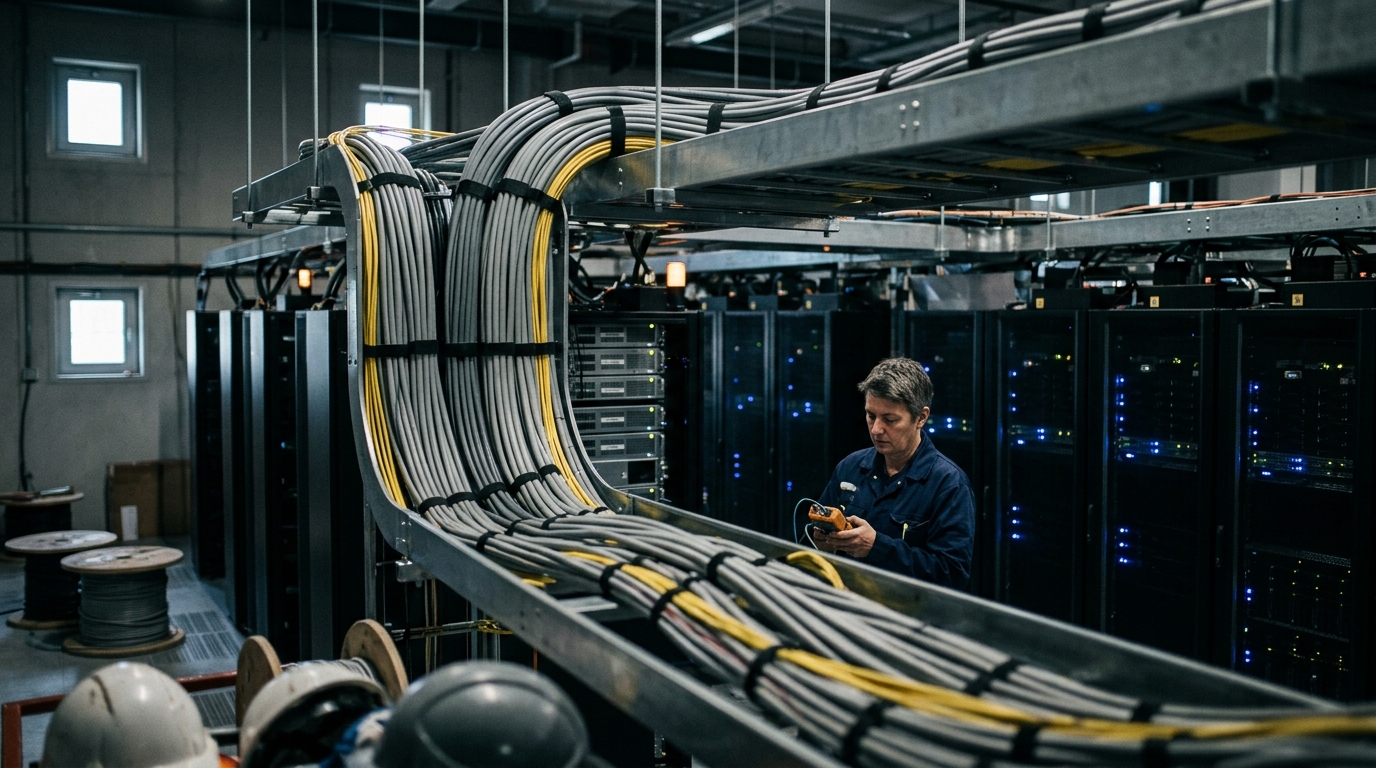
Who Wins When Hyperscalers Spend $700B
Published May 9th, 2026
Let’s skip the part where we tell you AI is a big deal. You already know. What’s worth talking about right now is where the actual money is moving – and it’s not where most retail investors are looking.
The five largest US hyperscalers – Amazon, Alphabet, Microsoft, Meta, and Oracle – are now collectively tracking toward somewhere between $700 and $800 billion in capital expenditures in 2026. That number has been revised upward repeatedly, and Goldman Sachs has noted that consensus capex estimates have proven too low for two years running. The AI infrastructure buildout is no longer a forecast. It’s already inscribed in balance sheets.
Nvidia gets the headlines. But the story underneath – the one that matters for cheap investors – is the physical buildout that has to happen regardless of which AI model wins. Data centers. Cooling systems. Storage. Power. Custom silicon. These are the boring inputs that scale with every dollar of AI capex, and right now capex is anything but slowing.
Your Download Link Will Expire
If you still haven’t downloaded my free “Simple Options Trading For Beginners” guide…
…please take a few seconds and download it right now before your new temporary download link expires.
I eventually plan to charge money for this training, so do yourself a favor and download it now…
That way, no matter what it costs in the future, you’ll have a free copy on your computer.
Make sense?
Where the Numbers Get Interesting
Vertiv Holdings (VRT) is the name worth watching on the infrastructure side. In Q1 2026, the company reported net sales of $2.65 billion – up 30% year-over-year, with 23% organic growth – and raised its full-year guidance to $13.5–$14.0 billion in net sales. Management is targeting adjusted EPS of $6.30–$6.40 for the full year, implying roughly 43% growth. Adjusted operating margins hit 20.8% in Q1, up 430 basis points versus last year. The project backlog now sits above $15 billion. Vertiv also recently acquired Strategic Thermal Labs to deepen its liquid-cooling capabilities – directly targeting the rack densities AI workloads are now demanding. That’s not a software-multiple story. That’s a cash-flow story with a real moat.
Then there’s Seagate Technology (STX). The most recent quarterly print – fiscal Q3 2026, ended April 3 – showed revenue of $3.11 billion, up 44% year-over-year and 10% sequentially, with non-GAAP EPS of $4.10 against a consensus of $3.50. Non-GAAP gross margin hit a record 47.0%, and free cash flow was $953 million in a single quarter. Management guided fiscal Q4 revenue to $3.45 billion with non-GAAP EPS of $5.00, implying continued acceleration. Nearline capacity is reportedly fully allocated through calendar 2026. The HAMR-based Mozaic product line is now qualified with five of the world’s largest cloud customers – giving Seagate a technology lead that takes years to replicate. The stock has roughly doubled year-to-date. And if you’re hunting for reasons to be skeptical: the valuation has moved, the easy money may already be made, and execution on the HAMR ramp still carries manufacturing risk.
On the chip side, Broadcom (AVGO) is taking a structurally different angle than Nvidia. Instead of broad-purpose GPUs, Broadcom partners directly with hyperscalers to co-design custom accelerators for specific workloads – and AI semiconductor revenue hit $8.4 billion in fiscal Q1 2026, up 106% year-over-year. That wasn’t just a beat. It was above Broadcom’s own internal forecast. For Q2, the company guided total revenue to $22 billion – up 47% year-over-year – with AI semiconductor revenue expected to reach $10.7 billion, up approximately 140% year-over-year. Management has outlined a path to more than $100 billion in AI chip revenue by 2027, backed by multi-year gigawatt-scale commitments from Google, Anthropic, Meta, and OpenAI. Each XPU customer relationship spans 3 to 5 years of recurring silicon revenue. That kind of bespoke lock-in is structurally different from a standard vendor contract.
Will Starlink Be Bigger Than SpaceX?
He turned PayPal from a tiny, off-the-radar startup to a massive $64 billion giant.
Then, he did it again with Tesla, which is up more than 19,500% since 2010.
For perspective, that turns $100 invested into almost $20,000!
And now, Elon could be set to do it for the third and final time with what might be his biggest breakthrough yet.
And for the first time ever, you have the rare chance to profit BEFORE the upcoming IPO.
The Part People Skip
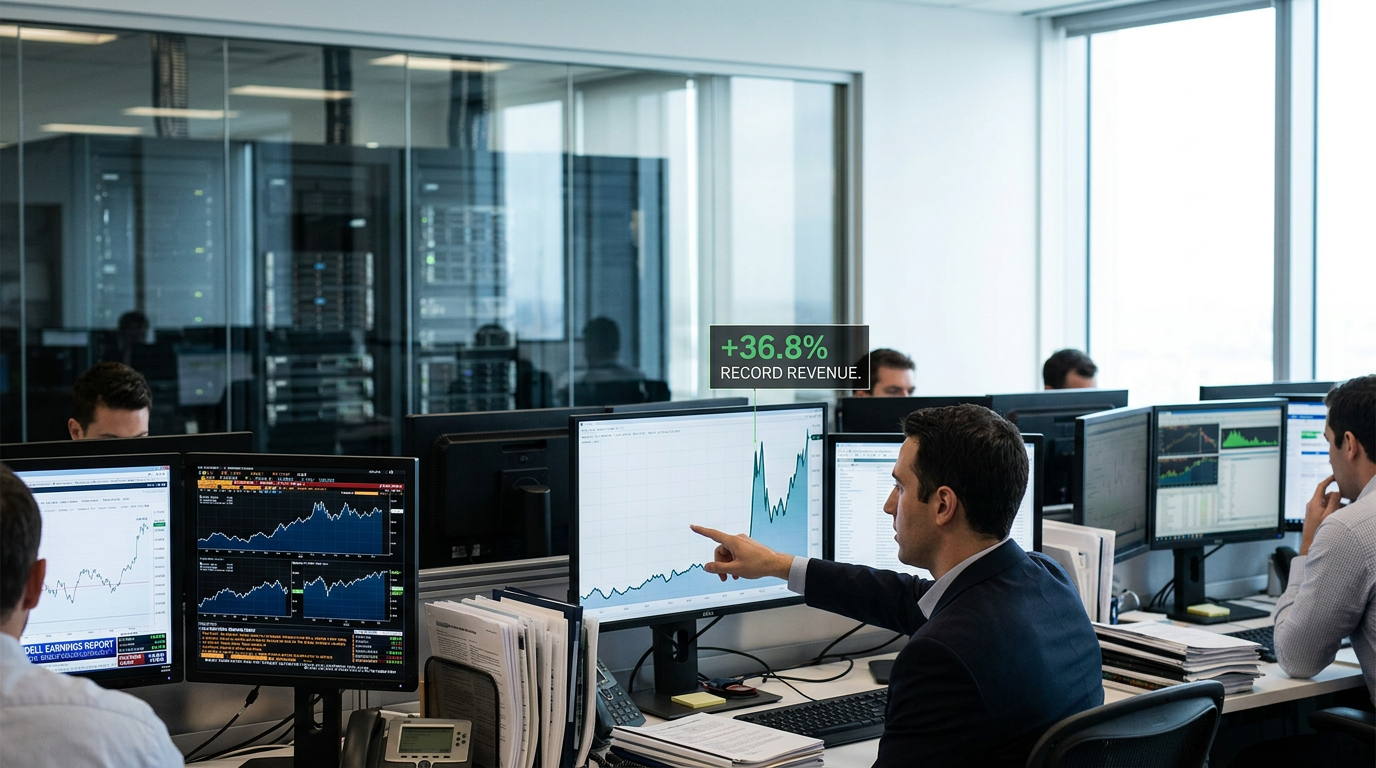
Dell Technologies (DELL) just closed its fiscal year 2026 with numbers that should turn more heads than they have. Full-year AI orders came in at $64.1 billion. The company shipped $25.2 billion in AI servers for the year – up over 150% – and ended fiscal 2026 with a record $43 billion in AI server backlog. In Q4 alone, AI-optimized server revenue surged 342% year-over-year to $9 billion. Full-year revenue hit $113.5 billion, up 19%, with non-GAAP diluted EPS of $10.30, up 27%, both ahead of analyst estimates. Management expects AI revenue to roughly double to $50 billion in fiscal 2027. And the stock, as of this writing, trades at a forward P/E of approximately 14–18x depending on the estimate used – well below where you’d expect given the scale of that backlog and the earnings growth trajectory. The market is discounting it because GPU-heavy bill-of-materials is compressing near-term margins, and the PC business continues to drag. Both are real concerns. But on-premise inference demand from enterprise customers is rising, and Dell’s full-stack advantage across neocloud, sovereign, and enterprise buyers is underappreciated.
Slight tangent, but it matters: there’s a DRAM problem building in the background. Dell’s own supply chain commentary flagged that memory prices are rising sharply – DRAM and SSD costs are reportedly up significantly quarter-over-quarter, and Micron is sold out for the year. This is a margin headwind for Dell and other hardware assemblers. But it’s a tailwind for memory producers – and it’s another data point confirming that AI buildout demand is outstripping available supply on multiple inputs simultaneously.
Oracle (ORCL) is where the story gets complicated – and interesting. Q3 fiscal 2026 results, released March 10, showed revenue of $17.19 billion with 20%-plus organic growth – the first time in over 15 years both total revenue and non-GAAP EPS grew 20% or more in a single quarter. Cloud infrastructure revenue grew 84% year-over-year to $4.89 billion. Remaining performance obligations – contracted future revenue – now stand at $553 billion, up 438% year-over-year. In early May, Oracle secured a classified AI deal with the US Department of Defense, sending shares up roughly 6%. The stock has rallied approximately 24% over the past month to around $185, recovering from a February trough near $134. The risk here is real: Oracle is burning free cash flow at a significant rate, long-term debt exceeds $100 billion, and the company is targeting $50 billion in fiscal 2026 capex. Whether the backlog converts into profitable cash flows before the debt load becomes uncomfortable is the central question. The bull case rests entirely on that conversion. For investors who need positive FCF in the near term, Oracle is not the right vehicle. For those with a longer horizon, the $553 billion backlog at 84% OCI growth is a hard number to dismiss.
The broader point is this: the top five hyperscalers alone are tracking toward $700–$800 billion in capital expenditures in 2026, with roughly 75% tied directly to AI infrastructure. That spending flows through to storage, cooling, power, chips, and cloud – the layer these companies occupy. If you’re hunting for value in a market where the obvious names are priced for perfection, the picks-and-shovels are where the margin of safety still lives. Not all of them are cheap anymore. Some have already run hard. But the earnings are real, the backlogs are audited, and the spending cycle that feeds them is not slowing – it’s being revised upward.
The next earnings catalyst cycle hits before summer. That’s your window to do the work.
This article is for informational purposes only and does not constitute financial advice. Always conduct your own due diligence before investing.